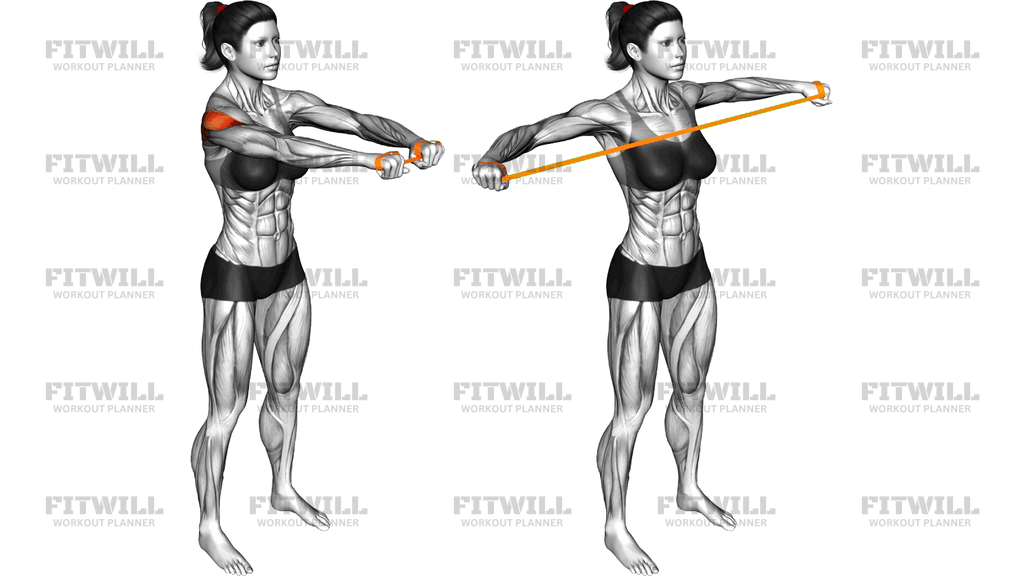
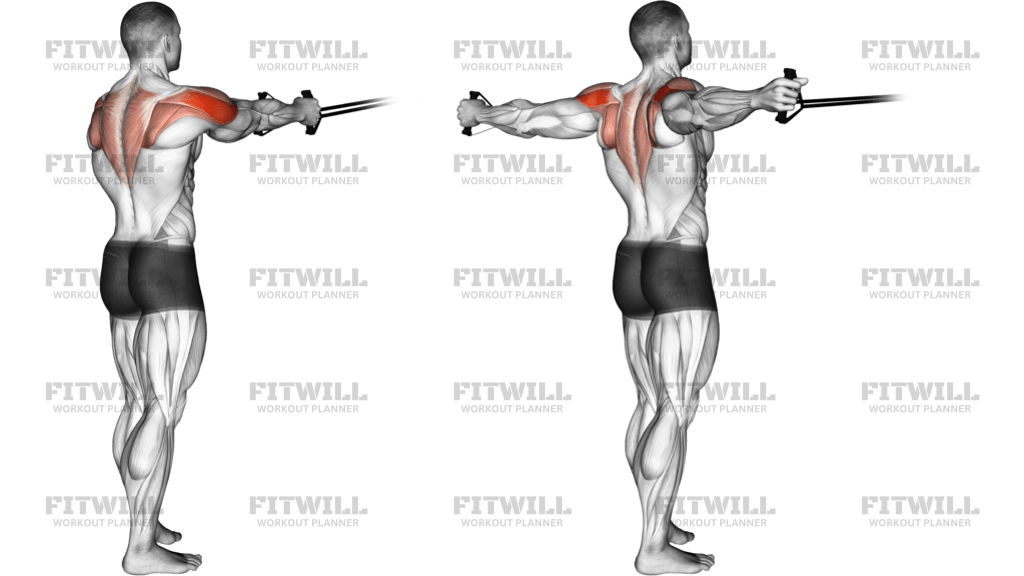
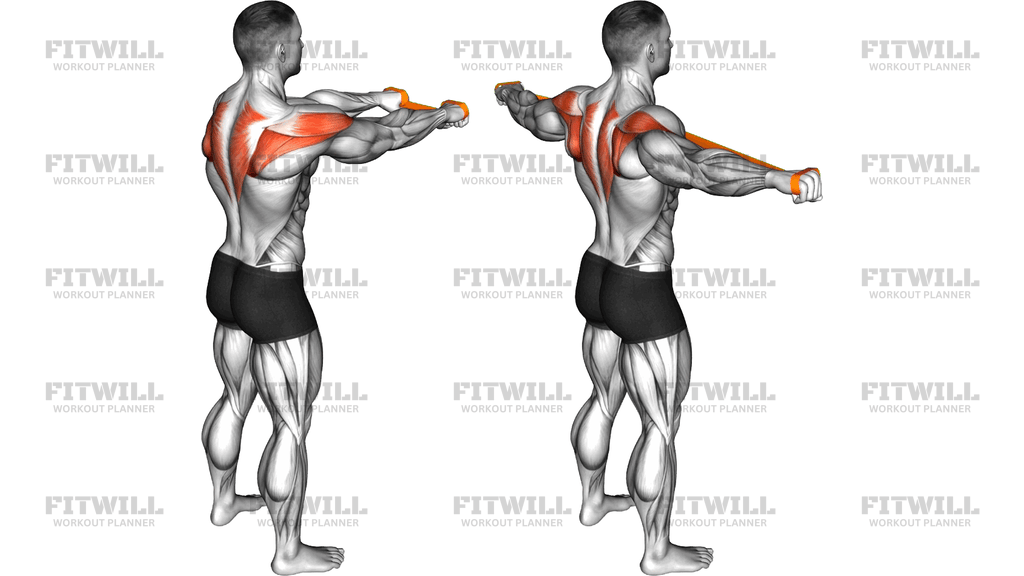
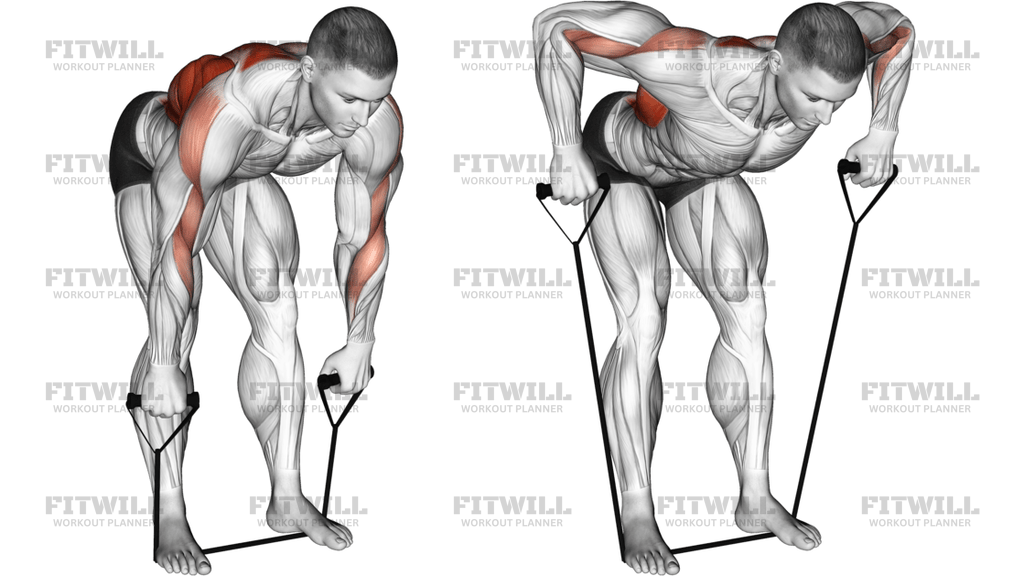
Resistance Band Standing Scapular Retraction
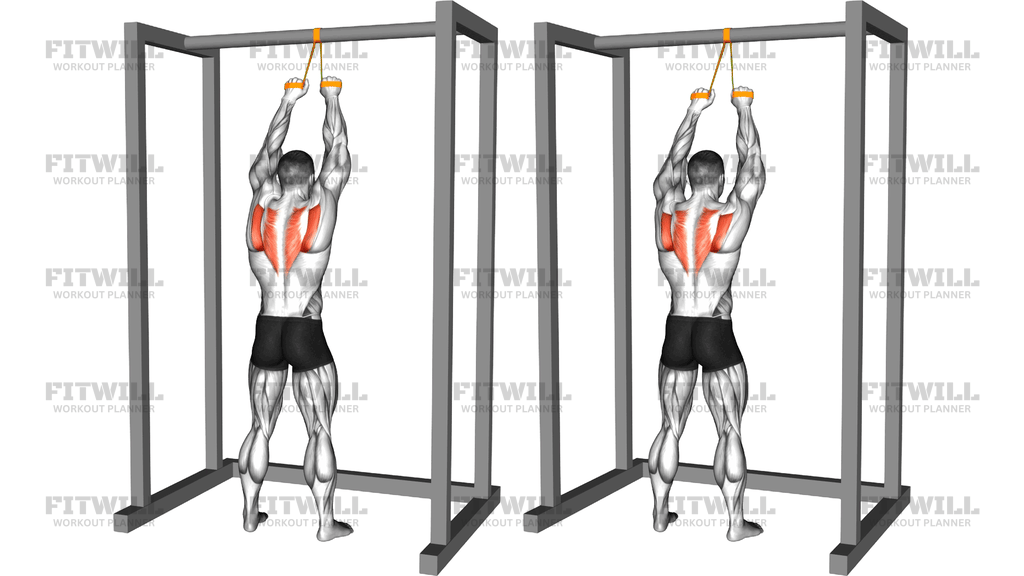
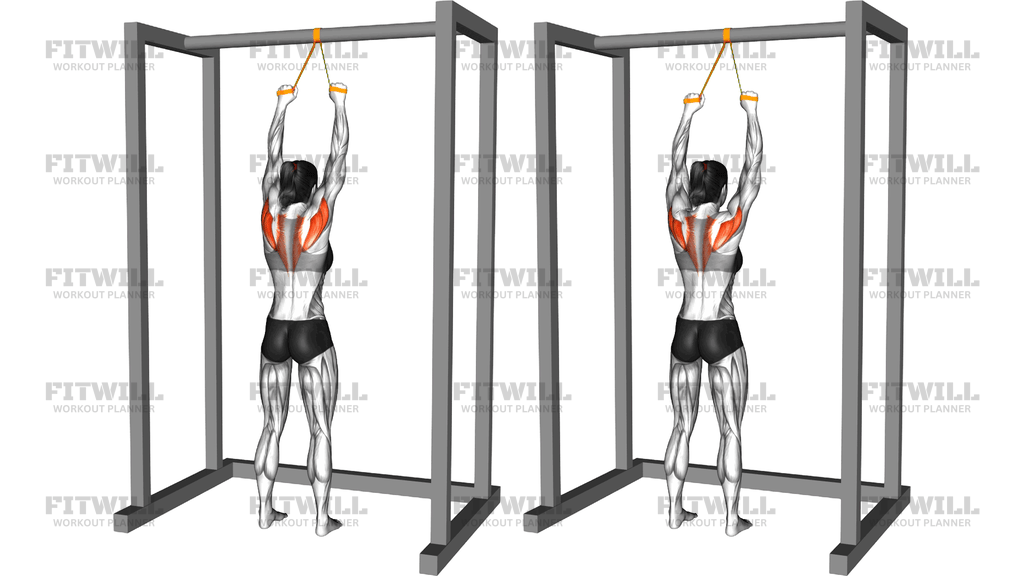
The Resistance Band Standing Scapular Retraction is a targeted upper-back drill performed standing under a pull-up bar or rack, with a resistance band looped over the bar and held in both hands. Your arms stay extended overhead while you draw your shoulder blades down and together against the band's pull. It is a small, precise movement — the elbows barely bend and the hands travel only a short distance — because the work is meant to happen at the shoulder blades, not at the arms.
This exercise is especially useful for people whose shoulder blades drift into a rounded, elevated position during daily sitting or pressing work. Office workers, lifters who bench or do push-ups regularly, and anyone rebuilding control after long periods of poor posture can benefit. It also serves as a warm-up primer before pull-ups, rows, or overhead pressing, since it wakes up the rhomboids and mid and lower traps that stabilize the shoulder girdle.
The main muscles trained are the rhomboids and the middle and lower trapezius, with the rear shoulders and lats assisting as the band is drawn down. Because you are standing and the band hangs from above, your core and legs work quietly to keep your torso upright and still — resist the urge to lean back or shrug as you pull.
Setup matters more here than in most upper-back exercises. The band should hang centered over the bar with even tension in both sides, and your grip should be symmetrical so each shoulder blade does the same amount of work. Stand close enough that the band has tension at the top, but not so close that it goes slack mid-rep. Slack at the bottom of each rep is the most common reason this drill loses its effect.
To execute it well, keep your arms long and simply think about sliding your shoulder blades into your back pockets while gently squeezing them toward each other. Pause briefly at the bottom, then let the band draw your shoulder blades back up in a slow, controlled release. If you feel it mostly in your neck or the tops of your shoulders, you are shrugging — drop the tension and reset.
Use light resistance and higher repetitions, typically 10 to 15 controlled reps for one to three sets. Because the load is light and joint-friendly, this movement suits beginners, warm-ups, and active recovery days alike, and it pairs naturally with band pull-aparts and face pulls in a balanced upper-back routine.
[ Workout Log & Planner ]
Put your next workout in Fitwill
Keep your plan and training log ready when you are.


Instructions
- Loop a resistance band over a pull-up bar or the top crossbar of a rack so it hangs down in the middle, with an even length on each side.
- Stand facing the bar and grip the band with both hands, palms forward, hands roughly shoulder-width apart so both sides carry equal tension.
- Step back or adjust your stance until your arms are fully extended overhead and the band is taut at the top of the movement.
- Set your feet about hip-width apart, soften your knees slightly, and brace your trunk so your torso stays tall and upright.
- Keeping your elbows nearly straight, pull your shoulder blades down and together, letting your hands travel down a short distance with the band.
- Squeeze your shoulder blades toward your spine at the bottom and hold the contraction for one to two seconds.
- Slowly release and let the band raise your arms back overhead, allowing your shoulder blades to rise and separate in a controlled way until the band is taut again.
- Exhale as you pull your shoulder blades down, and inhale as you return to the starting stretch overhead.
- Complete 10 to 15 repetitions, then switch or adjust the band if one side feels heavier than the other before your next set.
Tips & Tricks
- If your upper traps take over and you feel the work climbing into your neck, use a lighter band — the rhomboids and lower traps only need modest resistance to be challenged.
- Keep your elbows soft but extended; if they bend noticeably, the set turns into a mini pull-down and your shoulder blades stop doing the work.
- Do not let the band go slack at the top. If your hands drift above the point of tension, step back a few inches or switch to a longer band.
- Check that both hands are gripping the band at equal lengths. An off-center loop makes one shoulder blade work harder and can pull your torso slightly to one side.
- Avoid leaning your torso back as you pull. If you catch yourself swinging, brace your abs harder or stand with your back closer to a wall for feedback.
- Think 'shoulder blades to the spine and into the back pockets' rather than pulling with your hands — the hands are just anchors for the band.
- The band must be securely anchored over the bar before you load it. Give it a light test pull first so it cannot slip off the bar mid-rep.
- Control the release as much as the pull. Letting the band snap your shoulder blades upward quickly wastes the eccentric part of the rep and can aggravate the neck.
- If overhead reach is uncomfortable, use a lighter band and a slightly shorter range rather than forcing full extension.
Frequently Asked Questions
Which muscles does the Resistance Band Standing Scapular Retraction work?
It primarily targets the rhomboids and the middle and lower trapezius, which control the shoulder blades. The rear shoulders and lats assist, and your core stabilizes you while you stand.
Why do my arms stay overhead during the Resistance Band Standing Scapular Retraction?
The overhead position loads the shoulder blades through an elevated range, which is where many people are weakest. It teaches you to control your scapulae before pull-ups and overhead pressing.
Is the Resistance Band Standing Scapular Retraction good for beginners?
Yes. The band provides light, adjustable resistance and the movement is short and easy to learn, making it a safe first upper-back exercise. Start with a light band and focus on feeling the shoulder blades move.
How is this different from a band pull-apart?
A pull-apart is done with the band in front of your chest and arms moving horizontally, while this version anchors the band overhead and works the shoulder blades vertically. They complement each other rather than replace one another.
How many sets and reps should I do of the Resistance Band Standing Scapular Retraction?
One to three sets of 10 to 15 slow repetitions works well, either as a warm-up before upper-body training or as standalone mid-back work. Quality of the squeeze matters more than adding resistance.
I feel this in my neck instead of my upper back — what am I doing wrong?
You are most likely shrugging your shoulders or using too much band tension. Reduce the resistance, keep your shoulders away from your ears, and consciously lead the movement with your shoulder blades.
Can I do the Resistance Band Standing Scapular Retraction without a pull-up bar?
You need a sturdy overhead anchor such as a rack crossbar, a door-mounted pull-up bar, or any secure bar that can hold the band. Never anchor the band to something that could slide or break under tension.
How do I know the band tension is set correctly?
Stand so the band is taut with your arms fully extended overhead but not stretched to its limit. If it goes slack during the release or drags you forward at the start, adjust your distance or band thickness.
Is it safe to do this exercise every day?
For most people, yes, because the load is light and the range is small. If you have a current shoulder or neck issue, keep the range pain-free and clear the movement with a qualified professional first.
Should my elbows bend during the Resistance Band Standing Scapular Retraction?
Only slightly, if at all. The movement is a scapular retraction, not a pull-down, so if your elbows bend a lot your arms are taking over and the target muscles are underworked.