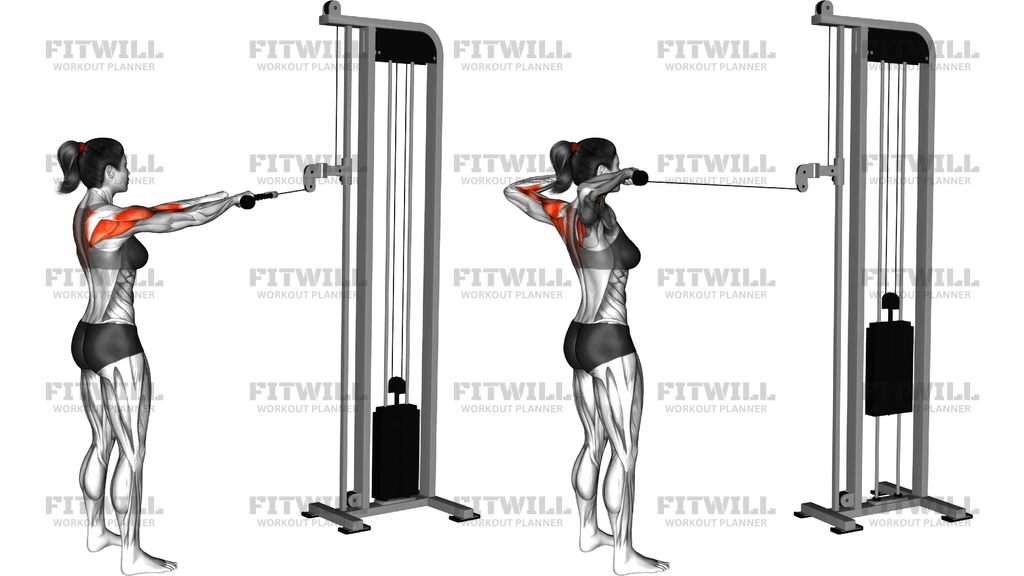
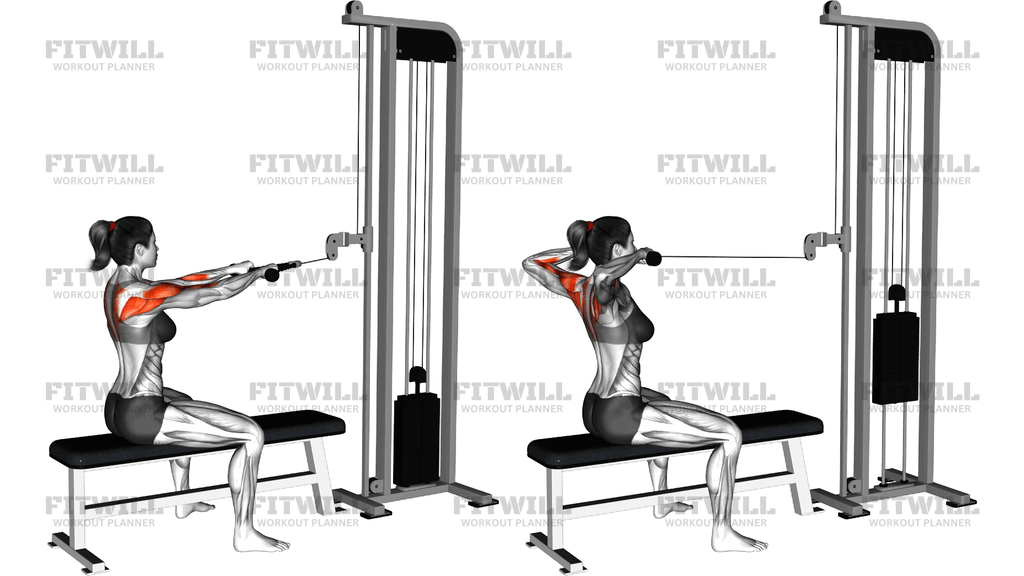
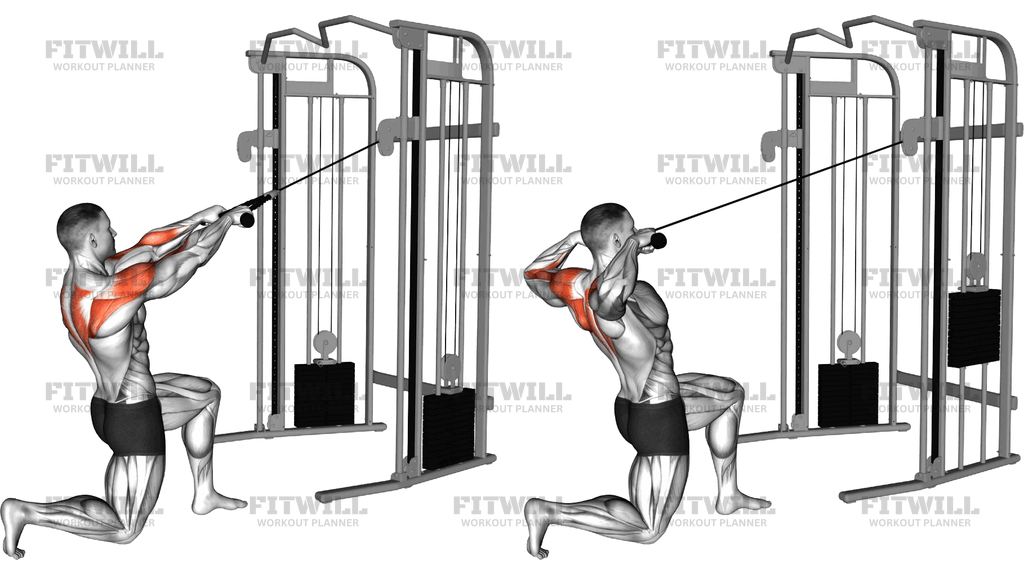
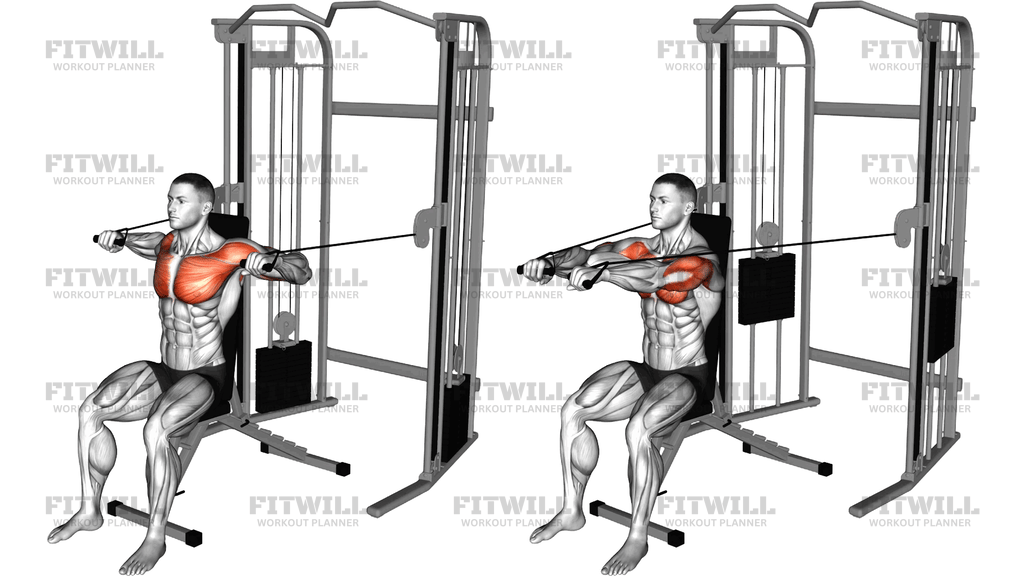
Cable Standing Single Arm Fly
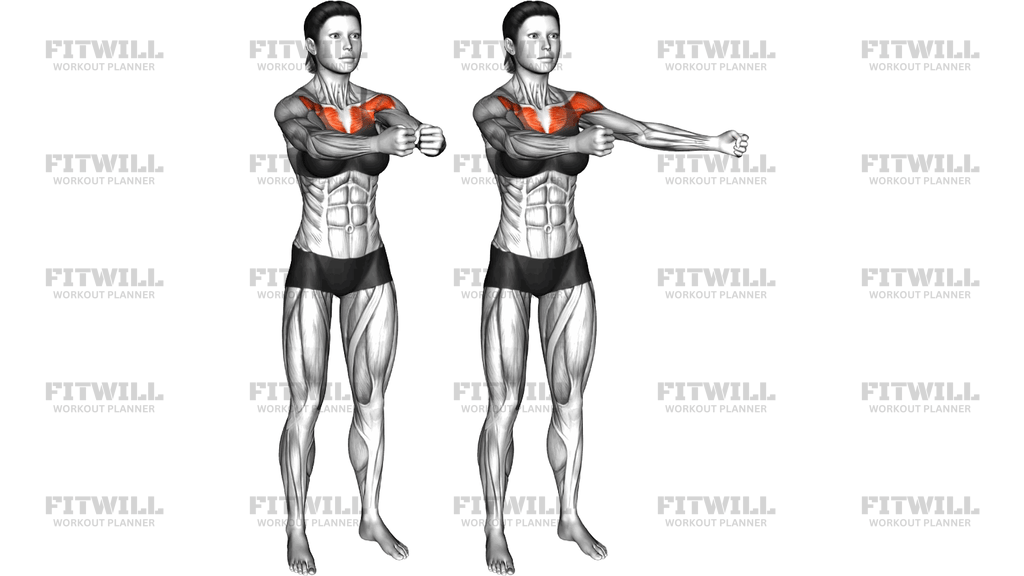
The Cable Standing Single Arm Fly is a unilateral chest exercise performed with a single handle attached to a cable pulley set at roughly shoulder height. You stand side-on to the machine, brace your torso with your free hand, and sweep the handle across the front of your body in a wide horizontal arc until your hand reaches the opposite side of your chest. Unlike a press, the elbow stays soft and mostly fixed, so the chest does the moving through horizontal adduction rather than the triceps taking over.
Because the cable pulls from behind and to the side, the resistance stays on the chest through the entire range, including the fully stretched position where a dumbbell fly would lose tension. The single-arm setup also challenges your core to resist rotation, since the cable constantly tries to twist your torso back toward the machine. That anti-rotation demand makes this a sneaky-good exercise for the obliques and deep core alongside the primary chest work.
The unilateral nature is one of its best features. Each side works independently, which exposes and helps correct left-to-right strength differences that stay hidden during barbell or machine pressing. It is also shoulder-friendly: the arm path can be adjusted slightly higher or lower to match your natural arc, and there is no bar forcing both shoulders into the same fixed track.
This version, with the pulley at chest height and the hand finishing near the middle of your torso, places strong emphasis on the clavicular head of the pectoralis major — the upper chest fibers — along with the front delts. Lifters who feel flat presses mostly in their front delts or triceps often find that single-arm cable flys give them a direct, isolated chest stimulus they have been missing.
Setup matters more here than in most chest movements. Standing too close to the machine removes tension at the start, standing too far pulls you off balance, and letting the torso rotate turns a chest fly into a sloppy cross-body swing. Keep the feet in a stable staggered stance, brace the free hand against your torso or a sturdy support, and let only the working arm travel.
Use moderate weights and controlled tempos. This is an isolation exercise, not a max-effort lift — the moment you have to heave or rotate to move the stack, the chest stops being the limiting factor. Two to four sets of 10 to 15 controlled reps per side, placed after your heavier pressing work, fits well into most chest or upper-body sessions.
[ Workout Log & Planner ]
Put your next workout in Fitwill
Keep your plan and training log ready when you are.


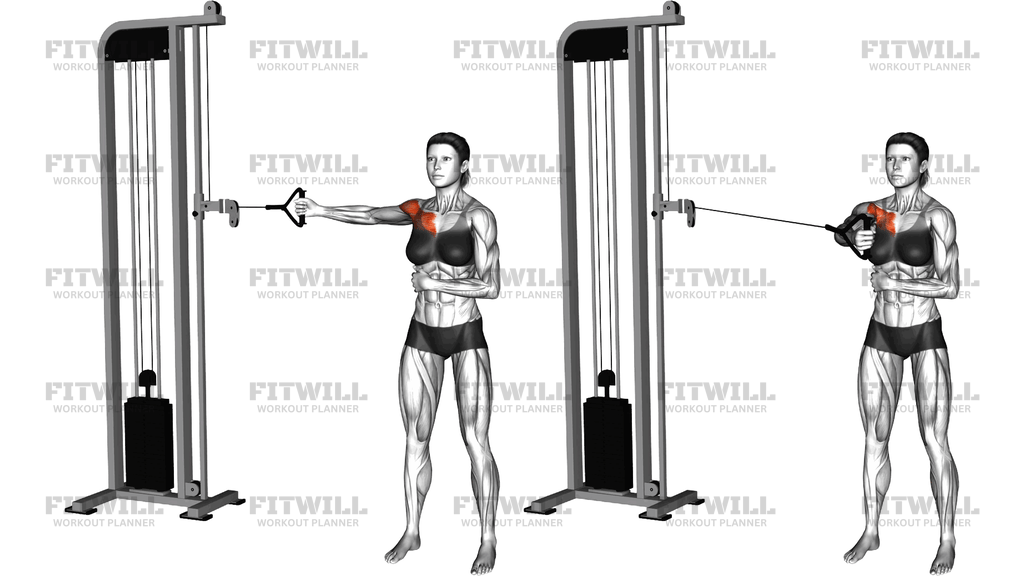
Instructions
- Set the cable pulley to shoulder height and attach a single handle.
- Stand side-on to the machine with your working arm closest to the pulley, then step out sideways until the cable is already slightly taut with your arm out to the side.
- Place your feet in a staggered stance about hip-width apart, soften your knees, and brace your free hand against your stomach or hip to keep your torso from twisting.
- Grip the handle with a neutral palm and hold your arm out to the side at chest height with a small, fixed bend in the elbow.
- Exhale and sweep the handle in a wide horizontal arc across the front of your body, leading with the elbow and hand together, until your hand crosses to the opposite side of your chest.
- Squeeze the chest briefly at the end of the arc without letting your shoulder roll forward.
- Inhale and slowly let the arm travel back along the same arc until you feel a stretch across the chest, stopping before the cable yanks the shoulder backward.
- Keep your hips and shoulders facing forward the entire time — the only joint that should move is the shoulder of the working arm.
- Complete all reps on one side, then switch stance and arm and repeat on the other side.
Tips & Tricks
- The most common fault is turning the fly into a press: if your elbow bends more as the hand comes across, the weight is too heavy or you are pushing instead of arcing — drop the load and lock in a soft, constant elbow angle.
- If your torso rotates toward the working arm, press your free hand more firmly into your stomach and think about keeping both shoulders pointing straight ahead.
- Standing too close to the machine makes the cable slack at the start; if the handle drifts before your chest engages, take one small step sideways until tension exists with your arm fully out.
- Avoid letting the handle travel deep behind your body at the start of the rep — a stretch is good, but the shoulder being dragged backward under load is not. Stop where you feel the pec lengthen without pinching at the front of the shoulder.
- A slight upward arc, finishing with the hand near the upper chest rather than the belly, biases the upper chest fibers and matches the pulley height in this setup.
- Pause for a half-second at the crossover point rather than bouncing — the pec contraction is the whole point of the exercise.
- Keep your neck relaxed and your gaze forward; craning toward the working arm usually signals that the load is too heavy.
- Because each side is trained separately, match your weaker side's rep count and never let the stronger side do extra reps.
- Wrist neutrality helps: gripping with a bent-back wrist shifts tension to the forearm and shoulder, so keep the knuckles aligned with the forearm.
Frequently Asked Questions
Which muscles does the Cable Standing Single Arm Fly work?
The pectoralis major, with extra emphasis on the upper chest fibers because the pulley sits at chest height and the hand finishes near the upper torso. The front delts assist, and the obliques and deep core work to keep your torso from rotating.
Why does the free hand press against the stomach during this exercise?
The cable pulls you backward and sideways, so bracing the free hand against your torso gives you a stable anchor and stops unwanted rotation. Without it, your core twists and the chest stops controlling the movement.
Is the Cable Standing Single Arm Fly good for beginners?
Yes, provided the weight is kept light and the arc is learned slowly first. The single-arm cable setup is actually easier on the shoulders than a barbell press because the path can follow your natural range.
How is this different from a dumbbell fly?
The cable keeps constant tension on the chest even when the arm is stretched out to the side, where a dumbbell's resistance drops off. The standing single-arm position also adds an anti-rotation core demand a bench fly does not have.
Where exactly should the pulley be set?
At or just below shoulder height for the standard version. A higher pulley shifts the emphasis downward through the chest, while a lower pulley biases the upper chest as the hand finishes high across the body.
My elbow keeps bending and it feels like a press — what am I doing wrong?
The elbow angle should stay fixed and soft, around 15 to 20 degrees, for the whole arc. If it bends as the hand crosses your body, reduce the weight and focus on sweeping the hand in a wide arc rather than pulling it toward you.
Can I do this exercise without a cable machine?
A resistance band anchored at chest height is the closest substitute and preserves the horizontal pulling arc. A dumbbell fly on a flat bench is a reasonable alternative, though it loses tension in the stretched position and the unilateral anti-rotation element.
How many reps and sets should I use?
Because it is an isolation movement, moderate loads for 10 to 15 reps per side over 2 to 4 sets work well. Prioritize a smooth arc and a full stretch over stacking weight.
Is it safe for the shoulder if the arm goes behind the body at the start?
A modest stretch is fine and beneficial, but do not let the cable drag the arm far behind the torso under load. Stop the return once the pec reaches its lengthened position and keep the elbow soft to avoid stress on the shoulder capsule.
Should I do both sides in the same set or one arm at a time?
Finish all reps on one side before switching, and start with your weaker arm. This makes it easy to match volume between sides and keeps the set quality consistent.