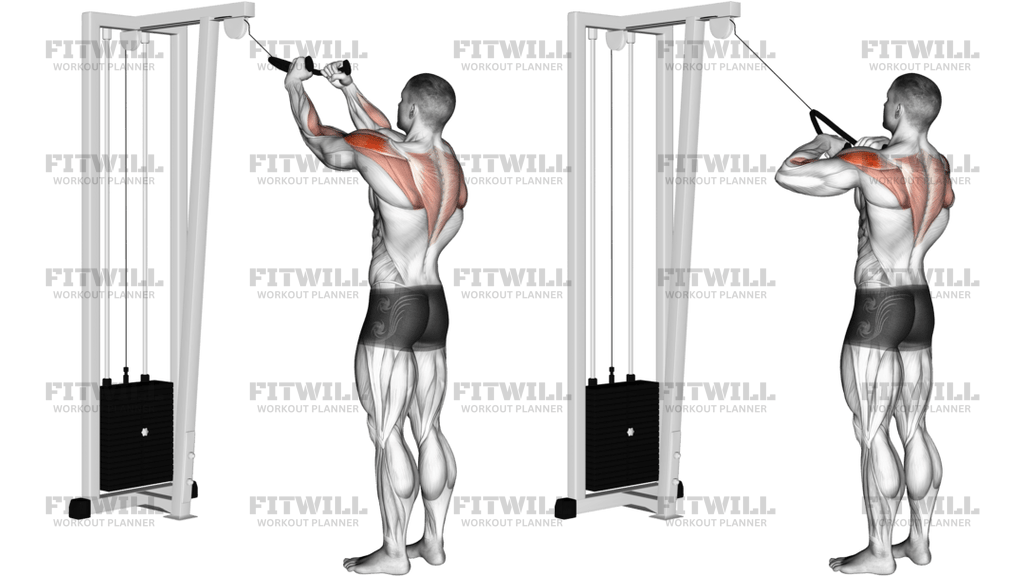
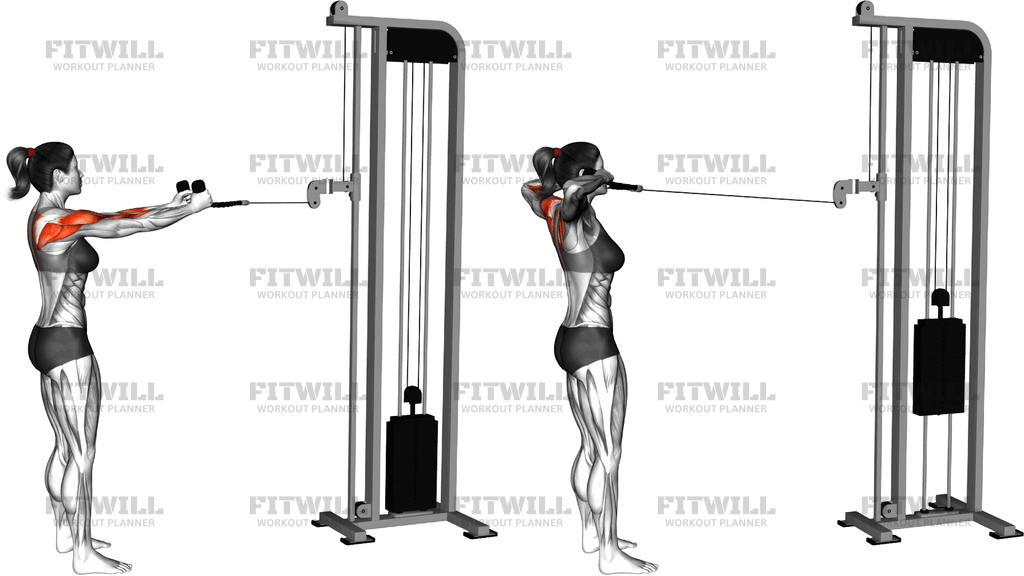
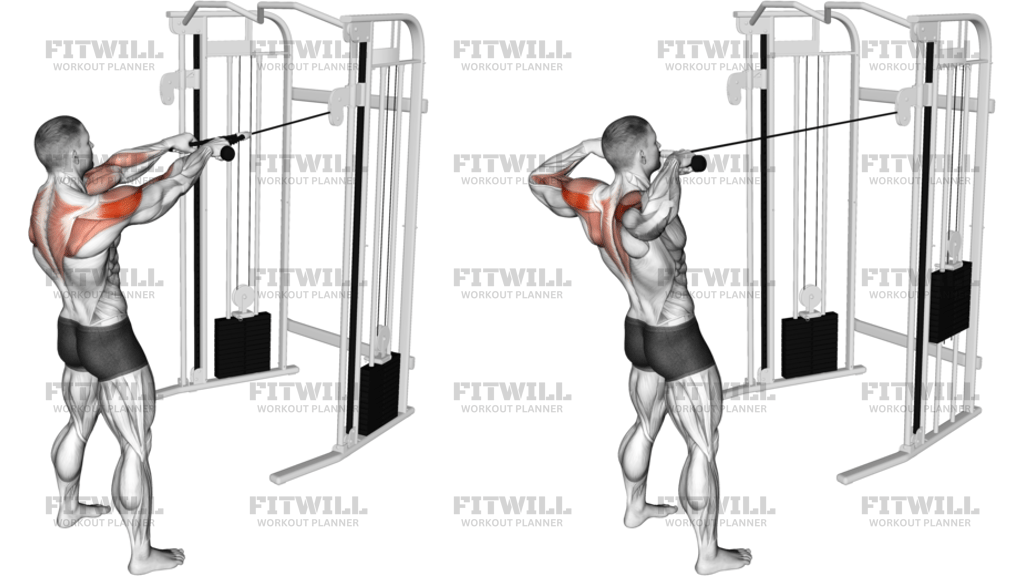
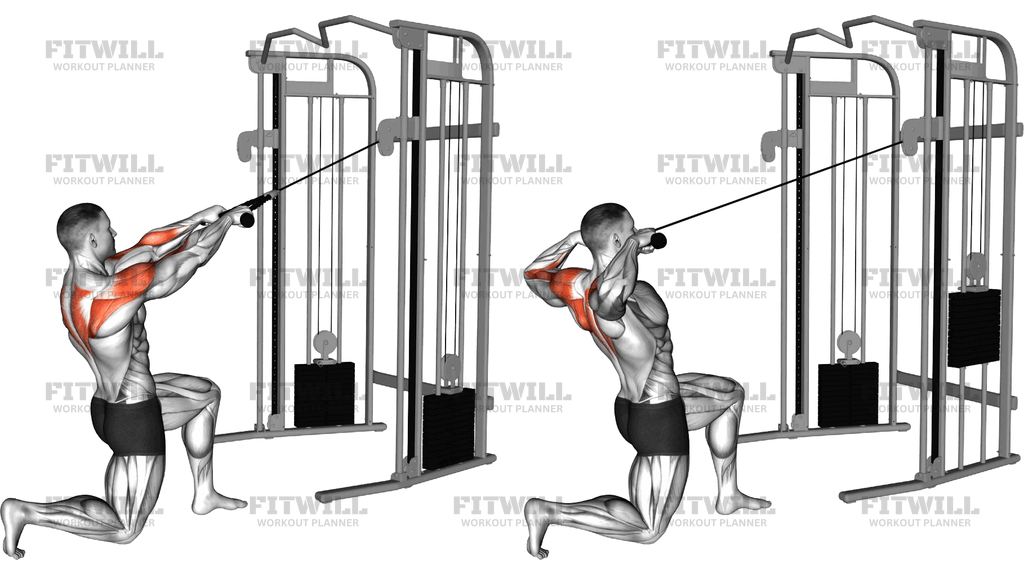
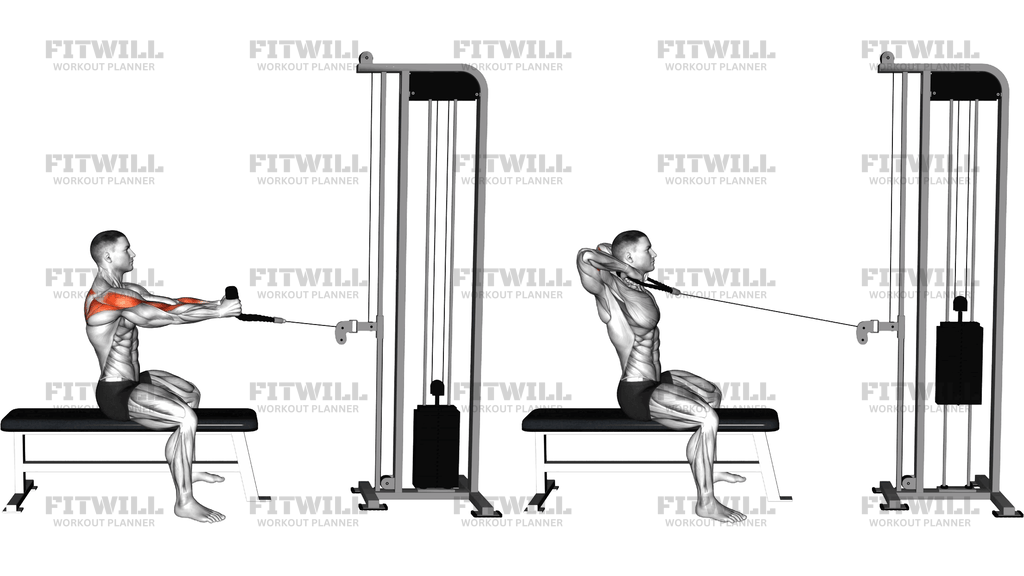
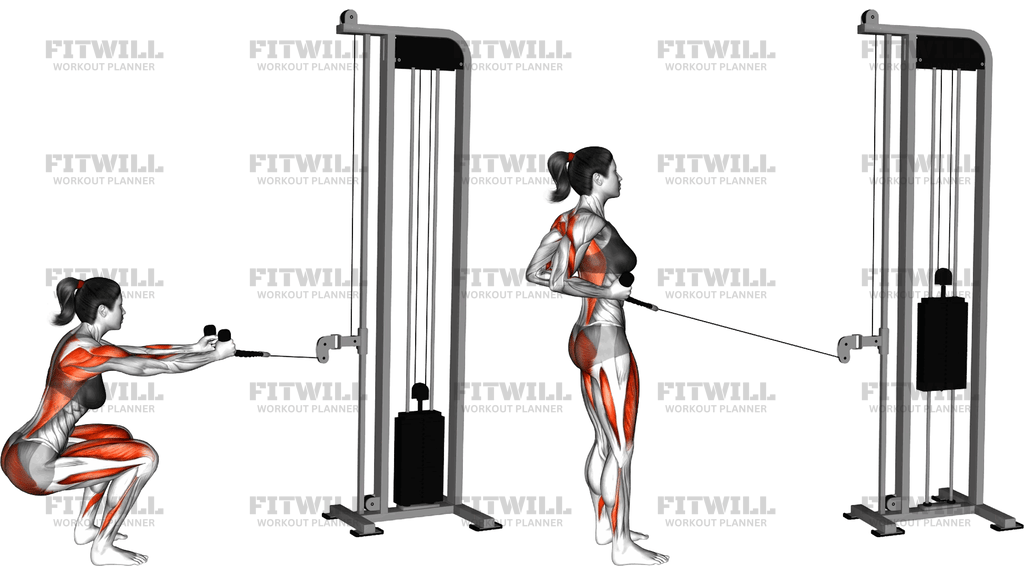
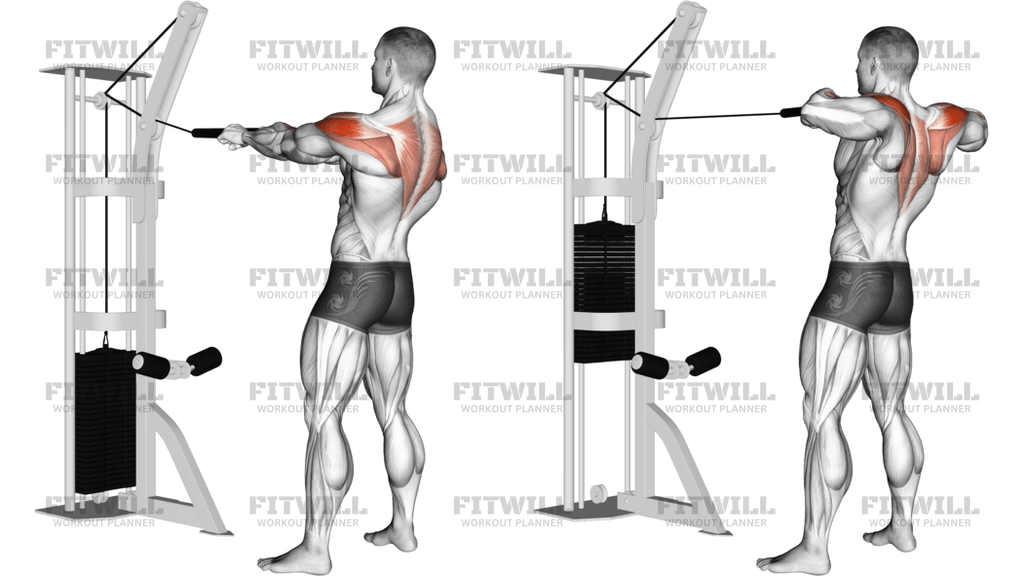
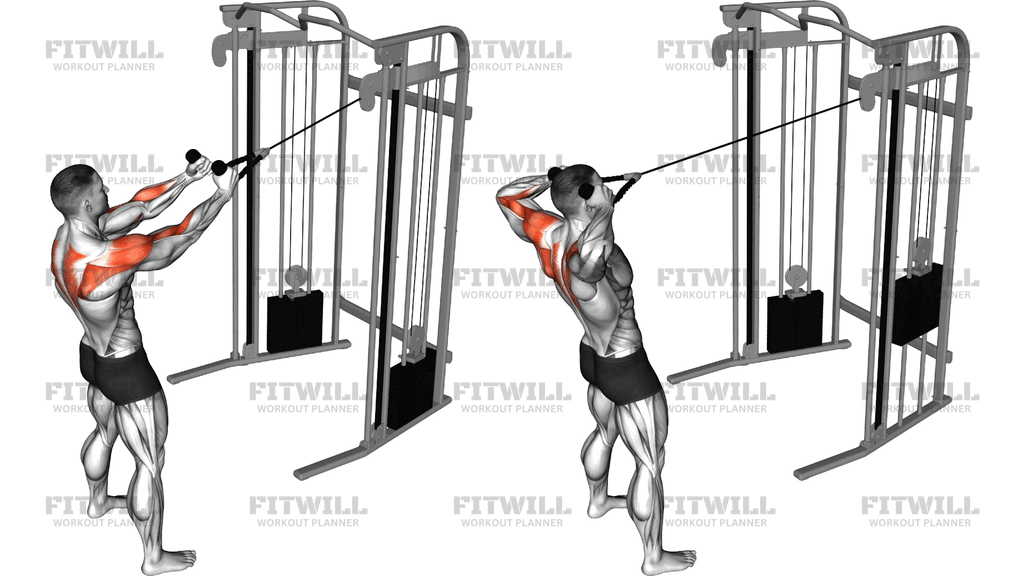
Cable Half Kneeling Face Pull
The Cable Half Kneeling Face Pull is a pulling exercise performed with a rope attachment on a cable machine set at roughly upper-chest to face height. You kneel in a split stance — one knee down, the other foot planted forward — grip the rope with an overhand grip, and pull the handles back toward your face while letting your elbows flare out wide. The finish position lands somewhere between your chin and forehead, with the backs of your hands near your ears and your shoulder blades drawn together.
The half-kneeling position is what separates this from the standing or seated versions. With one knee down, you lose the ability to lean back and heave the weight with your hips, so the work stays where it belongs: in the rear shoulders, upper back, and scapular muscles. The front-leg stance also trains your hips and trunk to hold steady under the cable's pull, making this a quietly demanding core-stability exercise as well.
This movement is especially useful for people who spend long hours at a desk, since the pulling pattern targets the muscles that tend to get long and weak when you sit hunched forward — the rear deltoids, mid and lower trapezius, rhomboids, and the external rotators of the shoulder. Lifters who press a lot of bench presses or overhead work also benefit, because balancing all that pressing with pulling helps keep the shoulders feeling healthy and moving well.
To execute it well, keep your torso upright and your ribs stacked over your pelvis throughout the set. As you pull, the rope should split so one handle ends up on each side of your head, with your elbows staying above wrist height. Think about driving your elbows back and apart rather than yanking with your hands, then pause briefly in the squeezed position before letting the weight pull your arms back out in a slow, controlled return.
A few practical points matter for safety and results. Choose a load you can pull smoothly without your body twisting toward the cable, and keep your front shin roughly vertical with your front foot fully planted. If your lower back arches hard or your torso rotates as you pull, the weight is too heavy. Most lifters do best with moderate loads, higher reps, and a deliberate pause — this is a feel exercise, and chasing numbers usually just turns it into a sloppy row.
[ Workout Log & Planner ]
Put your next workout in Fitwill
Keep your plan and training log ready when you are.


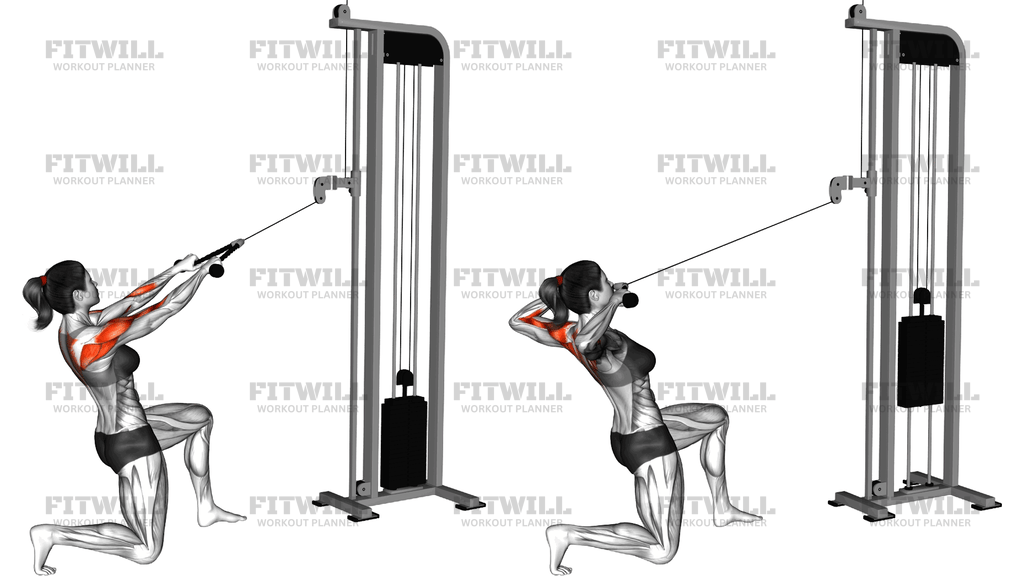
Instructions
- Attach a rope to the cable pulley of a cable machine and set the pulley at approximately upper-chest to face height.
- Kneel in a half-kneeling position facing the machine: place one knee on the floor beneath your hip and step your opposite foot forward so that leg is bent to about 90 degrees.
- Grip the rope handles with an overhand grip, thumbs pointing back toward you, and walk your torso back until your arms are fully extended toward the pulley.
- Tighten your trunk and glutes, keeping your torso upright with your ribs stacked over your pelvis.
- Pull the rope toward your face by driving your elbows back and out wide, keeping them higher than your wrists the whole way.
- Split the rope apart as you finish so one handle lands on each side of your head, and squeeze your shoulder blades together at the end position near your chin and forehead.
- Pause for a beat in that pulled-back position before reversing the motion.
- Slowly extend your arms back toward the pulley, resisting the cable's pull instead of letting it snap your arms forward.
- Exhale as you pull toward your face and inhale as your arms return.
- Complete your reps, then switch which knee is down and repeat on the other side.
Tips & Tricks
- If your torso twists toward the machine as you pull, lighten the load — the half-kneeling stance only locks out momentum when the weight stays honest.
- Keep your front shin close to vertical and your front heel down; letting that knee drift forward shifts work away from the target muscles.
- Avoid shrugging your shoulders toward your ears as you pull; if your upper traps burn first, drop the weight and cue elbows back and down slightly.
- Do not turn this into a triceps extension — the rope should end near your head with hands wide, not locked out overhead.
- Squeeze for a full second at each rep's finish; most people rush this point, which is exactly where the rear shoulder work happens.
- If the kneeling position bothers your back knee, place a folded mat or pad under it before you start.
- Keep your chin level and neck relaxed; jutting your chin forward to meet the rope is a common tell that the pull is too heavy.
- Set the pulley height so the cable pulls slightly downward toward your face; a pulley set far above or below head height changes the pulling angle and targets the wrong fibers.
Frequently Asked Questions
Which muscles does the Cable Half Kneeling Face Pull work?
The main movers are the rear deltoids and the muscles between your shoulder blades, including the mid and lower traps and rhomboids. The rotator cuff assists with the external rotation of the finish, your biceps help with the pull, and the half-kneeling stance challenges your hips and core to stay stable.
Why half kneeling instead of standing for Face Pulls?
Half kneeling removes the ability to lean back and use your body weight to heave the rope, so the target muscles have to do the work. It also adds a balance and trunk-stability demand that a standing stance lets you cheat around.
Where exactly should the pulley be set for the Cable Half Kneeling Face Pull?
Set it at about upper-chest to face height so the cable pulls roughly level with or slightly toward your face. A pulley much higher turns it into a different angle, and one near the floor makes it resemble a row instead.
Is the Cable Half Kneeling Face Pull good for beginners?
Yes, and it is one of the better beginner pulling exercises because the kneeling position naturally limits how much weight can be used. Start light, focus on feeling your rear shoulders and upper back work, and build reps before adding load.
How do I know if I am doing the Cable Half Kneeling Face Pull with good form?
Your elbows should stay above your wrists, the rope should split apart so a handle ends on each side of your head, and your torso should stay upright without twisting. If you feel it mostly in your biceps or neck, the setup or load is off.
What is the most common mistake with this exercise?
Going too heavy and turning it into a combination row and shrug, with the torso rocking toward the machine. The fix is simple: reduce the weight, slow the return, and hold the end position for a full second.
How many reps and sets should I do for the Cable Half Kneeling Face Pull?
It works best as a higher-rep movement — typically 2 to 4 sets of 10 to 15 reps with a deliberate pause. Because the rear shoulders respond more to quality contractions than max loads, moderate weight and strict form beat heavy, sloppy reps.
What can I use instead of a Cable Half Kneeling Face Pull if my gym has no cable machine?
A resistance band anchored at face height is the closest substitute — loop it around a rack or post and kneel the same way. Band face pulls, reverse flyes with light dumbbells, and band pull-aparts all train a similar pulling pattern.
Should I switch sides when doing the Cable Half Kneeling Face Pull?
Yes. Since you kneel with one knee down, do an even number of sets and repeat with the opposite knee on the floor so both sides get the same balance and stability work.
Is the Cable Half Kneeling Face Pull safe for my shoulders?
When performed with a controlled load and without shrugging or twisting, it is a joint-friendly pulling movement that trains the small stabilizing muscles around the shoulder blade. If a current shoulder issue limits your range, shorten the pull to a comfortable range and stop if you feel sharp pain.