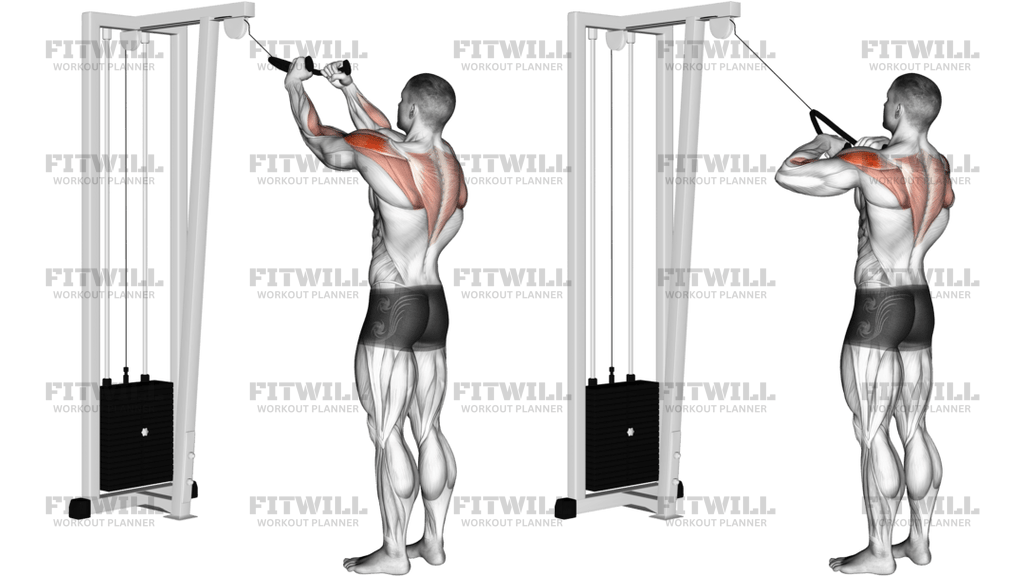
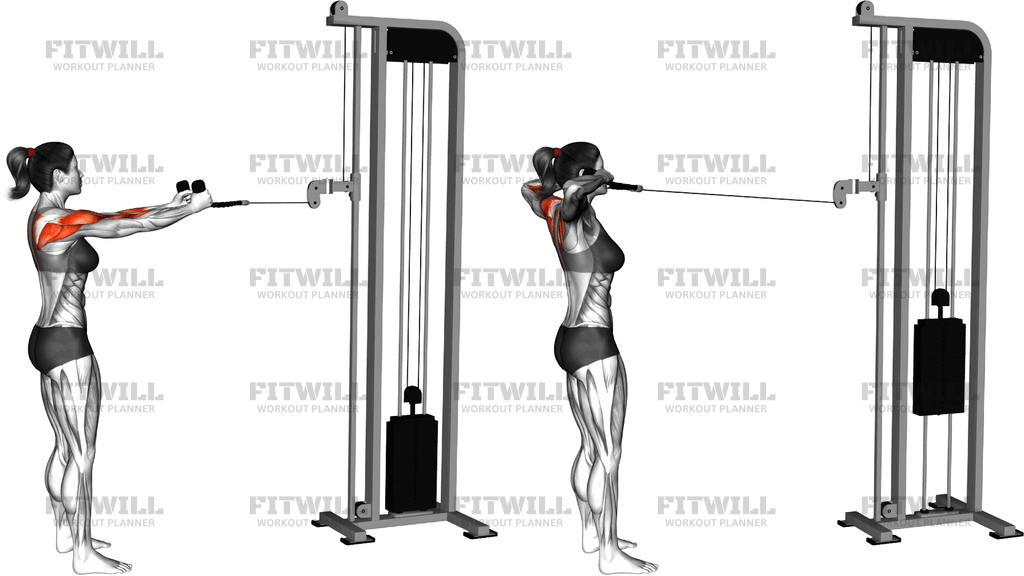
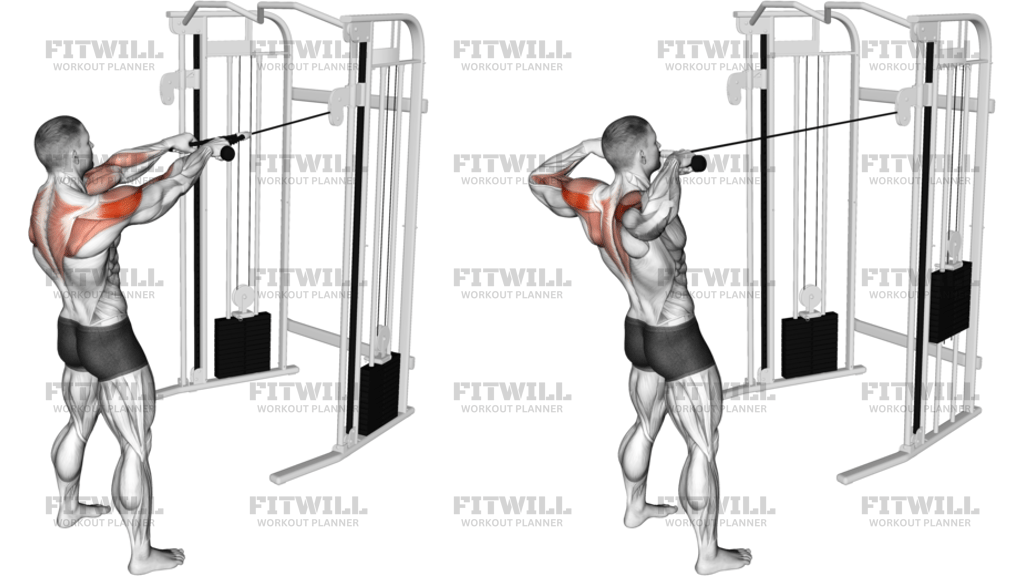
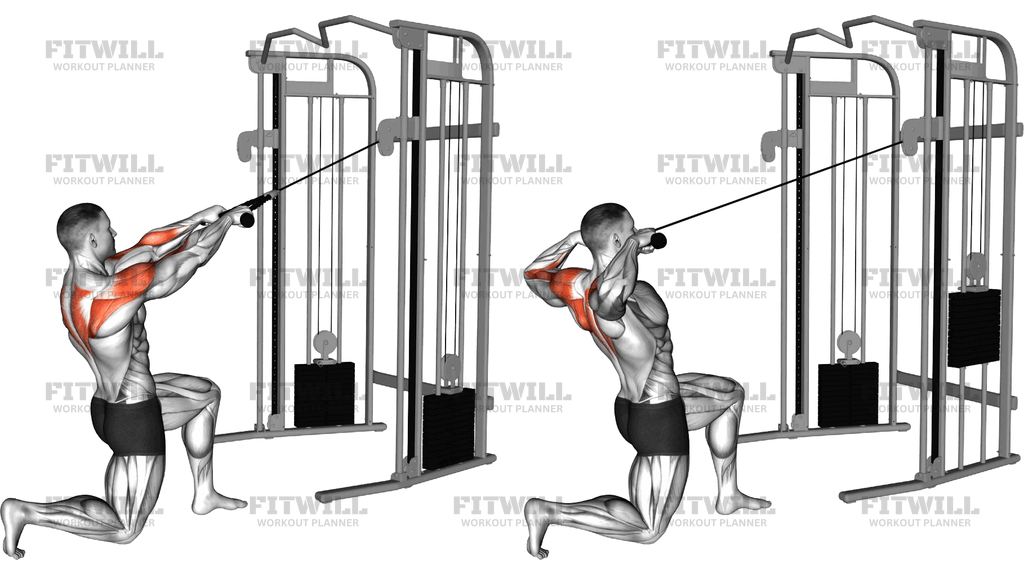
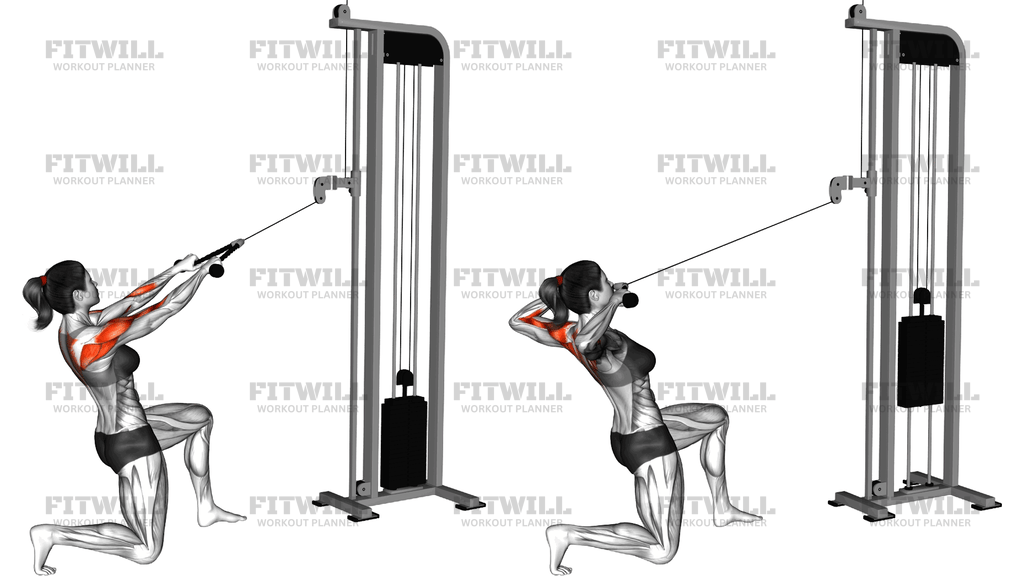
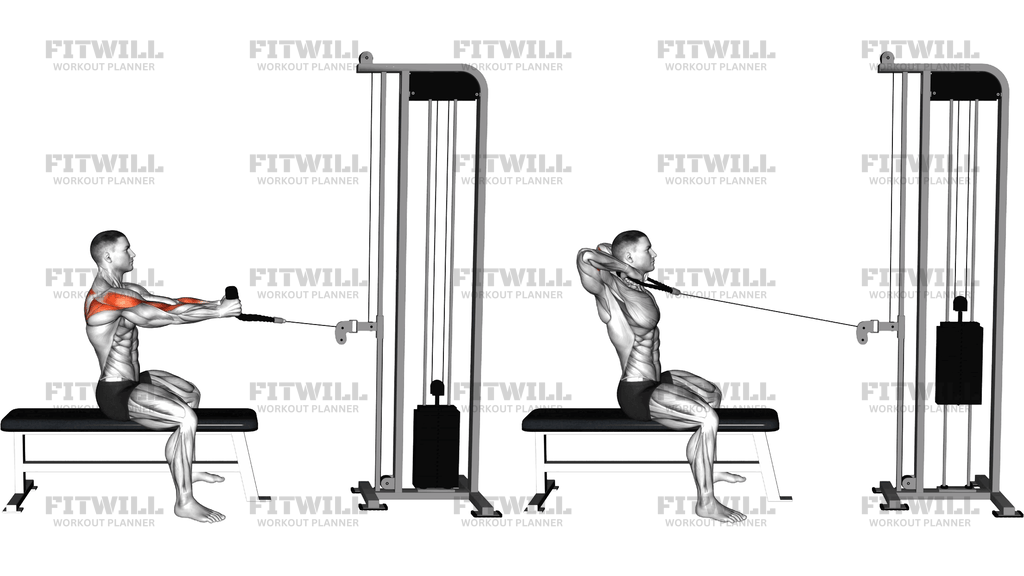
Cable Sitting Bench Face Pull (With Rope)
The Cable Sitting Bench Face Pull (With Rope) is a seated variation of the classic face pull, performed by attaching a rope to a cable machine set around upper-chest to eye level and pulling the rope handles back toward the head while sitting upright on a flat bench. Because the seated position removes the momentum and lean-back that creeps into standing versions, it forces the rear shoulders and upper back to do the work honestly, rep after rep.
This movement targets the rear deltoids primarily, with strong involvement from the middle and lower traps, the rhomboids, and the small external rotators of the shoulder. Those are exactly the muscles that tend to lag behind the chest and front shoulders in most training programs, especially for people who spend long hours at a desk or push a lot of pressing volume. Strengthening them supports better shoulder mechanics and helps balance out the physique from the side.
Setup matters more here than in most pulling exercises. The cable pulley should sit at or slightly above face height, the bench should be far enough away that the arms stay slightly short of full extension at the start, and your torso should stay vertical throughout. If the pulley is too low, the exercise drifts toward a row; if you sit too close, the range of motion shortens and the rope runs out of tension at the finish.
Execution is simple in outline: grab the rope with an overhand, thumbs-back grip, sit tall, and pull the handles toward the sides of your head while letting your elbows flare out wide and slightly up. At the end of the pull, the rope ends should be near your ears, your elbows should point outward, and your shoulder blades should be drawn together. The key is that the hands finish behind the elbows, not in front of them — that detail is what separates a real face pull from a sloppy high row.
This exercise suits lifters at nearly every level. Beginners benefit from learning to feel their rear shoulders working, while experienced trainees use it as a high-rep accessory after pressing work or as a standalone shoulder-health movement. Because the cable provides smooth, constant tension and the seated position is very stable, it is easy to control in both directions and easy to progress in small weight jumps.
Keep the load modest. The muscles involved are small, and the most common failure on this exercise is stacking on weight, turning the movement into a body-english row with a shortened range. Choose a weight you can pause briefly at the back of each rep, exhale on the pull, and let the rope's tension pull your hands forward under control rather than slamming the stack back down between reps.
[ Workout Log & Planner ]
Put your next workout in Fitwill
Keep your plan and training log ready when you are.


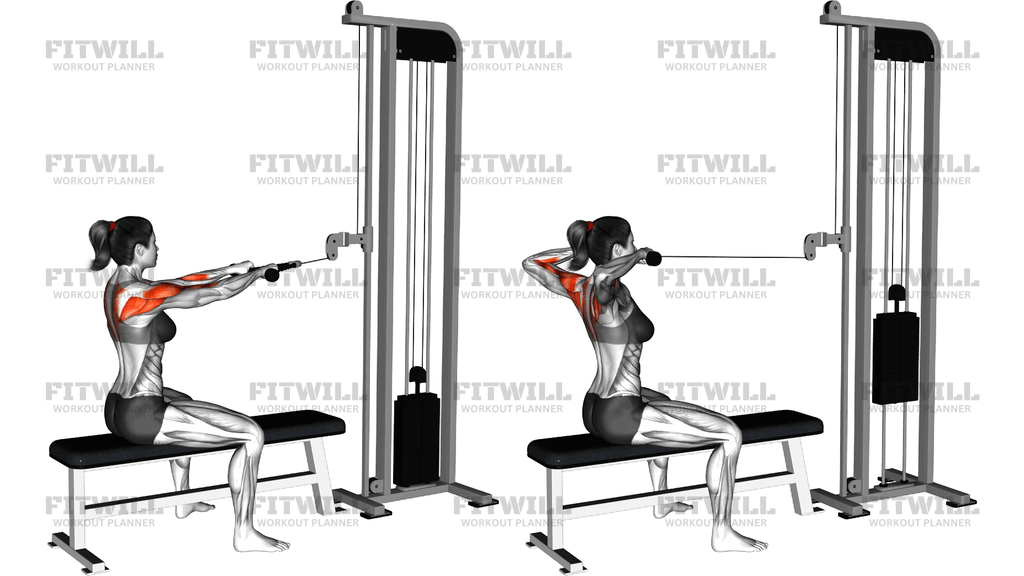
Instructions
- Set the cable pulley on the cable machine to roughly face height — around your upper chest to eye level when seated — and attach the rope handle.
- Place a flat bench facing the machine, far enough back that your arms can hold the rope with a slight bend in your elbows at full reach, then sit upright on the bench with feet flat on the floor.
- Grab one rope end in each hand with an overhand grip, thumbs pointing back toward you, and extend your arms toward the pulley without locking the elbows.
- Sit tall, lift your chest, and lightly brace your core so your torso stays vertical — avoid leaning back as you pull.
- Exhale and pull the rope toward your face by driving your elbows out wide and slightly upward, keeping them higher than your wrists throughout.
- Finish with the rope ends near the sides of your head, elbows pointing out, hands pulled back behind your elbows, and shoulder blades squeezed together.
- Pause for a beat at the end position and feel the contraction across your upper back and the backs of your shoulders.
- Inhale and slowly extend your arms forward, letting the rope's tension carry your hands back under control without letting your shoulders slump forward.
- Stop just short of letting the weight stack touch down between reps to keep constant tension on the rear shoulders.
- Complete your set, then stand carefully and return the stack to rest before letting go of the rope.
Tips & Tricks
- If you feel this mostly in your biceps or the front of your shoulders, the pulley is probably too low or your elbows are dropping — raise the pulley toward eye level and consciously lead the pull with your elbows.
- Sitting too close to the machine shortens the range so the rope runs out of tension before your hands reach your head; slide the bench back until your arms almost straighten at the start.
- Do not turn this into a high row. If your hands travel toward your chest instead of toward your face, drop the weight and refocus on the elbow path.
- Use a thumbs-back grip and let the rope ends rotate slightly outward as you pull — this naturally encourages shoulder external rotation, which is a big part of the exercise's value.
- Keep your ribs stacked over your hips on the bench. If you catch yourself rocking backward on each rep, the weight is too heavy for the seated position.
- Shrugging your shoulders up toward your ears at the start steals work from the rear delts; set your shoulders down and back before initiating the pull.
- Higher reps tend to work better here — sets of 12 to 20 with a light-to-moderate load usually beat heavy sets of 6 on this movement.
- Control the return for a two-count. Letting the stack yank your arms forward and round your shoulders between reps wastes half the exercise.
- If you cannot keep your torso upright on a flat bench, brace your feet firmly or try a bench with a slight back support rather than leaning away from the cable.
Frequently Asked Questions
Which muscles does the Cable Sitting Bench Face Pull (With Rope) work?
It primarily works the rear deltoids, with the middle and lower traps, rhomboids, and the shoulder's external rotators doing substantial supporting work. The biceps assist during the pull but should not dominate the movement.
How high should I set the cable pulley for this seated version?
Set it around face height — roughly upper chest to eye level while you are seated on the bench. A lower pulley turns the movement into a row and reduces the external rotation that makes face pulls effective.
Is the Cable Sitting Bench Face Pull (With Rope) good for beginners?
Yes. The seated position is stable, the cable path is guided, and light loads are easy to manage. Beginners should start with a very modest weight and prioritize feeling the rear shoulders before adding load.
How is this different from a standing face pull?
Sitting on the bench eliminates the backward lean and leg drive that often creep into standing face pulls, so your torso stays vertical and the rear shoulders and upper back handle the load on their own.
Why do my elbows keep dropping during the pull?
That is usually a sign the weight is too heavy or the movement has drifted toward a row. Lighten the load and cue yourself to lead with the elbows, keeping them above wrist height as the rope travels back.
What can I substitute if my gym has no rope attachment?
Two single handles on the same cable, or a resistance band anchored at face height, both work. The key is two separate points of contact so your hands can travel to the sides of your head while your elbows flare wide.
How many reps and sets should I do?
Two to four sets of 12 to 20 controlled reps works well for most people. The muscles involved are small, so moderate loads and higher reps generally produce better quality contractions than heavy, grindy sets.
When should I do this exercise in my workout?
It fits well as an accessory after pressing exercises, as a finisher on shoulder or upper-back days, or as a standalone movement on upper-body days when your rear shoulders need dedicated work.
Is it safe to pull the rope all the way back past my head?
Yes, provided the load is controlled and your shoulders stay relaxed rather than shrugged. The end position with the rope near your ears and elbows wide is exactly where the target muscles finish their range — just never force it with heavy weight.
Should my shoulder blades move during the Cable Sitting Bench Face Pull (With Rope)?
Yes, they should squeeze together as you pull and spread apart as your arms return. Keeping them rigidly pinned turns the movement into a pure arm exercise and reduces the work your upper back gets.