Bodyweight Standing Alternate Chest Fly
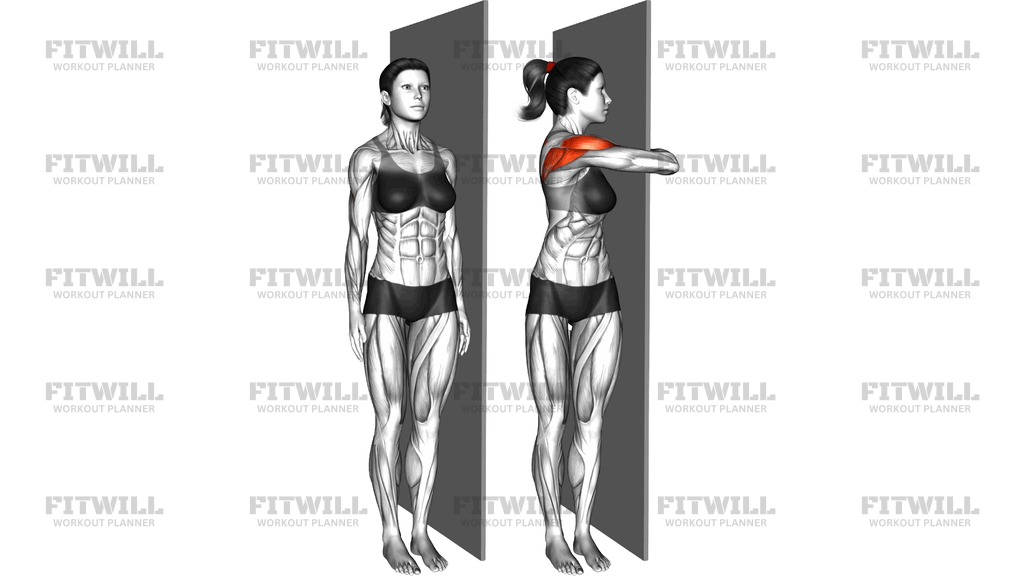
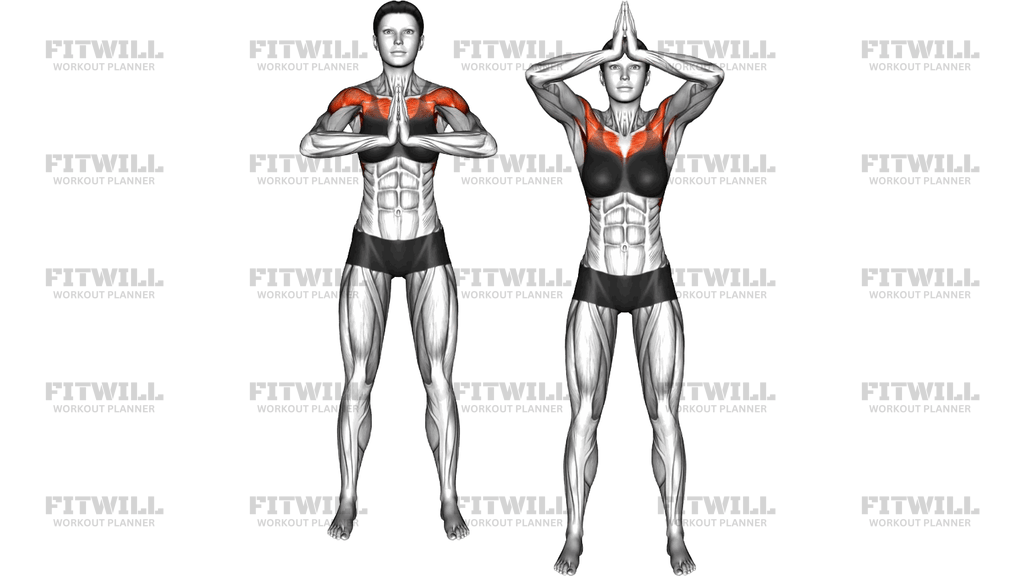
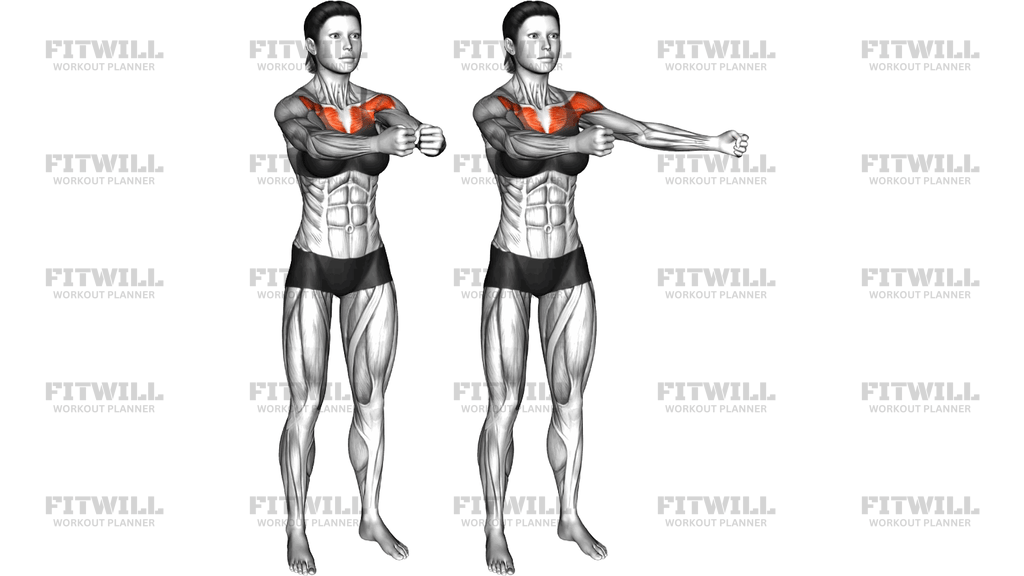
The Bodyweight Standing Alternate Chest Fly is a standing, equipment-free movement that mimics the arc of a cable or machine chest fly using nothing but your own arm position and muscular tension. You start with both arms extended straight out in front of your chest, fists together, then sweep one arm out to the side in a wide arc while the other stays forward, before bringing it back in and repeating on the other side. Because there is no external load, the challenge comes from actively squeezing the chest to control the arc and to press the fists together at the front.
This exercise is a good fit for people training at home or traveling with no equipment, beginners learning what a chest fly contraction is supposed to feel like, and more experienced lifters who want a low-fatigue way to warm up the chest before pressing or to finish a session with a focused pump. It also works well as a teaching tool: the standing position and empty hands make it easy to feel whether you are actually using the chest or just swinging the shoulder.
The main muscles at work are the pectorals, with particular emphasis on the upper, clavicular portion of the chest since the arms travel at roughly shoulder height across the body. The front delts assist on every arc, and the core, upper back, and shoulder stabilizers work isometrically to keep your torso tall and your forward arm from drifting. Because you work one side at a time, it also reveals and helps correct left-right differences in chest control.
Setup matters more than it looks in such a simple movement. Stand with feet about hip-width apart, knees soft, ribs stacked over the pelvis, and arms extended forward at chest height with a slight bend locked into the elbows. If you let the elbows flare, the shoulders shrug, or the lower back arch, the arc loses tension and the chest stops doing the work. Keeping the arms at chest height, not above, is what keeps the emphasis on the upper chest fibers.
To execute it well, think of the hands pushing through an invisible wall of resistance rather than simply swinging. Press the fists firmly together at the front, sweep one arm out until it is roughly in line with your shoulders, then pull it back in with the same deliberate squeeze and switch sides. The tempo should be slow enough that you feel the chest on both the opening and the closing of each arc.
A few practical points keep this safe and effective. There is no load on the joints, but repeated fast arcs with locked elbows and shrugged shoulders can still irritate the front of the shoulder, so keep the elbow bend soft and the neck relaxed. Start with modest reps, focus on the quality of each squeeze, and only add volume once the movement feels smooth and controlled on both sides.
[ Workout Log & Planner ]
Put your next workout in Fitwill
Keep your plan and training log ready when you are.


Instructions
- Stand upright with your feet about hip-width apart, knees slightly bent, and your weight spread evenly across both feet.
- Raise both arms straight out in front of your chest to shoulder height, elbows soft with a slight bend, and press your fists firmly together at the front.
- Roll your shoulders back and down, brace your core lightly, and keep your ribs stacked over your hips so your torso stays tall.
- Keeping the left arm extended forward and steady, sweep the right arm out to the side in a wide arc until it is roughly in line with your shoulders.
- Pause briefly at the open position, feeling the stretch across the right side of your chest.
- Pull the right arm back in along the same arc and squeeze the fists together hard in front of your chest, focusing on the pecs driving the movement.
- Repeat the arc with the left arm while the right stays forward, completing one rep per side.
- Breathe steadily throughout: inhale as the arm opens out, exhale as you squeeze it back to the front.
- Continue alternating sides for your target number of reps, keeping the forward arm from drifting up, down, or across the midline.
- To finish, lower both arms under control, shake out the shoulders, and reset your posture before the next set.
Tips & Tricks
- The most common mistake is turning this into a fast arm swing. If your torso starts rocking or your fists bounce off each other, slow the tempo down and treat each arc as if you were moving through thick water.
- Keep the bend in your elbow constant for the entire set. Straightening the arm as it opens shifts tension away from the chest and toward the elbow and front of the shoulder.
- Watch that the forward arm stays glued at chest height. It tends to drop as fatigue sets in, which quietly turns the exercise into a front raise rather than a fly.
- Squeeze your fists together actively at the front instead of just touching them. That isometric press is where most of the chest contraction in this bodyweight version comes from.
- If you feel the work in the front of your shoulders rather than your chest, lower your arms an inch or two and think about leading the arc from your elbow and armpit, not your hand.
- Avoid shrugging as the arm opens. Keep the space between your ear and shoulder on the working side visible in a mirror or, mentally, imagine your shoulder blade staying heavy.
- Alternate sides evenly and count reps per side rather than total. This keeps a weaker or less coordinated side from getting half the volume.
- Because there is no external resistance, muscle-building value depends on volume and intent. Higher reps with a deliberate squeeze, such as 12 to 20 per side, work better than a handful of quick reps.
- Use this before bench or push-up work as an activation drill with one or two easy sets, or after pressing as a finishing pump when the muscles are already warm.
Frequently Asked Questions
Which muscles does the Bodyweight Standing Alternate Chest Fly target?
It primarily targets the pectorals, especially the upper clavicular portion of the chest, with the front delts assisting on each arc. The core and shoulder stabilizers also work to hold your posture and keep the forward arm steady.
Can the Bodyweight Standing Alternate Chest Fly build muscle without any equipment?
It can contribute to muscle growth, but only with enough volume, slow tempo, and hard deliberate squeezes, since there is no external load. It is best used as a warm-up, teaching tool, or finishing pump alongside push-ups or pressing work rather than as your only chest exercise.
Why should my arms stay at chest height during the Bodyweight Standing Alternate Chest Fly?
Arms extended forward at shoulder height line the movement up with the upper chest fibers, which is where the emphasis belongs. Raising the arms higher shifts work toward the shoulders and can pinch the front of the shoulder joint.
Is the Bodyweight Standing Alternate Chest Fly suitable for beginners?
Yes, it is one of the safest ways to learn what a chest fly contraction feels like because there is no weight and no machine to set up. Beginners should focus on slow, controlled arcs and a firm fist squeeze rather than high reps.
My shoulders do the work instead of my chest—how do I fix that?
Lower your arms slightly, keep a constant soft bend in the elbows, and initiate each arc from the elbow and armpit rather than leading with the hand. Actively pressing the fists together at the front also helps the pecs take over.
What can I use instead of the Bodyweight Standing Alternate Chest Fly?
Cable flies, dumbbell flies, or resistance band flies train the same arc with external resistance. If you stay equipment-free, slow push-up variations with a pause at the top are the closest bodyweight substitute for chest work.
How many reps should I do per side?
For activation, one or two sets of 8 to 12 controlled reps per side is enough. For a finishing pump or stand-alone home work, aim for 12 to 20 reps per side with a strong squeeze at the front of each rep.
Is it safe to do the Bodyweight Standing Alternate Chest Fly every day?
Because the load is minimal and the joints are not heavily stressed, frequent practice is generally fine for most people. Still, the chest needs recovery to adapt, so treat it as a light drill on most days rather than a hard training stimulus every session.
Why does the exercise work one arm at a time?
The alternating pattern lets one arm hold the forward position while the other travels the fly arc, which challenges coordination and exposes side-to-side differences in chest strength and control. It also keeps constant tension on the working side without needing any equipment.