Cable Standing Face Pull (With Rope)
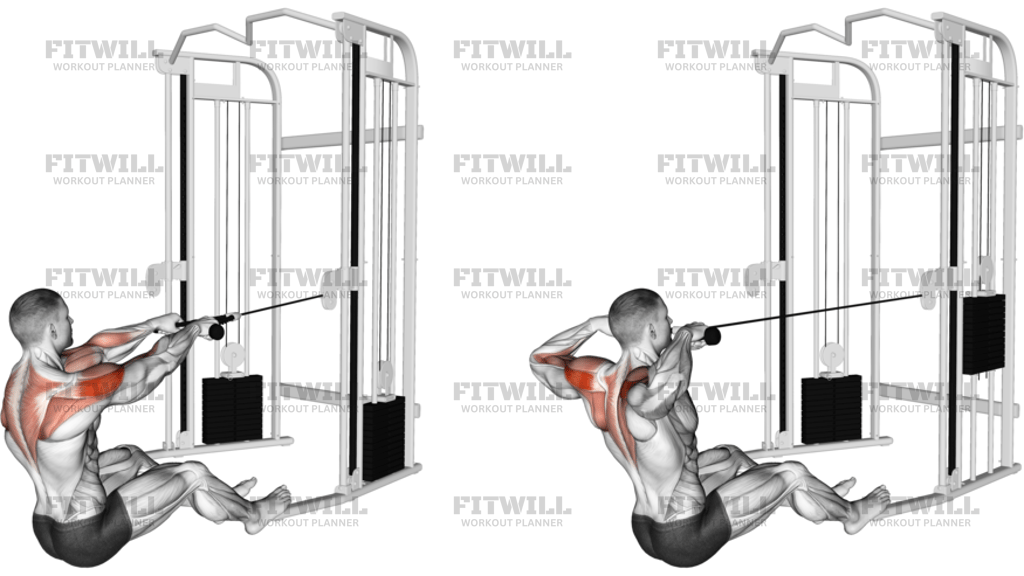
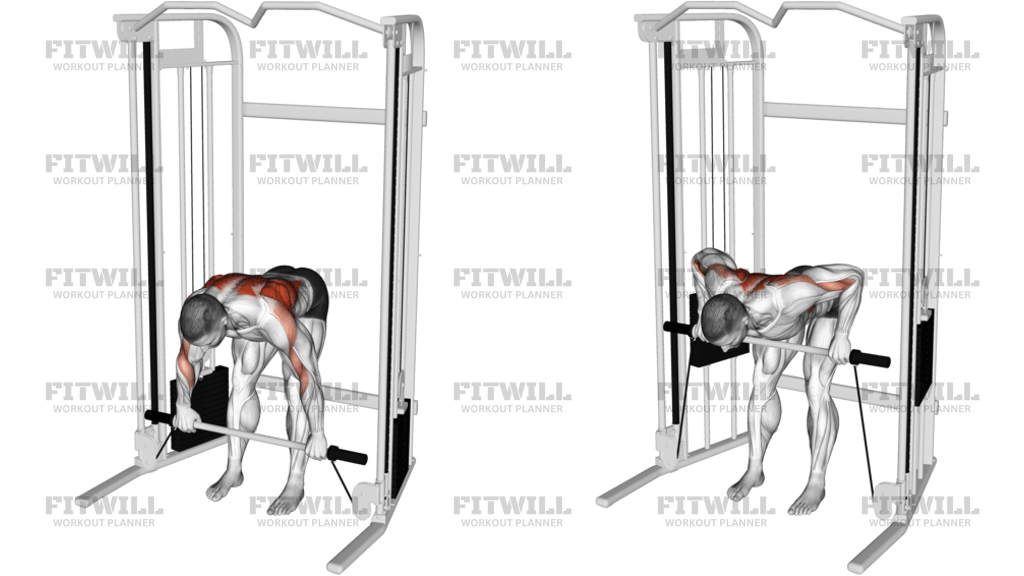
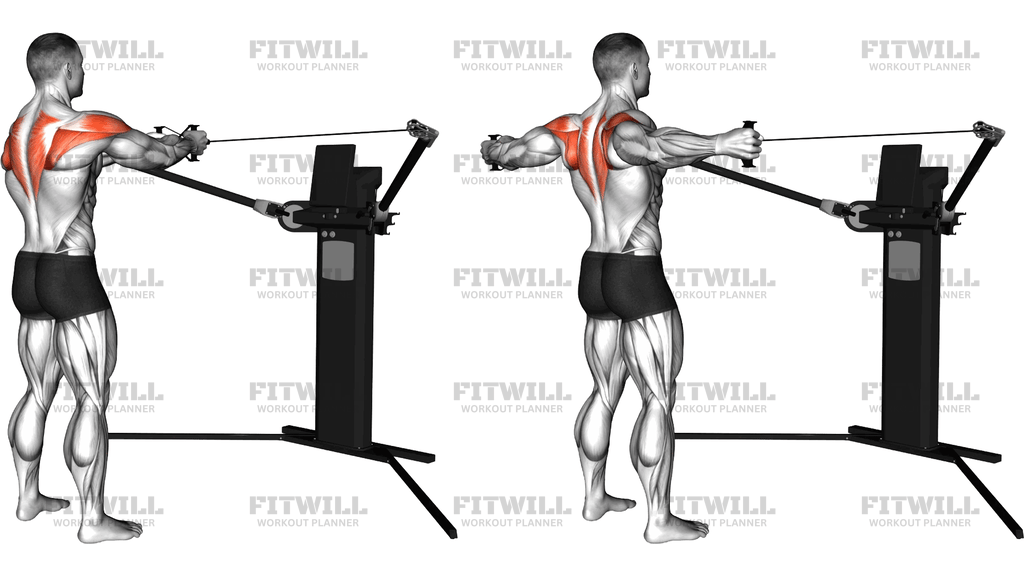
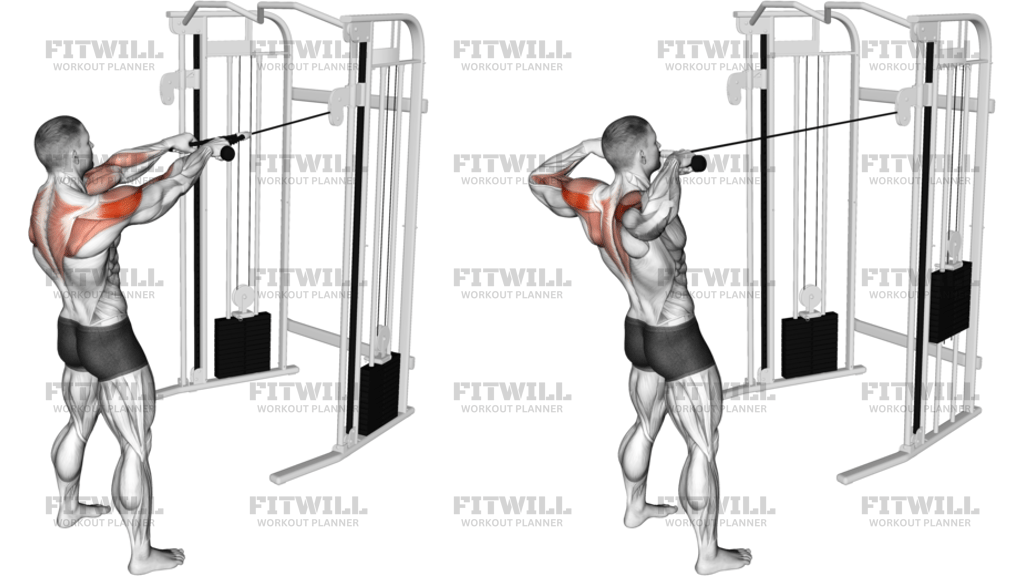
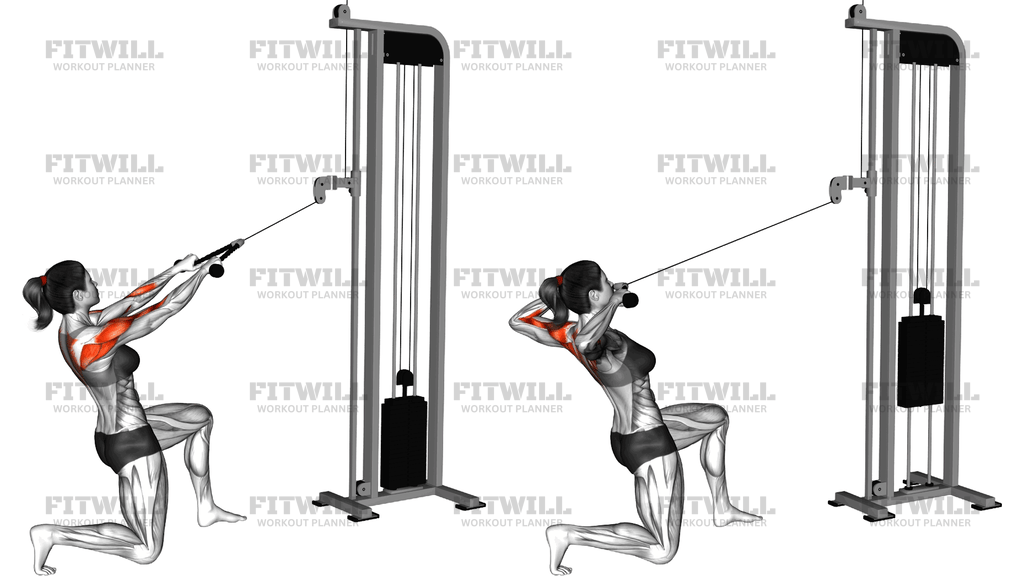
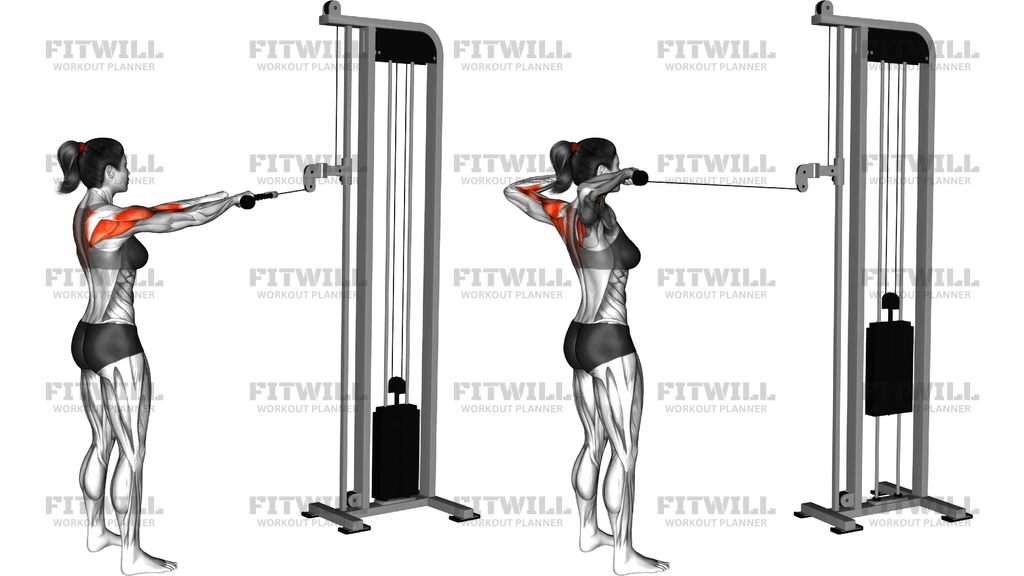
The Cable Standing Face Pull (With Rope) is a pulling exercise performed at a cable station with a rope attachment set at roughly upper-chest to face height. You stand facing the machine, grip the rope ends with a neutral grip, and pull the rope toward your face while separating your hands so they finish on either side of your head, elbows flared out high. The highlighted musculature in the movement makes it clear what this exercise is about: the rear delts, mid traps, and rhomboids do most of the work, with the rotator cuff and biceps assisting.
This is one of the best exercises for the often-neglected back of the shoulder and upper back. Most pressing-focused training leaves these areas underworked, which can contribute to rounded shoulders and imbalanced development. Face pulls train horizontal abduction and scapular retraction together, two motions that pressing and vertical pulling rarely cover well.
The standing setup matters more than it looks. Facing the cable with a staggered or hip-width stance forces your trunk to stabilize while your arms pull, and the slight backward lean many lifters naturally adopt helps counterbalance the cable's pull. Keep the rope high enough that you pull slightly downward or straight back toward your face, not low toward your chest, or the movement turns into a generic row.
Execution quality comes down to the finish position. At the end of each rep your hands should be beside your ears, elbows wide and roughly level with or slightly above your wrists, shoulder blades squeezed together. If your elbows drop or your torso twists to move the weight, the load is too heavy for the target muscles.
Face pulls fit into almost any program. They work well as a warm-up primer before benching or overhead pressing, as a higher-rep accessory on pull days, or as a regular corrective inclusion for people who spend long hours at a desk. Because the cable provides smooth tension through the whole range, the exercise is joint-friendly and easy to progress in small increments.
Keep the weight moderate and the reps controlled, typically 10-15 or more per set. The rear delts and traps respond better to strict technique and full range than to heavy loads moved with momentum.
[ Workout Log & Planner ]
Put your next workout in Fitwill
Keep your plan and training log ready when you are.


Instructions
- Set the pulley of a cable machine to upper-chest or face height and attach a rope with two ends.
- Stand facing the machine with feet hip-width apart or in a comfortable staggered stance, and grasp one rope end in each hand using a neutral grip with thumbs pointing back toward you.
- Step back until your arms are fully extended in front of you with light tension on the cable, then brace your core and keep your ribs stacked over your hips.
- Initiate the pull by drawing your shoulder blades back and down as you drive your elbows out wide and back toward your face.
- Pull until your hands are on either side of your head at ear level, elbows flared out and pointing back, with the rope ends near or slightly behind your ears.
- Squeeze your rear delts and mid traps hard for a brief pause at the finish position.
- Slowly extend your arms forward under control, letting your shoulder blades protract at the end range without letting the weight stack slam down.
- Exhale as you pull toward your face and inhale as you return to the start.
- Keep your torso upright and resist the urge to lean back or twist as fatigue sets in.
- Complete the set, then release one rope end at a time and let the stack reset gently.
Tips & Tricks
- Think 'elbows wide, hands out' rather than 'pull with your arms' — if your biceps are burning and your upper back isn't, you're curling the rope instead of rowing it toward your face.
- A common mistake is pulling the rope toward your chest with elbows low; this turns the set into a standard row and shifts work away from the rear delts, so keep the pull aimed at your face or forehead.
- If you have to step backward or wrench your torso to finish a rep, the weight is too heavy — drop it until the last rep looks like the first.
- Let your shoulder blades spread forward at full arm extension instead of keeping them pinned back; the protraction-retraction cycle is a big part of what makes this exercise valuable.
- Don't shrug your shoulders up toward your ears as you pull; keep the upper traps relatively relaxed so the mid traps and rear delts do the job.
- Using an overhand grip with knuckles forward changes the feel at the shoulder; the neutral grip with thumbs back is generally more comfortable and lets the elbows travel higher.
- Pause for a full second at the finish rather than bouncing out of the contraction — the rear delts respond to time under tension more than heavy loading.
- If the cable pulls you up onto your toes, widen your stance or take a small step back so your base can handle the line of pull.
- Face pulls pair naturally after heavy pressing; doing them while the shoulders are warm encourages quality reps at lighter loads.
Frequently Asked Questions
What muscles does the Cable Standing Face Pull (With Rope) work?
The primary movers are the rear deltoids, mid and lower trapezius, and rhomboids. The rotator cuff muscles assist with the external rotation at the end of the pull, and the biceps help flex the elbows.
What height should I set the cable pulley for face pulls?
Set it at approximately upper-chest to face height so the cable pulls toward your face on a nearly level or slightly downward line. A much lower setting turns the movement into a standard row.
How is the Cable Standing Face Pull (With Rope) different from a cable row?
A row pulls the handles toward your torso with elbows tucked and targets the lats more heavily, while a face pull pulls toward the face with elbows flared high, emphasizing the rear delts and mid traps.
How many reps and sets should I do?
Face pulls work best at moderate loads for 10-15 reps or slightly higher, for 2-4 sets. Because the target muscles are small, prioritize strict technique over adding weight.
Can beginners do this exercise?
Yes, it's very beginner-friendly since the cable path guides the movement and the load can be set very light. Start with a weight you can control for 12-15 clean reps before progressing.
Why do my biceps fatigue before my upper back during face pulls?
That usually means you're pulling with your arms instead of driving the elbows back with your shoulder blades. Focus on initiating each rep with scapular retraction and think of your hands as hooks holding the rope.
Should I stand exactly facing the cable or use a staggered stance?
Either works. A square hip-width stance is fine for lighter loads, while a slight staggered stance gives you a more stable base against the cable's pull as the weight gets heavier.
What can I substitute if my gym has no rope attachment?
You can use two single handles at the same pulley height, or perform face pulls with a resistance band anchored at face height. The key is preserving the high-elbow pull toward the face.
Is it safe to do face pulls every day?
Daily light-band face pulls are generally well tolerated, but with a loaded cable, 2-4 sessions per week with a rest day between is plenty. Stop if you feel pinching or sharp pain at the shoulder.
Should my elbows finish above or below my wrists at the end of the pull?
Elbows should be roughly level with or slightly above your wrists, flared wide at ear height. If your hands end up higher than your elbows, you're rotating the rope with your arms rather than pulling with your upper back.