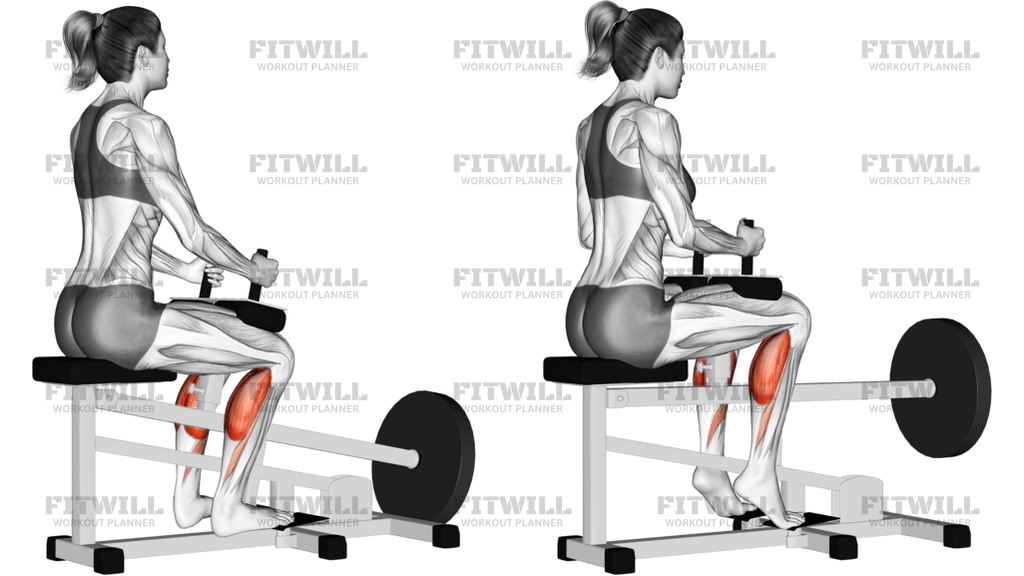
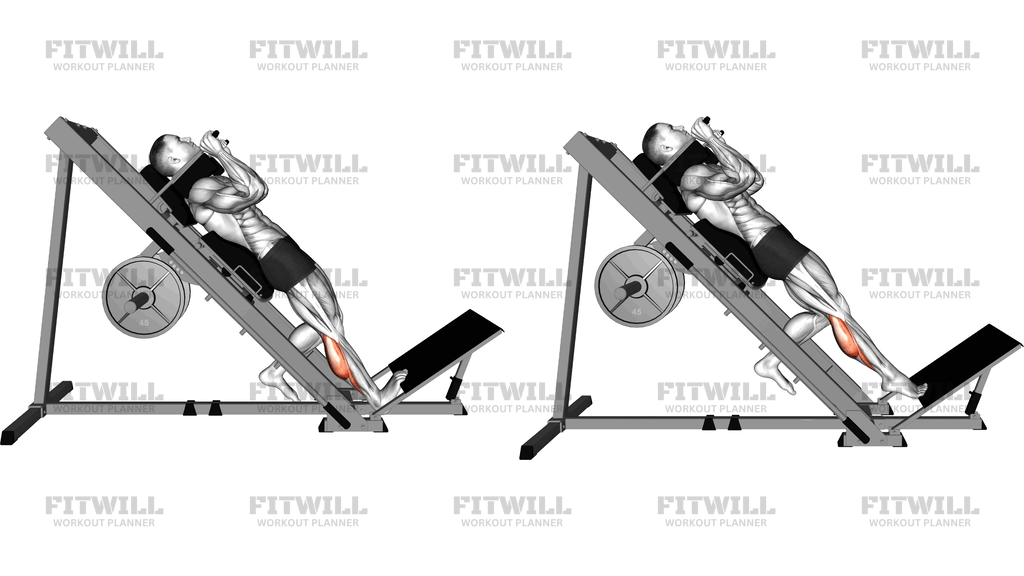
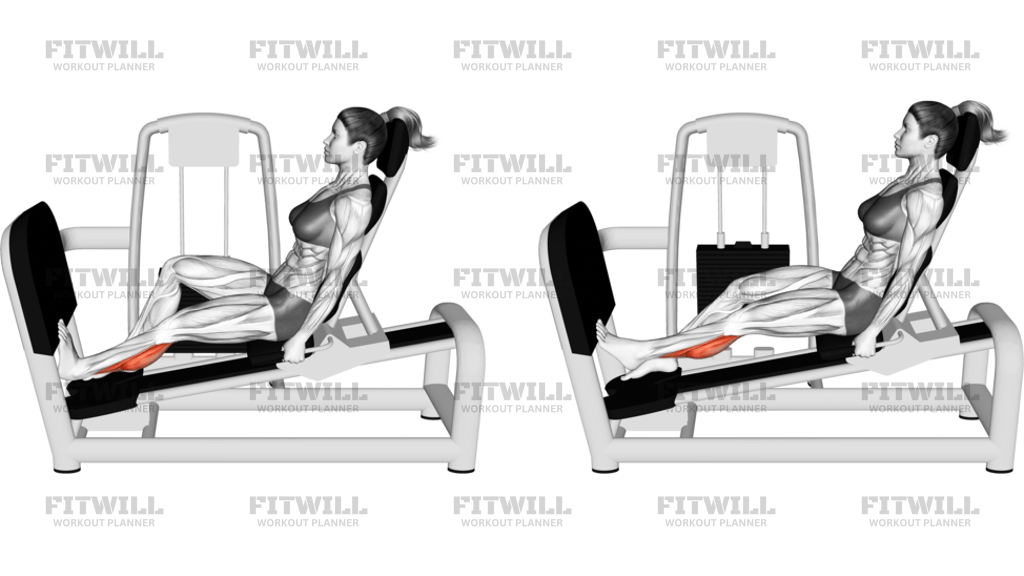
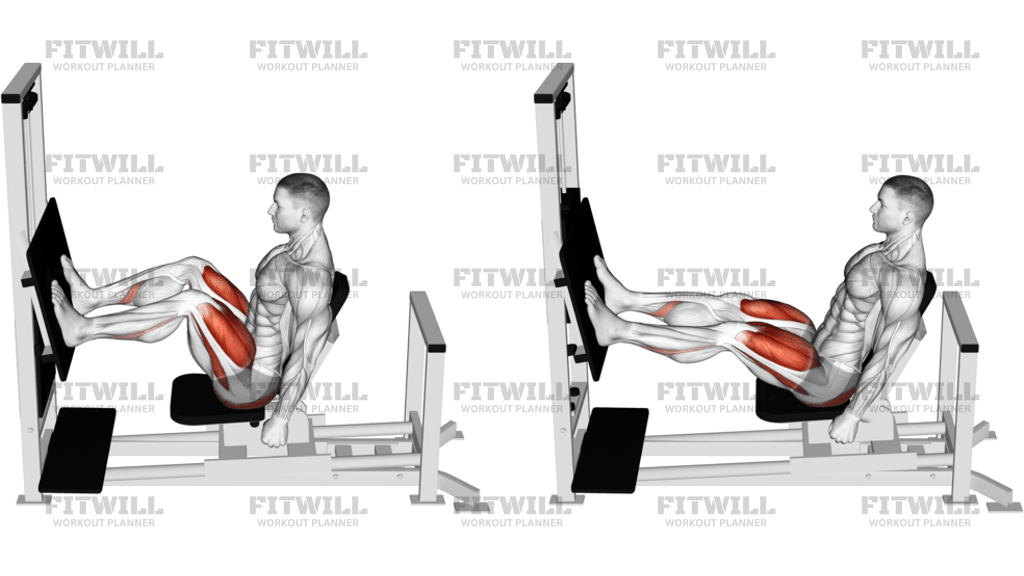
Lever Standing Single Leg Calf Raise
The Lever Standing Single Leg Calf Raise is a machine-based calf exercise performed one leg at a time on a standing calf raise station. You position your shoulders under the machine's padded levers, place the ball of one foot on the edge of the step platform, and drive up onto your toes before lowering your heel below the level of the platform. The working calf is highlighted through the full range, while your hands grip the handles for balance and the non-working leg either hovers behind you or rests lightly against the working leg.
This exercise primarily targets the gastrocnemius, the two-headed muscle that gives the calf its visible shape, with strong support from the soleus underneath and the smaller stabilizers around the ankle. Because it is performed standing with the knee straight, the gastrocnemius works through a long range, especially when you let the heel drop below the platform edge at the bottom. Training one leg at a time exposes left-right differences that a two-legged version can hide, which makes it a useful tool for correcting a weaker or smaller calf.
The machine setup is what makes this movement practical. The shoulder pads supply the resistance directly over your spine and hips, so you do not have to hold a heavy dumbbell in one hand or fight for balance the way you would doing single-leg raises with free weight. That lets you focus entirely on clean ankle movement: a full stretch at the bottom, a strong press to the top, and a deliberate pause before the next rep. The pad height should let you stand tall without rounding or shrugging into the machine.
This movement suits lifters who already have some training background, but beginners can use it too with light weight, since the machine guides the load path. It fits well into leg days, lower-body strength blocks, or dedicated calf work at the end of a session. Runners, jumpers, and lifters recovering ankle strength after time off often benefit from single-leg work because the working ankle handles load in isolation, closer to how it operates during walking and running.
Form points worth respecting: keep the knee of the working leg essentially straight but never locked hard, keep the hips stacked over the standing foot, and resist the urge to bend and extend the knee to help the weight up. If the ball of the foot slides forward off the platform edge, reset before continuing, because a shortened base reduces the stretch and shifts stress onto the toes. Start lighter than you think you need, since single-leg loading roughly doubles the demand on the working calf compared with a two-legged set at the same weight.
[ Workout Log & Planner ]
Put your next workout in Fitwill
Keep your plan and training log ready when you are.


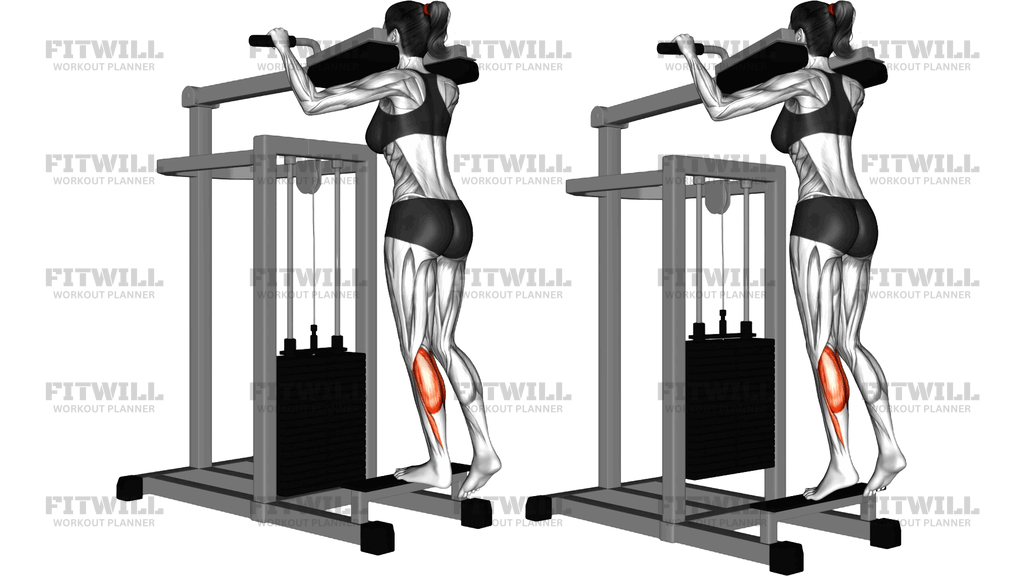
Instructions
- Set the shoulder pads of the standing calf raise machine so they rest comfortably on top of your shoulders when you stand tall underneath them.
- Place the ball of one foot in the center of the step platform with the heel extending off the edge, then position your free leg behind the working leg or hook it lightly behind your ankle.
- Grip the front handles firmly, lift the pads off the weight stack by straightening your legs, and step into position with your hips stacked directly over the working foot.
- Brace your trunk and keep your knee straight but soft, making sure the load is carried through your skeleton rather than by shrugging your shoulders upward.
- Lower your heel slowly toward the floor until you feel a full stretch along the back of the calf, keeping the ball of the foot planted on the platform edge.
- Press through the ball of the foot and drive your heel up as high as it will go, squeezing the calf at the top without bending the knee to assist.
- Pause for a moment at the top, then lower under control so the heel travels back below the platform edge before the next rep.
- Exhale as you press up and inhale as you lower the heel, keeping the breathing rhythm steady throughout the set.
- Complete all reps on one leg, then switch feet, reposition the free leg, and match the rep count on the other side.
- When finished, guide the pads back onto the weight stack with your heels lowered before stepping off the platform.
Tips & Tricks
- Do not let the shoulder pads ride up or your shoulders creep toward your ears; if they do, the pad height is off or the weight is too heavy for your trunk to hold comfortably.
- Keep the ball of the foot fully in contact with the platform. If it slides forward during the set, the load is shifting onto your toes and the calf stretch is being lost.
- Avoid bouncing out of the bottom stretch. The stretch reflex makes the bounce feel productive, but a controlled pause at the bottom builds the calf through the range that most people skip.
- Resist bending the working knee to help the weight up. A knee that flexes mid-rep shifts work toward the soleus and turns the lift into a partial squat rather than a calf raise.
- Start with your weaker leg first so you can match the workload on the stronger side without inflating the weaker side's set.
- A slow three-second lowering phase is usually more effective for this machine version than adding extra weight, because single-leg loading already doubles the demand on the working calf.
- Keep your gaze forward and your torso vertical. Leaning on the handles or tilting toward the machine changes the force line over the foot and reduces the calf's contribution.
- If your foot cramps mid-set, lower the weight, shorten the pause at the top, and make sure you are not pointing the toes excessively at lockout.
- Hold the handles for balance only. Pulling on them turns the set into a partial pull-up and takes load off the ankle joint where the work should be happening.
Frequently Asked Questions
Which muscles does the Lever Standing Single Leg Calf Raise work?
The gastrocnemius is the primary muscle, with the soleus and the smaller ankle stabilizers assisting throughout the raise. Because the knee stays straight, the gastrocnemius is emphasized more than in a bent-knee calf variation.
Why perform the Lever Standing Single Leg Calf Raise one leg at a time instead of with both legs?
Single-leg work lets you spot and fix side-to-side differences in strength or calf size, and it places load on the working ankle in isolation. It also doubles the demand on the working calf without needing extra plates on the machine.
Can beginners do the Lever Standing Single Leg Calf Raise?
Yes, as long as they start with a light weight and hold the handles for balance. The machine's fixed path makes it easier to learn than a free-weight single-leg raise, but the balance demand is still higher than a two-legged set.
How far should my heel drop on the Lever Standing Single Leg Calf Raise?
Lower the heel until you feel a definite stretch along the back of the calf, ideally below the level of the platform. Do not force the bottom position so far that the foot rolls or the arch collapses inward.
Why does my foot slide forward off the platform during the set?
The foot usually slides when the ball of the foot is not centered on the platform edge at the start, or when the weight is heavy enough that the toes claw for grip. Reset your foot position and reduce the load if it keeps happening.
What can I use instead of a Lever Standing Single Leg Calf Raise?
A single-leg dumbbell calf raise on a step, holding a wall or rack for balance, is the closest substitute. A Smith machine single-leg calf raise with a plate under the ball of the foot is another option with a similar straight-knee loading pattern.
Should I pause at the top of each rep?
A one-second squeeze at the top helps you finish the range fully and reduces the temptation to rush through reps. Long isometric holds at the top are optional and better reserved for dedicated finisher work.
Is it safe to do the Lever Standing Single Leg Calf Raise every day?
Daily training is not necessary and can leave the calves under-recovered, especially with single-leg loads. Two to three focused sessions per week with adequate weight and controlled tempo is a more sustainable approach.
How do I set the shoulder pad height correctly?
Adjust the pads so they rest on top of your shoulders while you stand tall with nearly straight legs, without having to bend your knees or rise onto your toes to take the weight. If the pads are too low, you will crouch into them; too high, and you cannot reach the full stretch.