Suspension Front Raise
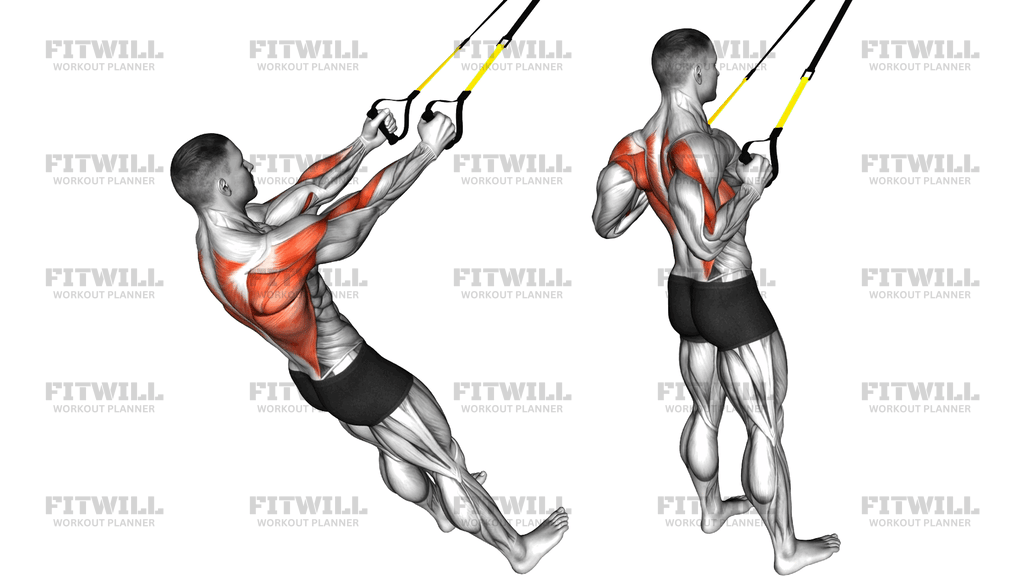
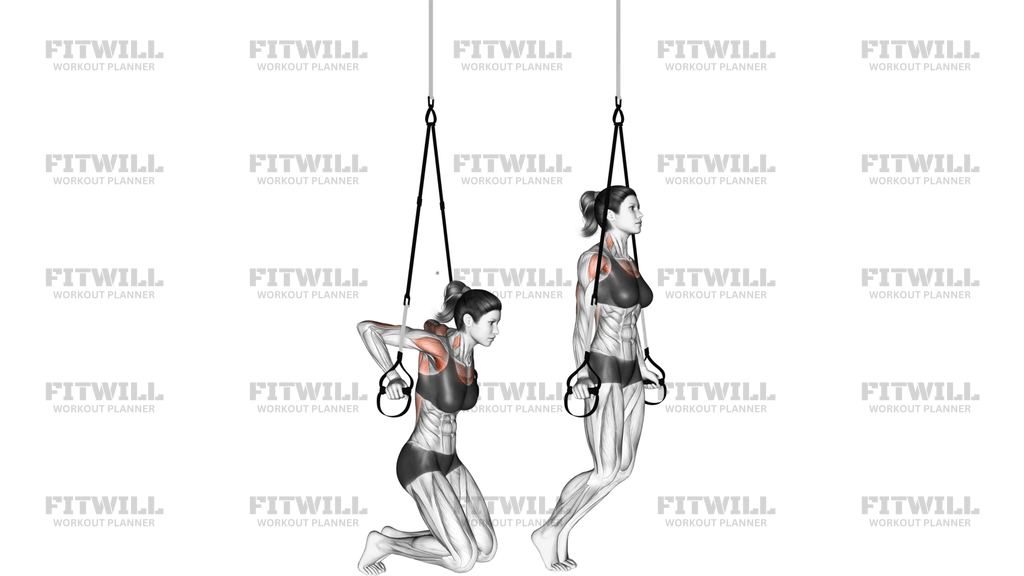
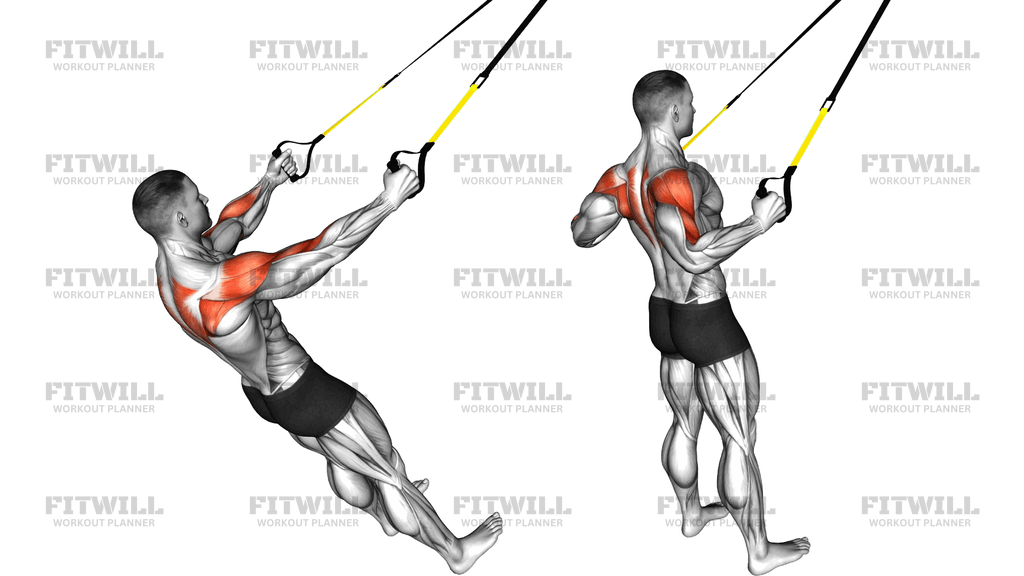
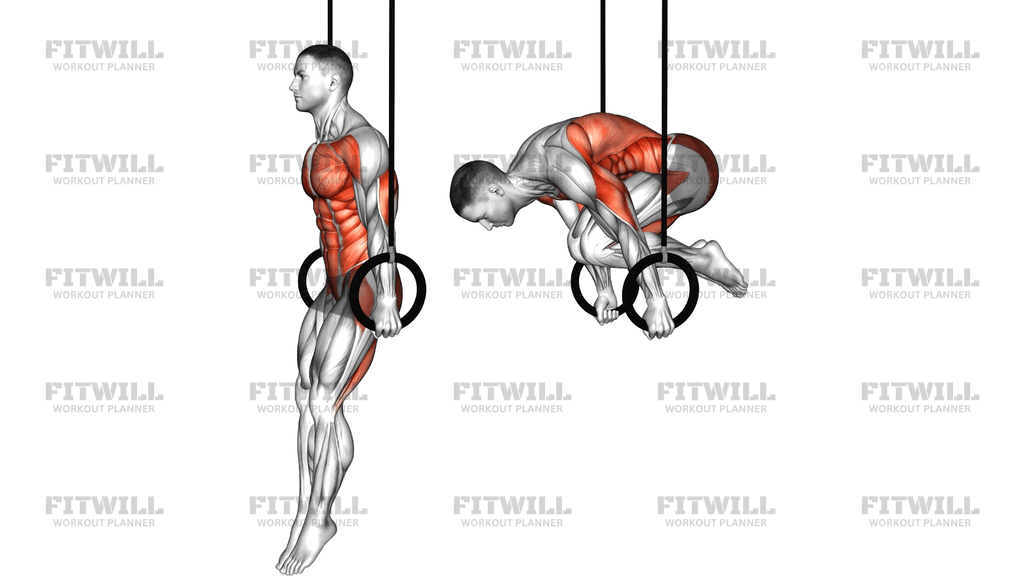
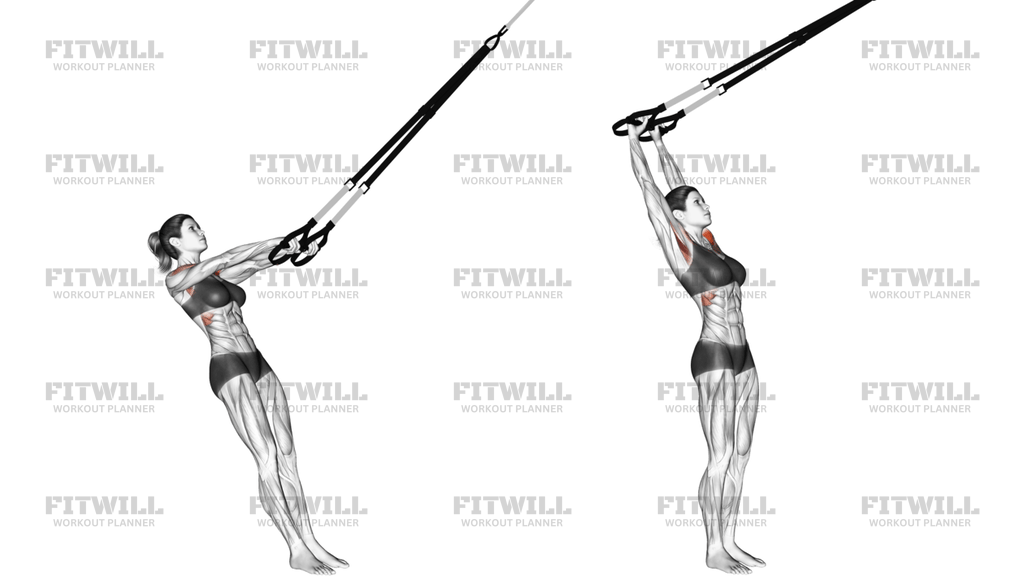
Suspension Front Raise is a suspension-based shoulder exercise that trains front-delt strength, shoulder control, and trunk stability through a long lever in front of the body. The straps create a constant challenge because your torso has to stay organized while the arms move from an angled reaching position into an overhead finish. That makes the exercise useful for building control, not just raising the arms.
The main emphasis is on the delts, especially the front portion of the shoulders, with the upper back, traps, rhomboids, triceps, and core helping to keep the body in line. In practice, the movement rewards clean shoulder flexion and a steady ribcage more than load. If the shoulders shrug up or the low back arches, the tension shifts away from the target and the repetition stops looking like a front raise.
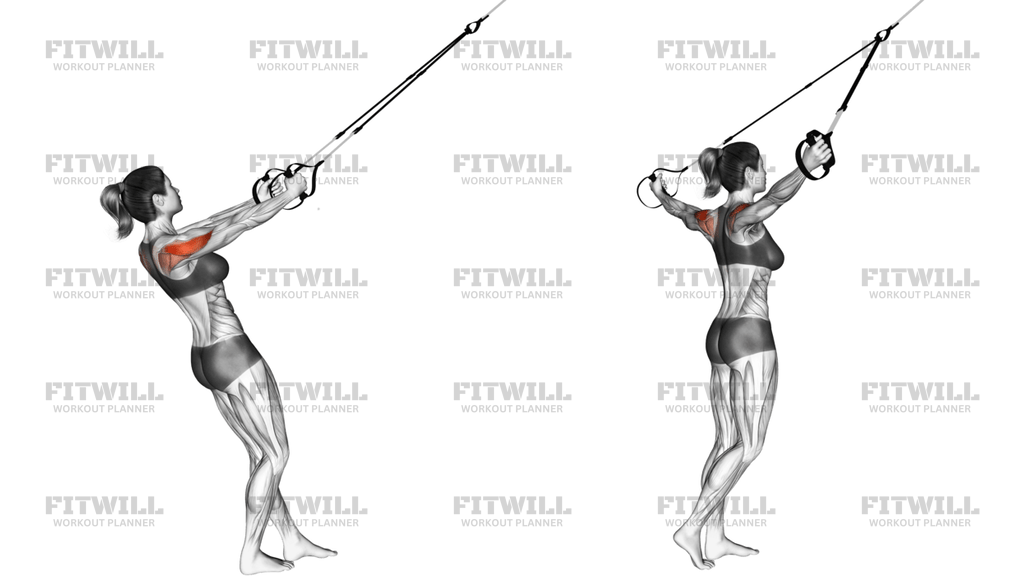
The setup matters because the start position determines the resistance and the quality of the path. Face the anchor, hold the handles, and lean back until the straps are taut and your body forms one long line from head to heels. Keep the feet planted, the neck relaxed, and the shoulders set down before you begin the lift. Small changes in foot distance or torso angle noticeably change how hard the raise feels.
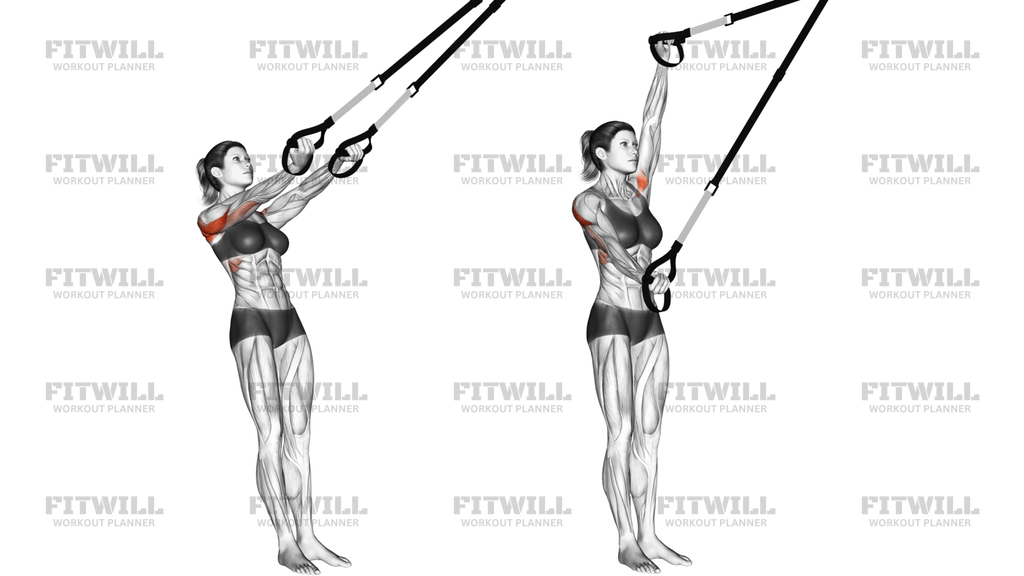
Each rep should travel in a smooth arc from the reaching start to a finish where the hands are overhead or slightly in front of the ears, depending on the strap angle. The elbows stay mostly straight but not locked hard, and the return should be slow enough that the shoulders keep working on the way down. This is an accessory exercise, so the goal is clean control, not swinging your body higher or using extra speed to cheat the top position.
It fits well in a shoulder warmup, an upper-body accessory block, or a circuit where you want shoulder endurance and posture awareness together. Use light to moderate resistance and stop the set when the torso starts to sway, the ribs flare, or the shoulders creep into the neck. Beginners can use it if they can maintain a stable lean and a controlled range without losing alignment.
[ Workout Log & Planner ]
Put your next workout in Fitwill
Keep your plan and training log ready when you are.


Instructions
- Face the suspension anchor, grab both handles, and step back until the straps are tight.
- Lean back into a straight line from head to heels with your feet hip-width apart and arms reaching in front of you.
- Set your shoulders down away from your ears and keep your ribs stacked over your pelvis.
- Brace your midsection before the first rep so your torso does not drift as the arms move.
- Raise the handles in a smooth arc until your hands reach overhead or just in front of your ears.
- Keep the elbows almost straight and let the shoulders do the work instead of bending the arms.
- Pause briefly at the top without shrugging or arching your lower back.
- Lower the handles under control to the starting reach while keeping tension in the straps.
- Exhale as you lift and inhale as you return, then repeat for the planned reps.
Tips & Tricks
- A longer step back makes the straps more horizontal and increases the lever arm at the shoulders.
- If your ribs pop up as the hands rise, reduce the range before you increase resistance.
- Keep the collarbones wide and the neck long so the traps do not take over the top half of the rep.
- Do not bend the elbows to turn this into a row; the movement should stay a front raise, not an arm pull.
- Slow the lowering phase so the front delts stay loaded through the return instead of dropping the straps.
- Keep the feet rooted and the body as a single plank to prevent swinging the torso through the straps.
- Use a lighter body angle if you cannot keep the handles moving in a clean arc.
- Stop the set when the shoulders start to ride up or the low back starts to arch.
Frequently Asked Questions
What muscle does Suspension Front Raise target most?
The front delts do most of the work, with the upper chest, traps, and core helping stabilize the motion.
Can beginners perform this exercise?
Yes, if they keep a stable lean and use a short, controlled range before progressing to a bigger arc.
Where should my hands finish at the top?
Finish with the hands overhead or slightly in front of the ears, without shrugging the shoulders upward.
Why do the straps feel harder on some reps?
Small changes in how far you step back and how far you lean change the line of pull, so even a small shift can increase tension a lot.
Should I keep my elbows straight?
Keep them mostly straight with a soft bend. Too much elbow bend turns the movement into something closer to a pull.
What does a bad rep usually look like?
Common faults are leaning back too far, swinging through the hips, shrugging the shoulders, or arching the lower back to fake more height.
Is this more of a strength or accessory exercise?
It works best as accessory work or a controlled shoulder drill rather than a heavy primary lift.
How do I make it safer on the shoulders?
Keep the motion smooth, stop before pain, and lower the handles under control instead of dropping out of the top position.