Suspension Split Fly
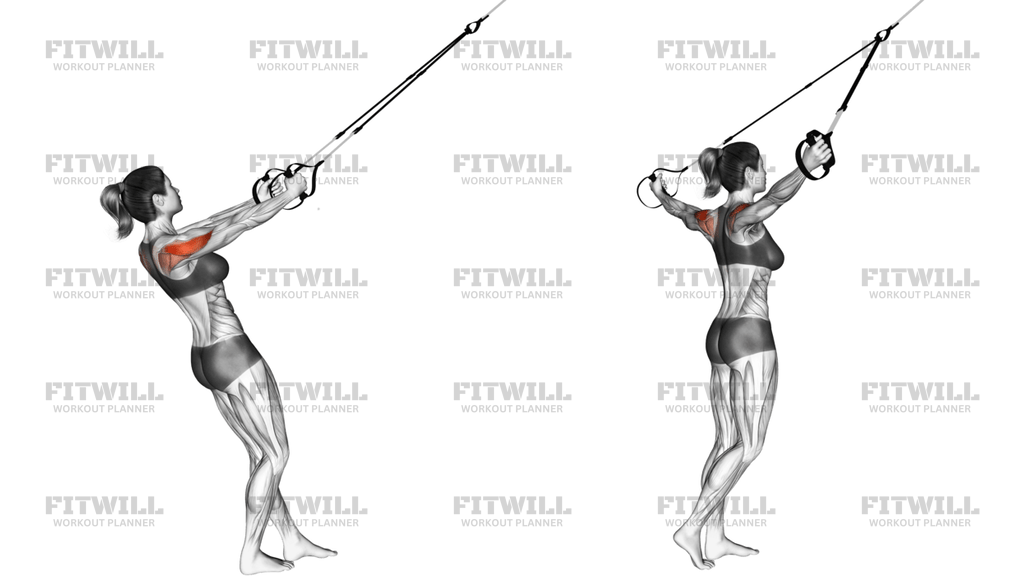
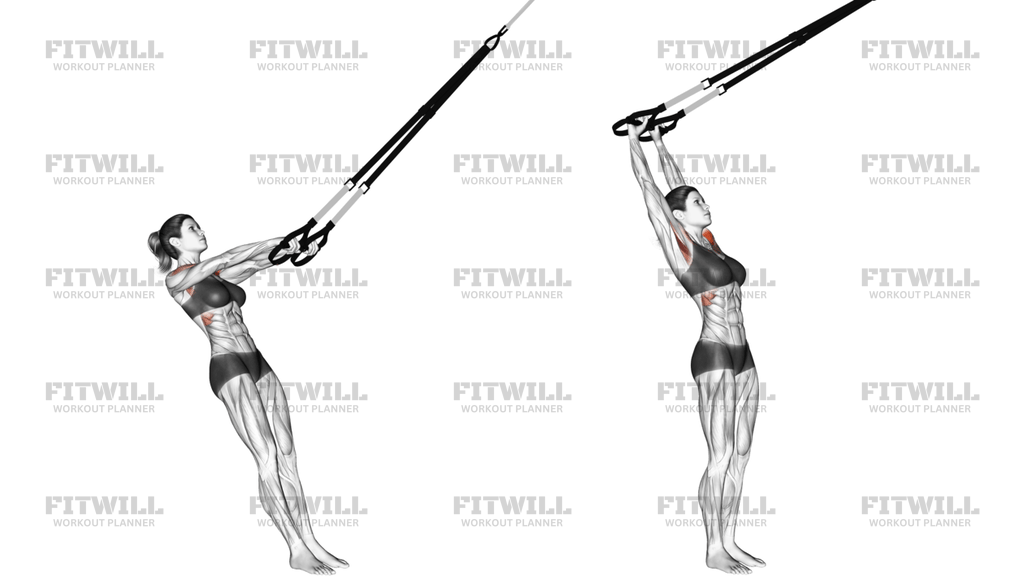
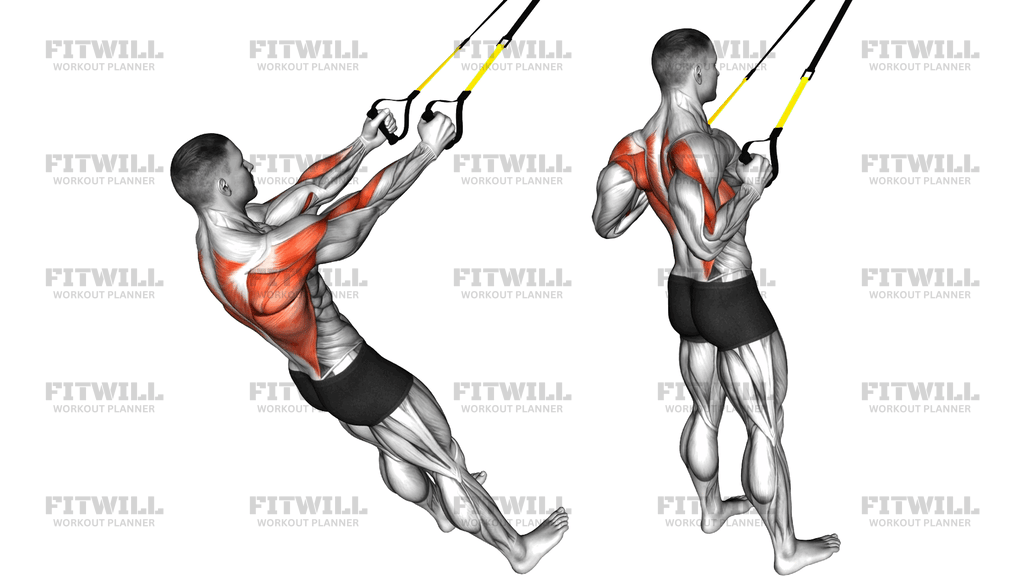
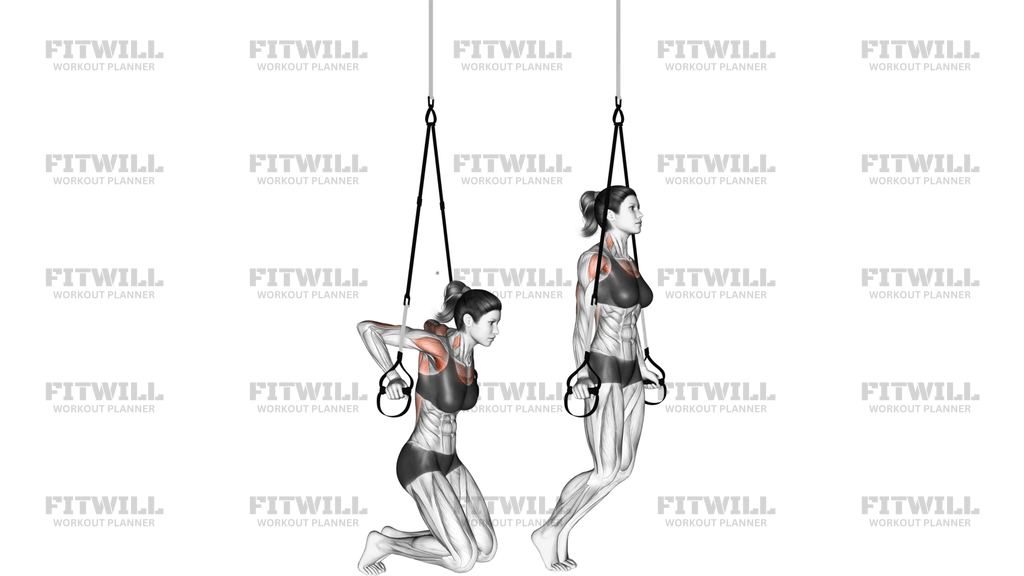
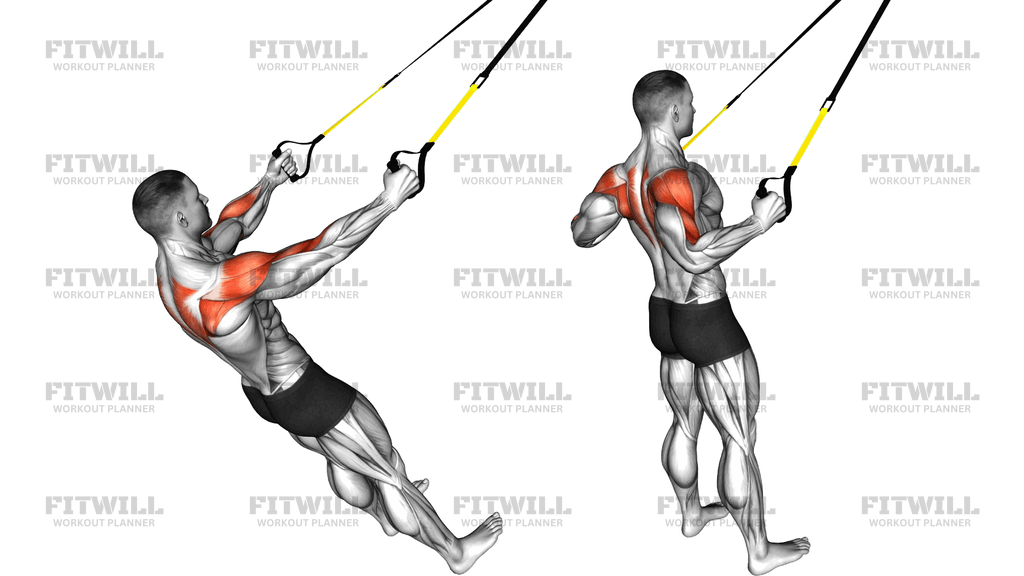
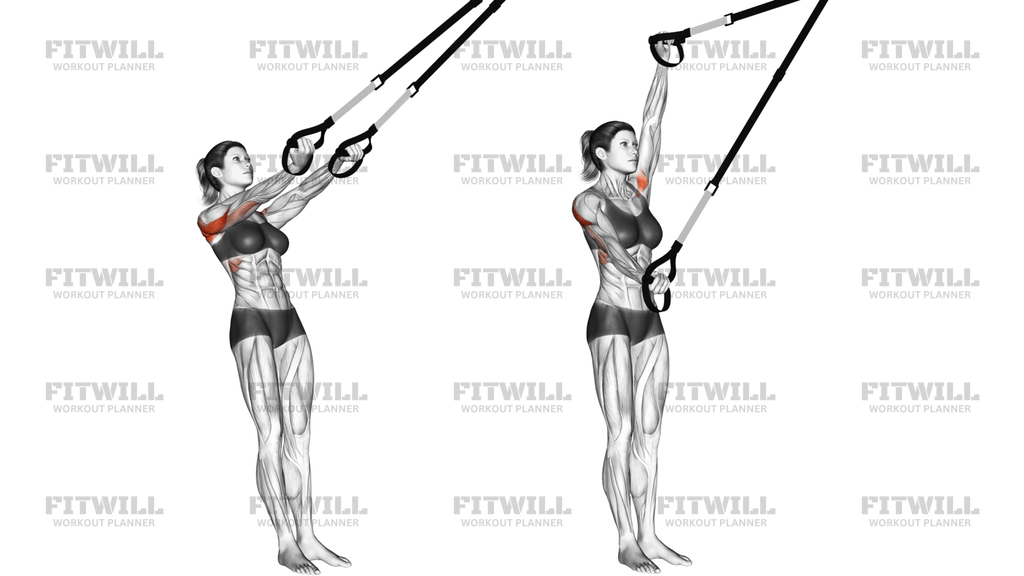
Suspension Split Fly is a standing suspension-trainer fly variation that loads the shoulders through an asymmetrical, split diagonal arm path. With the straps set high and your body leaning back just enough to keep tension on the handles, one arm reaches on a higher line while the other tracks on a lower line. That changing angle makes the movement feel more demanding than a simple straight-ahead fly because the deltoids, upper back, and arm muscles must organize the straps while you keep the torso steady.
This exercise is most useful when you want shoulder work that also challenges scapular control, posture, and anti-rotation. The primary emphasis is on the delts, with the traps, rhomboids, and triceps helping to keep the arms on line and the shoulders from drifting forward. In practice, the movement should look smooth and deliberate: the chest stays lifted, the ribs stay controlled, and the straps move on clean diagonals instead of wobbling side to side.
The setup matters more here than in many machine or dumbbell fly variations. Step far enough from the anchor points to create tension without collapsing into the handles, then organize your stance before each rep. A staggered base can help if you tend to sway, while a narrower stance can make the anti-rotation demand feel stronger. Keep the wrists neutral, the elbows softly bent, and the shoulders away from the ears so the upper traps do not take over.
Use the repetition to open and close the split position under control rather than chasing range for its own sake. On the way out, reach long through the handles and let the shoulders move only as far as you can keep the torso quiet. On the way back, resist the straps and return to the start with the same diagonal path. It works well as accessory shoulder training, a warm-up for upper-body sessions, or a technique-focused pull-and-push circuit. Choose a tension that lets every rep look the same from the first to the last.
[ Workout Log & Planner ]
Put your next workout in Fitwill
Keep your plan and training log ready when you are.


Instructions
- Set the suspension straps high enough that you can hold one handle in each hand with the cables already under light tension.
- Stand between the anchors, step back until your body leans slightly away from the straps, and use a staggered or hip-width stance for balance.
- Keep your chest tall, ribs controlled, wrists neutral, and elbows softly bent before the first rep starts.
- Begin with the handles on split diagonal lines, one slightly higher than the other, so the starting position already matches the fly path.
- Open the arms along those diagonal tracks without shrugging or twisting the torso.
- Pause briefly when the straps are most separated and the shoulders still feel organized.
- Reverse the motion slowly, letting the handles come back together on the same lines instead of dropping the chest or arching the back.
- Breathe out as you open the fly and inhale as you return to the start for the next repetition.
Tips & Tricks
- Set the straps short enough that the handles stay loaded; slack at the start usually means the shoulders will jerk forward before the fly begins.
- Think about reaching the handles away from each other on diagonal tracks, not just pulling them wider in a straight line.
- Keep the ribs from flaring as the arms open; if the low back arches, the torso is helping too much.
- A soft elbow bend usually keeps tension on the delts and upper back better than locking the arms straight.
- If one shoulder rides up toward the ear, shorten the range and lower the working tension.
- Use a staggered stance when the body wants to swing, especially on the return phase.
- The movement should feel controlled through the shoulder girdle, not like a chest fly driven by momentum.
- Stop the set when the straps start to twist or the handles no longer follow the same diagonal path every rep.
Frequently Asked Questions
What muscle does Suspension Split Fly target most?
The delts are the primary target, with the traps, rhomboids, and triceps helping control the suspension straps.
Can beginners perform this exercise?
Yes, if they keep the straps short, use light body angle, and stay within a range that does not pull the shoulders forward.
How should my hands and elbows stay during the split fly?
Hold the handles with neutral wrists and a soft elbow bend so the straps stay on clean diagonal lines.
Why are the arms on different diagonal paths instead of moving straight out?
The split angle keeps the exercise specific to the suspension setup and increases the demand on shoulder control and torso stability.
What is the most common form mistake?
Letting the chest flare and the low back arch while the handles are moving, which turns the rep into a swing instead of a controlled fly.
Do I need a staggered stance?
Not always, but a staggered stance can make it easier to keep the torso quiet if you tend to sway.
Where should I feel the exercise working?
You should feel tension across the shoulders and upper back, with the arms helping stabilize the handles rather than doing all the work.
What should I do if the handles start to twist?
Shorten the range and reduce body angle until each rep follows the same path without losing alignment.