Calf Forward Jump
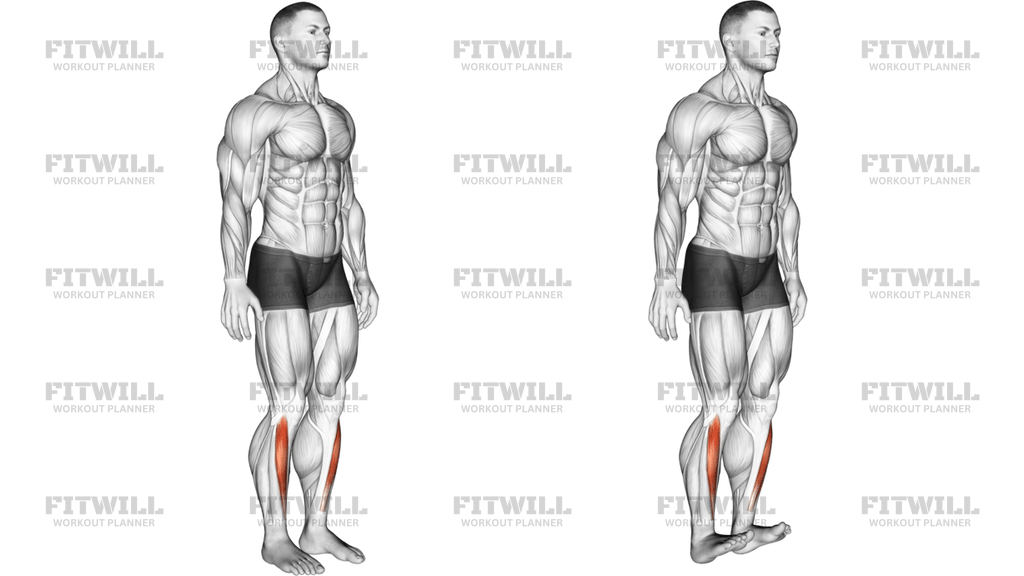
The Calf Forward Jump is a bodyweight plyometric drill that trains the calves to produce quick, repetitive pushing power through the ankles. You stand tall with your hands on your hips and travel forward using short, springy hops driven almost entirely by the calf muscles, keeping the knees relatively stiff so the ankles do the work. It looks simple, but done correctly it is one of the most direct ways to build elastic strength in the lower legs.
This movement is especially useful for runners, jumpers, and court-sport athletes who need strong, reactive calves and resilient Achilles tendons. It also suits anyone doing general lower-body conditioning, because repeated ankle pushes raise the heart rate quickly while isolating a muscle group that regular squats and lunges only hit indirectly. Because it requires no equipment and very little space, it fits easily into warm-ups, finishers, or short home sessions.
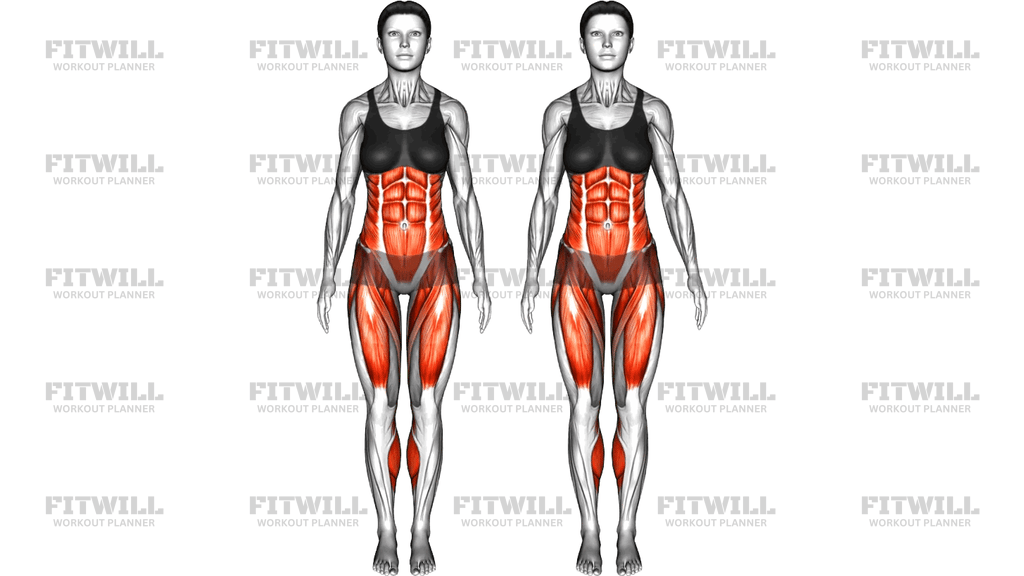
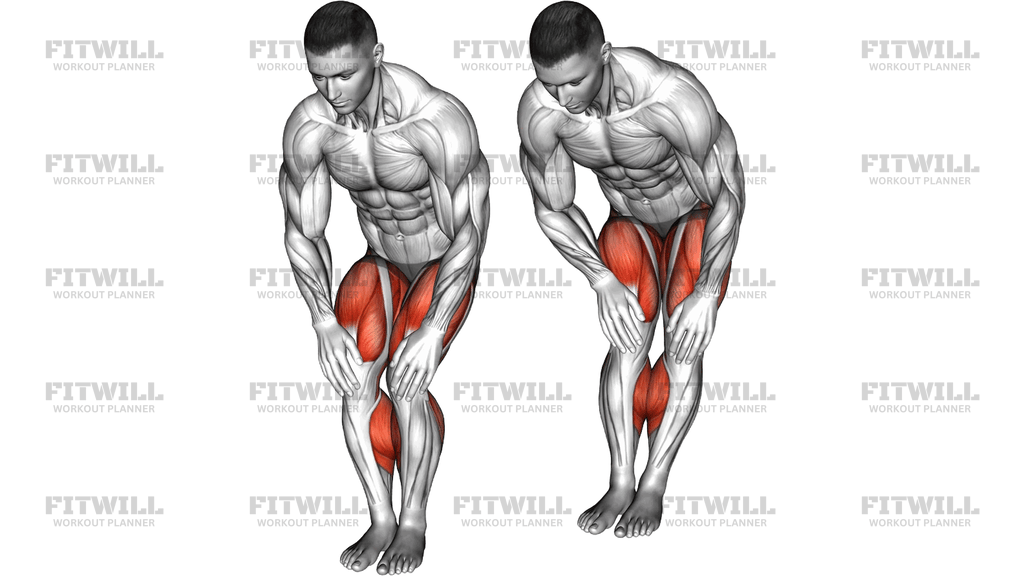
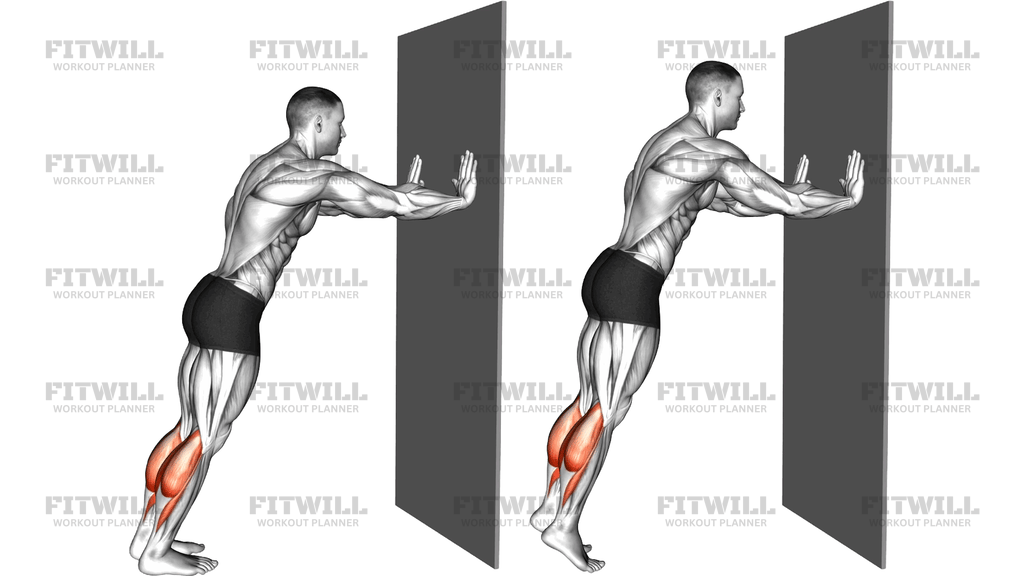
The main muscles working are the gastrocnemius and soleus, the two heads of the calf, supported by the smaller stabilizers around the ankle and foot. The quads and glutes contribute a small amount of forward drive, but the intent of the exercise is to keep the push coming from below the knee. That is why the setup matters: a tall torso, hands braced on the hips, and soft-but-straight knees force the calves to do the propelling instead of letting the hips and thighs take over.
To execute it well, think of your feet as springs rather than levers. Push off the balls of your feet, let the calves briefly shorten and stretch with each contact, and land quietly on the forefoot before the next hop. Short, fast contacts with minimal ground time develop the reactive quality you want; tall, slow bounces turn the drill into a strength exercise instead. A few sets of ten to twenty hops moving forward across a clear area is enough for most people.
The most practical safety point is surface and volume. Perform the jumps on a firm but forgiving surface such as a gym floor, rubber matting, or grass, and start with low, quiet hops before adding height or distance. If your calves or Achilles feel tight or sore during the set, stop and stretch rather than pushing through, since the calf group handles high loads in this drill and recovers best when the volume is built up gradually.
[ Workout Log & Planner ]
Put your next workout in Fitwill
Keep your plan and training log ready when you are.


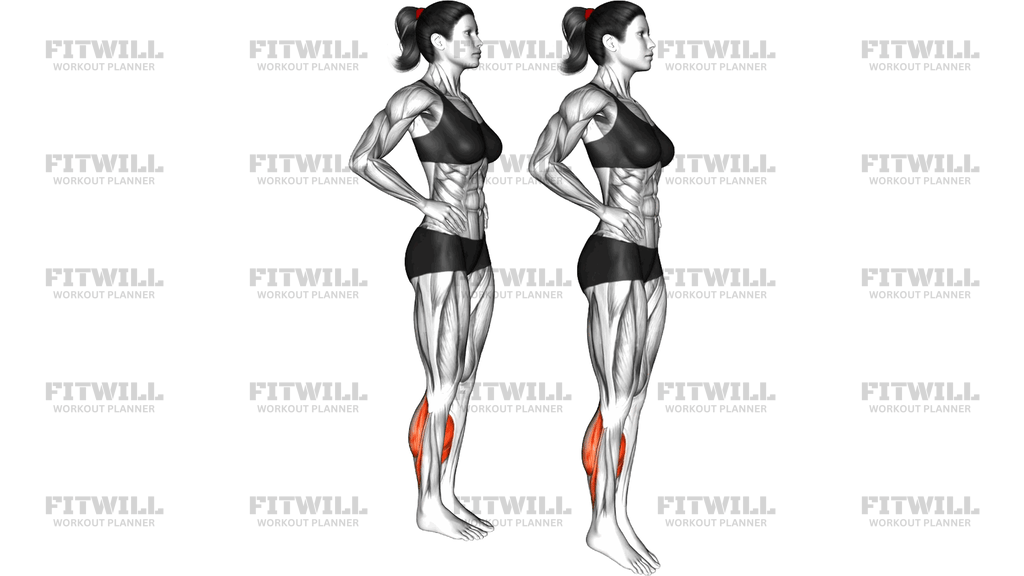
Instructions
- Stand tall with your feet about hip-width apart and place both hands on your hips, elbows out to the sides.
- Shift your weight onto the balls of your feet and rise slightly onto your toes so your heels hover just off the floor.
- Brace your torso and keep your knees nearly straight, with only a small soft bend so the calves remain the main driver.
- Push off the balls of both feet at the same time and hop forward a short distance, pointing the toes slightly as you leave the ground.
- Land on the forefoot of both feet together, letting your heels lower briefly toward the floor to absorb the contact.
- Immediately rebound into the next hop, keeping ground contact short and the rhythm steady as you travel forward.
- Keep your torso upright the whole time; do not lean forward or let your hips drift behind your feet.
- Breathe in a relaxed, steady rhythm, exhaling on each push-off rather than holding your breath.
- After the final hop, walk a few steps or stand and lower your heels fully to let the calves release before starting the next set.
Tips & Tricks
- Keep the hops low at first; high, straining jumps shift work to the thighs and make quiet landings much harder.
- If you hear heavy slaps on landing, your heels are crashing down — aim for a soft forefoot contact that sounds almost silent.
- Hands on the hips are not just for balance; they keep your arms from swinging and stealing momentum from the calves.
- Land with both feet level and pointing straight ahead; feet splaying outward signals ankle fatigue and raises the risk of a roll.
- Shorten the distance of each hop rather than bending the knees deeper if the movement starts to feel awkward.
- Stop the set when the bounce rhythm slows noticeably — ragged, slow contacts train nothing and strain the Achilles.
- Warm up with easy ankle circles and a slow calf stretch before jumping, especially in cold rooms or early sessions.
- Progress by adding hops per set or a second and third set before you ever add jump height.
Frequently Asked Questions
Which muscles does the Calf Forward Jump work?
The gastrocnemius and soleus of the calf do most of the pushing, with the ankle stabilizers and foot muscles controlling each landing. The quads and glutes assist slightly, but the design of the exercise keeps the load below the knee.
Is the Calf Forward Jump suitable for beginners?
Yes, as long as beginners keep the hops low and the sets short. Start with two sets of ten small hops on a forgiving surface and build volume over several weeks.
Why should my hands stay on my hips during the Calf Forward Jump?
Placing the hands on the hips removes arm swing, so the forward travel has to come from the calf push rather than momentum from the upper body. It also helps you feel whether your torso stays upright.
Should my knees bend during this exercise?
Keep only a slight soft bend. If you squat down before each hop, the thighs and hips take over the work and the calves stop being the limiting muscles.
How far forward should each jump travel?
A short hop of roughly 15 to 30 centimeters is plenty for most trainees. The goal is quick, springy contacts, not covering ground quickly.
What is the most common mistake in the Calf Forward Jump?
Landing flat-footed with a heavy heel strike instead of on the forefoot. This dumps the landing force through the knees and heels and removes the stretch on the calves that makes the drill effective.
Can I do the Calf Forward Jump instead of calf raises?
They complement each other but are not interchangeable. Calf raises build slow strength through a full range, while the forward jump trains speed and elasticity, so many programs use both.
What surface is best for this exercise?
A rubber gym floor, sprung studio floor, or firm grass works well. Avoid very hard concrete when starting out, and avoid overly soft or uneven ground that makes landings unstable.
How do I know when my calves are fatigued and I should stop?
Watch for a slowing bounce rhythm, heels dropping lower into each landing, or feet turning outward on contact. Any of these means the calves have given you their best work and quality is fading.
Is the Calf Forward Jump hard on the Achilles tendon?
It loads the Achilles significantly, which is healthy in moderation for most people, but volume should increase gradually. If you are new to jumping or returning from a layoff, begin with low hops and modest set numbers.