Dumbbell Tate Press
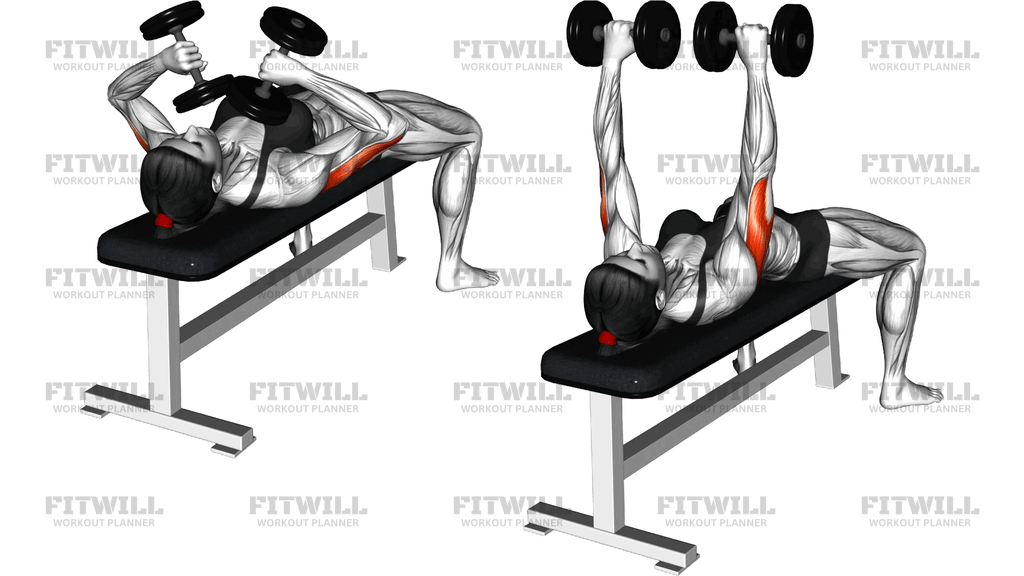
The Dumbbell Tate Press is a lying triceps exercise performed on a flat bench, and it stands apart from most triceps movements because of one unusual detail: the elbows stay flared out wide toward the sides, similar to the bottom of a dumbbell chest press. You start with the dumbbells locked out above your chest, then bend your elbows and let the dumbbells sink down and inward until they nearly touch — or lightly tap — over your upper chest, before pressing back up to full extension. That flared-elbow path changes the angle of load on the triceps compared with a skull crusher or overhead extension, placing a strong stretch on the long head in particular.
This exercise suits lifters who already have some pressing experience and want targeted triceps work without hammering the elbows the way heavy skull crushers sometimes can. Because the elbows are supported by the bench rather than hanging in the air, many people find the position more joint-friendly than standing extensions. It is a popular accessory movement after bench pressing, since the triceps are the limiting muscle in the lockout of any press, and strengthening them in this stretched, flared position carries over directly to pressing strength.
The primary muscle worked is the triceps brachii, with meaningful contributions from the chest and front delts as stabilizers, especially as the dumbbells drop toward the chest. The unusual elbow position also stresses the triceps from an angle that most pressing and extension work misses, which is exactly why lifters add it: not to replace their main extensions, but to fill in the gap.
Setup matters more here than in many triceps exercises. Lie back on a flat bench with your head supported, feet planted on the floor, and a dumbbell in each hand with a neutral grip. Press the dumbbells to full extension directly over your chest before you begin — starting the first rep from the lockout position keeps the descent controlled and symmetrical. Because the weights travel down toward your face and chest, choose a weight you can slow down; this is not a movement for swinging or bouncing.
Execution is a matter of patience. Lower the dumbbells by bending the elbows out to the sides, letting the inner heads of the dumbbells drift toward each other until they meet over your chest. Pause briefly, feel the stretch across the back of the arms, then press back up along the same path until the arms are straight again. Keep the shoulder blades pinned back against the bench throughout, and avoid letting the elbows drift forward or inward, which shifts work away from the triceps and toward the shoulder joint.
A few practical points keep the exercise safe and productive. Use a moderate weight and higher reps — the flared position becomes risky quickly when the load is too heavy and form breaks down. Keep wrists straight and stacked over the forearms, control the descent rather than dropping the dumbbells, and stop the set as soon as you cannot keep the elbows wide and the path smooth. Done with that level of control, the Dumbbell Tate Press is a sharp, focused tool for building triceps size and pressing lockout strength.
[ Workout Log & Planner ]
Put your next workout in Fitwill
Keep your plan and training log ready when you are.


Instructions
- Sit on a flat bench holding a dumbbell in each hand with a neutral grip, then lie back and bring the dumbbells up over your chest.
- Plant your feet flat on the floor, squeeze your shoulder blades back and down into the bench, and press both dumbbells straight up until your arms are fully extended over your chest.
- Brace your core lightly to keep your ribcage down and your back from arching off the bench.
- From the lockout position, bend your elbows out to the sides and slowly lower both dumbbells down and inward, letting the inner heads of the dumbbells move toward each other.
- Continue lowering until the dumbbells touch or nearly touch over your upper chest, with your elbows flared wide and pointing out toward the floor.
- Pause for a beat at the bottom and feel the stretch along the back of your upper arms.
- Press both dumbbells back up and apart along the same path, extending the elbows until the arms are straight again over your chest.
- Exhale as you press up, and inhale as you lower the dumbbells toward your chest.
- Keep the shoulder blades and upper back flat against the bench and your head resting on the bench for the entire set.
- After your final rep, guide the dumbbells back to your chest, then sit up carefully or lower them to the floor before standing.
Tips & Tricks
- The most common mistake is turning the Tate Press into a skull crusher by letting the elbows point toward the ceiling instead of flaring out wide — keep the elbows drifting out to the sides so the dumbbells sink toward the chest, not behind the head.
- Do not let the dumbbells crash into each other at the bottom; a light touch is fine, but letting them collide wastes tension and usually means the descent was too fast.
- If your shoulders pinch at the bottom, shorten the range slightly and stop the descent an inch or two above the chest instead of forcing the full drop.
- Pick a lighter weight than you would use for a dumbbell skull crusher — the flared elbow position offers less leverage, and going too heavy is the usual reason lifters lose the path.
- Keep your wrists straight and stacked over your forearms; letting them bend back under load at the bottom shifts stress into the wrist joint.
- If the elbows creep inward as fatigue sets in, that is your signal the set is done — pressing with the elbows tucked turns the movement into a narrow press and stops targeting the triceps the same way.
- Squeeze the dumbbells inward slightly against each other as you press up; this small cue keeps both arms working evenly and tightens the triceps at lockout.
- Because the dumbbells travel over your face and chest, check that the collars are tight and your grip is secure before you lie back.
Frequently Asked Questions
What muscles does the Dumbbell Tate Press work?
The triceps are the primary muscle, especially the long head due to the stretched position at the bottom. The chest and front delts assist as the dumbbells lower toward the chest and stabilize the shoulder joint throughout.
How is the Dumbbell Tate Press different from a dumbbell skull crusher?
In a skull crusher the elbows point toward the ceiling and the dumbbells lower behind or beside your head. In the Tate Press the elbows flare out wide to the sides, so the dumbbells drop down and inward toward your upper chest, loading the triceps from a different angle.
Is the Dumbbell Tate Press good for beginners?
It can be, but it is better suited to lifters who already know how to control dumbbells while lying on a bench. Beginners should start very light, master the flared elbow path, and build confidence before adding load.
Why do the dumbbells touch over my chest during the Tate Press?
Letting the inner heads of the dumbbells meet over the chest is what creates the deep stretch on the triceps at the bottom. A light touch is fine, but do not slam them together or bounce off the contact, as that releases tension and can jar the wrists.
How heavy should I go on the Dumbbell Tate Press?
Use a moderate weight you can lower slowly for around 8 to 15 reps. The flared elbow position gives you less leverage than a press or skull crusher, so the appropriate load is usually lighter than either of those.
Can the Dumbbell Tate Press replace triceps pushdowns or dips?
It can substitute for them in a session, but it works best alongside them rather than instead of them. The Tate Press emphasizes a stretched, flared position that pushdowns and dips do not, so combining it with those movements gives more complete triceps development.
Where should I put the Dumbbell Tate Press in my workout?
Place it after your main pressing lifts as an accessory, when the triceps are pre-fatigued but you still have control. Doing it first would make it hard to keep the elbows wide under a meaningful load.
Is the Dumbbell Tate Press safe for the shoulders and elbows?
When performed with controlled tempo and a sensible weight, the bench-supported position makes it relatively easy on the joints. If you feel pinching in the front of the shoulder at the bottom, reduce the range or the weight, and stop if you feel sharp pain rather than muscle tension.
My elbows keep drifting forward when I lower the weights — what am I doing wrong?
That usually means the weight is too heavy or you are rushing the descent. Slow the lowering phase, consciously press the elbows out toward the sides, and if the path still breaks down, drop to lighter dumbbells until you can hold the position.