Dumbbell Seated Bent Arm Lateral Raise To Triceps
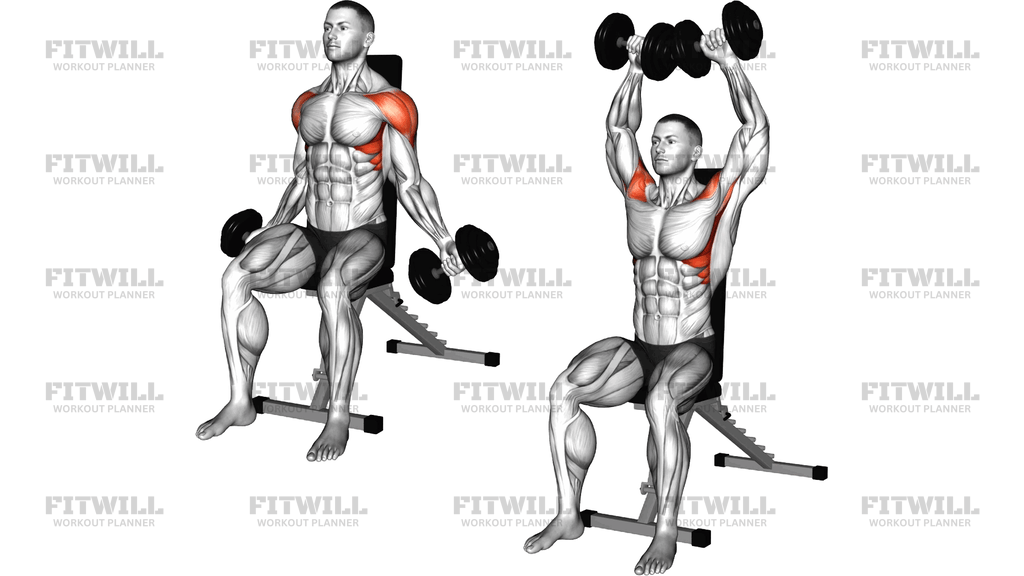
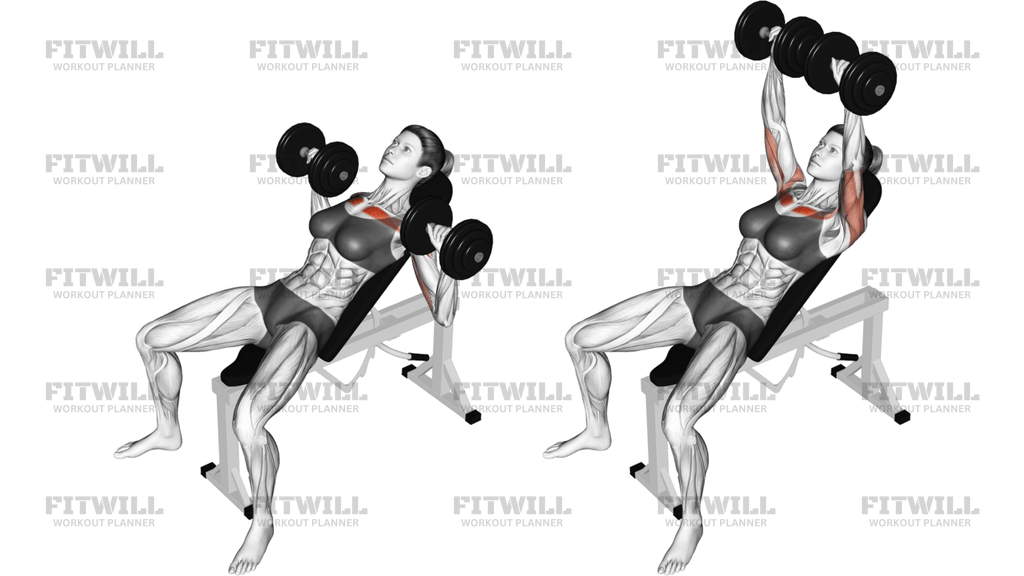
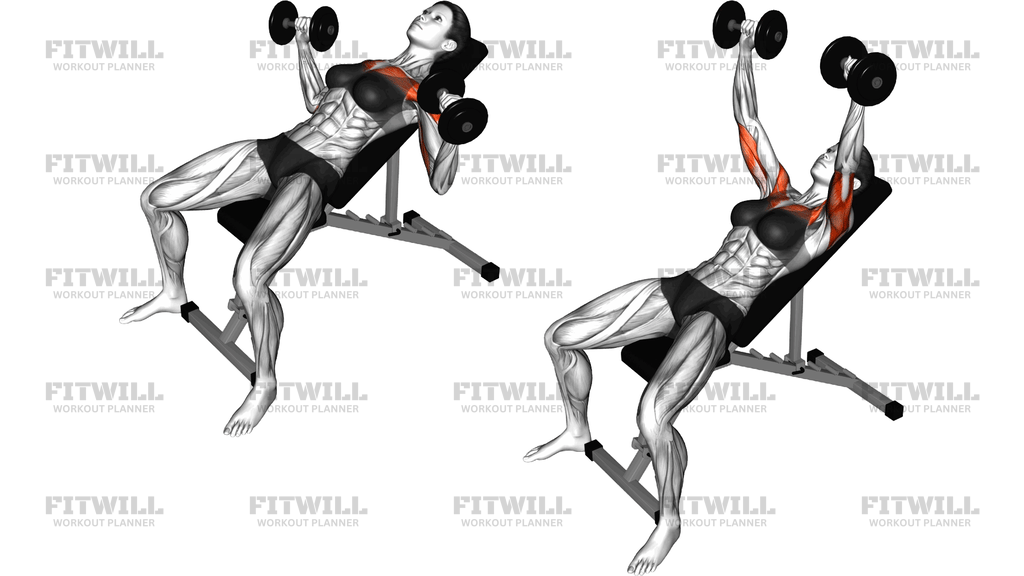
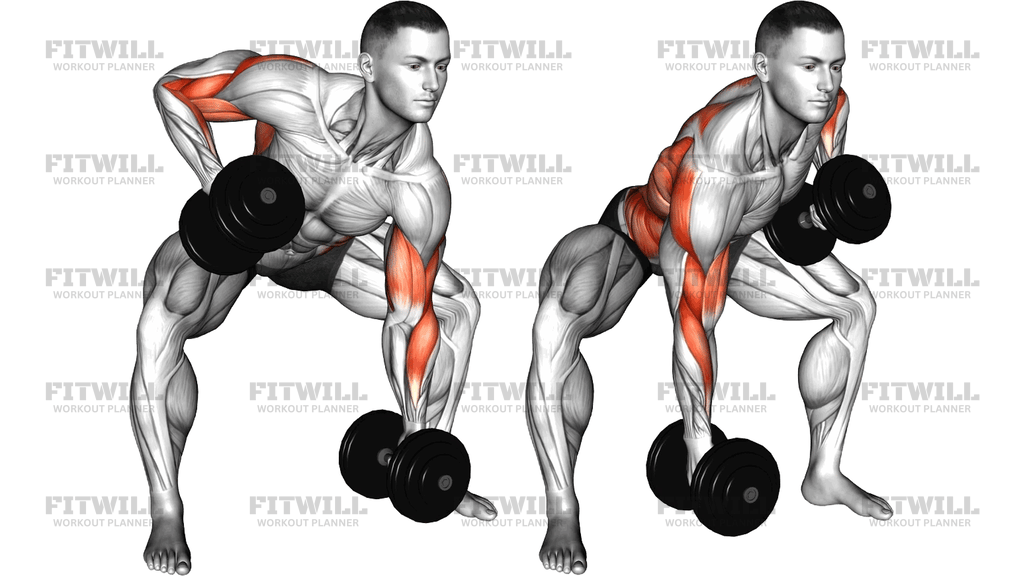
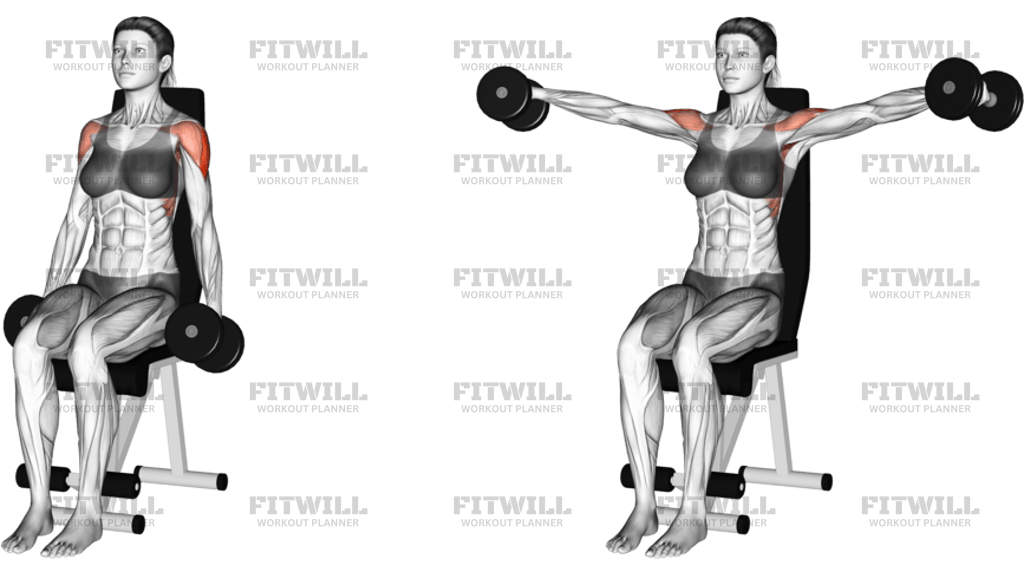
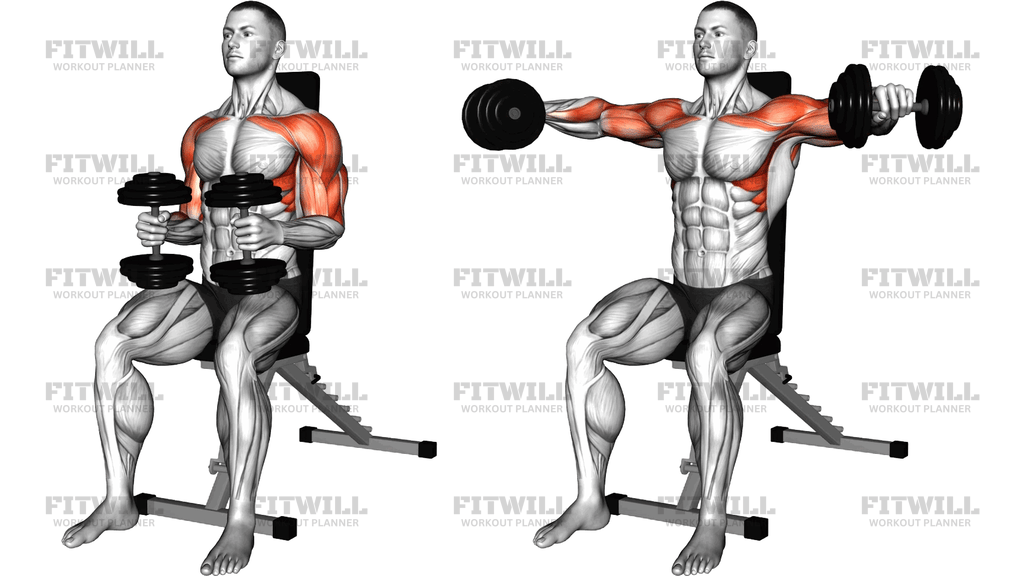
The Dumbbell Seated Bent Arm Lateral Raise To Triceps is a two-part shoulder and arm movement performed sitting on an upright or slightly inclined bench. You start with a dumbbell in each hand at your sides, elbows bent to roughly 90 degrees, then lift your upper arms out to the sides until they reach shoulder height. From that raised position, you straighten your elbows so the dumbbells travel from hanging beside your forearms up to level with your hands, forming a wide T-shape at the top. This makes it a hybrid of a classic bent-arm lateral raise and a triceps extension, training two areas in one flowing rep.
The main workload falls on the side delts, which control the sweep of the upper arms out to the sides. Once the arms are raised, the elbow extension shifts attention to the triceps, which must straighten the arms against the dumbbells' leverage. The front delts and upper traps assist during the lift, and because you are seated with a backrest, your torso stays supported and your core works mainly to keep you upright rather than to stabilize a heavy standing press.
This exercise suits lifters who want more shoulder width and triceps detail without stacking several separate movements. It is especially useful in a shoulder-focused session, as a finisher after heavier presses, or for trainees with limited time who want efficient paired work for the delts and arms. Because the arms stay relatively light and the movement is seated, it is also approachable for intermediates refining their lateral raise technique.
The setup matters more than it might seem. Sitting upright against the bench pad prevents the forward lean and body swing that people often use to cheat standing lateral raises, and keeping the elbows fixed at about 90 degrees during the raise ensures the delts do the lifting instead of momentum. When you extend at the top, the elbows should stay high and in line with the shoulders so the triceps extend against resistance rather than the weight simply falling backward.
To execute it well, think of the rep as two clean phases: a deliberate lift of the elbows out and up, then a controlled straightening of the arms, followed by the exact reverse on the way down. Choose a weight you can raise without shrugging and extend without flaring your ribcage. Most lifters do well with 2 to 4 sets of 8 to 15 reps, focusing on smooth tempo rather than heavy loads.
A few safety points are worth respecting. Keep the weights modest, since the shoulder is at its weakest in this raised, rotated position, and jerking a dumbbell up there invites strain. If you feel pinching at the top of the shoulder, lower the end range slightly and reduce the load. Stop and reassess your elbow height and tempo before continuing if form breaks down.
[ Workout Log & Planner ]
Put your next workout in Fitwill
Keep your plan and training log ready when you are.


Instructions
- Sit upright on a bench with a backrest, feet flat on the floor about hip-width apart, and your back, shoulders, and head resting against the pad.
- Hold a dumbbell in each hand with a neutral grip (palms facing in) and let your arms hang at your sides, then bend your elbows to about 90 degrees so your forearms point forward.
- Brace your midsection lightly, pull your shoulder blades down and back, and keep your ribs stacked over your pelvis so your torso stays quiet throughout the set.
- Exhale as you lift your upper arms out to the sides, keeping the elbow angle fixed at 90 degrees, until your elbows reach shoulder height.
- From that raised position, straighten both elbows so the dumbbells rise until your arms form a wide T, with the weights level with your shoulders and your palms facing forward or slightly down.
- Pause briefly at the top with your arms, elbows, and dumbbells in one line, without shrugging your shoulders toward your ears.
- Inhale as you reverse the movement in the same order: bend the elbows back to 90 degrees, then lower your upper arms under control to your sides.
- Keep the descent slower than the lift, roughly two to three seconds down, resisting the dumbbells rather than letting them drop.
- Reset your posture against the backrest between reps if you feel yourself leaning forward or arching, then continue for your target reps.
Tips & Tricks
- The most common mistake is letting the elbow angle change during the raise — if the elbows drift from 90 degrees, the lift turns into a partial press and the side delts lose their job. Cue yourself to lift with the elbows, not the hands.
- If your upper traps take over and your shoulders creep toward your ears, drop the weight by 10 to 20 percent. Heavy loads almost always turn this into a shrug-driven movement.
- Do not swing the dumbbells up during the extension phase. If the weights need momentum to straighten your arms, the triceps portion is too heavy — extend deliberately or reduce the load.
- Squeeze the backrest with your upper back instead of arching off it. If your lower back hollows and your chest lifts at the top, your ribcage is compensating for a weight that is too challenging.
- Stop the raise at shoulder height rather than pulling the dumbbells higher. Lifting the elbows above shoulder level shifts stress onto the traps and can pinch the shoulder in this position.
- Because the arms are extended sideways at the top, the leverage on the shoulder joint is long. Choose lighter dumbbells than you would for a standard seated press — this is a shaping movement, not a max-effort lift.
- Keep your wrists straight and stacked over your forearms. Bent or collapsed wrists during the extension phase point the strain into the forearm and elbow rather than the triceps.
- If one side lags or shakes, slow the tempo down rather than adding reps. Uneven extension speed usually means the weaker arm is being rushed through its sticking point.
Frequently Asked Questions
Which muscles does the Dumbbell Seated Bent Arm Lateral Raise To Triceps work?
The side delts do the lifting during the raise, and the triceps take over when you straighten your arms at shoulder height. The front delts and upper traps assist throughout, making it an efficient delt-and-arm combination.
Why are the elbows bent during the lateral raise portion?
Bending the elbows to about 90 degrees shortens the lever arm, which reduces strain on the shoulder joint and makes it easier to feel the side delts working. It also sets you up cleanly for the triceps extension at the top.
Is the Dumbbell Seated Bent Arm Lateral Raise To Triceps suitable for beginners?
Yes, provided a light weight is used and the two phases are learned separately first. Beginners often benefit from practicing a plain bent-arm lateral raise for a few sessions before adding the elbow extension.
How heavy should the dumbbells be for this movement?
Go noticeably lighter than you would for a dumbbell shoulder press, since the extended-arm T position puts the weights at a long leverage disadvantage. A weight you can control for 8 to 15 smooth reps with no shrugging or swinging is the right zone.
What is the most common mistake in this exercise?
Turning it into a partial press by straightening the elbows during the raise, or swinging the dumbbells up with momentum at the top. Both happen when the load is too heavy — the lift should look like two distinct, controlled phases.
Can I do this exercise standing instead of seated?
You can, but the seated position against a backrest removes the torso lean and leg drive that lets you cheat standing lateral raises. If you switch to standing, expect to use less weight and watch for body swing.
What can I substitute if I do not have a bench with a backrest?
Any upright seated position works, including the edge of a flat bench or a sturdy chair with your torso held tall. The key is keeping your spine upright so the delts lift the arms without torso momentum.
Where should I feel the Dumbbell Seated Bent Arm Lateral Raise To Triceps?
You should feel a burn along the outside of your shoulders during the raise and along the back of your upper arms during the extension. Mild trapezius engagement is normal; sharp pinching at the top of the shoulder is not.
Should my palms face forward or stay neutral during the movement?
Start with a neutral grip, palms facing your body, and let the wrists rotate naturally as you extend so the palms face forward at the top. Forcing one fixed wrist position can irritate the elbows and wrists.
How does this differ from a regular dumbbell lateral raise?
A regular lateral raise ends when your arms reach shoulder height, while this version adds an elbow extension at the top that loads the triceps and extends the time under tension for the whole shoulder girdle.