Lever Pure Rear Kick
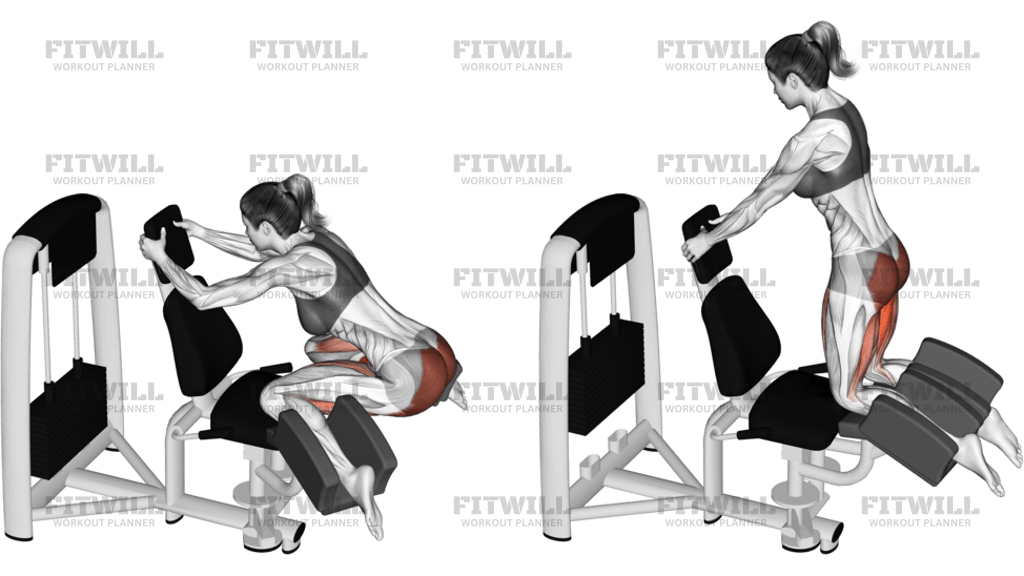
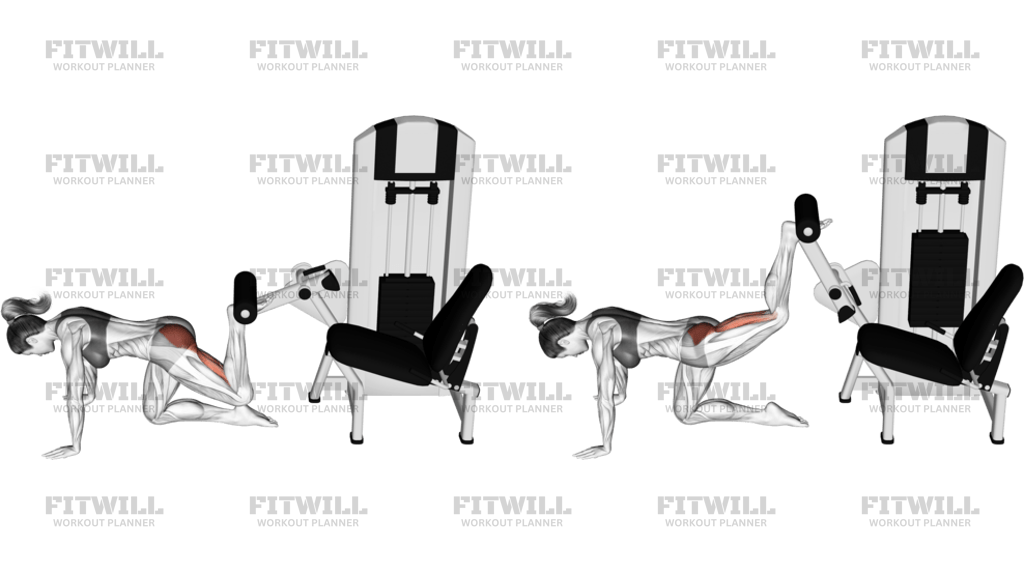
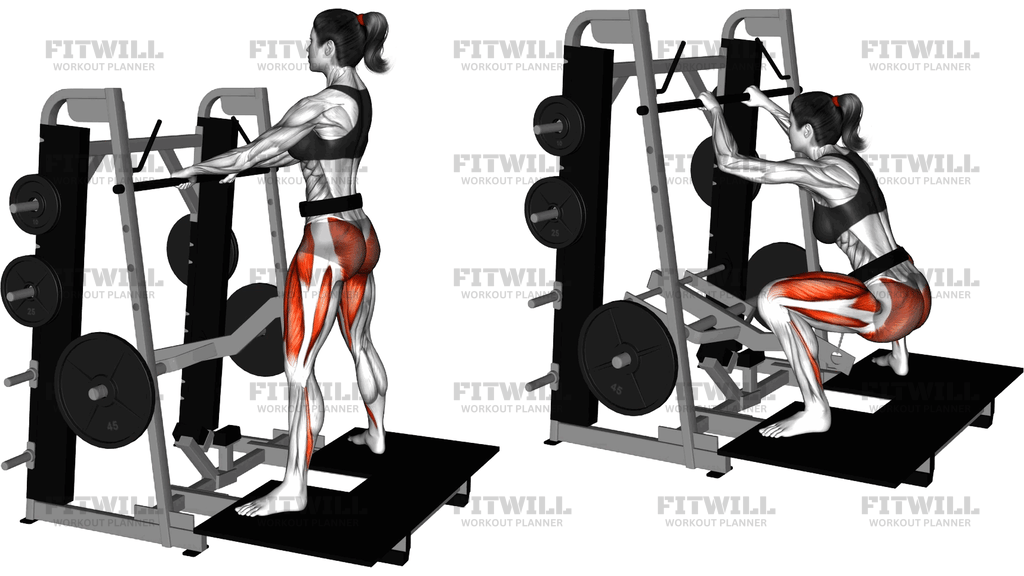
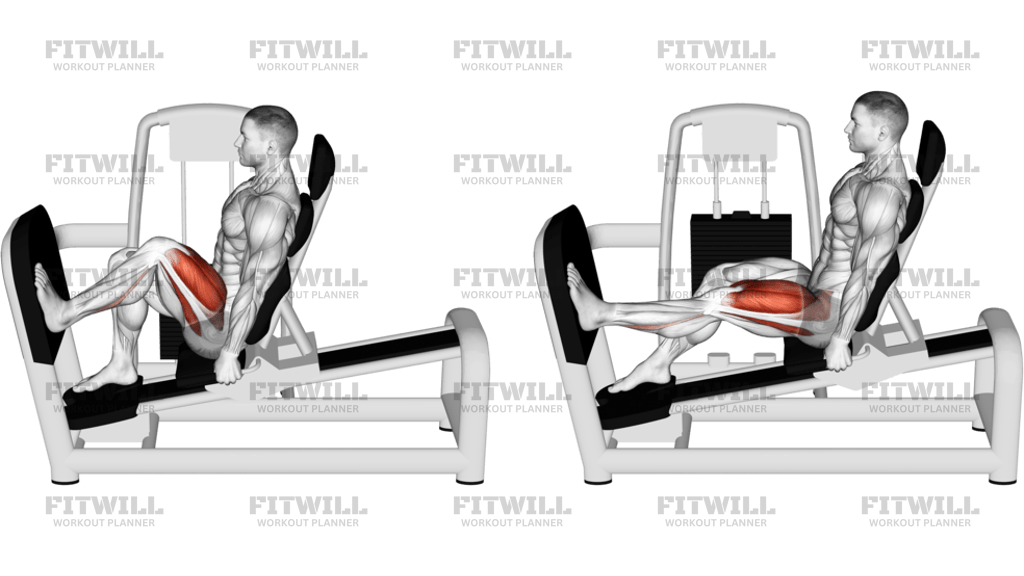
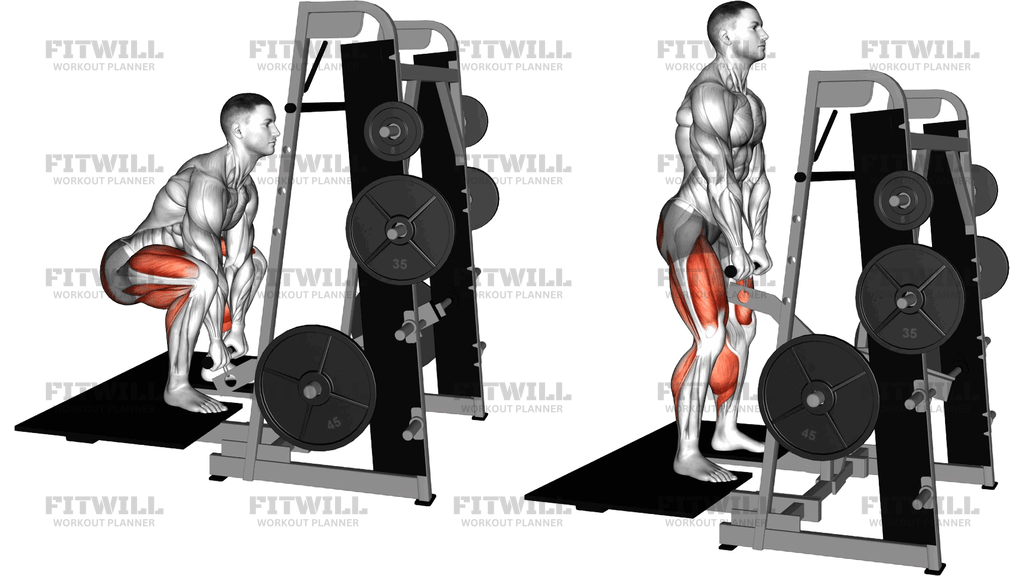
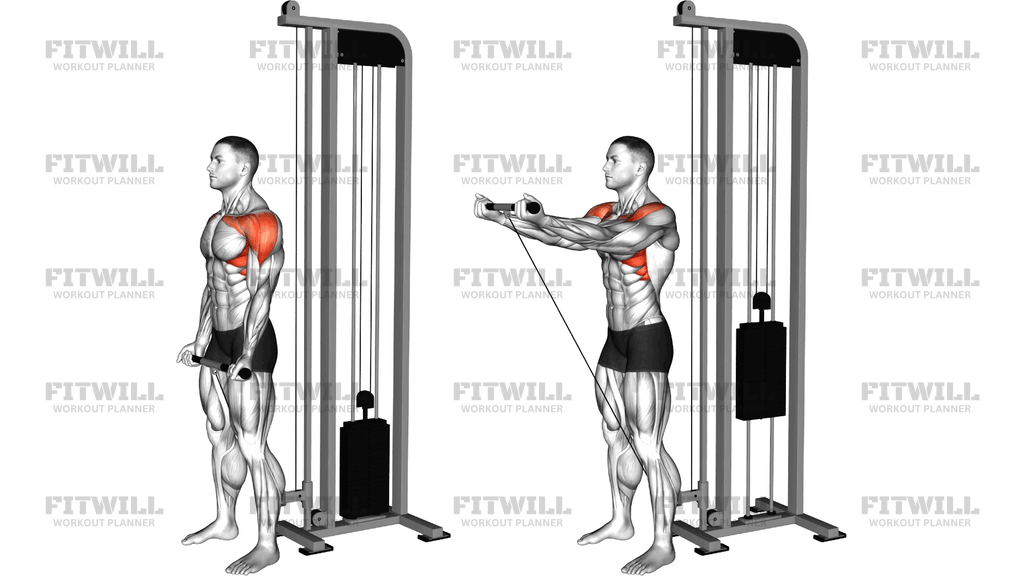
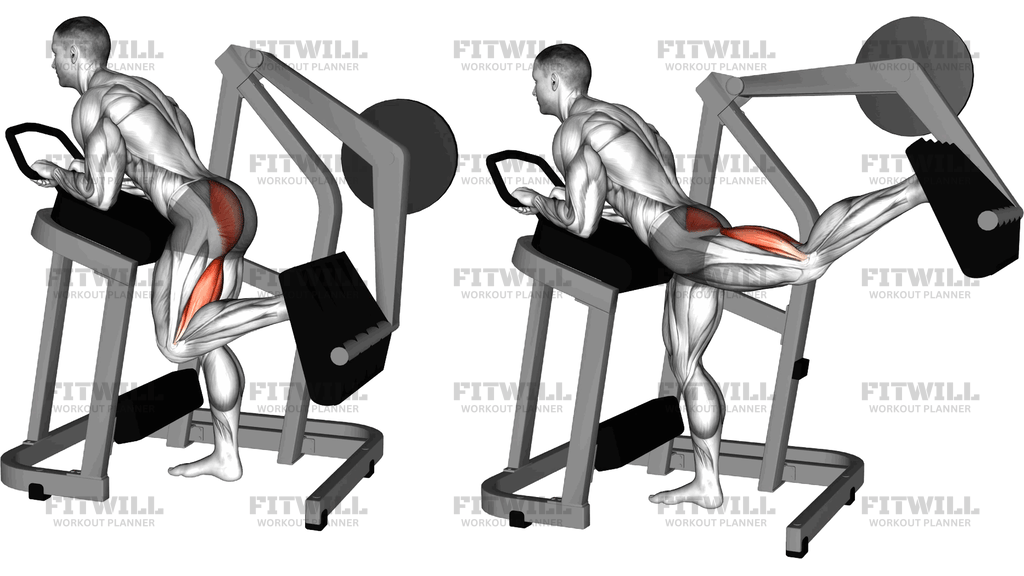
The Lever Pure Rear Kick is a plate-loaded leverage machine exercise that isolates hip extension on one leg at a time. You lean forward onto the machine's chest pad and grip the handles, hook the back of your working leg under the roller pad, and drive the leg back and up behind you against the machine's resistance arm. Because the movement arm guides the path, the exercise stays focused on the glutes and hamstrings without demanding balance or stabilization from the standing side.
This movement is especially useful for people who want direct glute work without loading the spine. Lifters with lower back fatigue from heavy squats or deadlifts can use it as a secondary hip extension exercise, and beginners benefit from the fixed path because it removes the coordination demands of free-weight hip hinges. It is also a staple in glute-focused training blocks, since the single-leg setup lets you address left-to-right strength differences that are easy to hide with two-legged lifts.
The primary muscle trained is the gluteus maximus, which drives the leg behind the body through the full range of the kick. The hamstrings assist as they extend the hip and flex the knee against the pad, and the standing leg works quietly to keep you tall and stable on the platform. Compared with cable kickbacks, the leverage arm typically provides a smoother resistance curve and a firmer pad to press against, which helps you push hard without the pad slipping down the leg.
Setup quality determines how well this exercise works. Position your hips on the pad so the working hip can extend fully without your lower back arching to fake extra range. Your knee should start slightly bent and roughly under or just behind your hip, with the roller resting on the calf just below the knee. If you set the pad too low on the ankle, your hamstrings and calf take over; too high and the range gets cramped.
To execute well, think of pushing the pad away with your heel in a controlled arc, squeezing the glute hard at the top, and lowering the leg with the same care rather than letting the weight stack or plate arm drop it back. Keep your torso pressed into the chest pad the entire time. If your chest lifts or your back arches as you kick, the weight is too heavy or the range is too long, and the work shifts away from the glute you are trying to train.
In practice, the Lever Pure Rear Kick fits best as an accessory movement placed after your main lower body lifts, typically for 2 to 4 sets of 10 to 15 controlled reps per leg. It pairs naturally with hip thrusts, lunges, or Romanian deadlifts when the goal is complete glute development, and it also serves as a low-fatigue warm-up activation before heavy squat or hinge sessions.
[ Workout Log & Planner ]
Put your next workout in Fitwill
Keep your plan and training log ready when you are.
Instructions
- Set the chest pad height so you can lean your torso fully onto it with your forearms resting on the handles and your spine in a neutral, slightly inclined position.
- Position yourself so the hip crease of your working leg sits on the edge of the pad, with your other foot planted firmly on the machine's platform or footrest.
- Place the back of your working leg under the roller pad so it rests on the calf just below the knee crease, with the knee bent slightly.
- Grip the handles firmly and press your chest and forearms into the pads to lock your upper body in place before starting the set.
- Brace your core lightly and keep your neck in line with your spine so the torso does not rotate as the leg moves.
- Drive the pad back and up by squeezing the glute, extending the hip while keeping the knee softly bent, until the leg finishes behind you at roughly hip height or slightly above.
- Pause for a beat at the top and deliberately squeeze the glute rather than letting momentum carry the leg.
- Lower the leg slowly back to the start, keeping tension on the glute instead of letting the resistance arm slam the pad back down.
- Exhale as you kick back and inhale as you return, maintaining steady breathing throughout the set.
- Complete all repetitions on one leg, then reposition and repeat on the other side, matching the reps and effort between legs.
Tips & Tricks
- The most common fault is arching the lower back to chase extra height. If your torso lifts off the chest pad at the top of the kick, shorten the range until you can keep the torso glued down.
- Check the pad placement every set. If the roller rides up toward the back of the knee, it squeezes the joint and changes the leverage; reposition it on the calf before continuing.
- Do not straighten the leg completely during the kick. A slightly bent knee keeps the hamstrings contributing through hip extension and reduces strain on the knee joint.
- If you feel the work in your lower back instead of your glute, you are likely starting with too much lumbar arch. Tilt your pelvis slightly under and re-brace before the first rep.
- Keep the toe relaxed rather than pointing hard. Over-pointing the foot tends to make people lead with the calf and lose glute focus.
- Use a controlled two-count on the way down. Letting the resistance arm snap back is the fastest way to lose tension and irritate the hip.
- Because this is a single-leg machine, start with your weaker side and match the reps on the stronger side to gradually even out imbalances.
- Avoid twisting the hips open as the leg rises. Both hip bones should stay pressed toward the pad so the glute does the extending, not rotation.
- Pick a weight you can pause at the top for a full second. If the top position turns into a bounce, the load is beyond what the glute can control.
Frequently Asked Questions
What muscles does the Lever Pure Rear Kick work?
The gluteus maximus is the prime mover, extending the hip as you drive the leg back. The hamstrings assist strongly, and the standing leg along with your core stabilizes you throughout the set.
Is the Lever Pure Rear Kick good for beginners?
Yes. The fixed path of the leverage arm removes balance demands, so beginners can focus purely on feeling the glute contract. Start with a light weight and prioritize the squeeze over range.
Where exactly should the roller pad sit on my leg?
The pad should rest on the calf just below the back of the knee. Placing it on the ankle shifts the emphasis and can pull the hip into an awkward path, while sitting it on the knee crease itself can compress the joint.
How is this different from a cable kickback?
The leverage machine supports your torso on a chest pad, so you do not have to stabilize your own body, and the resistance arm gives a more consistent resistance curve than a cable pulling from a fixed point. That makes it easier to load progressively and harder to cheat with body sway.
Why do I feel my lower back during the Lever Pure Rear Kick?
Your lower back is arching to extend the hip beyond what the glute controls. Tilt your pelvis slightly under, reduce the height of the kick, and lighten the load until the glute does the work.
How high should I kick my leg at the top?
Kick back and up until the leg reaches about hip height or slightly above, stopping where your glute is fully contracted and your torso stays on the pad. Height that comes from arching your back adds nothing and shifts work away from the glute.
Can I use the Lever Pure Rear Kick as a warm-up?
Yes, one or two light sets per leg work well to activate the glutes before squats, deadlifts, or lunges. Keep the reps around 12 to 15 and stop well short of fatigue.
How many sets and reps should I do?
Two to four sets of 10 to 15 controlled reps per leg fit most training programs. The single-leg format doubles the time under tension, so start conservative on volume.
Is it safe for my knees?
With the pad correctly placed on the calf and the knee kept slightly bent rather than locked or hyperextended, the knee joint is not loaded directly. If you feel pinching at the back of the knee, stop and reposition the pad before continuing.