Lever Belt Deadlift (Straight Bar)
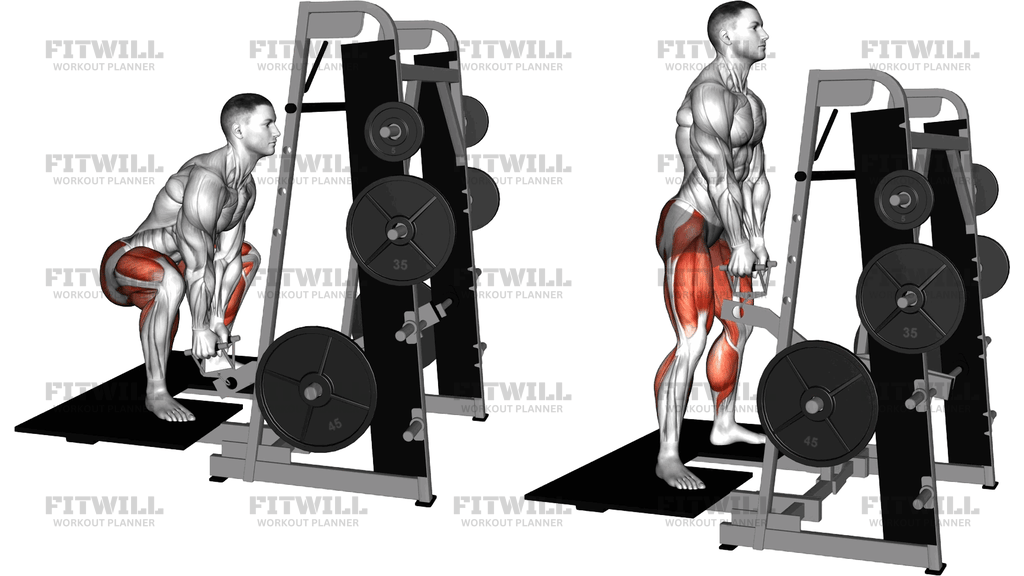
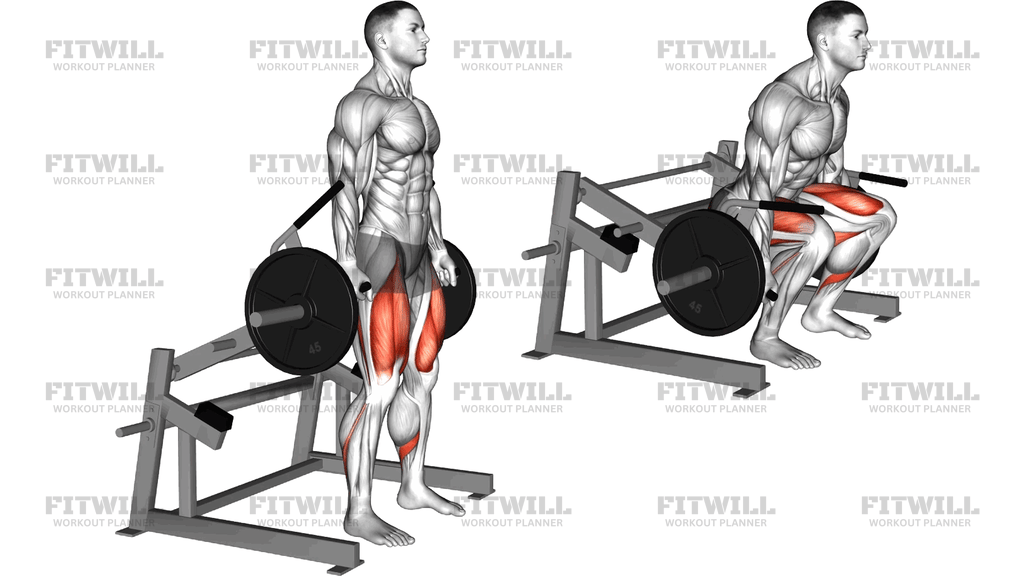
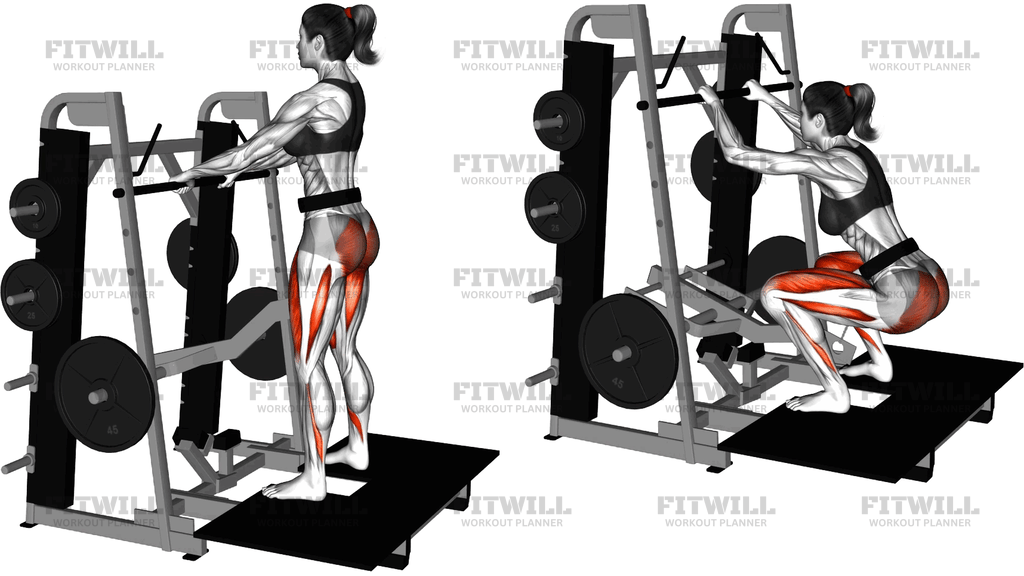
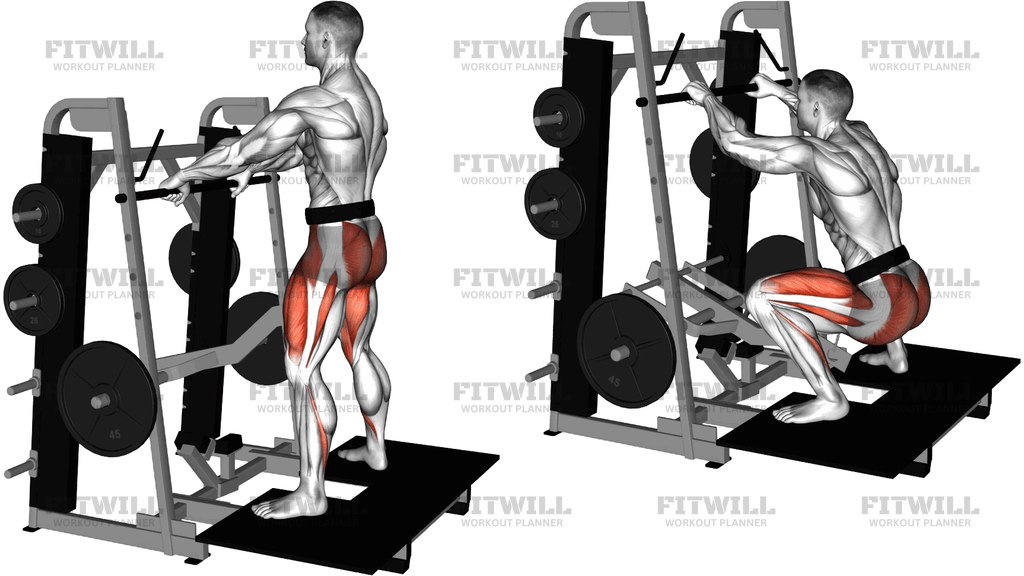
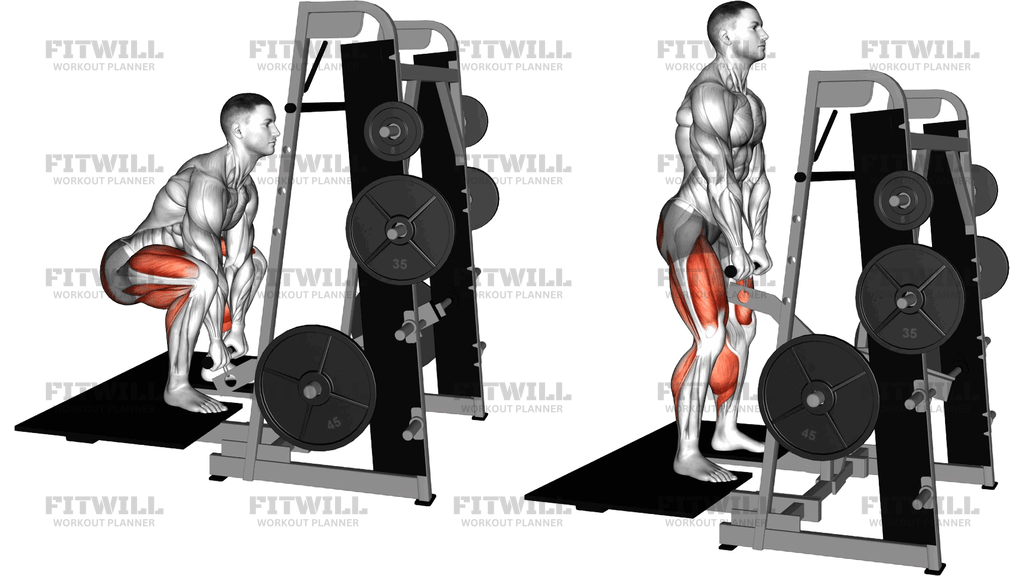
The Lever Belt Deadlift (Straight Bar) is a plate-loaded machine version of the conventional deadlift. You stand on the machine's platform, squat down to grip a low-mounted straight bar handle attached to a lever arm, and drive through your feet to a full standing position. Because the resistance travels on a fixed lever path, the movement keeps the load close to your body at all times, which removes much of the balance demand of a free-weight barbell deadlift.
This exercise works the same big pattern as a regular deadlift: the quads and glutes extend the hips and knees, the hamstrings control the bottom position, and the lower back stays locked in an isometric hold rather than actively lifting. Your grip and upper back also work to hold the handle and keep your torso from rounding as the weight stacks up.
It is especially useful for lifters who want the deadlift pattern without setting up a barbell from the floor, for beginners learning hip hinge mechanics with a guided path, or for anyone training in a busy gym where deadlifting space is limited. The fixed trajectory also makes it a solid choice for higher-rep work or for finishing the posterior chain after squats without fatiguing your stabilizers as much.
Setup matters here because the lever path does not adjust mid-rep to compensate for poor positioning. Set your feet so the handle lines up over the middle of your feet, keep your shins close to the lever arm, and hinge at the hips while bending the knees to reach the handle. If you sit too far back or too far forward, the load will pull you out of position as soon as the plates break off the stack.
To execute it well, brace your torso before you pull, keep your chest up and shoulders slightly ahead of the bar, and push the floor away with your whole foot rather than yanking with your arms. Stand tall by driving the hips forward, then lower the weight under control back to the bottom, letting the lever settle briefly before starting the next rep. Avoid bouncing out of the bottom, since the machine's momentum can hide sloppy technique under heavy loads.
[ Workout Log & Planner ]
Put your next workout in Fitwill
Keep your plan and training log ready when you are.


Instructions
- Load the weight plates onto the machine's plate horns and set the lever handle to its lowest starting position.
- Step onto the platform and place your feet roughly hip-width apart so the straight bar handle hangs over the middle of your feet.
- Bend your knees and hinge at the hips to lower yourself into a squat, gripping the handle with both hands just outside your thighs.
- Pull your shoulders back and down, keep your arms straight, and position your chest slightly ahead of the handle.
- Take a deep breath into your belly and brace your core hard before the plates leave their resting position.
- Drive through your heels and mid-foot, extending your knees and hips together to stand up tall against the resistance.
- At the top, finish with your hips fully extended and your torso upright, but do not lean back or hyperextend your lower back.
- Reverse the movement by pushing your hips back first, letting the handle travel down the same path close to your body.
- Exhale at the top of each rep and re-brace before every pull, especially as the weight gets heavier.
- Reset your grip and torso position at the bottom of each rep rather than bouncing the lever off its stop.
Tips & Tricks
- If the load pulls you forward onto your toes at the start, your feet are too far from the lever arm — shift your stance back so the handle sits over mid-foot.
- A common mistake is squatting the weight up with your chest dropping toward the handle. Keep your chest tall and let the hips and knees extend together.
- Do not lock out by over-arching your lower back. Stand tall and squeeze the glutes; the lever machine makes this exaggeration easy because the weight is balanced for you.
- Because the path is fixed, rounding your upper back under load shows up immediately. Start with lighter weight than your barbell deadlift to dial in the position.
- Use lifting straps for high-rep sets if grip fails before your legs do, but keep some sets strapless if grip strength is a priority.
- Lower the handle slower than you pull it up. The eccentric on a lever machine can run away from you if you just drop it onto the stack.
- Check that the lever's bottom stop is at a height that lets you reach the handle without collapsing your lower back — adjust your foot position or the handle setting if you have to round to reach it.
- Keep your arms as relaxed hooks. Bending the elbows or shrugging at the top turns a leg exercise into an arm and trap fight.
- If your knees cave inward on the drive, think about spreading the floor with your feet as you push up.
Frequently Asked Questions
Which muscles does the Lever Belt Deadlift (Straight Bar) work the most?
The main work comes from the quads and glutes extending your knees and hips, with the hamstrings and lower back supporting throughout. Grip and upper back muscles hold the handle steady as the load increases.
Is the Lever Belt Deadlift (Straight Bar) good for beginners?
Yes, it is one of the friendlier ways to learn the deadlift pattern because the fixed lever path keeps the weight tracking correctly even if your positioning is slightly off. Start light and focus on hinging and bracing before adding plates.
How is the Lever Belt Deadlift (Straight Bar) different from a barbell deadlift?
The load moves on a fixed path attached to the machine's lever arm, so you do not have to balance the weight or control a bar that drifts away from your body. This reduces stabilizer demand but also means the machine cannot adapt to poor setup the way free weight can.
Where should my feet be placed on the platform?
Place them hip-width apart with the straight bar handle aligned over the middle of your feet. If the handle is too far in front of you, the first inch of the pull will drag you onto your toes.
Should I wear a belt for this exercise?
A belt is optional and mainly worth using on heavier sets once you can brace your core well without one. The machine reduces some lower back demand compared to a barbell, so many lifters save the belt for their heaviest work.
Why do I keep bouncing at the bottom of each rep?
Letting the lever crash onto its stop uses the machine's rebound to restart the rep, which hides weak positioning and reduces muscle work. Lower the handle under control and pause briefly at the bottom before re-bracing and pulling.
What can I substitute if my gym has no lever deadlift machine?
A trap bar deadlift is the closest free-weight alternative because it also places the load at your sides with a more upright torso. Heavy dumbbell deadlifts or conventional barbell deadlifts with lighter loads are other workable options.
How heavy should I go compared to my regular deadlift?
Expect to move more or less weight than a barbell in some cases because the machine balances and guides the load, but do not treat the numbers as equivalent. Judge progress by the machine's own increments and how clean your reps look.
Is it safe for my lower back?
The guided path and side-by-side load make it easier to keep a neutral spine than with a free barbell, but the lower back still works hard to hold position. Keep your torso braced, avoid rounding at the bottom, and stop the set if your back starts doing the lifting instead of your hips and legs.