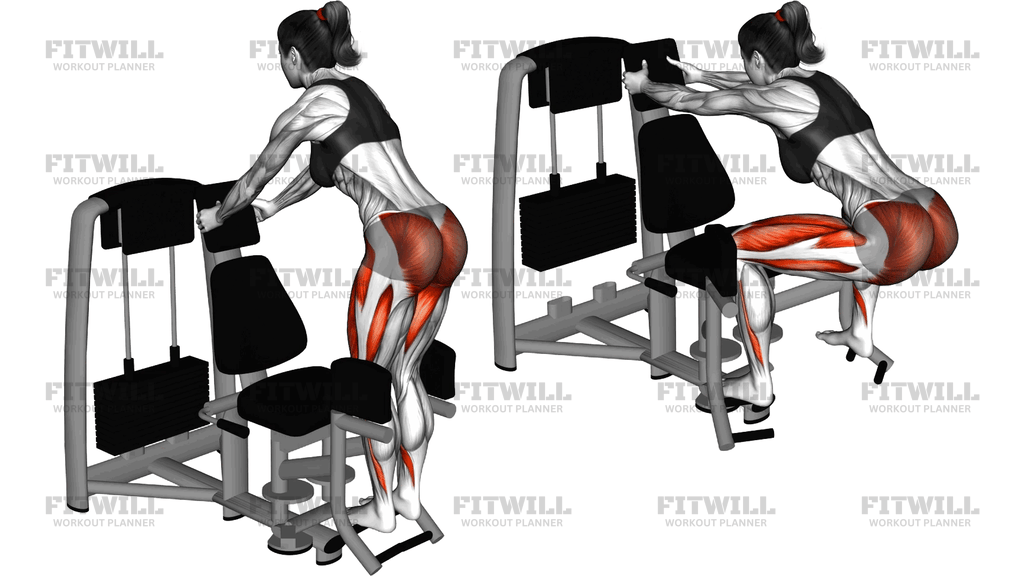
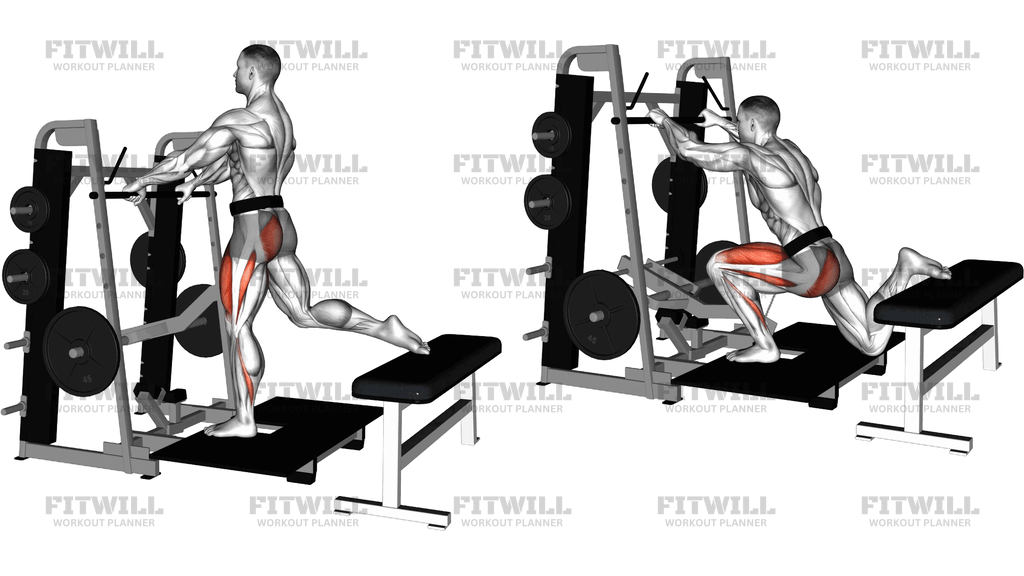
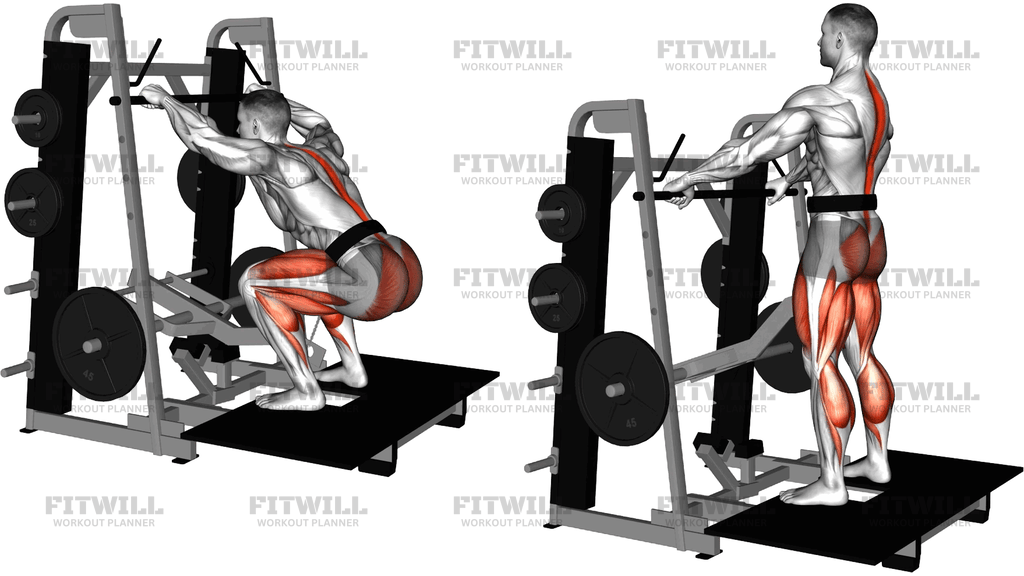
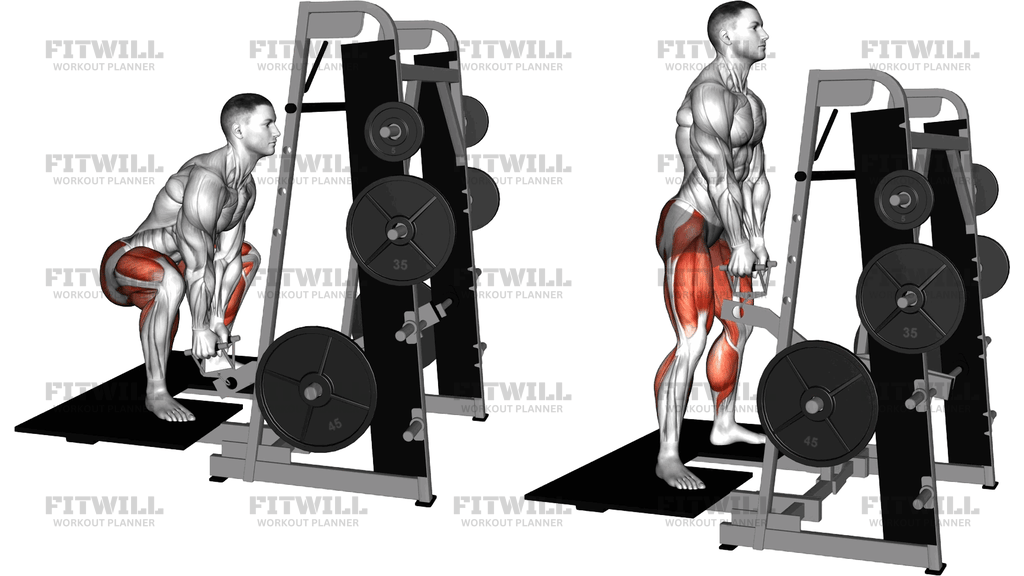
Lever Belt Sumo Squat
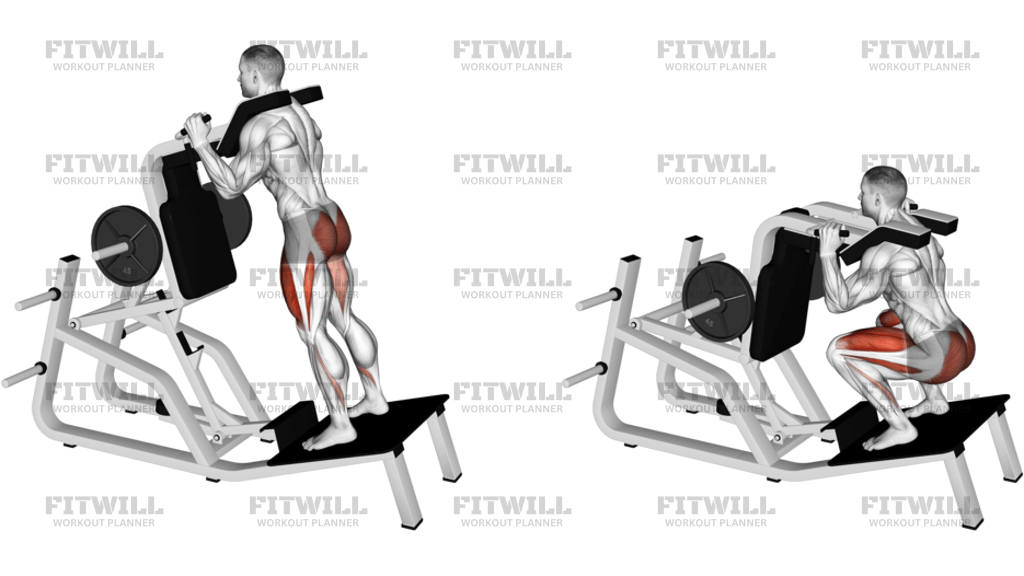
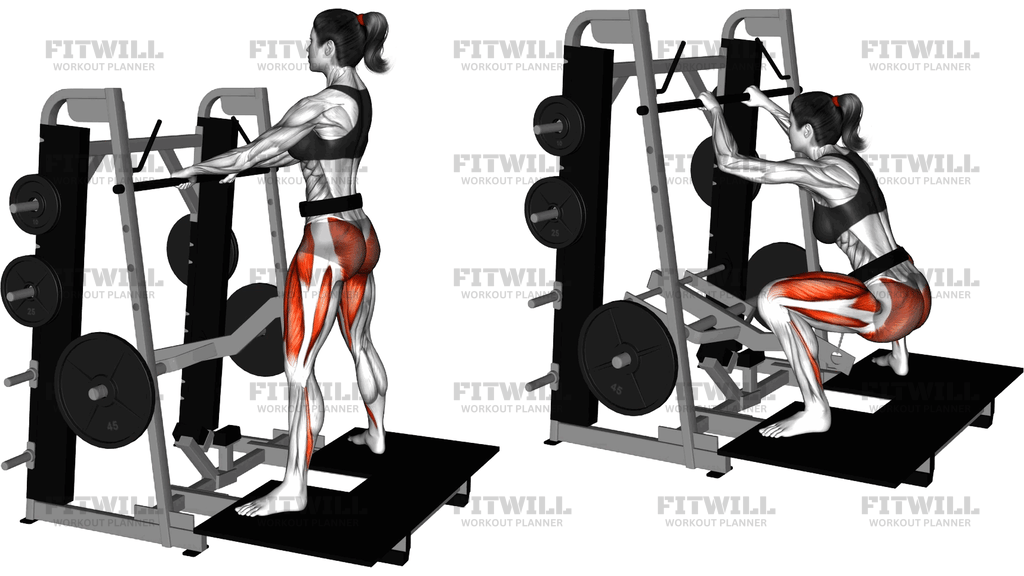
The Lever Belt Sumo Squat is a machine-based squat performed on a plate-loaded leverage squat machine, with the lifter wearing a weightlifting belt and holding the machine's front handles throughout the movement. Instead of balancing a barbell on your back, the resistance travels on a fixed lever arm, so you push against the machine while your hands stay anchored to the handles. The name comes from the sumo-style foot placement: feet set wider than shoulder width with the toes turned out, which shifts the emphasis toward the glutes and inner thighs.
The setup matters because the machine removes the balance demands of a free-weight squat but adds its own requirements. Your foot position on the platform determines how your hips and knees track, and the handles give you a fixed reference point so you can sit back into the squat without your torso collapsing forward. The belt worn in the demonstration helps brace the trunk and gives the abdominal wall something to press against as you descend, which is useful when the machine lets you load the legs heavily.
Muscularly, this exercise targets the gluteus maximus as the primary mover, with strong contributions from the quadriceps and adductors as you widen the stance and turn the toes out. The hamstrings and the deep hip muscles work to control the descent, and your core stays engaged to keep the ribcage stacked over the pelvis. Because the lever arm stabilizes the load, you can focus entirely on driving the hips and knees through a full, controlled range.
This movement suits lifters who want heavy squat volume without a barbell on the spine, people returning from a layoff who need the groove of a fixed path, and anyone who struggles to stay upright in a barbell sumo squat. It is also a practical way to train the wide-stance squat pattern with a partner spotting from the side rather than catching a bar.
To execute it well, set your feet wide with the toes angled outward, grip the handles firmly, and keep the chest proud as you push the hips back and let the knees travel over the toes. Drop until your thighs reach at least parallel or as deep as your hips allow without rounding the lower back, then drive the floor away and squeeze the glutes to stand tall. Keep the heels glued to the platform and let the handles support balance only — the legs, not the arms, should move the weight.
[ Workout Log & Planner ]
Put your next workout in Fitwill
Keep your plan and training log ready when you are.


Instructions
- Stand on the machine's platform and set your feet wider than shoulder width, toes turned out roughly 30 to 45 degrees, with the heels fully supported on the plate.
- Wear a lifting belt snug around your waist and grip the machine's front handles with both hands at about shoulder height, arms extended but not locked.
- Unrack the lever arm and stand tall with the chest lifted, shoulders down, and your weight spread evenly across the whole foot.
- Brace your abdominal wall out against the belt and take a steady breath before descending.
- Push your hips back and down, letting the knees track outward over the toes in line with your turned-out feet.
- Lower until your thighs are at least parallel to the platform, keeping the heels down and the torso angle steady with the help of the handles.
- Drive through the heels and mid-foot to extend the hips and knees together, pressing the lever back up along the same path.
- At the top, stand fully upright and squeeze the glutes without snapping the knees back or leaning away from the handles.
- Exhale on the way up, inhale at the top, and reset your brace before starting the next rep.
- After the final rep, guide the lever back onto its stops and step off the platform only once the weight is fully racked.
Tips & Tricks
- If your knees cave inward at the bottom, consciously spread the floor with your feet — the wide stance only works when the knees keep tracking over the toes.
- Do not pull yourself up with the handles; they are there for balance and torso angle, so if your arms are bending and doing work, the load is too heavy for your legs to move honestly.
- A common mistake is letting the heels lift off the platform as depth increases. Sit back into the hips rather than dropping straight down to keep the weight in the mid-foot.
- Rounding the lower back at the bottom usually means you have gone past your available hip range. Cut the depth slightly and keep the belt-braced torso rigid instead of chasing extra depth with a rounded spine.
- Because the lever arm has its own starting resistance, do your first set lighter than you expect and get a feel for how the machine's path matches your hip and knee joints.
- Keep the toes-out angle consistent every set. Changing foot rotation between sets changes which muscles do the work and makes progress hard to judge.
- Pause for a beat at full depth rather than bouncing out of the stretch — the rebound is easy to hide on a machine and it robs the glutes of work.
- Position the platform so that at the top your torso is close to the handles without hunching; a setup that forces you to reach forward will pull you onto your toes during the squat.
Frequently Asked Questions
Which muscles does the Lever Belt Sumo Squat work the most?
The gluteus maximus does most of the work, with the quadriceps and adductors (inner thighs) contributing heavily because of the wide, toes-out stance. The hamstrings help control the descent and the core stabilizes your torso against the belt.
Why wear a lifting belt for a machine squat?
The belt gives your abdominal wall something to brace against, which helps keep the trunk rigid when the machine allows you to load the legs with more weight than you might use in a free-weight sumo squat. It is a bracing aid, not a replacement for core tension.
How wide should my stance be on the Lever Belt Sumo Squat?
Set your feet clearly wider than shoulder width with the toes turned out 30 to 45 degrees, then adjust so your knees can travel over your toes without pinching at the hips. Taller lifters or those with limited hip rotation usually need a slightly wider placement.
Is the Lever Belt Sumo Squat good for beginners?
Yes, it is one of the more beginner-friendly ways to learn the sumo squat pattern because the lever arm fixes the path of the resistance and the handles provide balance. Start with a light load to learn the machine's groove before adding plates.
How deep should I squat on this machine?
Aim for thighs at least parallel to the platform, or as deep as you can go while keeping the heels down and the lower back neutral. Depth past that point with a rounded back does not add useful work and increases strain on the spine.
What is the most common mistake on this exercise?
Bouncing out of the bottom and letting the knees cave inward on the way up. Both are easy to get away with on a guided machine, so control the pause at depth and keep the knees pushed out over the toes.
What can I substitute if my gym has no leverage squat machine?
A barbell sumo squat with a wide stance, a dumbbell sumo squat holding a single dumbbell at chest height, or a Smith machine sumo squat all train the same pattern. None offer the fixed handles, so expect a bigger balance demand in the free-weight versions.
Should my arms be doing any of the work on the handles?
No. The handles anchor your upper body and help you keep a steady torso angle, but the hips and legs move the lever. If you find yourself rowing or pulling the handles to finish reps, reduce the weight.
Is the Lever Belt Sumo Squat safe for the knees and lower back?
It is generally joint-friendly because the machine stabilizes the load and there is no bar on the spine. Keep the knees tracking over the toes, the heels down, and the torso braced, and stop if you feel sharp joint pain rather than muscular effort.