Weighted Lying Neck Flexion
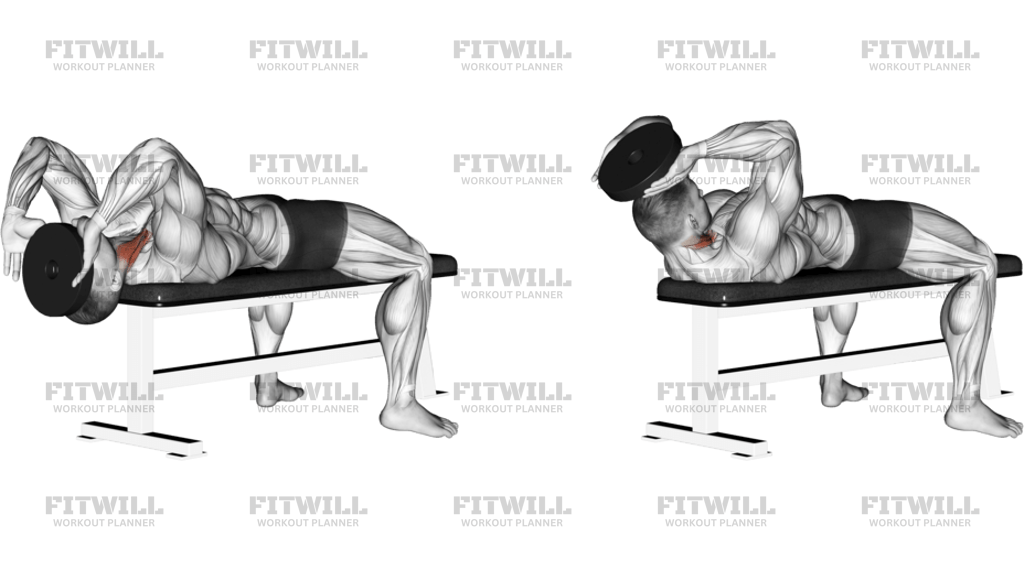
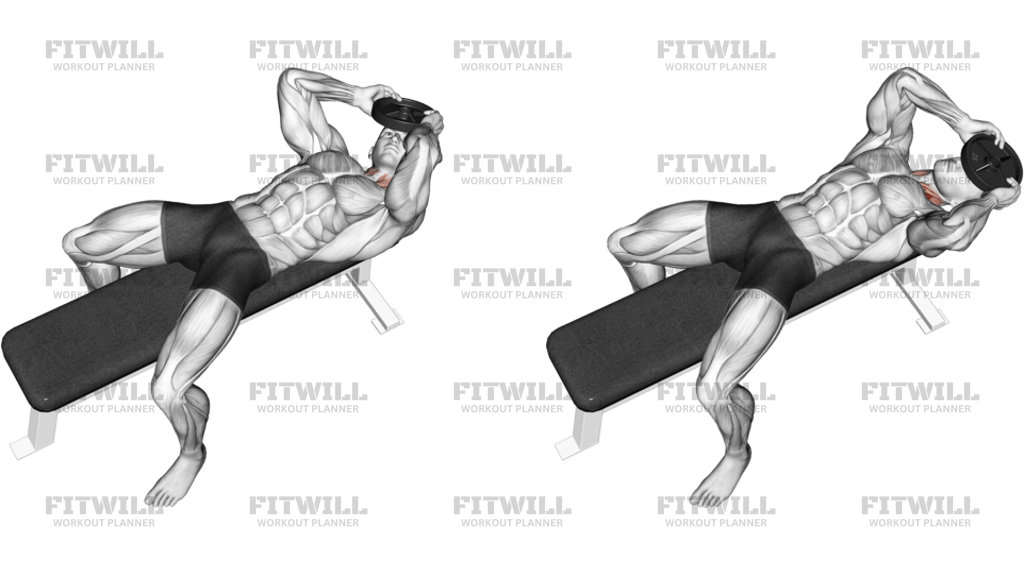
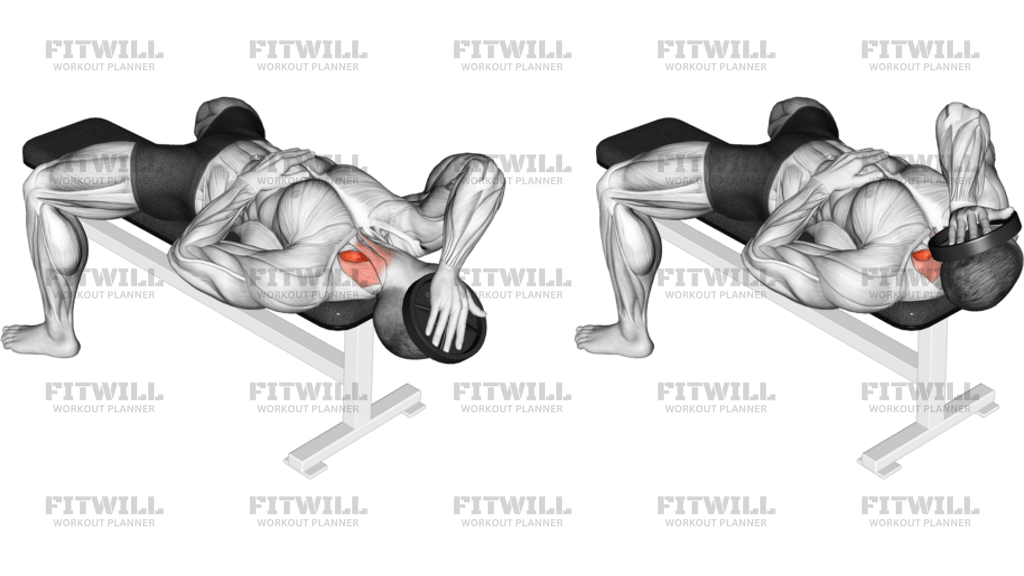
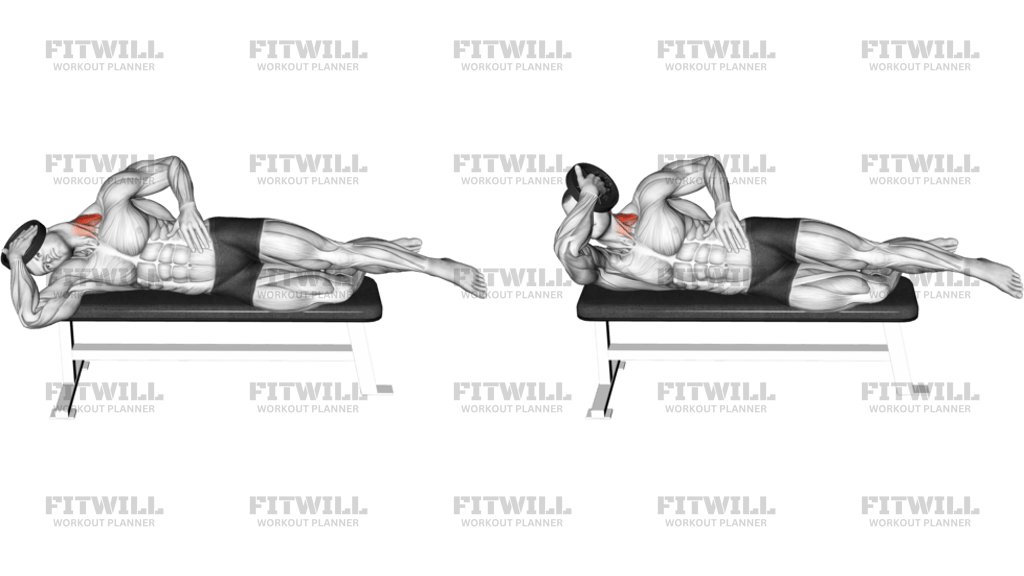
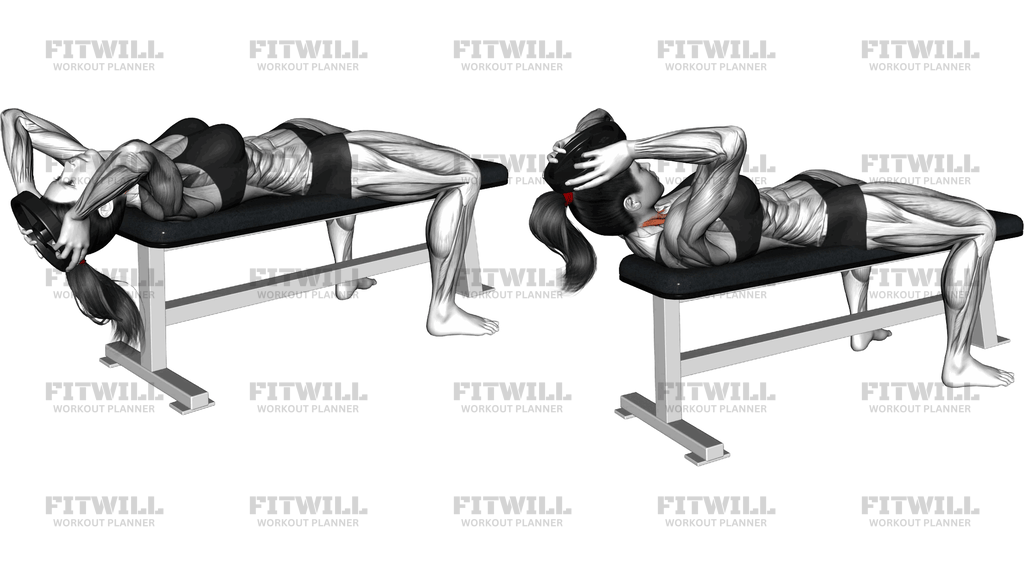
Weighted Lying Neck Flexion is a direct neck-flexor exercise performed face-up on a flat bench with a weight plate balanced on the forehead. You lie with your head and upper shoulders hanging just past the edge of the bench, hold the plate flat against your forehead with both hands, and curl your chin toward your chest against the resistance before lowering it back down with control. The front of the neck does the work, while the arms only stabilize the plate.
The main muscles trained are the neck flexors at the front of the throat, especially the sternocleidomastoid, along with the deeper muscles that draw the head toward the chest. Because the bench supports your torso and the movement arc is short and guided by gravity, the setup is stable and easy to learn, which makes this one of the more approachable ways to load the front of the neck.
This exercise is useful for contact-sport athletes in wrestling, boxing, football, and rugby who want the front of the neck to match the strengthening work done on the sides and back. It is also commonly used in general strength programs to bring the neck up to par with the rest of the upper body, and in rehab-adjacent training to rebuild flexor strength after the neck has been undertrained, provided a professional has cleared you for loaded work.
Setup matters more here than in most lifts. The position of your head relative to the bench edge determines the range of motion: your head needs to hang far enough back that it can flex freely, but your shoulders and upper back must stay firmly supported so the plate never pulls on unsupported tissue. The plate should sit flat and centered on the forehead, never tilted toward the eyes or resting on the crown of the head.
Execution is a slow nod turned into a full curl. Leading with the chin, you flex the neck until you reach a comfortable end range, hold for a beat, then resist the weight all the way back to the start. Because the neck is a mobile column of small joints rather than a simple hinge, jerky or rushed reps are where problems happen. Treat every repetition as deliberate.
Practically, keep the load modest. The neck flexors are small muscles and respond well to higher reps with light plates, typically in the 5 to 15 pound range. Start lighter than you think you need, progress slowly, and stop any set the moment form gets sloppy. If you have a history of neck injury, get clearance before adding weight to this movement.
[ Workout Log & Planner ]
Put your next workout in Fitwill
Keep your plan and training log ready when you are.


Instructions
- Set a flat bench in a clear space and place a light weight plate, such as a 5 or 10 pound plate, within arm's reach on the bench or floor.
- Lie face-up on the bench with your knees bent and feet flat on the floor, and scoot down until the back of your head and upper shoulders are just past the edge of the bench so your head hangs free.
- Pick up the plate and place it flat against your forehead, centered between the hairline and eyebrows, then wrap both hands over it to hold it steady.
- Settle into position: let your head drop back slightly to a neutral hanging position, relax your shoulders onto the bench, and brace your torso so your body does not shift during reps.
- Exhale as you flex your neck, curling your chin toward your chest and lifting your head against the weight of the plate.
- Pause for a moment at the top when your chin is close to your chest or at a range where the plate stays secure and the movement stays comfortable.
- Inhale as you slowly lower your head back down, resisting the plate the whole way until your head returns to the neutral hanging start position.
- Complete your target reps, then carefully sit up or roll the plate off your forehead before standing; never drop the plate while lying down.
- Rest, reset the plate's position on your forehead if it drifted, and repeat for your remaining sets.
Tips & Tricks
- Choose a small plate rather than a large one: a bigger plate sits further down your forehead and can slide toward your eyes as your head tilts back at the start of each rep.
- Keep your hands acting as stabilizers, not lifters. If you notice your elbows drifting toward the bench to help curl the weight, your arms are doing work the neck should be doing.
- Do not pull with your hands at the bottom of the rep. Let the neck flexors initiate the movement and the arms simply keep the plate from slipping.
- Watch for the head twisting sideways, which happens when one arm fatigues first. If the plate starts to tilt, end the set and reset rather than fighting it.
- Keep your hips and feet planted. Lifting the hips or bridging changes the angle of the torso and lets the plate roll toward the eyes.
- The range is short, so tempo is your main tool: aim for a one-second curl, a brief pause, and a two- to three-second lowering phase.
- If the plate feels unstable, place a small towel between the plate and your forehead for grip and padding.
- Stop the set when you cannot lower slowly. Losing control on the descent is the most common cause of strain in this exercise.
- Alternate Weighted Lying Neck Flexion with a lying neck extension on the same bench across the week so the front and back of the neck stay balanced.
Frequently Asked Questions
Which muscles does Weighted Lying Neck Flexion work?
It primarily targets the neck flexors at the front of the throat, especially the sternocleidomastoid, along with the deeper muscles that bring the chin toward the chest. The arms only stabilize the plate, and the torso stays supported on the bench.
How much weight should I use for Weighted Lying Neck Flexion?
Most people should start with a 5 pound plate and only add weight when every rep can be performed slowly with the plate staying flat on the forehead. The neck flexors are small muscles, and small, steady jumps in load are the safest way to progress.
Why do my shoulders need to stay on the bench during Weighted Lying Neck Flexion?
The bench edge should pass just behind your shoulders so your head can hang and flex freely while your upper back stays supported. If your shoulders slide off the edge, the plate loads unsupported tissue instead of only challenging the neck flexors.
How is Weighted Lying Neck Flexion different from lying neck extension?
Flexion works the front of the neck as you curl the chin toward the chest, while extension is usually performed lying face-down and works the muscles at the back of the neck. Training both keeps the neck balanced around the spine.
Is Weighted Lying Neck Flexion safe for beginners?
Beginners can perform it safely with a very light plate or even no weight, focusing on slow, controlled reps. The main risks are using too much load, rushing the lowering phase, or letting the plate slide, so err on the light side at first.
Can I do this exercise without a bench?
Yes, you can lie face-up on a mat on the floor with the plate on your forehead and perform the same curling motion. The floor version has a shorter range of motion since your head rests on the ground, so it works well as a lighter starting point.
How many reps and sets should I do for Weighted Lying Neck Flexion?
Higher-rep sets work well for the neck: 10 to 20 controlled repetitions for 2 to 3 sets is a common approach. Slow tempo and consistent control matter far more than the amount of weight on your forehead.
The plate slides on my forehead during reps. What should I do?
Use a smaller plate, place a thin towel between the plate and your forehead, and keep both hands spread wide over the plate so it cannot tilt. Also check that you are not letting your head drop too far back at the start, which increases the slide.
Should I feel Weighted Lying Neck Flexion anywhere besides my neck?
The effort should be concentrated at the front and sides of your neck. If you feel sharp pain, dizziness, or numbness and tingling into your arms, stop the set and reduce or remove the weight before trying again.
How often can I train Weighted Lying Neck Flexion?
Because the load is light and the range is short, it can usually be trained two to three times per week alongside other neck work. Allow at least a day between sessions so the neck muscles recover like any other trained muscle group.