Smith Calf Raise (Version 2)
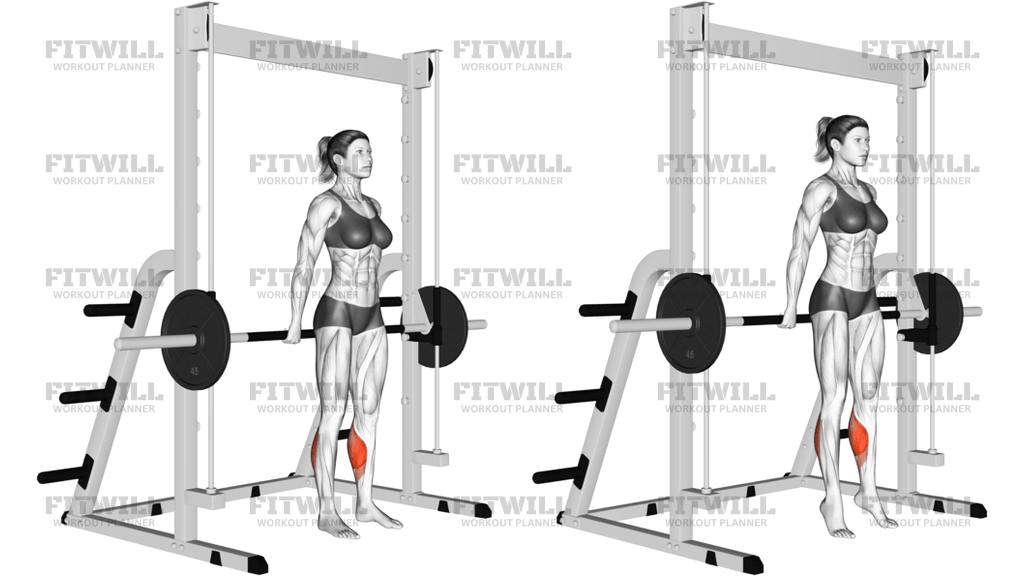
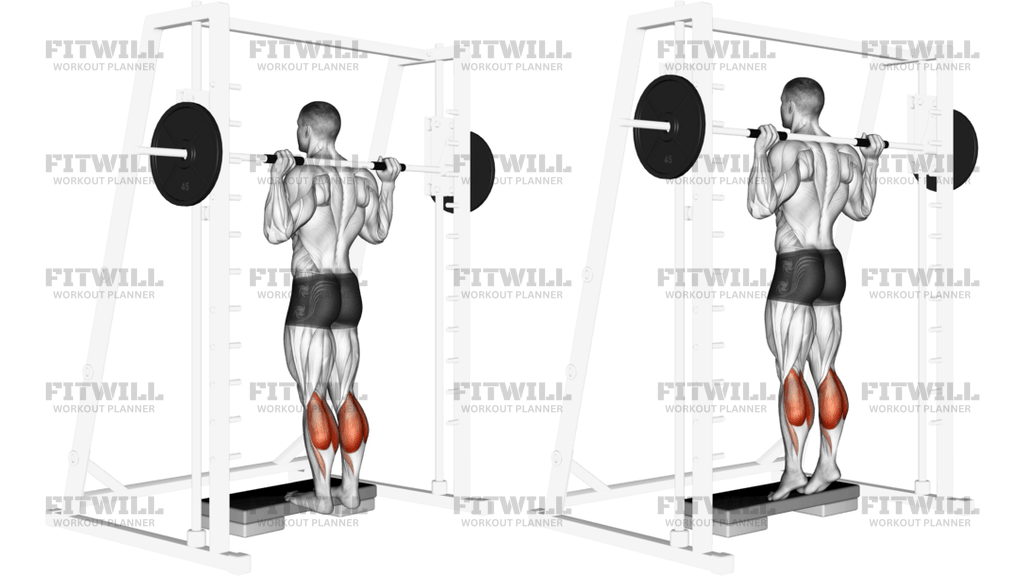
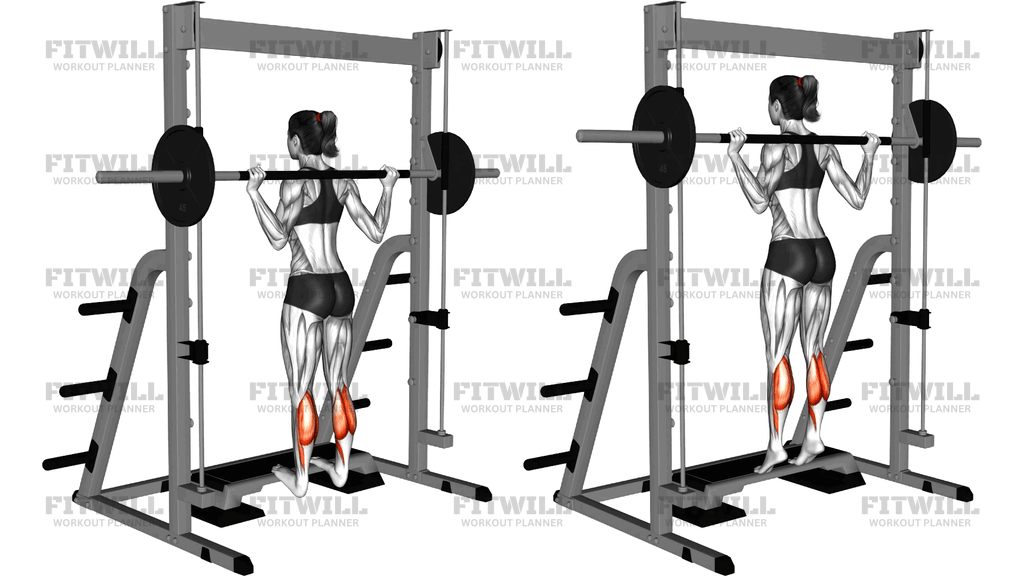
The Smith Calf Raise is a standing calf exercise performed inside a Smith machine, with the bar resting across your upper back and the balls of your feet placed on a raised platform or step. Because the bar travels on a fixed vertical track, the setup removes balance demands almost entirely, letting you put full attention into driving your heels up and lowering them into a deep stretch at the bottom.
This version of the movement primarily targets the gastrocnemius, the large two-headed muscle that forms the visible shape of the calf, with the soleus working underneath it as a strong assistant. Standing with relatively straight knees biases the gastrocnemius, which is why this exercise pairs well with seated calf work when you want to cover both major calf muscles in a session.
The Smith machine setup matters for a specific reason: with the bar locked to the rails, you can safely work very close to muscular failure without worrying about stabilizing a free barbell or losing your footing. You can also adjust your foot position on the platform slightly from set to set, which is harder to manage when your whole body is balancing a bar. The fixed path makes this a favorite for lifters who want higher-rep calf work, drop sets, or a deep, loaded stretch at the bottom of each rep.
Execution comes down to three checkpoints. First, place the balls of your feet firmly on the platform with your heels hanging off the edge, and unrack the bar with a secure grip on each side. Second, drop your heels below the level of the platform to stretch the calves before each rep. Third, press up through the balls of your feet until you are tall on your toes, pause briefly at the top, and lower under control. Keeping your knees straight but not locked stiff, and your hips stacked over your ankles, keeps the tension where it belongs.
Common use cases include bodybuilding calf training, rebuilding calf strength after long lay-offs where machine-guided movement feels more manageable, and anyone who struggles to feel standing calf raises with dumbbells because of balance issues. Because calves respond well to volume and controlled tempo, this exercise slots naturally into leg days as a finisher.
From a safety standpoint, the main concerns are setup and range. Set the bar height so you can unrack it while standing tall on the platform rather than stretching to reach it, and keep the safety stops positioned low enough to catch the bar if a set goes wrong. Never bounce out of the bottom stretch, and build the range gradually so your ankles and Achilles tolerate the full depth before you load it heavily.
[ Workout Log & Planner ]
Put your next workout in Fitwill
Keep your plan and training log ready when you are.


Instructions
- Set the platform or step inside the Smith machine directly under the bar, and adjust the bar height so it sits at your upper-back level when you stand tall on the platform.
- Position the balls of both feet on the edge of the platform with your heels hanging off, feet about hip-width apart, and grip the bar on each side of your shoulders just like a back squat.
- Unrack the bar, rotate it to release the safety hooks, and stand upright with your hips stacked over your ankles and your core braced.
- Lower your heels slowly toward the floor until you feel a solid stretch across both calves, keeping the descent smooth rather than dropping.
- Press through the balls of your feet and raise your heels as high as possible, driving up until you are fully on your toes.
- Hold the top position for a beat and squeeze your calves before starting the next rep.
- Inhale as you lower into the stretch and exhale as you press up to the top.
- Keep your knees straight but not rigid, and avoid letting them bend or drift forward as you move.
- After your final rep, rotate the bar back onto the safety hooks before stepping your heels down off the platform.
Tips & Tricks
- If your heels keep dropping too fast at the bottom, lighten the load and take two full seconds to reach the stretch — the bounce usually means the weight is doing the work instead of your calves.
- Roll the bar slightly forward or back on your shoulders to find the spot where it presses least on your neck; the Smith bar angle can make a bad rack position uncomfortable over long sets.
- A pause of one to two seconds at the top does more for calf development than extra plates rushed through the range.
- If the platform edge digs into your feet, shift slightly so the widest part of the forefoot sits on the platform, not the arch.
- Point your toes straight ahead or slightly out; turning them far outward or inward does not meaningfully change which calf head works and just twists the knee.
- Watch that your hips stay level and square to the machine — twisting to peek at the mirror shifts load off the calves.
- Full range beats heavy partials here: drop the heels completely, but if your Achilles feels pinched at full depth, reduce the range slightly and work up to it over weeks.
- Set the Smith machine safety stops a few inches below your deepest stretch so a failed rep can be handed off safely.
- Since the machine guides the bar, use that stability for tempo work — three seconds down, pause, one second up is an effective pattern for this exact setup.
Frequently Asked Questions
Which muscles does the Smith Calf Raise work?
It mainly trains the gastrocnemius, the visible upper calf muscle, with the soleus assisting through the ankle extension. The ankle stabilizers also work to keep your feet steady on the platform.
Why use a Smith machine instead of a barbell for standing calf raises?
The fixed bar path removes the balance and stabilization demands of a free barbell, so you can focus entirely on the calf contraction and use a deeper, more controlled stretch. It also makes training close to failure safer because you can re-rack the bar at any point.
How deep should my heels drop in the Smith Calf Raise?
Lower your heels until you feel a clear stretch in the calves without pain in the Achilles. If you are new to the movement or haven't trained calves in a while, use a slightly shorter range and increase depth gradually.
Should my knees be straight or slightly bent?
Keep your knees straight but relaxed. Bending the knees turns the movement into more of a soleus exercise and reduces the work of the gastrocnemius, which is the main target when you perform the Smith Calf Raise standing.
Where exactly should my feet sit on the platform?
Place the balls of your feet on the platform edge with your heels fully off it, so they can drop below the level of your toes. If the edge is uncomfortable, adjust so the pressure lands on the pad of the forefoot rather than the arch.
How many reps should I do?
Calves tend to respond to moderate and high rep ranges, so sets of 10 to 20 controlled reps work well. Because the machine is stable, you can also safely use pauses and slower tempos to make lighter weights harder.
What is the most common mistake with this exercise?
Bouncing out of the bottom stretch using the elastic recoil of the Achilles tendon. Fix it by lowering slowly, pausing briefly in the stretched position, and driving up from a dead stop each rep.
Can beginners do the Smith Calf Raise?
Yes, and it is actually a good starting point because the machine handles balance for you. Begin with body weight or a light load, master the full range, and add plates gradually.
What can I substitute if my gym has no Smith machine?
Standing calf raises with dumbbells on a step or a leg press calf raise are close substitutes. You will need to manage balance yourself with the dumbbell version, so keep the weight moderate.
Is it safe to train calves to failure on this machine?
The Smith setup is one of the safer ways to push near failure because the bar can be hooked back on the rails at any moment. Still, set the safety stops low enough to catch the bar, and avoid pushing to failure if your form is breaking down.