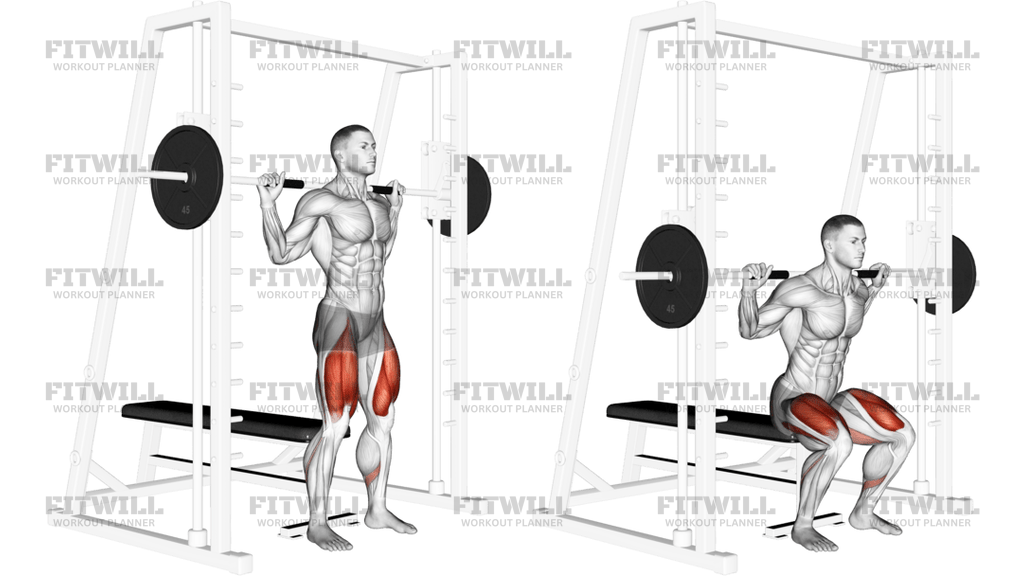
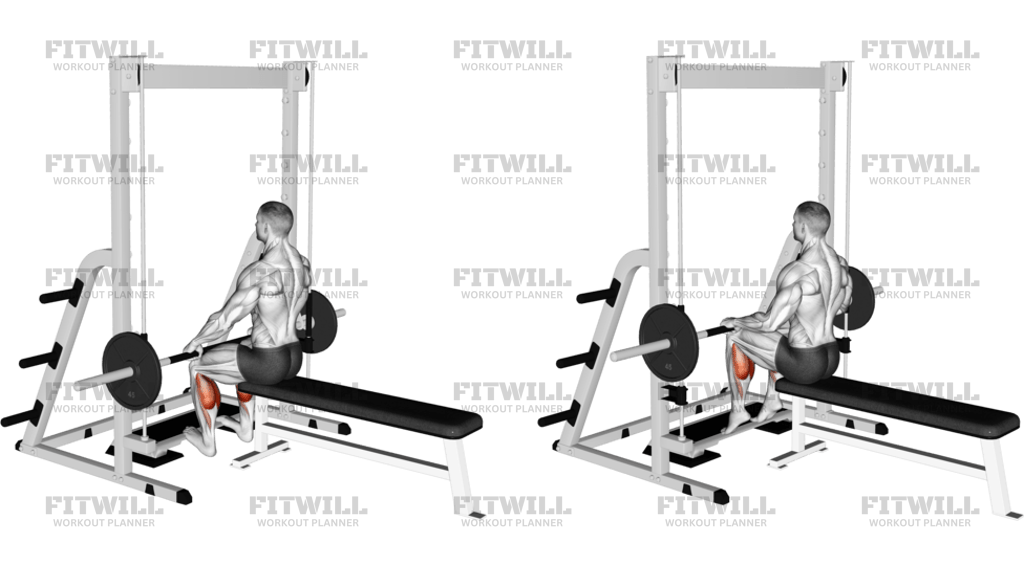
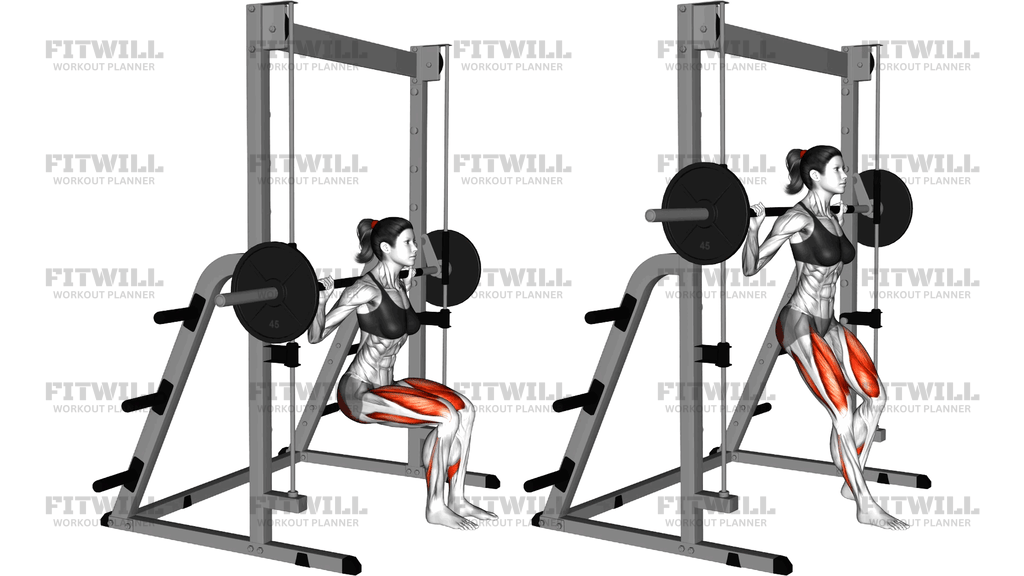
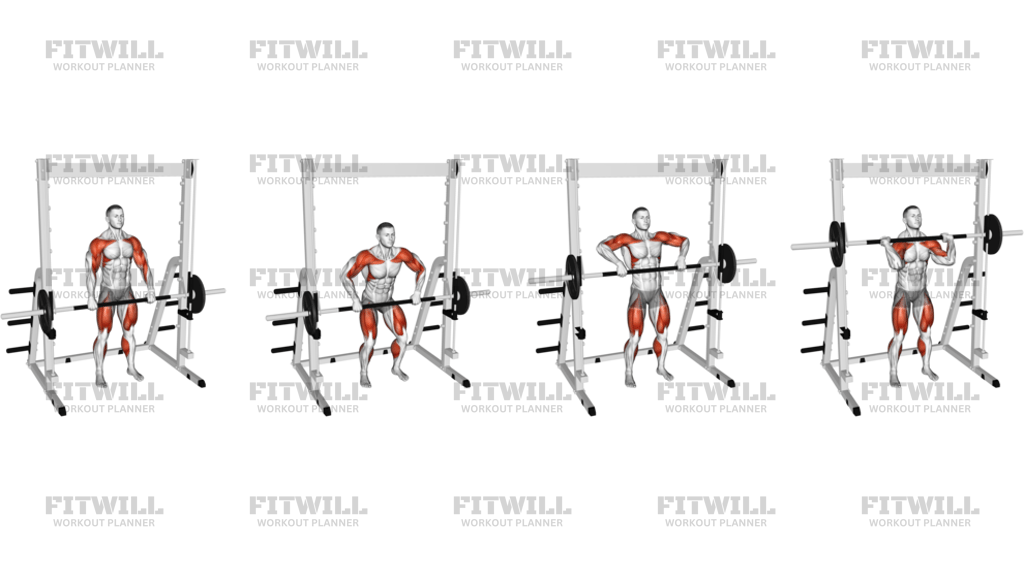
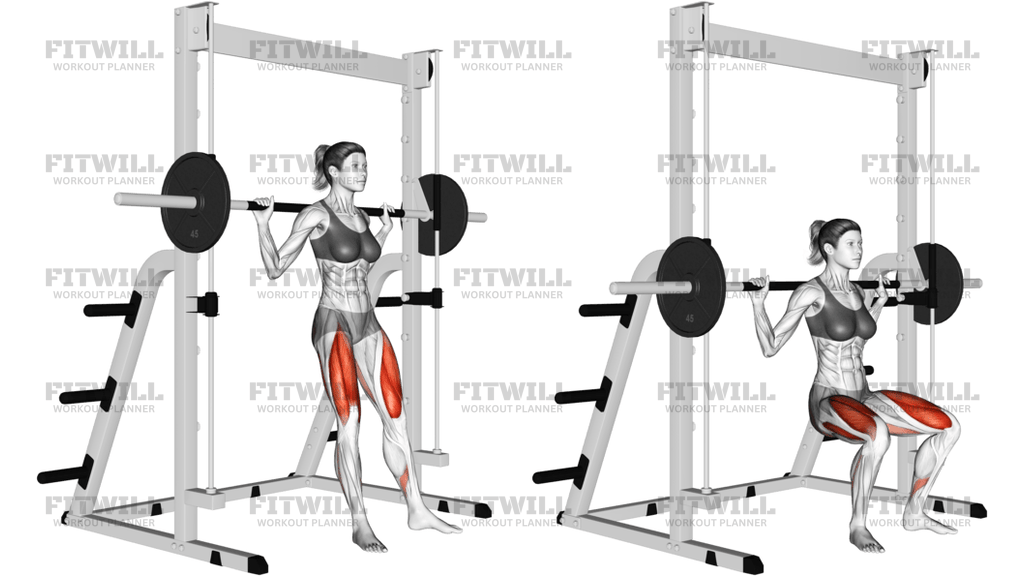
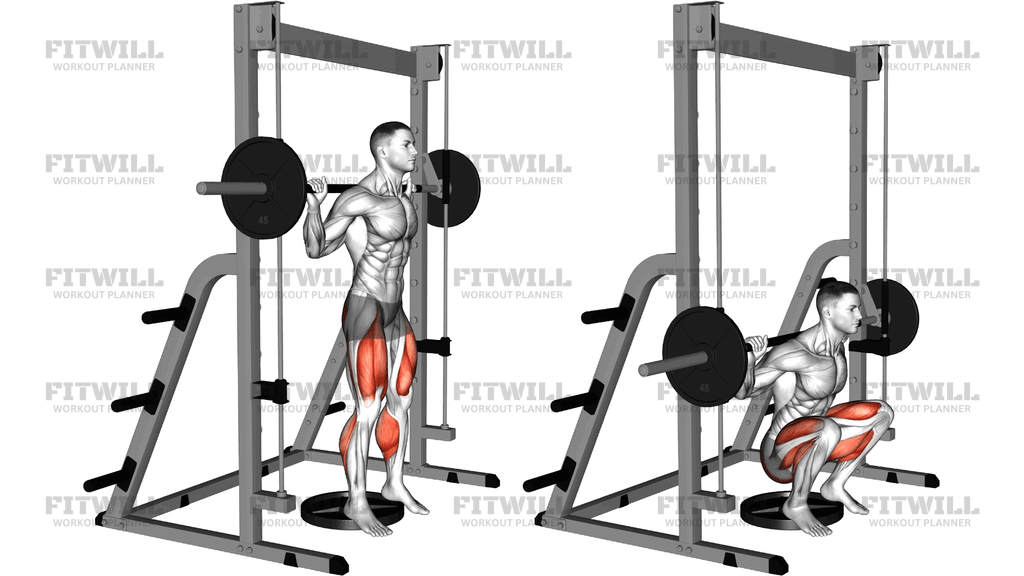
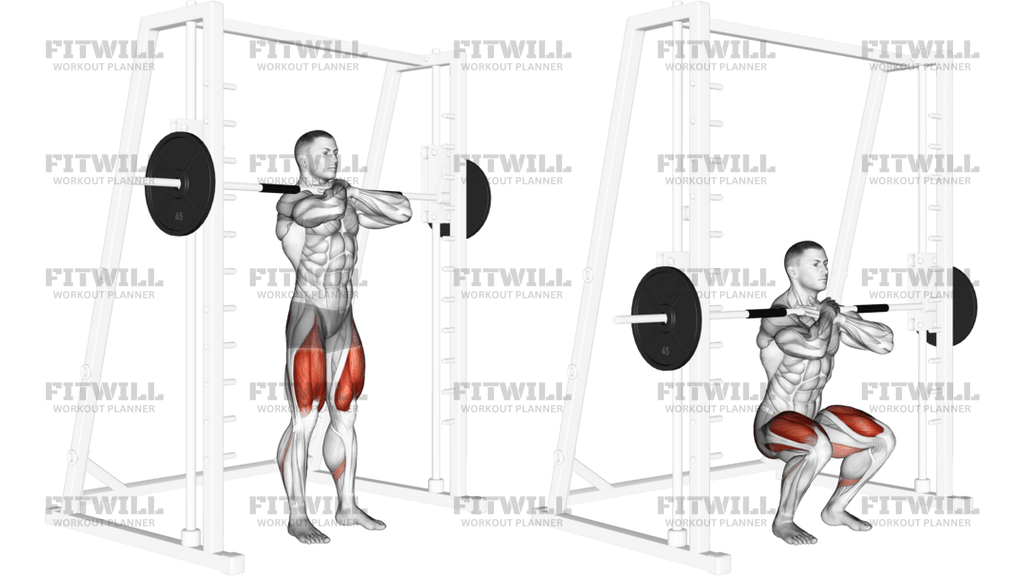
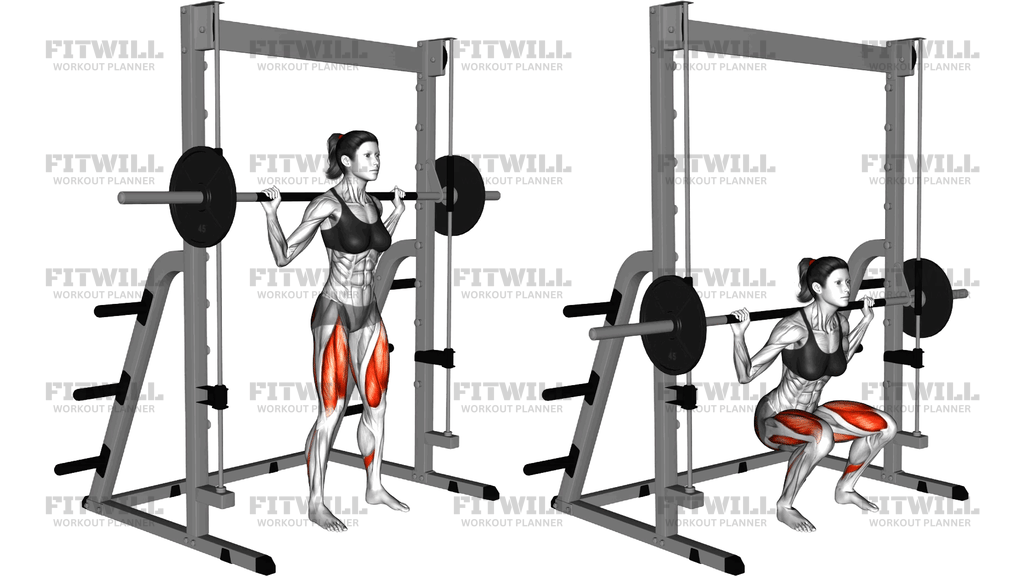
Smith Bench Squat
The Smith Bench Squat is a guided squat variation performed on a Smith machine with a flat bench positioned behind you. You unrack the bar across your upper back, stand a step forward from the machine's vertical path, and lower your hips back and down until they lightly touch the bench before driving back up to standing. The bench acts as a depth gauge and a safety target, which makes it easier to repeat the same range on every rep.
This setup is especially useful for people learning to squat. The fixed bar path removes the balance demands of a free-weight barbell, and the bench behind you gives clear feedback about how deep you are going. If you tend to cut squats short or drift forward onto your toes, tapping the bench helps you practice sitting back into your hips instead of collapsing your knees forward.
The main muscles worked are the quads, which extend the knees as you rise. The glutes and hamstrings handle hip extension, particularly during the drive out of the bottom, and the calves, lower back, and core stabilize you throughout. Because the Smith machine supports the load on its rails, you can focus on leg drive rather than stabilizing the bar.
Setup matters more than people expect here. The bench height and your distance from the machine determine whether you tap the bench with your hips or awkwardly perch on it. Set the bar at roughly upper-chest height, place the bench directly behind the bar path, and take one or two short steps forward so your feet sit slightly ahead of your hips. This lets your shins stay near vertical while your hips travel back.
To execute well, brace your torso before each rep, lower under control for two to three seconds, and make contact with the bench a light touch rather than a full sit. Pausing or relaxing on the bench turns the rep into two separate movements and loses the tension you built on the way down. Keep your chest tall, grip the bar firmly with elbows tucked, and push the floor away as you stand.
Common use cases include beginner squat instruction, higher-rep leg hypertrophy work, returning to squatting after a layoff, and training without a spotter since the Smith machine's safety catches can be set just below your working depth. It pairs well with leg presses or lunges in a lower-body session.
[ Workout Log & Planner ]
Put your next workout in Fitwill
Keep your plan and training log ready when you are.


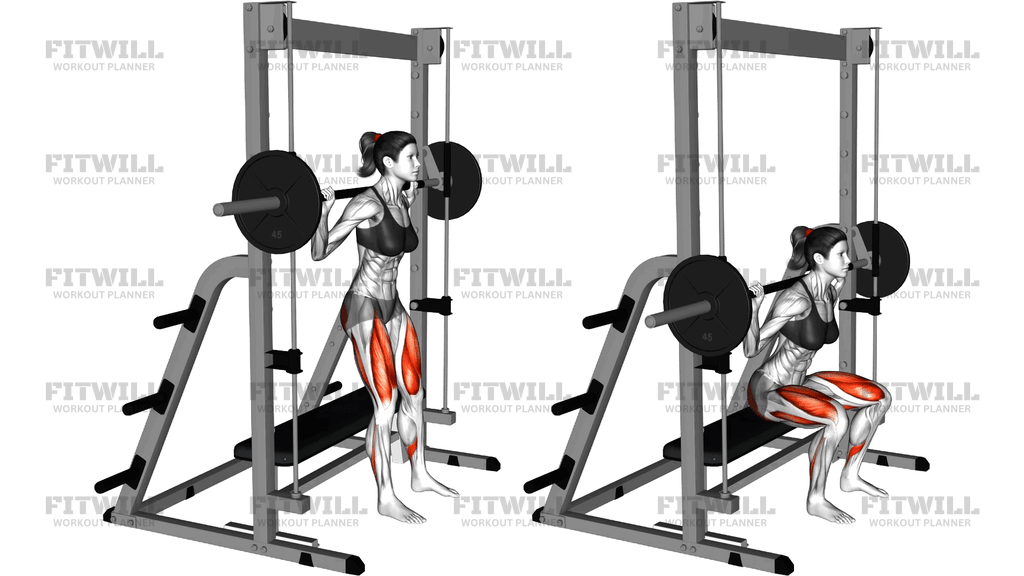
Instructions
- Set the Smith machine bar at about upper-chest height and place a flat bench directly behind the bar, perpendicular to your stance.
- Position the bar across your upper back on the traps, grip it wider than shoulder width with elbows pointing down, and unrack it by rotating the bar forward off the hooks.
- Take one or two short steps forward so your feet are slightly ahead of the bar, about hip to shoulder width apart, with toes turned out 10 to 20 degrees.
- Inhale and brace your core, pull your shoulder blades together to keep the bar stable, and lift your chest.
- Push your hips back and bend your knees to lower yourself toward the bench, keeping your weight over the middle of your feet and your shins close to vertical.
- Continue down until your hips lightly touch the bench, keeping tension in your legs rather than sitting your weight onto it.
- Drive through your heels and mid-foot to press the floor away, extending your hips and knees together until you reach a full stand.
- Exhale as you rise, then take a breath, re-brace, and lower again for the next repetition.
- After your final rep, step the bar back under the hooks and rotate it onto the rack before letting go, and set the safety stops at just below bench height before you start.
Tips & Tricks
- If your heels lift as you lower, you are standing too far forward or descending too fast, so shorten your forward step and slow the eccentric down.
- Tap the bench with your hips, don't sit on it. Resting between reps removes muscle tension and turns each rep into two separate efforts.
- If the bar drifts toward your toes, think about spreading the floor with your feet and pulling your hips back at the start of the descent.
- Adjust bench height so your thighs reach parallel or just below when your hips make contact; a bench that is too high shortens the range and too low forces you to hunt for depth.
- Keep your elbows under the bar rather than flared behind it. Flared elbows often coincide with a rounded upper back under load.
- Set the Smith machine safety stops one notch below your deepest rep so a failed set can be escaped by shrugging the bar forward.
- Avoid locking your knees hard at the top; stand tall with legs nearly straight but keep slight tension in the quads.
- If your lower back rounds when you tap the bench, reduce the depth or widen your stance slightly until you can keep your spine neutral.
- Start with just the counterbalanced bar weight for your first session to dial in bench distance and foot placement before adding plates.
Frequently Asked Questions
What muscles does the Smith Bench Squat work?
The quads are the primary movers, with the glutes and hamstrings driving hip extension out of the bottom. The calves, core, and lower back work to keep your torso steady under the bar.
Is the Smith Bench Squat good for beginners?
Yes, it is one of the friendlier ways to learn squatting because the fixed bar path handles balance and the bench gives an unmissable depth target. Once the pattern feels natural, you can transition to free-weight squats with the same hip-back cue.
How far in front of the Smith machine should my feet be?
Take one or two short steps forward so your feet sit slightly ahead of the bar and your shins stay close to vertical when your hips reach the bench. If your heels lift or your knees slide far forward, step back a little.
Should I sit fully on the bench during the Smith Bench Squat?
No, make it a light touch. Sitting fully unloads your muscles and breaks the rep into two separate movements, whereas a brief tap keeps tension from the descent through the drive up.
Why is there a bench behind me in this squat variation?
The bench sets a consistent, repeatable depth and encourages you to sit back into your hips instead of drifting forward onto your toes. It also acts as a built-in safety target if you lose control on a heavy set.
What is the most common mistake with the Smith Bench Squat?
The most frequent error is lowering too quickly and bouncing off the bench, which rounds the lower back and takes tension off the quads. Control the last few inches before contact and pause briefly at the tap.
Can I build legs with the Smith Bench Squat instead of barbell squats?
You can build meaningful quad and glute strength and size with it, especially at moderate to high rep ranges. The trade-off is less stabilizer involvement than a free-weight squat, so many lifters use it alongside other leg work rather than as the only squat.
What can I use instead of a bench if my gym's benches are taken?
A sturdy box, a low plyo box, or even a stacked step platform works the same way as long as it is stable and near parallel height. Avoid anything soft or wheeled that could shift when you make contact.
How should I set the Smith machine safety stops for this exercise?
Set the catches one notch below the bar position at your deepest rep. That way, if you fail a lift, you can shrug the bar forward off your back and step out from under it.
Is the Smith Bench Squat safe to do alone without a spotter?
Yes, that is one of its main advantages. The fixed bar path, the bench behind you, and adjustable safety stops mean you can train to a challenging depth and escape a failed rep without a partner.