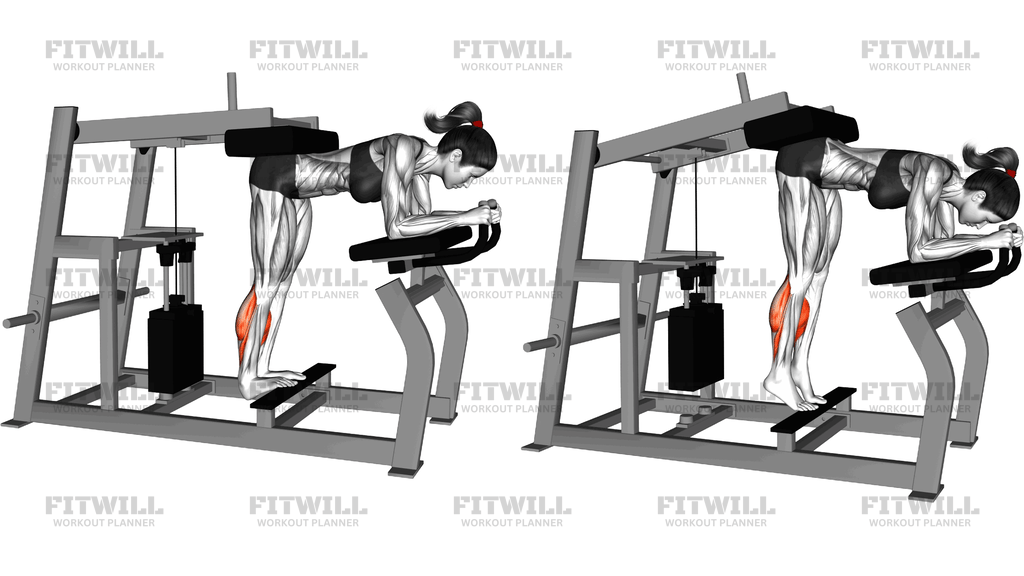
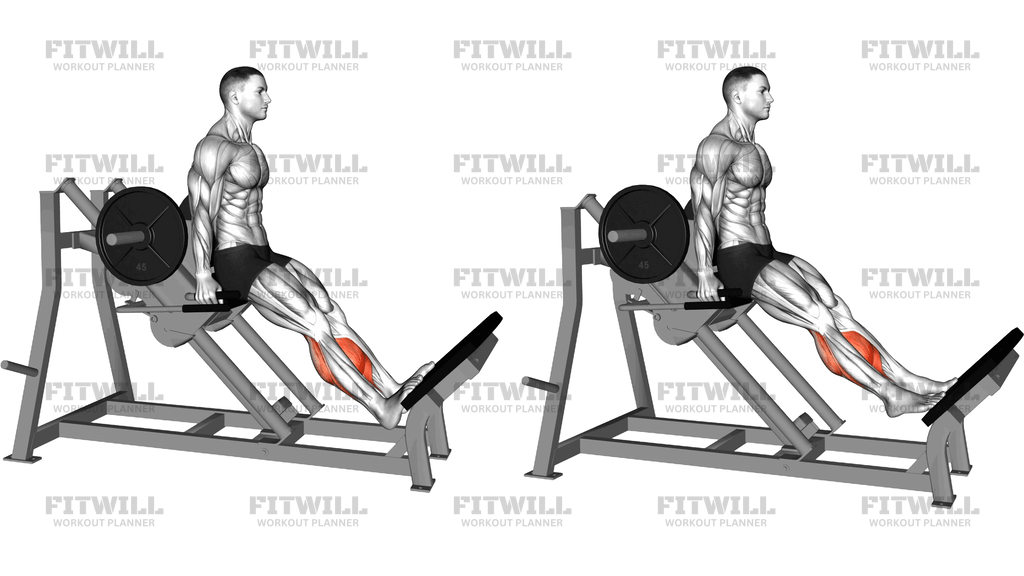
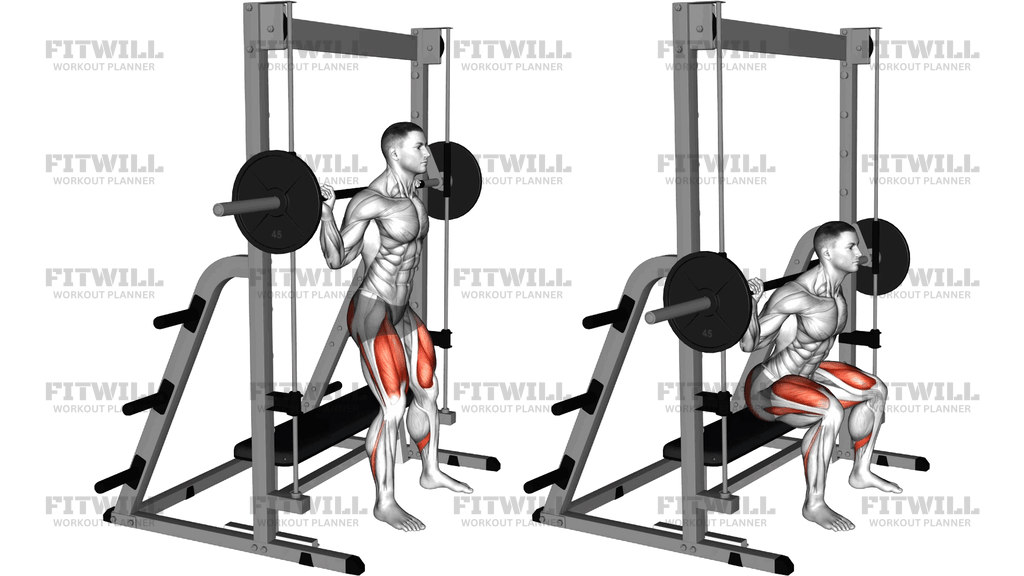
Smith Calf Raise On Step
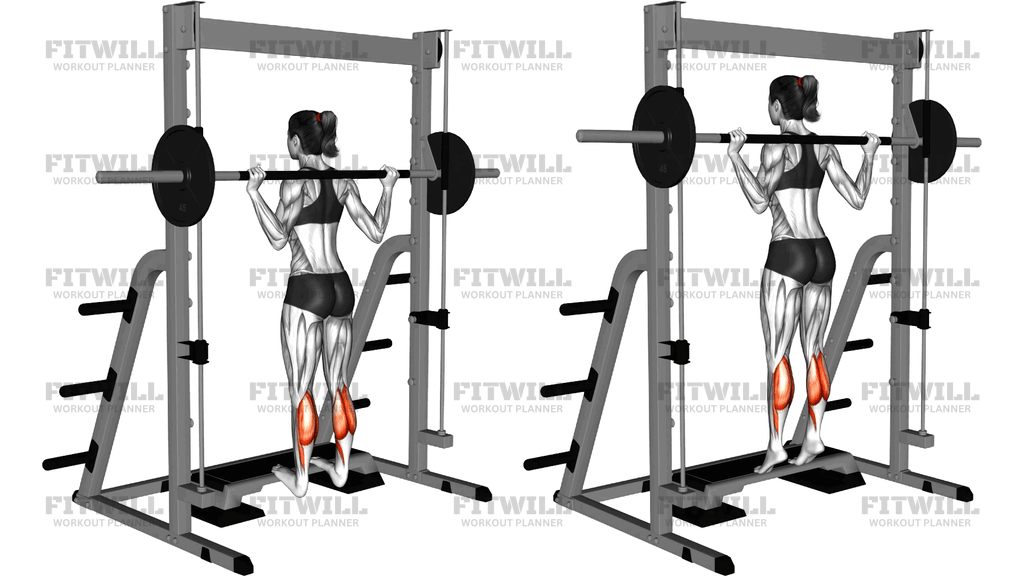
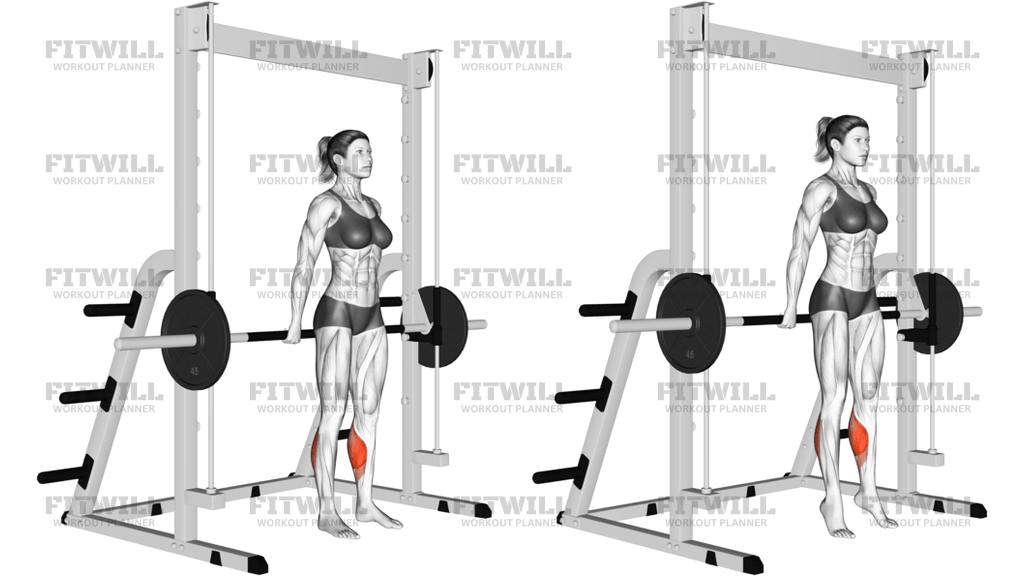
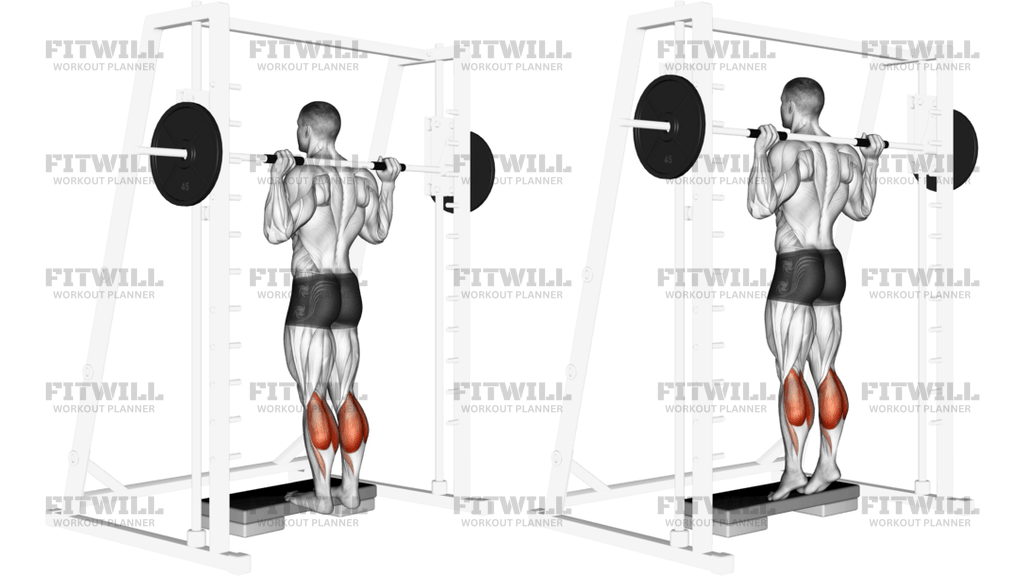
Smith Calf Raise On Step is a standing calf exercise performed with the Smith machine bar resting across the upper back while the balls of the feet stay on a raised step. The step lets the heels travel below the toes, so each rep starts from a loaded stretch and finishes with a hard plantarflexion at the top. That makes the movement especially useful when you want direct calf work with a very stable bar path and minimal balance demand.
The exercise mainly targets the gastrocnemius and soleus, with the ankle and foot muscles controlling the rise, the lower legs stabilizing the bar path, and the trunk keeping the torso stacked over the midfoot. Because the machine fixes the bar path, the quality of the rep depends on how well you manage foot pressure, heel drop, and tempo. If the heels bounce or the knees turn the rep into a squat, the calves lose tension quickly.
Setup matters more here than in many other calf movements. Stand tall on the step with the balls of the feet planted and the heels hanging clear of the edge. Keep the bar secure across the traps or rear delts, use a stance about hip width, and unlock the machine only after you are braced and balanced. From there, lower the heels under control until you feel a clear stretch through the calves, then drive straight up through the forefoot without letting the ankles roll out or the knees drift forward.
A good rep finishes with the ankles fully extended, the body still upright, and the calves doing the work rather than momentum. Pause briefly at the top if you want more tension, then return slowly to the stretched bottom position. The step height should be enough to lengthen the calves without forcing the Achilles tendon or arches into a painful range. If you cannot keep the torso quiet and the movement clean, reduce the load before you reduce the range.
This exercise fits well as an accessory lift for leg days, lower-body specialization blocks, or any program that needs direct calf volume with predictable form. It is also beginner friendly because the Smith machine removes a lot of balance complexity, but the machine does not protect you from sloppy foot placement. Use a controlled tempo, keep the reps smooth, and stop the set when the heel path or ankle position starts to change.
[ Workout Log & Planner ]
Put your next workout in Fitwill
Keep your plan and training log ready when you are.


Instructions
- Place the Smith bar across your upper traps or rear delts, then step onto a stable platform so the balls of your feet are on the edge and your heels can hang free.
- Stand about hip-width apart with your weight centered over the big toe, second toe, and heel line of each foot, then unlock the bar only after you feel balanced.
- Keep your knees softly bent but fixed, chest tall, and ribs stacked over your pelvis before you start the first rep.
- Lower both heels slowly until you feel a strong calf stretch at the bottom of the step.
- Pause briefly in the stretched position without bouncing or relaxing onto the Achilles tendon.
- Drive straight up through the forefoot and lift the heels as high as you can until the calves are fully contracted.
- Keep the bar path quiet and let the ankles do the work instead of swaying the hips or turning the rep into a squat.
- Lower back down under control, breathe steadily, and re-rack the Smith bar once the set is complete.
Tips & Tricks
- Use a step height that gives you a clear calf stretch without forcing the heel so low that the Achilles or arch feels pinched.
- Keep pressure on the big toe and second toe as you rise; rolling to the outside edge of the foot usually shortens the calf contraction.
- Do not let the knees travel forward and turn the set into a bent-knee squat pattern unless you intentionally want more soleus bias.
- A brief pause at the top increases calf tension more effectively than bouncing for extra reps.
- If the bar feels unstable on your traps, reset your shoulder position before each set instead of chasing the rep.
- Use a slower lowering phase than lifting phase so the calves stay loaded through the full range.
- Keep the torso vertical; leaning forward shifts the work away from the calves and makes the rep look easier than it is.
- Choose a load that lets every heel drop look the same from the first rep to the last.
Frequently Asked Questions
What does Smith Calf Raise On Step train most?
It primarily trains the calf muscles, especially the gastrocnemius and soleus, with the foot and ankle muscles helping control the heel path.
Why use a step instead of standing flat on the floor?
The step lets your heels drop below toe level, which increases the stretch on the calves and usually makes each rep more productive.
Where should the Smith bar sit on my body?
It should rest across the upper traps or rear delts, not on the neck. Keep the shoulders set so the bar feels secure before you unlock it.
Should my knees bend during the rep?
Keep them softly bent and mostly fixed. A little knee softness is fine, but too much bend turns the exercise into a different calf emphasis and reduces the clean ankle motion.
How high should I rise at the top?
Rise until the heels are as high as you can control and the calves are fully shortened, then pause briefly before lowering again.
What is the most common mistake on this movement?
The usual mistake is bouncing in the bottom stretch or using hip sway to help the bar move instead of letting the ankles do the work.
Can I do this if I am new to calf training?
Yes. The Smith machine makes balance easier, so beginners can focus on foot placement, heel drop, and a controlled tempo with light loads.
How do I make the exercise more challenging without changing equipment?
Use a slower lowering phase, add a short pause at the top, and keep the same range of motion on every rep before you increase the load.