Smith Reverse Calf Raises
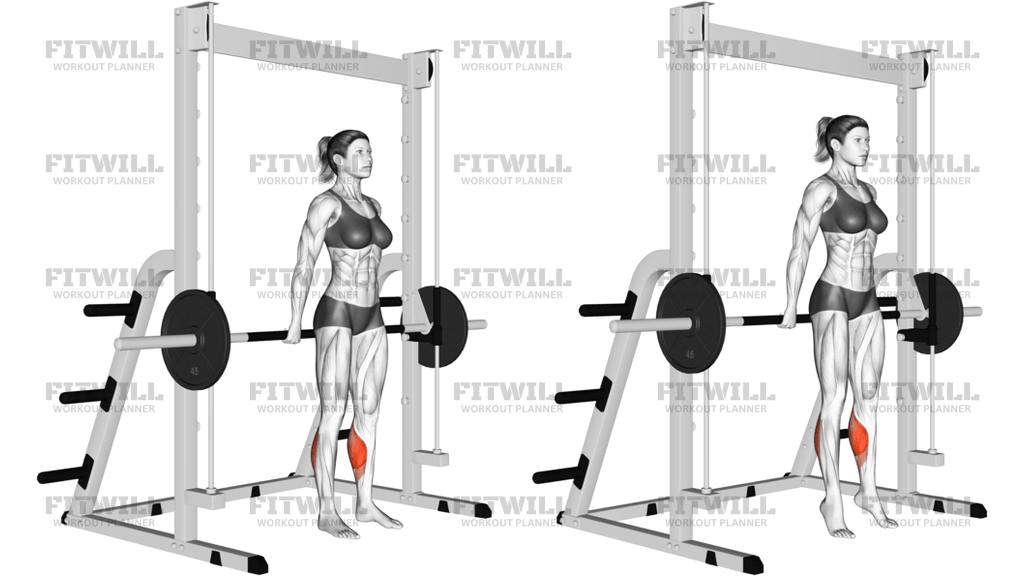
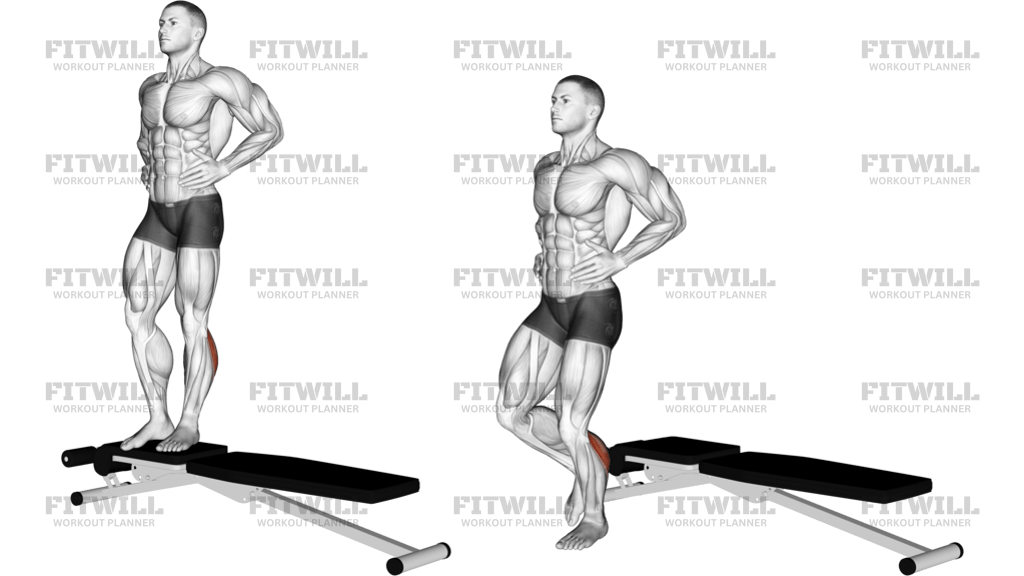
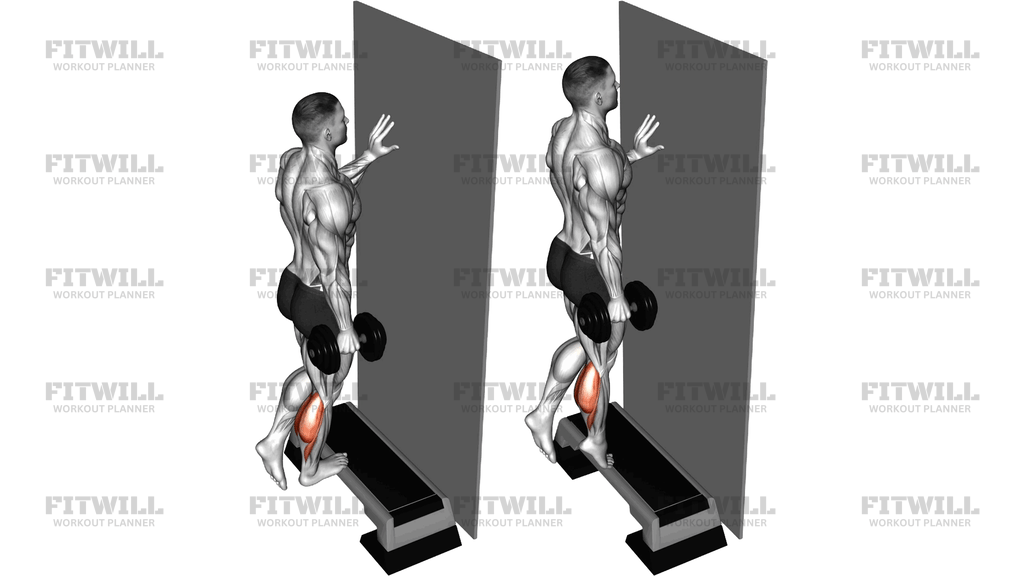
Smith Reverse Calf Raises are a standing calf exercise done in a Smith machine while you hold the bar behind your body and raise the heels under control. The fixed bar path makes it easier to keep the torso tall and remove a lot of the balance noise that can happen with free-standing calf work, so the rep can stay focused on the ankle and lower-leg action instead of turning into a full-body bounce.
This exercise is most useful when you want direct calf loading with a very repeatable setup. The calves are the prime movers, while the feet, ankles, and grip position help you stay organized. Because the bar is guided, your stance and foot pressure matter more than momentum. A small change in how far your feet are from the bar, or how much you bend the knees, can shift the emphasis away from the calves and into the hips or lower back.
Set the feet about hip-width, stand tall, and hold the Smith bar lightly with the hands down at your sides. Keep most of the pressure through the balls of the feet and let the heels lower only as far as you can control. From there, drive straight up onto the toes, squeeze at the top, and lower slowly until you feel a clean calf stretch. The movement should look and feel like an ankle raise, not a squat or a hip hinge.
Use this variation when you want a straightforward calf builder in a lower-body day, accessory block, or calf-focused finisher. It works well for moderate to higher reps because the calves usually respond well to time under tension and a controlled range. Beginners can use it too, provided they keep the bar light enough to avoid bouncing, twisting, or leaning back to finish the rep.
The main safety points are simple: keep the knees softly unlocked, avoid rolling to the outside edges of the feet, and do not rush the lowering phase. If the heels are slamming down or the body is drifting to help the lift, the set is too heavy or the stance is too unstable. Clean repetition quality matters more here than load.
[ Workout Log & Planner ]
Put your next workout in Fitwill
Keep your plan and training log ready when you are.


Instructions
- Set the Smith bar at about mid-thigh to hip height and stand centered inside the machine with your feet about hip-width apart.
- Hold the bar lightly with your hands at your sides and place most of your weight over the balls of your feet.
- Stand tall with a neutral torso and keep your knees softly unlocked, not bent into a squat.
- Let your heels lower under control until you feel a solid stretch through the calves.
- Drive straight up through the balls of the feet and lift the heels as high as you can without leaning back.
- Pause for a brief squeeze at the top while keeping the legs long and the torso still.
- Lower the heels slowly to the start position and keep tension on the calves instead of dropping the weight.
- Repeat for the planned reps, then step out only after the bar is fully settled.
Tips & Tricks
- Keep the grip light so the hands stabilize the bar without turning the set into an upper-body pull.
- Think about driving the floor away through the big toe and second toe, not rocking onto the outer edge of the foot.
- Do not turn the rep into a knee bend; soft knees are fine, but extra bend shifts work away from the calves.
- Use a full calf stretch at the bottom only if you can control it without bouncing off the relaxed position.
- Pause briefly at the top so the calves do the work instead of the Smith bar's momentum.
- Choose a load that lets you keep the heels moving smoothly from rep one to the last rep.
- Keep the torso stacked over the ankles instead of leaning back to fake a bigger range.
- Exhale as you rise and inhale as you lower so the torso stays braced without holding tension in the neck.
Frequently Asked Questions
What muscle does Smith Reverse Calf Raises target most?
The calves are the main target, especially when you keep the knees only slightly unlocked and move through the ankles.
Can beginners perform this exercise?
Yes. Beginners usually do well with a very light Smith bar setup and a short, controlled range until the ankle motion feels smooth.
How should my feet be set up on the Smith bar?
Keep the feet about hip-width, stay centered under the bar, and press through the balls of the feet instead of letting the weight drift into the heels or outer edges.
Should I bend my knees during Smith Reverse Calf Raises?
Only slightly. A soft unlock is fine, but turning the movement into a mini-squat reduces the calf work and makes the set harder to control.
Why does the set feel better with a pause at the top?
The pause removes bounce and forces the calves to finish the rep instead of relying on the Smith machine's momentum.
What is the biggest mistake to avoid?
The biggest mistake is bouncing the heels or leaning back to force more range than the calves can control.
How many reps work well for this exercise?
Moderate to higher reps usually work well because the calves respond strongly to controlled tension and a clean stretch.
Can I use this as a calf finisher?
Yes. It fits well at the end of a leg workout when you want direct calf work without needing a complex setup.