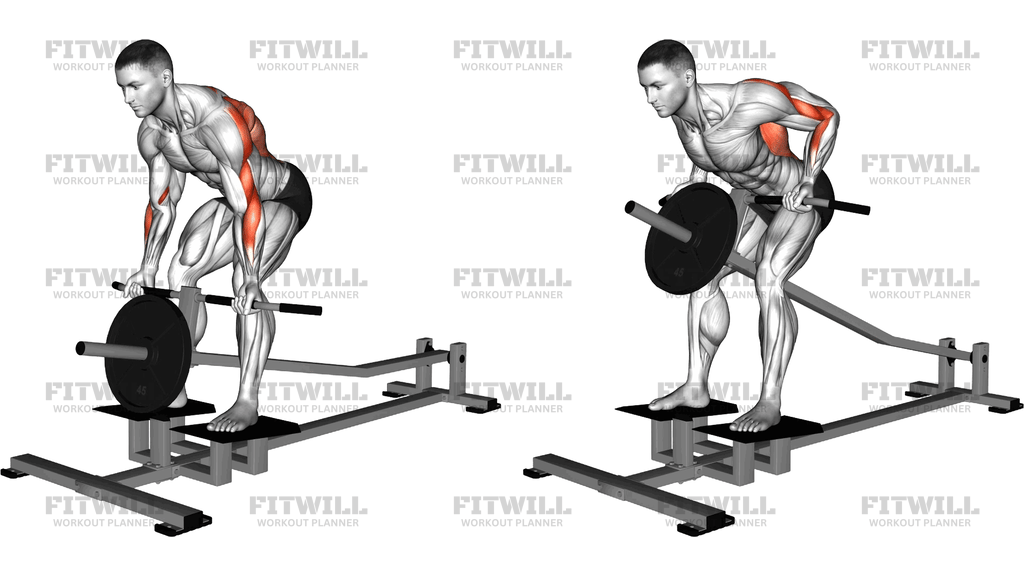
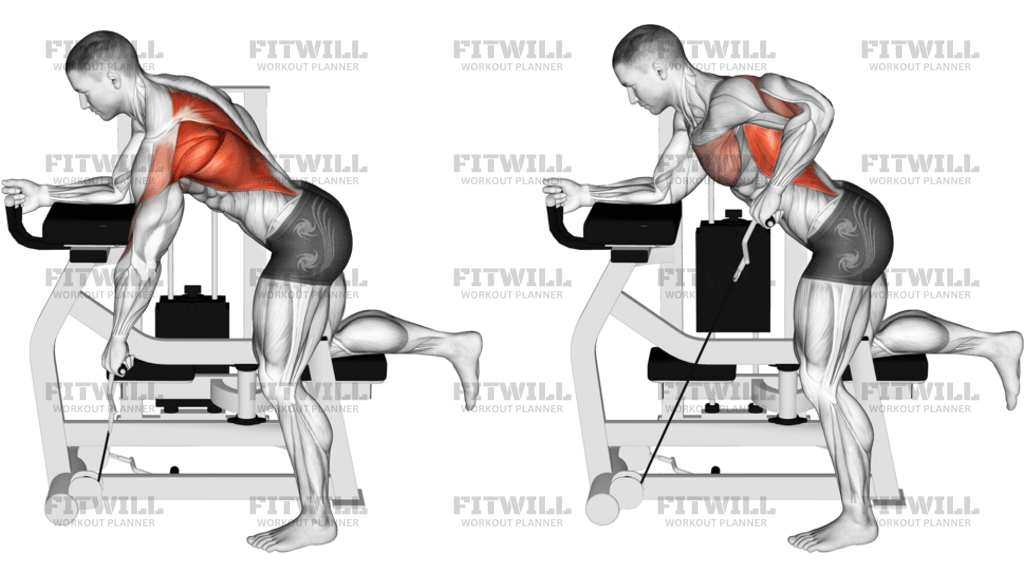
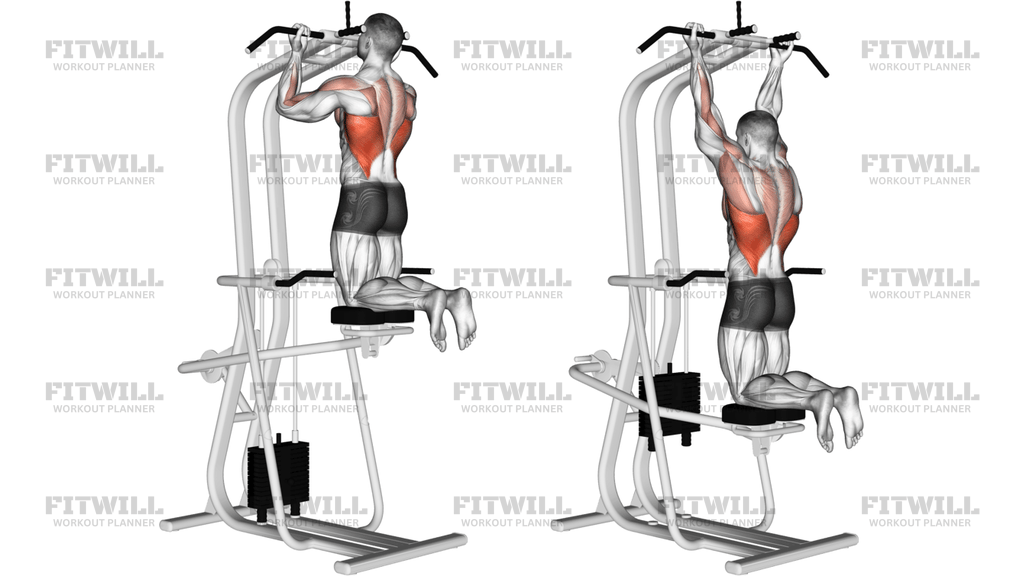
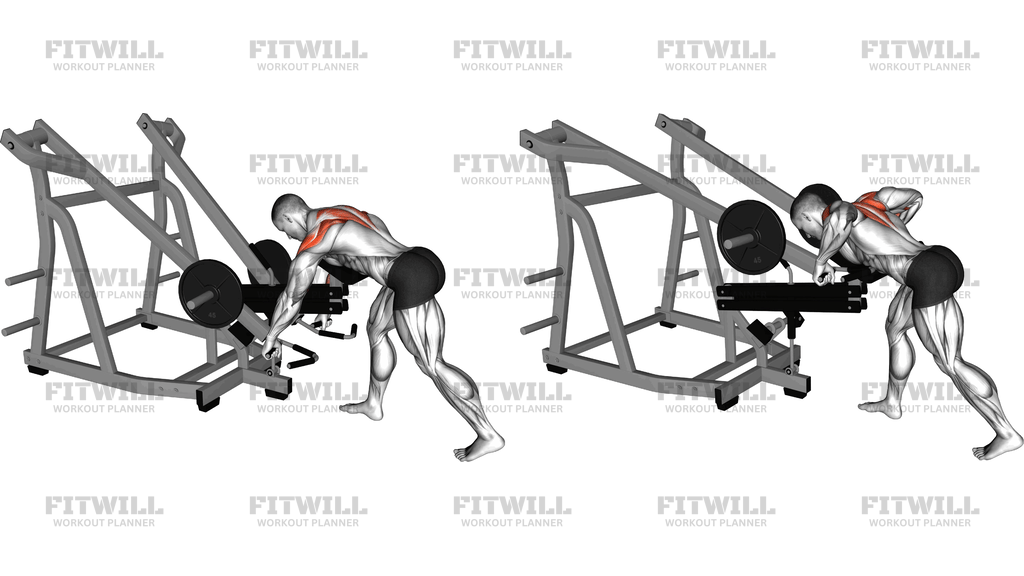
Lever Low Row (Plate Loaded)
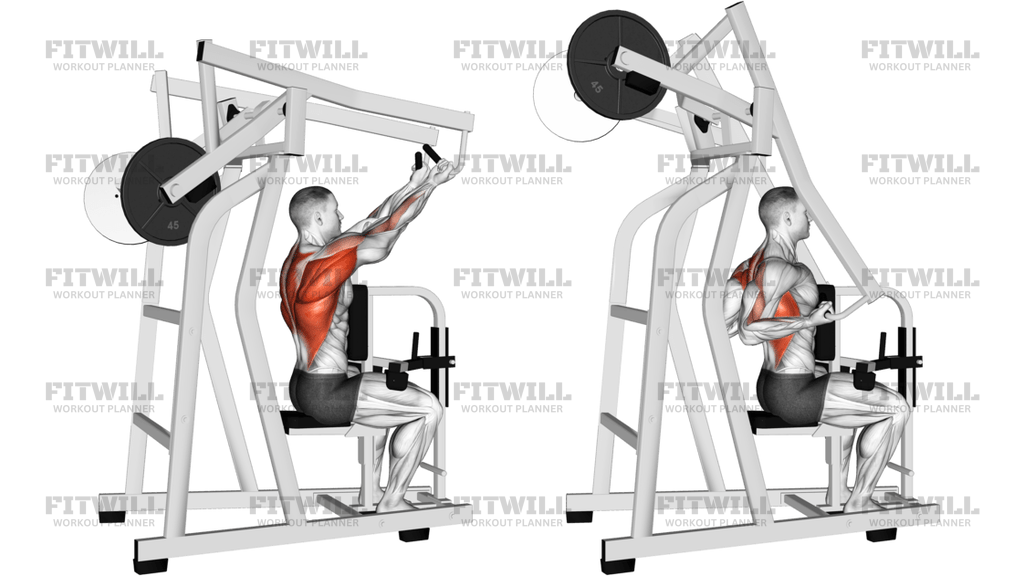
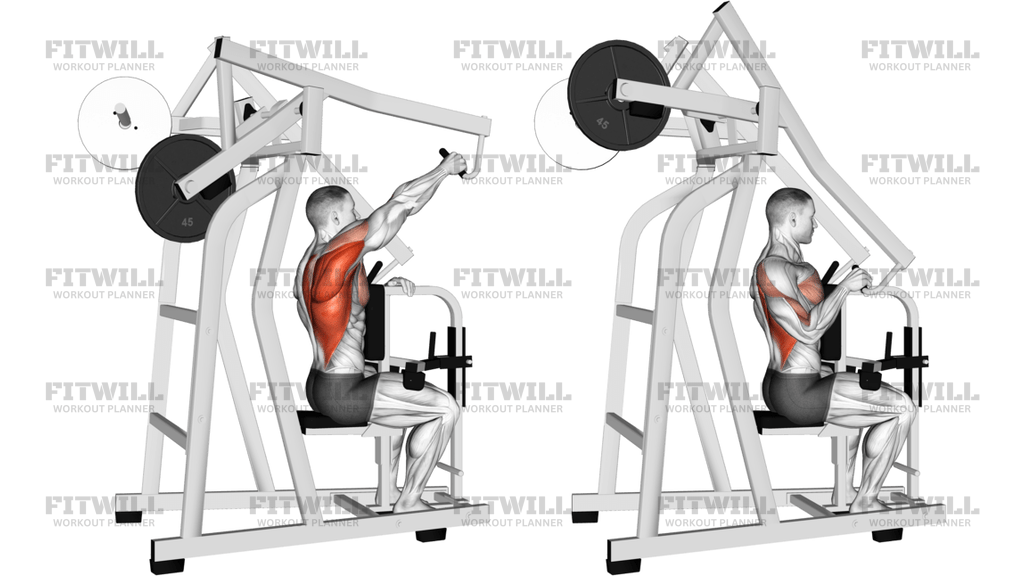
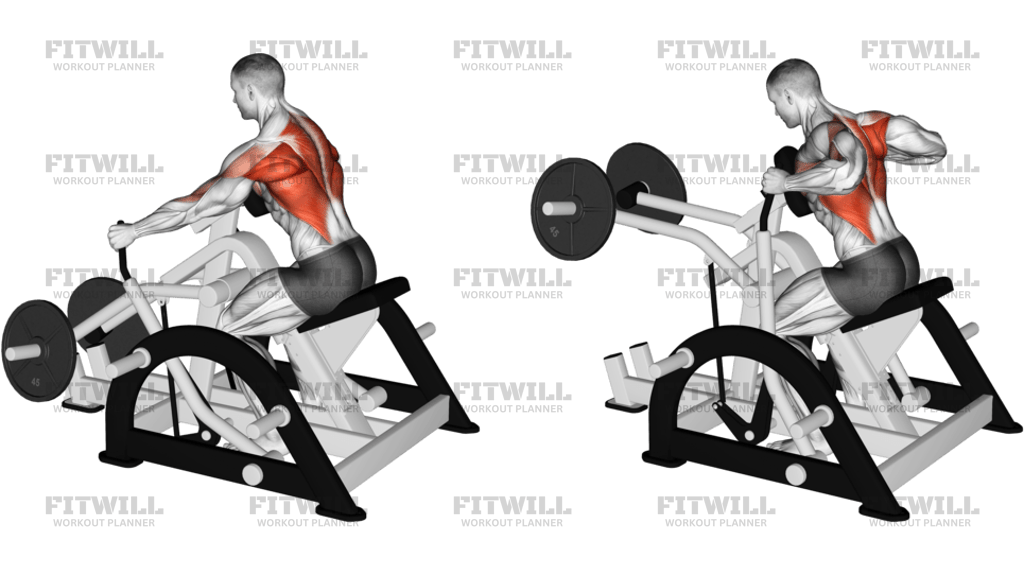
The Lever Low Row (Plate Loaded) is a seated machine row performed on a leverage apparatus that places you chest-first against an upright pad while you pull two side handles from a low position back toward your torso. Weight plates load directly onto lever arms above the machine, so the resistance follows a fixed, guided arc from the stretched position in front of you to the fully contracted position at your sides. Because the movement path is built into the machine, you can focus entirely on squeezing the back instead of stabilizing a free-weight barbell.
This exercise suits a wide range of lifters. Beginners get a safe introduction to horizontal rowing because the machine supports the torso and controls the path. More experienced lifters use it to add training volume to the back with less lower-back fatigue than barbell rows demand, which makes it a good accessory lift on heavy pull days or a reliable option when the lower back is already taxed from squats or deadlifts.
The primary work comes from the lats, which drive the elbows down and back, along with the rhomboids and mid-traps, which pull the shoulder blades together at the end of each rep. The rear deltoids assist the pull, the biceps act as secondary movers at the elbow, and the spinal erectors work isometrically to keep you tall against the chest pad. Grip strength is also lightly trained as you hold the handles through each set.
Setup matters more on this machine than most people assume. The seat height should place the handles level with or slightly below your mid-torso, and your chest must stay firmly in contact with the pad for the entire set. If the seat is too high or too low, the pull angle changes and the shoulders or arms start doing work the back should be handling. The chest pad is not a suggestion either; once it separates from the pad, you are turning a supported row into a body-english row.
Execution is straightforward but deserves attention. Pull the handles back by leading with the elbows, keep them tracking close to the body rather than flaring wide, and finish each rep with the shoulder blades drawn together and down. Pause briefly in the contracted position, then let the handles travel forward under control until the arms are extended and the lats are stretched before starting the next rep. Rushing the stretch-back phase is the most common way to waste half of every repetition on this machine.
In practice, the Lever Low Row (Plate Loaded) fits well as a main back builder in machine-based programs, a volume tool after free-weight rows, or a rehabilitative-friendly pulling option when controlled range and back support are priorities. Load conservatively at first, since leverage machines often feel heavier at the stretched end of the path than the plate count suggests.
[ Workout Log & Planner ]
Put your next workout in Fitwill
Keep your plan and training log ready when you are.


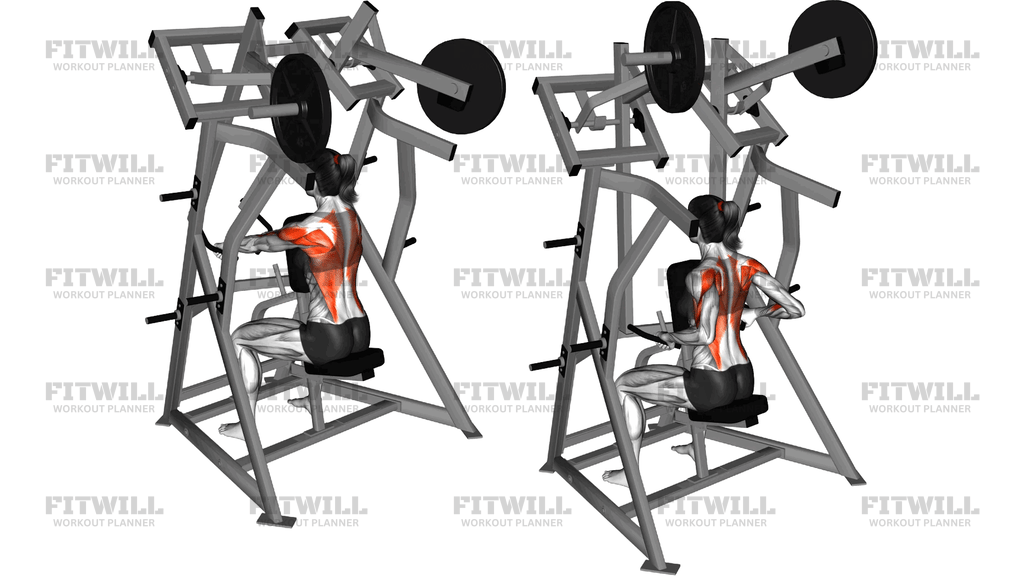
Instructions
- Sit on the machine facing the chest pad and plant both feet flat on the floor, roughly hip-width apart, with knees bent to about 90 degrees.
- Adjust the seat height so the handles sit at or just below mid-torso level and your chest rests squarely against the upright pad.
- Grip the two side handles with a neutral or slightly angled palm-in grip and let your arms extend fully forward toward the weight stack of plates.
- Lift your chest, draw the shoulder blades gently down and back, and brace the abdominal muscles so the torso stays tall against the pad.
- Pull the handles back by driving the elbows down and past the ribs, keeping them close to the body rather than flared outward.
- Continue pulling until the hands reach your sides and the shoulder blades are fully squeezed together and down; hold that contracted position for a beat.
- Exhale as you pull back and inhale as you extend the arms forward again.
- Return the handles under control to the fully stretched position in front of you, stopping just short of letting the plates rest or the shoulders roll forward.
- Keep the chest glued to the pad and the hips planted on the seat for every repetition; do not lean or rock to start the pull.
- Complete the set, release the handles only after the lever arms are fully settled, and adjust the seat or load before the next set if needed.
Tips & Tricks
- If your shoulders shrug toward your ears as you pull, the weight is likely too heavy or your upper traps are taking over; drop the load and think about pulling with the elbows instead of the hands.
- Letting the chest peel off the pad is the most common fault on this machine; if you have to lean back to finish the rep, reduce the plates until the pad contact holds for all reps.
- Do not fully release the handles forward so the plates slam down between reps; keeping light tension at the stretch protects the shoulder joint and keeps the lats loaded.
- A brief one-second pause with the shoulder blades squeezed at the back of the movement does more for rhomboid and mid-trap development than adding another plate.
- If your forearms fatigue before your back, loosen your grip slightly and focus on hooking the handles rather than crushing them.
- Check the seat height every session; even one notch too high shifts the pull upward and turns the exercise into more of a shoulder-dominant row.
- Keep the wrists straight and in line with the forearms; bending the wrists back under load strains them without adding anything to the pull.
- Because the lever arms swing on a fixed arc, the resistance feels heaviest when the arms are extended forward; control that first third of the rep instead of letting gravity yank the handles back.
Frequently Asked Questions
Which muscles does the Lever Low Row (Plate Loaded) work hardest?
The lats do the bulk of the pulling, supported strongly by the rhomboids and mid-traps as the shoulder blades retract. The rear deltoids and biceps assist, while the lower back and core work to hold your torso steady against the chest pad.
Is this machine a good first rowing exercise for beginners?
Yes. The chest pad supports the torso and the fixed lever path removes most of the stability demands of a barbell or dumbbell row, so a beginner can learn to feel the back working without worrying about balance or lower-back positioning.
How do I know the seat is set at the right height?
When seated, your chest should rest naturally against the pad and the handles should be at or slightly below mid-torso level with your arms extended. If the handles sit near your chest or near your hips, adjust the seat before loading any plates.
Why should my chest stay on the pad during the Lever Low Row (Plate Loaded)?
Chest contact fixes your torso angle so the lats and upper back do the pulling. Lifting off the pad lets momentum and body English take over, which shifts stress toward the lower back and reduces the work the target muscles receive.
Should I use a wide or close elbow position on this row?
Keep the elbows tracking close to your sides to emphasize the lats, which matches the low-to-mid pull path of this machine. Flaring the elbows wide changes the row toward a rear-delt and upper-trap movement and does not suit the handle placement here.
What can I substitute if the Lever Low Row (Plate Loaded) machine is taken?
A seated cable row with a close-grip handle is the closest alternative, since it also pulls from a low position toward the torso. A chest-supported dumbbell row on an incline bench preserves the torso support if you prefer free weights.
How heavy should I load the plates?
Start lighter than you expect, because leverage machines often feel hardest at the fully stretched position when the arms are extended forward. Choose a load you can pull through a full range with the chest on the pad for all planned reps, then progress gradually.
Is it a mistake to let the plates touch down between repetitions?
Yes, briefly unloading at the bottom removes tension from the lats and encourages rushing. Stop the forward travel just short of a full rest so the muscles stay engaged and the next rep starts from a controlled stretch.
Can I train the Lever Low Row (Plate Loaded) with sore lower back muscles?
The machine is often more tolerable than free-weight rows because the pad supports the trunk, but the erectors still work to keep you upright. If your lower back is genuinely sore, reduce the load, keep reps controlled, or choose a supported pulling option that day.