Nordic Hamstring Curl
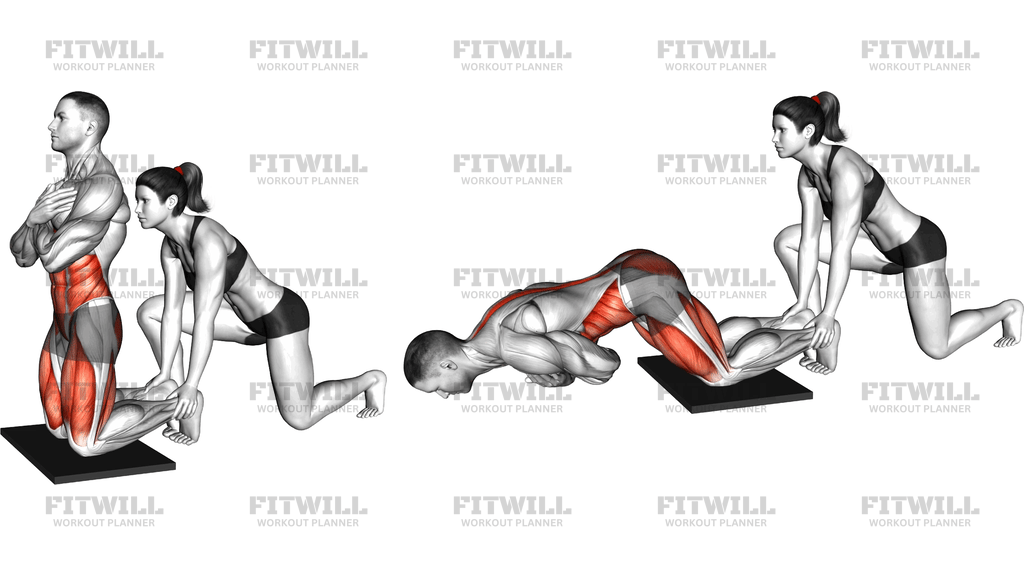
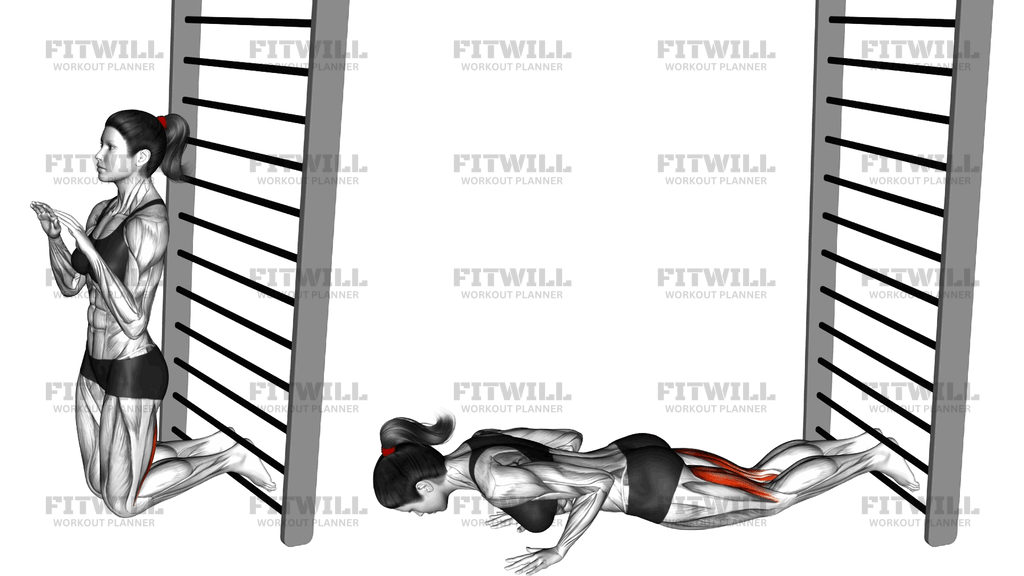
The Nordic Hamstring Curl is one of the most demanding body weight hamstring exercises you can do, and it earns its reputation honestly. You kneel with your ankles anchored under a fixed structure such as wall bars, keep your body in a straight line from knees to head, and then lower your entire torso forward toward the floor under control. Because your feet are fixed and your body rotates away from them, your hamstrings must resist lengthening while under load, which is something very few exercises actually train.
This eccentric work is exactly why the Nordic Hamstring Curl shows up so often in athletic preparation. Sprinting, jumping, and rapid deceleration all lengthen the hamstrings under tension, and this movement trains that same quality in a controlled setting. It is useful for sprinters, field sport athletes, and anyone whose training has leaned heavily on leg curls and deadlifts but has neglected the hamstring's role as a brake.
Setup matters more here than in almost any other body weight exercise. If your ankles are not firmly locked in place, or if the anchor point sits too high or too low on your lower legs, the movement turns into a flopping forward fall rather than a loaded eccentric. Your knees should rest on a padded surface, your shins should stay vertical and close to the anchor, and the distance from the anchor point to your knees determines how hard the set will be before you even start.
Execution comes down to one thing: controlling the descent. Brace your trunk, squeeze your glutes, and lower your body forward from the knees at a speed you can genuinely resist. Most people can only manage a partial range at first, and that is completely fine. Catch yourself with your hands when your hamstrings lose the fight, then push lightly off the floor and pull back up to the kneeling position.
Because the strength demands are high, treat the Nordic Hamstring Curl as a skill as much as an exercise. Start with short ranges, band assistance, or a partner holding your shoulders, and progress slowly. Low reps with full tension beat sloppy high-rep sets every time, and the hamstrings often need a day or two of extra recovery after a real dose of this movement.
[ Workout Log & Planner ]
Put your next workout in Fitwill
Keep your plan and training log ready when you are.


Instructions
- Kneel on a padded surface with your knees roughly hip-width apart, facing away from a wall bar, stall bar, or another fixed anchor point.
- Hook your feet under the bottom rung so your ankles are locked in place, with the tops of your feet pressed down against the bar or floor and toes pointing back.
- Set up tall in the kneeling position with your hips extended, your body forming one straight line from knees through hips, shoulders, and head.
- Place your hands in front of your chest, ready to catch you, and brace your core while squeezing your glutes to lock your pelvis in a neutral position.
- Keeping your hips extended and your body rigid, slowly lean forward from the knees and begin lowering your torso toward the floor.
- Resist the pull of gravity for as long as your hamstrings can hold, letting your elbows bend as your chest approaches the ground.
- Catch yourself with your hands at the bottom, keeping your body from collapsing fully into the floor.
- Push lightly with your arms and use your hamstrings to pull and drive your body back up to the tall kneeling position, keeping your hips extended as you rise.
- Exhale as you lower or as you push back up, and take a breath at the top before starting the next repetition.
- Reset your position at the top, re-brace, and repeat; end the set as soon as you start free-falling instead of lowering under control.
Tips & Tricks
- The most common failure point is breaking at the hips, where you flex forward at the waist and turn the rep into a fall. Keep the line from knees to head intact and hinge only from the knees.
- If you cannot control at least a quarter of the descent, loop a resistance band around your chest and anchor it behind you, or have a partner support your shoulders to remove part of your body weight.
- Squeezing your glutes hard at the top is not optional; if your pelvis tips forward, your lower back takes over the work your hamstrings should be doing.
- Descend slower than you think you need to. A three to five second lower is plenty, and grinding out a shorter range slowly builds more strength than diving to the floor fast.
- If your ankles slip out from under the anchor mid-set, stop and re-set. Feet that shift position change the leverage instantly and put the load in the wrong place.
- Use a thick mat or folded pad under your knees. Grinding kneecaps on a hard floor will pull your attention away from the hamstrings and shorten your sets.
- Keep your hands close to your chest during the descent rather than reaching early. Reaching forward too soon lets you cheat the eccentric with your arms.
- Expect soreness in the hamstrings one to two days after your first few sessions. Start with two or three low-volume sets and build up over several weeks rather than maxing out on day one.
- If the movement still stalls early even with assistance, hold a partial range isometric at your sticking point for five to eight seconds to build strength in that specific angle.
Frequently Asked Questions
What muscles does the Nordic Hamstring Curl work?
The hamstrings are the primary muscles working, since they resist the lengthening as your body lowers. Your glutes and lower back stabilize the trunk and pelvis, and your calves assist as your feet stay anchored.
Is the Nordic Hamstring Curl good for beginners?
Beginners usually cannot control the full range yet, but they can start with a limited range of motion, band assistance, or a partner supporting their torso. Building up gradually makes it accessible rather than skipping it entirely.
How should my feet be anchored during the Nordic Hamstring Curl?
Your ankles should be locked under a fixed rung or pad with the tops of your feet pressed down so your heels cannot lift. If your feet shift or slip during a set, stop and reset before continuing.
Why do I keep falling forward instead of lowering slowly?
This usually means the load exceeds what your hamstrings can handle eccentrically, or you are breaking at the hips and losing the straight-body position. Shorten the range, add assistance, and focus on keeping knees, hips, and shoulders in one line.
Can I do the Nordic Hamstring Curl without a partner?
Yes. Wall bars, a loaded barbell in a rack with a pad over it, or a sturdy couch with your feet wedged under it all work as anchors, and a resistance band can replace a partner for assistance.
How many reps should I do of the Nordic Hamstring Curl?
Most people get the most from low volumes, such as two to four sets of three to six controlled reps. Stop the set when you can no longer resist the descent, because sloppy fast reps defeat the purpose of the exercise.
How is the Nordic Hamstring Curl different from a leg curl machine?
A leg curl shortens the hamstring against load, while the Nordic Hamstring Curl primarily trains the hamstring lengthening under tension. That eccentric emphasis is what makes it valuable for sprinting and jumping actions.
Should my hips stay extended or can I sit back?
Your hips should stay extended with your body in a straight line from knees to head. Sitting back or flexing at the hips reduces the hamstring demand and shifts the effort toward your lower back.
How often can I train the Nordic Hamstring Curl?
Because the eccentric loading creates significant muscle soreness, one or two sessions per week is a practical starting point. Increase frequency or volume only after recovery between sessions feels manageable.
What should I do at the bottom of the Nordic Hamstring Curl?
Catch yourself with your hands as your chest reaches the floor, absorb the impact through your arms, then push lightly and pull your body back to the kneeling position. Letting yourself crash down removes the tension and invites strain.