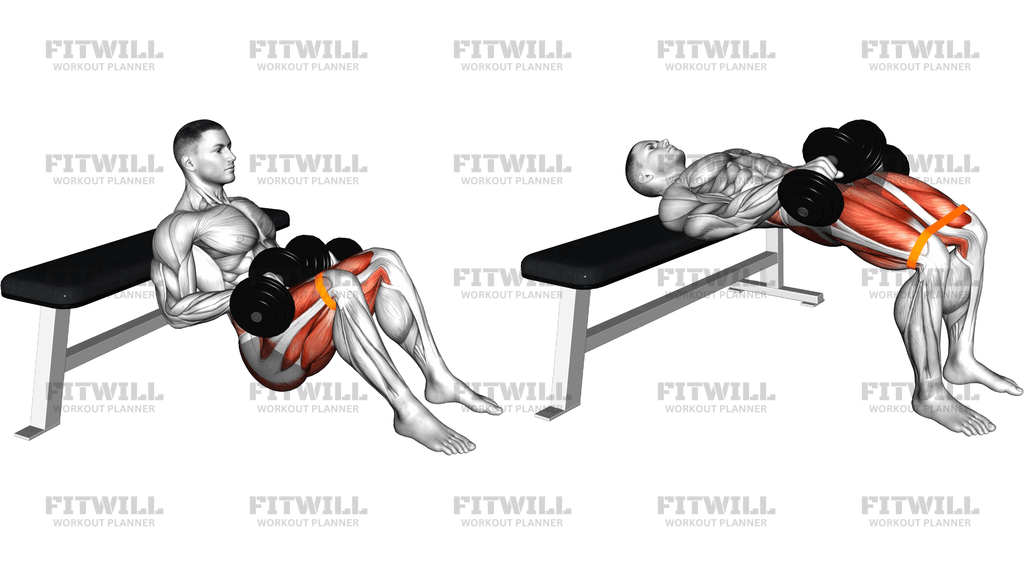
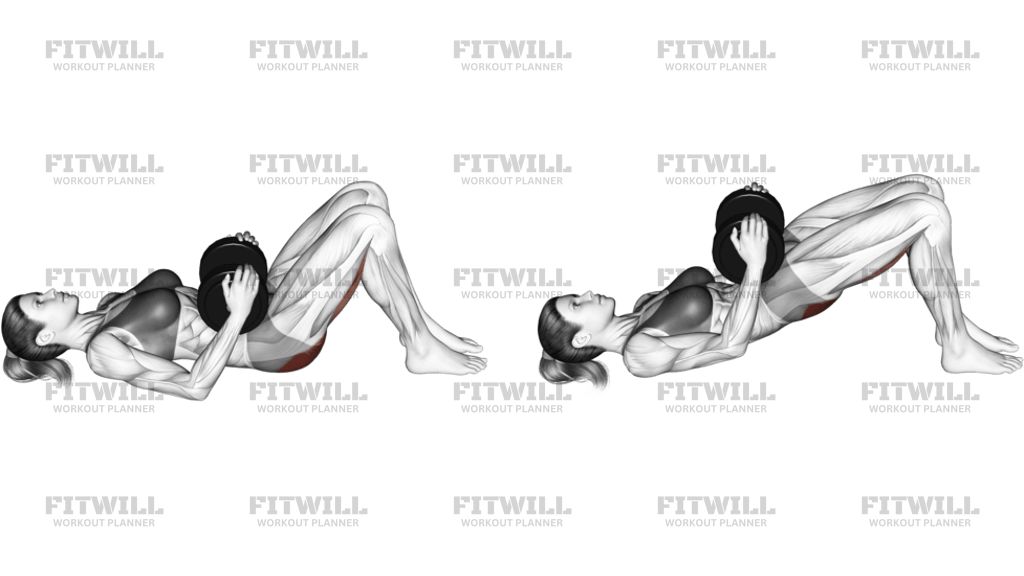
Weighted Dumbbell Table Top Bridge
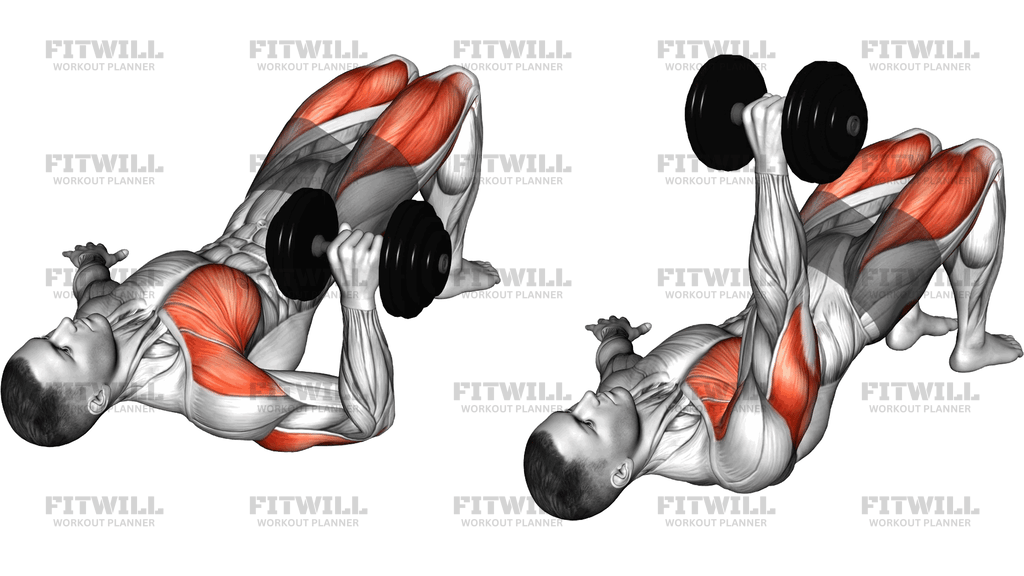
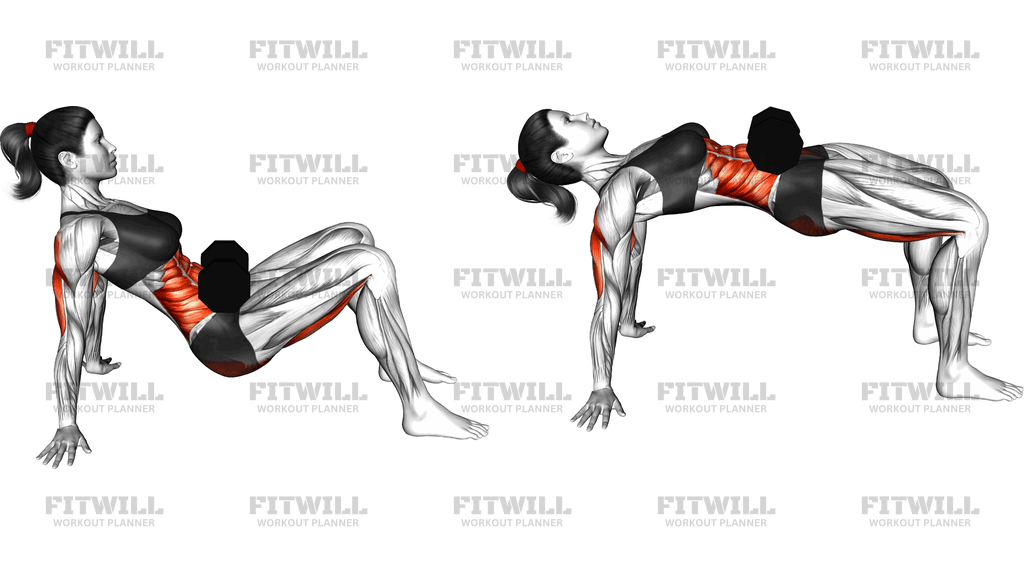
The Weighted Dumbbell Table Top Bridge is a hip-dominant movement performed from a reverse tabletop position, sometimes called a crab bridge. You sit on the floor with your hands planted behind you and your feet flat, place a dumbbell across the crease of your hips, then drive through your heels and palms to lift your hips until your torso and thighs form a level, table-like line. From there you lower back down under control and repeat.
What makes this version different from a standard floor bridge is the combination of the hand-supported position and the added load. Because your hands are behind you rather than at your sides, your shoulders and triceps work to hold you up, while the dumbbell raises the demand on the glutes and hamstrings beyond what body weight alone provides. The core also has to stay braced the entire time to keep the pelvis from tilting or the lower back from sagging between reps.
This exercise suits lifters who already handle bodyweight bridges comfortably and want more resistance without setting up a barbell hip thrust. It is also a practical choice for home training, since a single dumbbell and a patch of floor are all you need. Athletes who sprint, jump, or hinge under load benefit from the strong glute drive, and desk workers appreciate the reverse shoulder position, which opens the front of the shoulders after long hours of sitting.
Setup matters more here than in most bridging variations. The dumbbell needs to sit securely on the hip crease so it does not roll toward your ribs or your knees, and your hands should be stacked directly under your shoulders with fingers angled slightly outward. Feet stay about hip-width apart with heels close enough to your hips that your shins are near vertical at the top. A stable base keeps the load on your glutes instead of your lower back.
To execute it well, squeeze your glutes first and let them drive the hips upward, rather than arching your way to the top. At the highest point your shoulders, hips, and knees should roughly line up, with a small backward pause to own the position. Lower with the same control, lightly touching the hips toward the floor before the next rep. Breathe in as you descend, exhale as you drive up.
The main safety point is protecting your wrists and lower back. Keep the movement driven by the hips, stop short of hyperextending at the top, and choose a dumbbell weight you can hold in place without shifting or gripping awkwardly. If your wrists complain, ease into the position gradually or reduce the load while your hands adapt.
[ Workout Log & Planner ]
Put your next workout in Fitwill
Keep your plan and training log ready when you are.


Instructions
- Sit on the floor with your knees bent and feet flat, about hip-width apart, with your heels roughly a foot in front of your glutes.
- Place a dumbbell lengthwise across the crease of your hips and hold it steady with one hand while you plant your other palm on the floor behind you, fingers pointing toward your heels or angled slightly out.
- Set your second hand on the floor so both wrists sit under or just outside your shoulders, elbows soft but not locked.
- Brace your abs and tuck your chin slightly so your neck stays neutral and your ribs stay down.
- Exhale and drive through your heels and palms, squeezing your glutes to lift your hips until your shoulders, hips, and knees form a straight, table-top line.
- Pause for a beat at the top with your glutes fully engaged and the dumbbell balanced on your hips; avoid pushing your hips higher by arching your lower back.
- Inhale and lower your hips back toward the floor with control, letting them lightly touch down or hover just above it.
- Reset your brace and reposition the dumbbell if it shifted, then start the next rep.
- Keep your weight distributed across your whole palm and all four corners of each foot throughout the set to protect your wrists and stay balanced.
- After your final rep, hold the dumbbell with one hand, lower your hips, and sit forward to remove the weight safely.
Tips & Tricks
- If the dumbbell rolls off your hip crease toward your ribs, place it lengthwise along the top of one thigh near the hip and press it down with your hand between reps, or use a dumbbell with flat hex heads that sits more securely.
- A common mistake is lifting by arching the lower back instead of squeezing the glutes; at the top, check that your ribs are down and your pelvis is tucked slightly under rather than tipped forward.
- If your hips drop on one side, you are likely letting one leg do most of the work; slow the tempo down and picture pushing the floor away evenly with both heels.
- Warm up your wrists with a few bodyweight table top bridges first, because the loaded hand position puts extension pressure on them that a regular glute bridge never demands.
- Point your fingers slightly outward and grip the floor lightly with your fingertips; this reduces wrist strain and helps your triceps and shoulders hold the support position.
- Do not let your heels drift away from your hips as you fatigue, since a long shin angle shifts effort toward the hamstrings and makes the top position harder to reach.
- Keep your head neutral by looking at a spot on the ceiling slightly behind you; craning the neck forward is a sign you are losing the brace at the top.
- Choose a dumbbell you can control for the full set before going heavier; a weight that is too big forces you to stabilize it with your hands instead of driving with your hips.
- If your shoulders feel pinched at the top, lower your range slightly and focus on squeezing the glutes harder rather than chasing a higher hip line.
- Perform the movement on a firm surface; a very soft mat lets your hands sink and shifts the load toward your wrists.
Frequently Asked Questions
Which muscles does the Weighted Dumbbell Table Top Bridge work the most?
The glutes do the primary work of lifting and holding your hips up. Your hamstrings assist the hip extension, your abs and lower back stabilize the pelvis, and your triceps and shoulders support your upper body the entire time.
How is the Weighted Dumbbell Table Top Bridge different from a regular glute bridge?
A regular glute bridge is done lying on your back with arms at your sides, while the table top version uses hands planted behind you in a crab-like position. That changes the support demands on the shoulders and triceps and makes the core work harder to keep the pelvis level.
Where exactly should I place the dumbbell on my hips?
Set it lengthwise across the crease where your thigh meets your hip, right over the front of the pelvis. If it feels uncomfortable, fold a small towel around it or rest it across the top of one thigh and press it down with your hand.
Is the Weighted Dumbbell Table Top Bridge suitable for beginners?
Beginners should first master the bodyweight table top bridge until they can hold a stable hip line for several reps. Once that feels solid and the wrists are comfortable, a light dumbbell can be added.
Why do my wrists hurt during this exercise?
The loaded position places your wrists in significant extension while bearing weight. Point your fingers slightly outward, spread the load across your whole palm, warm up with bodyweight reps, and stop if sharp discomfort appears.
How high should I lift my hips at the top of the Weighted Dumbbell Table Top Bridge?
Lift until your shoulders, hips, and knees form a roughly straight line. Pushing higher than that usually comes from arching the lower back rather than extra glute effort, so stop at level and squeeze instead.
What can I use instead of a dumbbell for this bridge?
A kettlebell, a small weight plate, or a weighted backpack resting on the hip crease all work. If no weight is available, the bodyweight version with a slow tempo and a longer top pause is a good substitute.
How many sets and reps should I do of the Weighted Dumbbell Table Top Bridge?
For strength and muscle, 3 to 4 sets of 8 to 12 controlled reps works well. If you are using a light weight to learn the pattern, higher reps of 12 to 15 with a deliberate top squeeze are more useful.
Should my feet stay flat during the Weighted Dumbbell Table Top Bridge?
Yes, keep your whole foot on the floor with your heels close to your glutes so your shins are near vertical at the top. This keeps the emphasis on the glutes and gives you a stable base to press through.
Is it safe to do this exercise with lower back sensitivity?
The key is keeping the movement hip-driven and avoiding any hyperextension at the top. If you have a history of back issues, start with the bodyweight version, keep the range modest, and check with a qualified professional before adding load.