Side Lunge Stretch (Version 2)
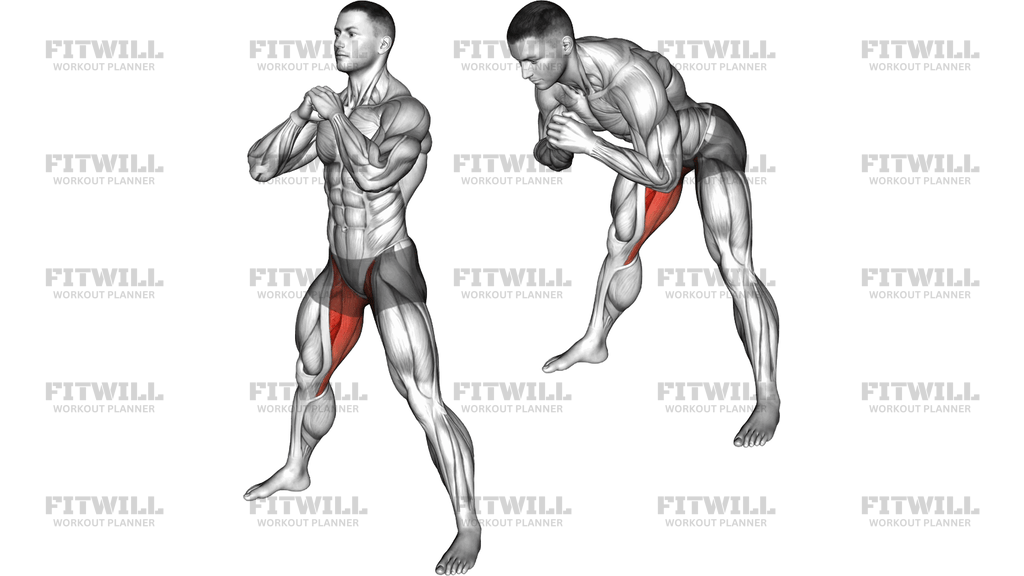
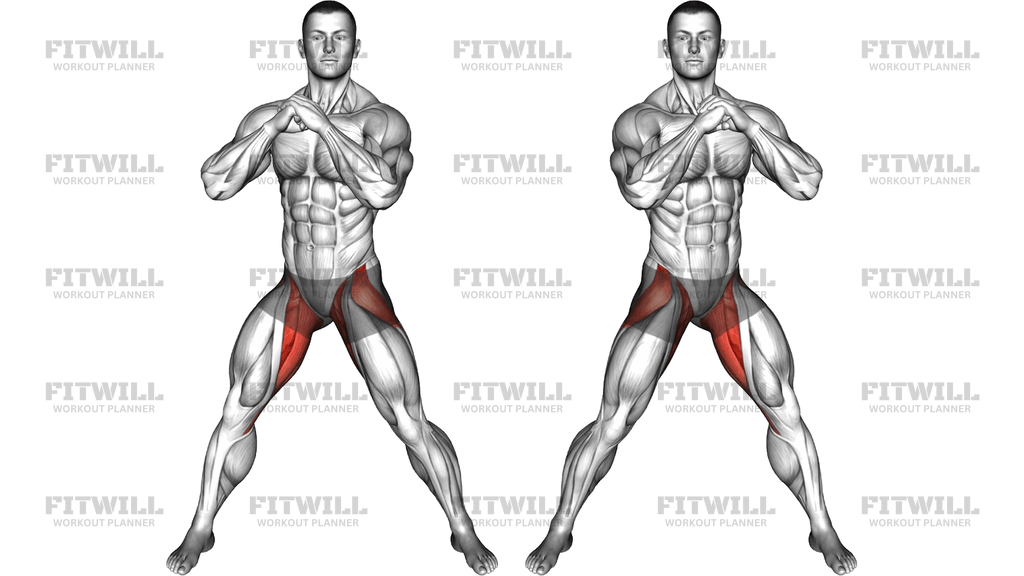
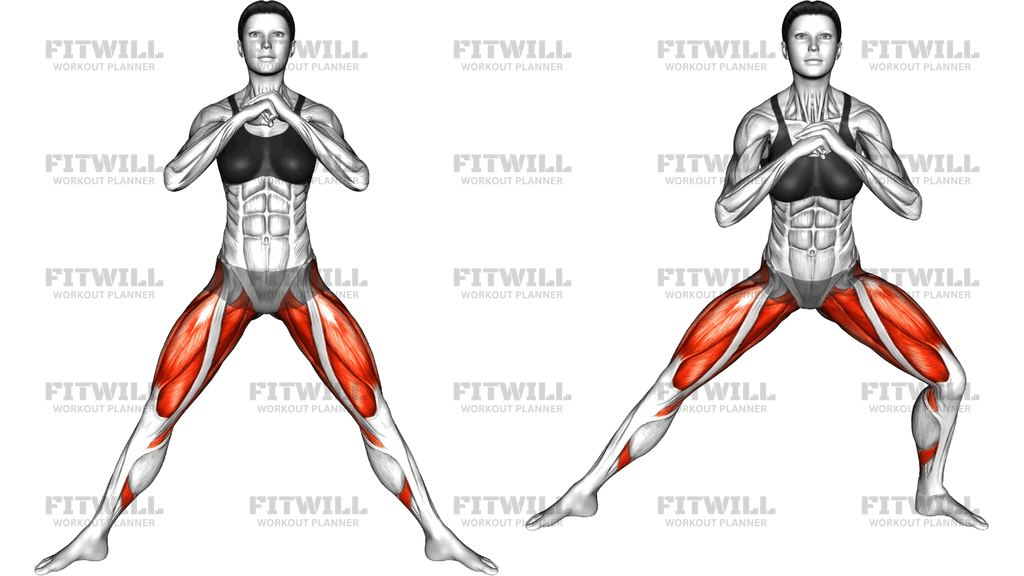
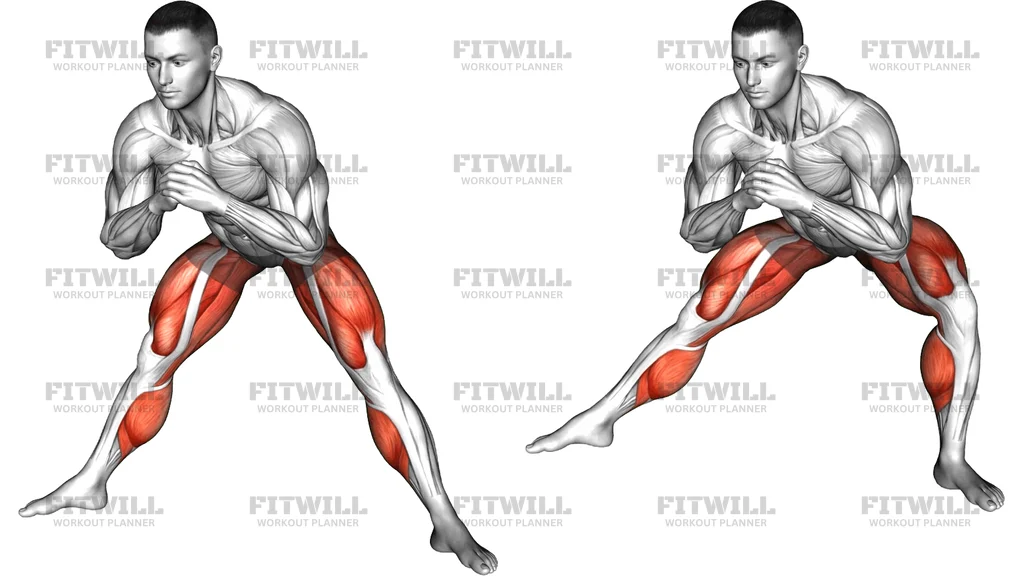
The Side Lunge Stretch is a body weight mobility drill that takes you into a wide, lateral stance and shifts your weight over one bent leg while the other leg stays long and straight. The version shown here keeps the hands clasped at the chest and the torso leaning slightly forward over the working side, which loads the inner thigh of the straight leg and the hip and thigh of the bent leg at the same time. Because you work one side, pause, then transition to the other, it doubles as both a targeted stretch and a smooth way to compare left-right flexibility.
This movement targets the adductors along the inner thigh more than almost any other body weight stretch, while also lengthening the hamstrings and calves of the straight leg and opening the hip of the bent side. If you squat, run, play field sports, or practice martial arts, tight inner thighs show up quickly as shallow squat depth or a narrow, stiff stride. Spending a few controlled breaths on each side before training tends to make lateral movement feel noticeably freer.
Setup matters more than most people expect. Your feet should be planted much wider than shoulder width, with the toes of both feet angled slightly outward rather than pointing straight ahead. When you shift sideways, the bending knee must travel in the same direction as the toes and stay stacked over or behind the ankle, never caving inward or drifting past the toes. The straight leg stays actively engaged with the foot flat or toes pulled up, because a collapsed straight knee takes the stretch off the inner thigh and puts slack where you want tension.
To execute it well, clasp your hands in front of your chest for balance, brace your trunk, and push your hips back and to the side as you bend one knee. Let the torso lean toward the bent leg; this forward tilt deepens the stretch along the straight leg's inner thigh and hamstring without forcing anything. Hold the end position for several easy breaths, feeling a strong but tolerable pull, then press through the bent foot to bring yourself back to center before switching sides.
Common use cases include pre-workout warm-ups for leg days, cool-downs after running or cycling, and general hip mobility routines for people who sit for long hours. Because it requires no equipment and only about a body width of floor space, it fits easily into any setting, from a gym floor to a hotel room.
Keep the effort moderate and the movement slow. A stretch should feel like lengthening, not straining; if you catch yourself holding your breath, wobbling, or bouncing at the end range, back off slightly and rebuild the position. Consistent, comfortable holds a few times per week do far more for range of motion than one aggressive session.
[ Workout Log & Planner ]
Put your next workout in Fitwill
Keep your plan and training log ready when you are.


Instructions
- Stand tall with your feet roughly two shoulder widths apart and turn your toes out slightly, about 15 to 30 degrees.
- Clasp your hands together in front of your chest and brace your trunk as if preparing for a light squat.
- Shift your weight toward your right leg, pushing your hips back and to the right as the right knee bends.
- Keep the right knee tracking over your right toes and stacked above the ankle, letting it bend as deeply as your mobility allows.
- Leave the left leg straight and active, with the left foot flat and the left kneecap pointing toward the ceiling or slightly outward.
- Lean your torso slightly forward over the bent leg until you feel a firm pull along the straight leg's inner thigh and the bent hip.
- Hold the end position for 15 to 30 seconds, breathing slowly and letting the hips settle a little deeper with each exhale.
- Press through the bent foot and squeeze the inner thighs to draw yourself back to a centered, wide stance.
- Pause briefly in the middle, then repeat the shift to the left side for the same hold time.
- Complete 2 to 3 alternating holds per side, keeping the transitions smooth and controlled.
Tips & Tricks
- If the straight leg's foot rolls onto its outer edge, shorten your stance slightly; a flat foot keeps the inner thigh under proper tension.
- A knee that dives inward over the big toe is the most common fault here; think of spreading the floor with the bent foot as you descend.
- Keep weight in the heel and midfoot of the bent leg. Sitting onto the ball of the foot shortens the calf stretch and strains the knee.
- Use your clasped hands as a counterweight at chest height; reaching them too far forward rounds the lower back and steals tension from the hips.
- Ease into depth over the first few breaths instead of dropping straight to your deepest range; the adductors respond better to gradual loading.
- If the floor is slippery, perform the stretch barefoot or on a mat so your feet cannot slide wider under load.
- Stop short of sharp pain behind the straight knee or deep in the bent hip; a stretch should be intense but never burning or stabbing.
- Bend the straight knee slightly if the hamstring pull dominates; once the inner thigh sensation returns to center, straighten it again.
- Pair the hold with slow nasal breathing rather than forcing a longer range; tension in the shoulders and jaw usually mirrors tension in the hips.
Frequently Asked Questions
Which muscles does the Side Lunge Stretch target?
It primarily lengthens the adductors of the straight leg's inner thigh, while the bent-leg hip, glutes, and the straight leg's hamstrings and calves also receive a stretch. The quads around the bent knee work isometrically to hold the position.
How wide should my stance be for the Side Lunge Stretch?
Start with your feet about two shoulder widths apart and adjust from there. If you cannot keep the straight foot flat or the bent knee over the ankle, your stance is too wide; if you feel almost no pull, step out further.
Is the Side Lunge Stretch suitable for beginners?
Yes, as long as you keep the depth modest and the knee tracking over the toes. Beginners often benefit from holding a door frame or wall for extra balance while learning the hip shift.
Why do my hamstrings feel the stretch more than my inner thighs?
That usually means the straight knee is locked and the torso is leaning too far forward. Soften the straight knee slightly and lift the chest until the pull moves toward the inner thigh.
Should I hold the stretch or move in and out of it?
Both work. Slow rhythmic reps in and out of the position suit a warm-up, while static holds of 15 to 30 seconds per side are better after training or in a dedicated mobility session.
Can I do the Side Lunge Stretch every day?
Yes, a gentle version is fine daily. Keep the intensity comfortable, and reduce depth on days when the inner thighs still feel sore from training.
What should I do if my knees hurt during the stretch?
Reduce the depth so the bent knee bends less, keep the knee stacked over the ankle rather than past the toes, and make sure the foot stays fully flat. If discomfort persists, shorten the stance or substitute a seated butterfly stretch.
How is this different from a regular side lunge exercise?
A side lunge is a strength exercise where you push back up under load with each rep. The Side Lunge Stretch holds the lowered position to lengthen the inner thigh and hip, with no intent to drive back up forcefully.
Can I use the Side Lunge Stretch before heavy squats or deadlifts?
Yes, brief holds of 10 to 15 seconds per side work well as part of a warm-up. Avoid long, aggressive static holds immediately before maximal lifting, as extended stretching can temporarily reduce force output.