Barbell Thruster
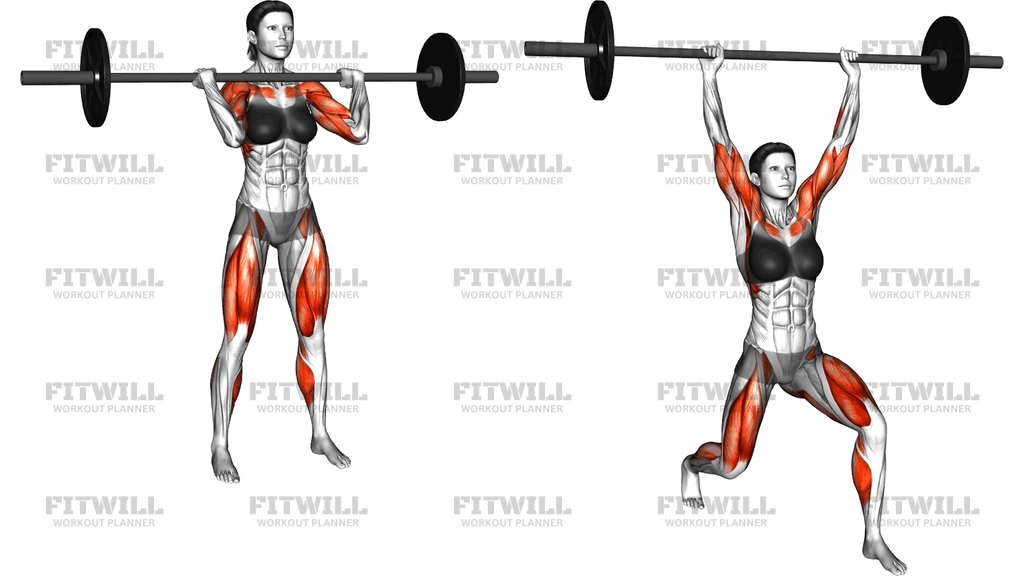
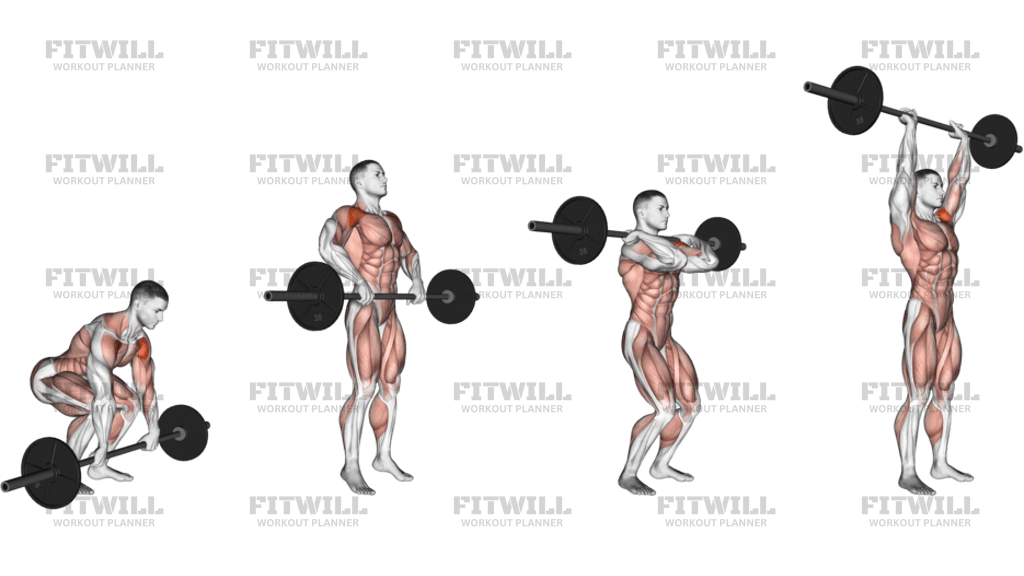
The Barbell Thruster is a compound movement that joins a front squat and an overhead press into one continuous, explosive action. You hold a barbell in the front rack position at shoulder height, squat down, and then drive up out of the squat with enough force that the momentum carries the bar straight overhead into a locked-out press. Because the legs, hips, torso, and arms all contribute in one linked chain, it trains the body as a single coordinated system rather than as isolated muscle groups.
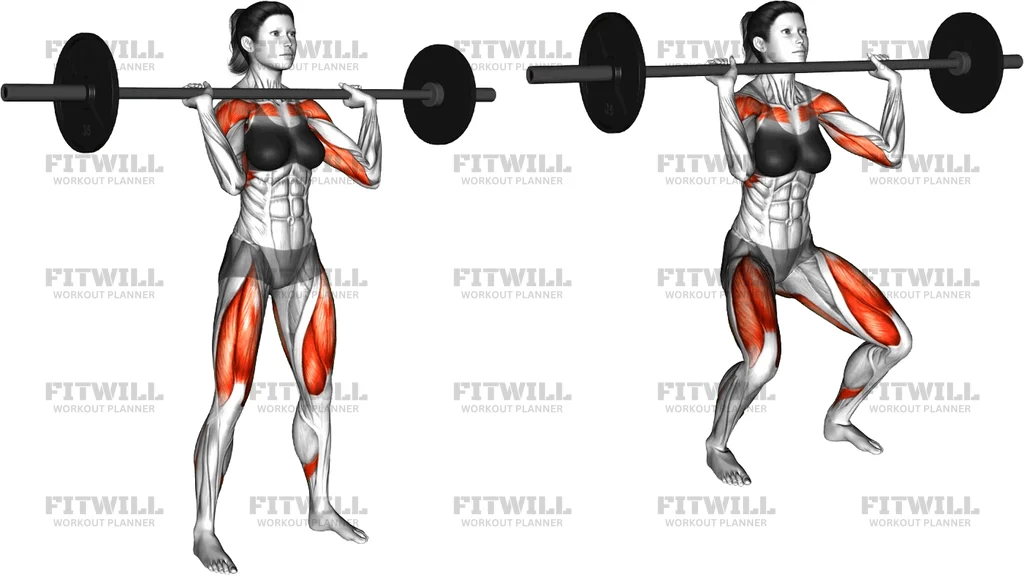
This exercise is one of the most demanding full-body movements you can do with a barbell. The squat portion loads the quads, glutes, and hamstrings, the transition demands serious core stability to keep the bar from drifting, and the press finishes with the shoulders and triceps. The calves and upper back also contribute as you extend through the ankles and keep the bar path tight. Very few lifts ask for this much total-body effort in a single repetition.
The Barbell Thruster is a staple in CrossFit conditioning workouts, but it is equally valuable for general strength training, athletic conditioning, and anyone short on time who wants maximum return per set. Because it elevates the heart rate quickly, it works well in timed intervals, moderate-repetition circuits, or heavier strength-focused sets of three to five reps. Athletes in sports that require transferring force from the ground upward, like sprinting, jumping, or throwing, get direct carryover from the movement pattern.
Setup matters more here than in most lifts. A sloppy front rack or a loose brace gets exposed the moment you try to link the squat and press together. The bar should rest on the front of the shoulders with elbows high, and your feet should be set slightly wider than hip width so you can squat deep and stay balanced. A bar that sits too far forward on the shoulders or elbows that drop during the squat will pull your chest down and make the press far harder than it needs to be.
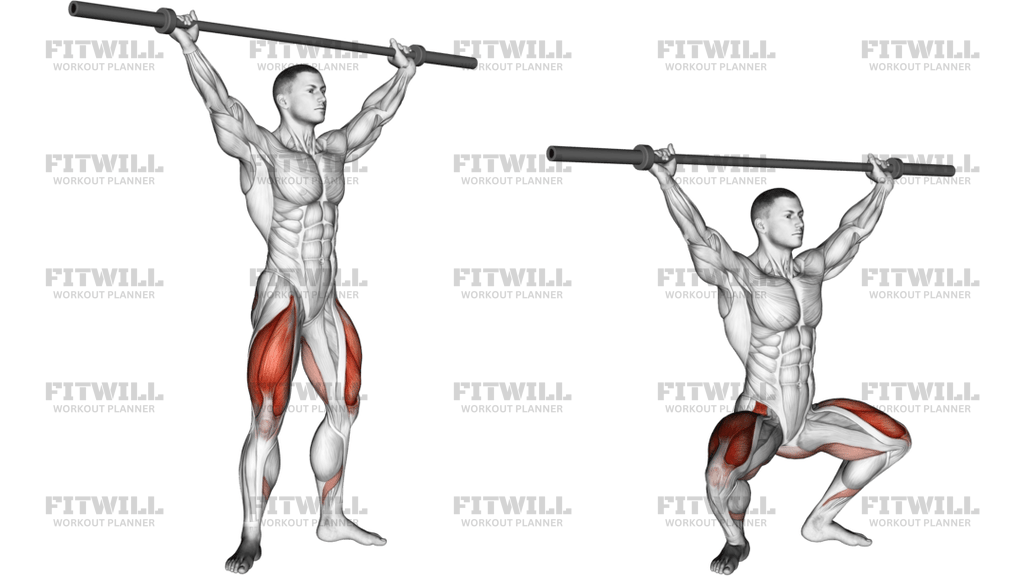
Execution comes down to sequencing. Sink into a controlled front squat, keep the torso as upright as the rack position allows, and then explode upward. The press should begin as your hips reach full extension, so the momentum from standing does most of the early work and your arms simply finish the job. The bar travels in a straight vertical line, ending directly over your midfoot with your biceps beside your ears and your elbows locked out.
Because the Thruster is so fatiguing, form tends to break down fast, especially in high-rep sets. Start with a light bar or an empty barbell until the squat-to-press rhythm feels natural, and treat any collapse in your lower back or forward drift of the bar as the signal to stop the set. Quality reps with a modest load will build more strength and conditioning than grinding out ugly repetitions with more weight.
[ Workout Log & Planner ]
Put your next workout in Fitwill
Keep your plan and training log ready when you are.


Instructions
- Set a barbell in a rack at about upper-chest height. Grip the bar slightly wider than shoulder width, duck under it, and rest it across the front of your shoulders with your elbows pointed forward and lifted so the bar sits on the deltoids, not held entirely in your hands.
- Lift the bar out of the rack, take a step or two back, and set your feet roughly hip-width to shoulder-width apart with your toes turned out slightly and your weight balanced across the whole foot.
- Take a deep breath into your belly, brace your abdominal wall as if bracing for a light punch, and keep your ribs stacked over your pelvis before you descend.
- Squat down by pushing your hips back and bending your knees, lowering until your thighs reach at least parallel while you keep the elbows high and the chest up.
- Reverse the squat explosively, driving the floor away through your whole foot. As your hips approach full extension, begin pressing the bar straight up, letting the momentum from your legs start the bar on its path.
- Finish the press by fully extending the elbows with the bar directly overhead, stacked over your shoulders and midfoot, and your head pushed slightly through so your biceps end up close to your ears.
- Lower the bar under control back to the front rack position by bending the elbows and letting it return to your shoulders, catching it as you either stand tall or immediately descend into the next squat.
- Exhale as you press overhead or at the top of the rep, and inhale and re-brace at the rack position before the next descent.
- After your final rep, walk the bar back into the rack or lower it to the floor with a controlled hinge, keeping your back flat rather than rounding to set it down.
Tips & Tricks
- The most common fault is squatting, pausing, then pressing with the arms only. That turns the lift into two separate exercises and kills the efficiency of the movement. Let the leg drive feed directly into the press by starting the press before you finish standing.
- If your elbows drop during the squat and the bar rolls forward, your rack position is too loose. Widen your grip slightly or work on shoulder and wrist mobility so you can keep the elbows lifted through the whole descent.
- Watch for the bar drifting forward as it goes overhead, which usually means you are pressing around your head instead of moving your head back out of the way. Aim the bar at a vertical line over your midfoot and step your head back as it passes your face.
- Excessive lower-back arch at the top of the press usually signals a weak brace or a bar that is too heavy. Squeeze your glutes at lockout and think about pulling your ribs down rather than leaning back into the weight.
- Heels lifting off the floor during the squat points to limited ankle mobility or a stance that is too narrow. Widen your feet, turn your toes out a bit more, or place a small heel wedge under your heels while you build mobility.
- Keep the descent controlled but not slow. A controlled lower lets you stay braced and consistent, while an overly slow squat wastes energy you will want for the press and for later reps.
- Breathe strategically in longer sets. A full breath and brace every rep or two is ideal for heavy work, but in high-rep conditioning sets you may need to take shorter, quicker breaths at the top rather than resetting fully each time.
- Choose a load you could front squat for several solid reps. If you cannot stand up cleanly from the squat, the press will turn into a standing overhead press with a rounded back, which is where most Thruster injuries happen.
- If the full movement feels unmanageable, build it in pieces first: practice front squats, then add a partial press, then link the full rep. Dumbbells also work well as a stepping stone because they let each arm find its own path.
Frequently Asked Questions
What muscles does the Barbell Thruster work?
It is a true full-body lift. The quads and glutes do the bulk of the work during the squat and drive, the core stabilizes the torso throughout, and the shoulders and triceps finish the press overhead. The hamstrings, calves, and upper back contribute as supporting muscles.
Is the Barbell Thruster suitable for beginners?
Yes, as long as it is introduced with an empty bar or a light load and broken into its parts. A beginner should be comfortable with front squats and overhead presses separately before linking them, and should expect the first few sessions to be about rhythm rather than weight.
How deep should I squat during a Barbell Thruster?
Thighs at or just below parallel is the standard target, since a deeper squat gives the legs more distance to accelerate the bar and makes the drive more powerful. Only go as deep as you can maintain an upright torso and a firm brace.
Why does my bar drift forward when I press overhead?
This usually means the bar path is arcing around your head instead of staying vertical. Move your head back as the bar passes your face, press toward a line stacked over your midfoot, and check that you are not leaning your torso backward at the top.
Can I use dumbbells instead of a barbell for Thrusters?
Absolutely. Dumbbell thrusters are a common substitute and can actually be easier on the wrists and shoulders because each arm can move independently. The barbell version simply allows heavier loading and keeps the front rack position consistent.
How is the Barbell Thruster different from a squat and press done as two separate exercises?
In a thruster the two actions are linked by leg drive, so momentum from standing up helps launch the bar overhead. Performed separately, the squat and press each rely entirely on their own muscles, which makes the combination less efficient and far more tiring at heavier loads.
How heavy should I go on Barbell Thrusters?
For strength work, choose a load you can front squat and press for three to five clean reps. For conditioning circuits, use something you can cycle for eight or more reps before your squat depth or overhead lockout starts to slip. The moment form degrades, the set is over.
My wrists hurt in the front rack position. What should I change?
Try widening your grip slightly so more of the bar rests on your front delts and less weight sits in your hands, and keep your fingers relaxed or even open if flexibility limits you. Working on wrist and lat mobility over time will also let you keep your elbows higher with less strain.
Is it safe to drop the bar after the last rep of a set?
Only drop the bar from the front rack if you are using rubber bumper plates on a platform designed for it, and never from overhead. The safer habit is to lower the bar to your shoulders and then hinge it down to the floor with a flat back.