Split Stance Single Leg Calf Raise
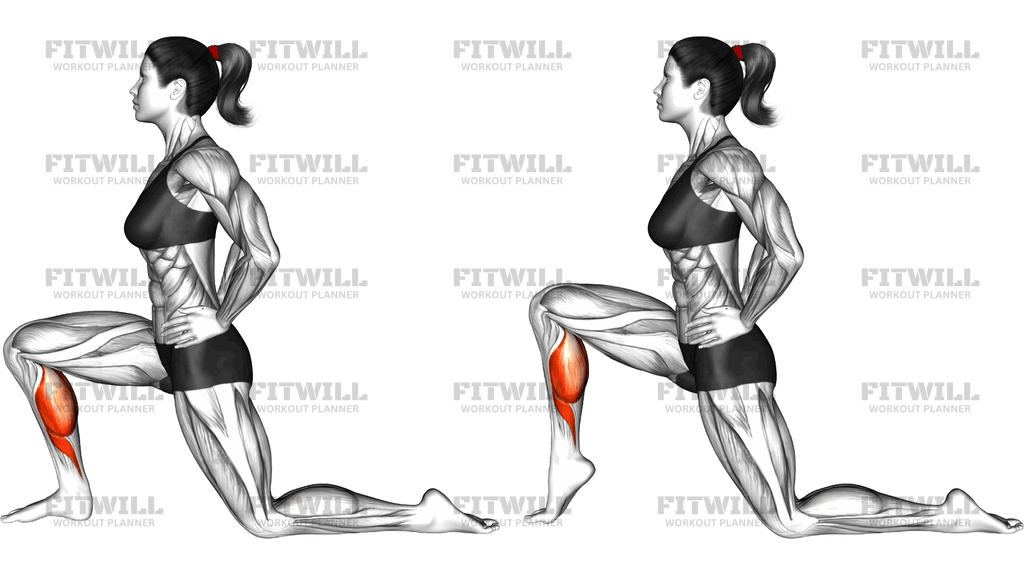
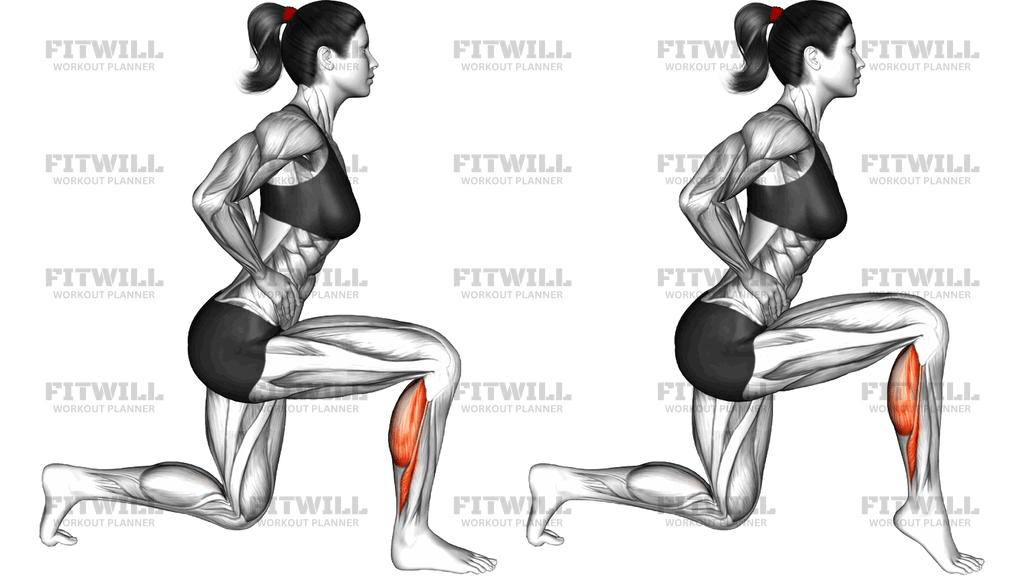
The Split Stance Single Leg Calf Raise is a body weight calf exercise performed from a staggered lunge position, with the work focused entirely on the front leg. You drop into a half-kneeling-style split stance, keep the front foot flat, then press through the ball of the front foot to lift the heel as high as possible before lowering it back to the floor with control. Because only one calf works at a time and the front knee stays bent, the movement loads the lower leg in a way that closely mirrors walking, running, and climbing stairs.
This exercise is especially useful for exposing side-to-side differences in calf strength and ankle stability. Most people have one calf that is noticeably stronger or one ankle that is less steady, but standard two-leg calf raises hide that imbalance. Training one leg at a time also lets the working ankle move through a fuller, more natural range than many machine-based options, since your own foot and ankle have to stabilize the effort from the ground up.
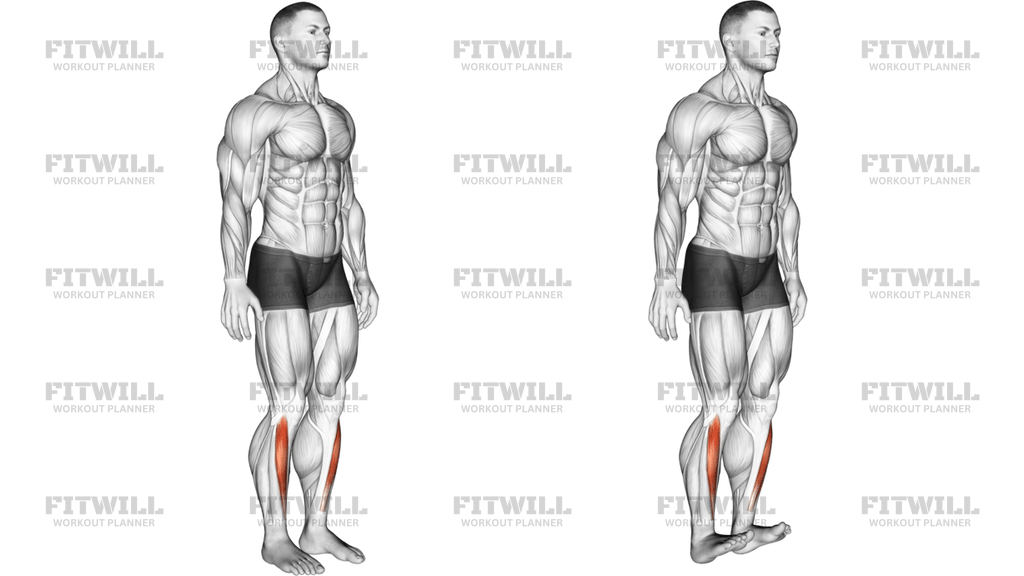
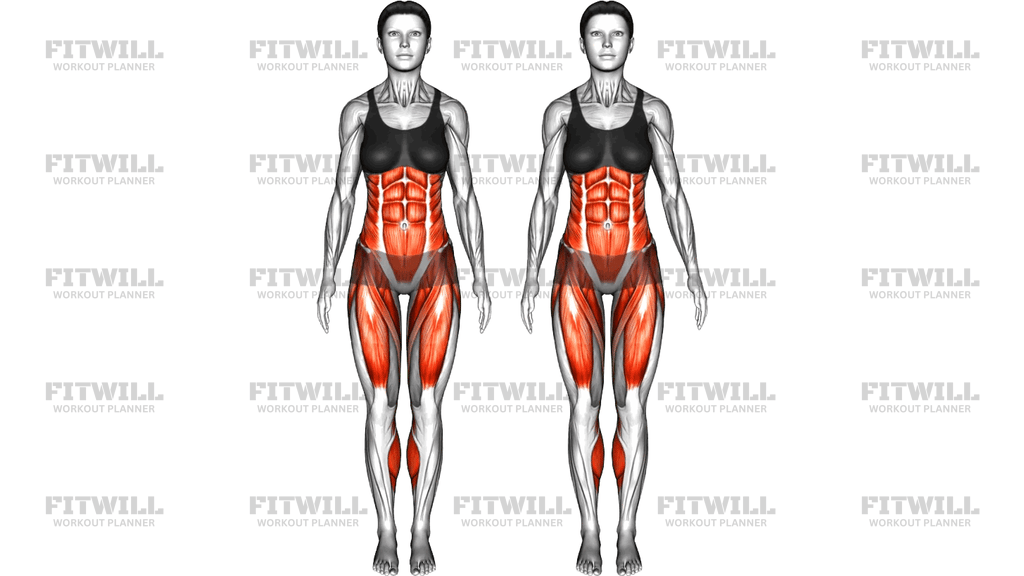
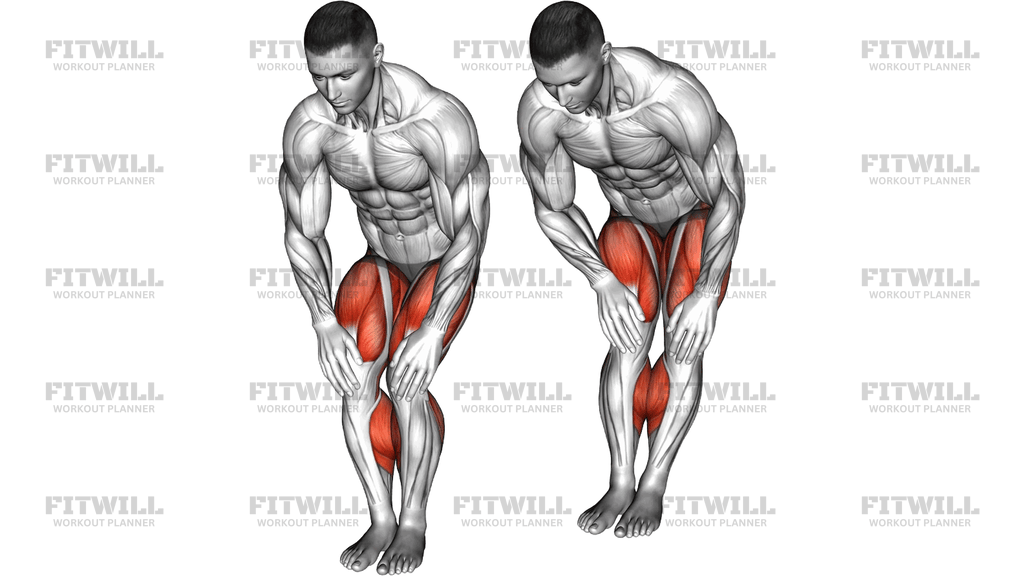
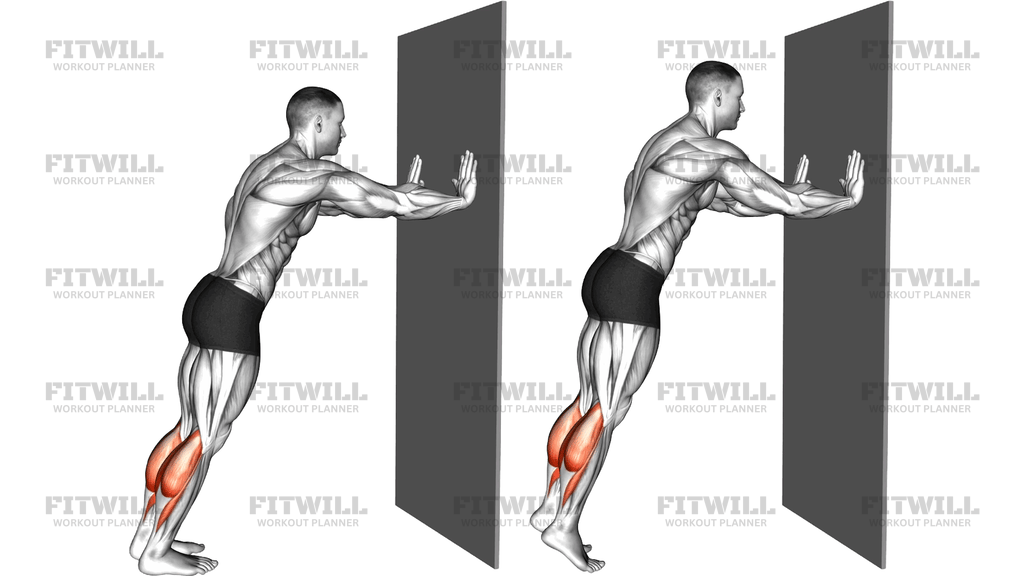
The primary muscle at work is the calf complex on the front leg, particularly the gastrocnemius and soleus. Because the front knee is bent in the split stance, the calf is trained with the ankle dorsiflexed under load, which places meaningful demand on the soleus and the smaller stabilizing muscles around the ankle as well. The rear leg mostly serves as a support and balance aid, while the trunk works lightly to keep your posture tall throughout the set.
The setup matters more than it might seem. The distance between your feet determines whether the exercise feels stable or shaky: too wide and you lose balance, too narrow and you cannot sink the rear knee comfortably. The front foot must stay fully planted through the ball and toes, and the front knee should track over the toes rather than collapsing inward. Keeping your hands on your hips or near a wall for light support helps you stay tall and stop the movement from turning into a bouncing lunge.
To perform it well, rise onto the ball of the front foot by driving the heel straight up, pause briefly at the top, and lower the heel all the way back to the floor under control before starting the next rep. Speed is the most common mistake — the calf responds better to a slow, deliberate lift and a controlled descent than to fast bouncing. Complete all reps on one side before switching legs, and keep the rear knee softly resting near the floor rather than slumping into it.
This movement fits well into lower body days, running and jumping preparation, or rehabilitation-style ankle work when no equipment is available. It requires no setup space beyond a body-length area of floor, which makes it a practical choice for home training or warm-ups. If balance is limiting you before the calf feels challenged, lightly touching a wall with one hand is a fair adjustment that still keeps the load on the front leg.
[ Workout Log & Planner ]
Put your next workout in Fitwill
Keep your plan and training log ready when you are.


Instructions
- Stand tall with one foot stepped roughly two to three feet in front of the other, hands on your hips.
- Lower into a split stance by bending both knees until the rear knee hovers just above or lightly touches the floor; keep the front foot completely flat.
- Position the front knee directly over the toes so it stays stacked over the ankle you are about to work.
- Brace your trunk and lift your chest so your torso stays upright instead of leaning over the front leg.
- Press through the ball of the front foot and raise the heel as high as it will go, keeping the toes planted and the front knee bent.
- Pause for a second at the top of the lift, squeezing the calf of the front leg.
- Lower the front heel slowly back to the floor until it touches down fully, keeping the split stance intact.
- Exhale as you rise onto the ball of the foot and inhale as you lower the heel.
- Finish all repetitions on the front leg, then switch sides and repeat with the other leg forward.
- Stand up out of the split stance between sets to reset, and re-establish your foot spacing before the next set.
Tips & Tricks
- If you bounce the front heel up and down quickly, the Achilles tendon starts doing the work instead of the calf — slow the lowering phase to a two-count so the muscle stays under tension.
- Keep the front knee bent throughout the set; straightening it turns the exercise into a different variation and shifts emphasis away from the soleus-heavy position this setup creates.
- Do not let the front knee drift inward as you lift the heel — cue the knee to stay lined up over the middle of the foot to protect the ankle path.
- The rear leg is for support only. If you find yourself pushing off the back toes to help lift the front heel, lighten the effort and let the front calf do the work.
- If your balance wobbles, stand within arm's reach of a wall and touch it lightly with one hand rather than widening your stance, which changes the stretch on the calf.
- Lift the heel as high as your range genuinely allows rather than stopping halfway — a shortened range is a common reason this exercise stops producing results.
- Make sure the ball and toes of the front foot stay glued to the floor; rolling onto the outside edge of the foot is a frequent fault that reduces calf engagement and strains the ankle.
- Expect the rear knee and hip to fatigue before the calf on longer sets — if your back leg gives out first, reduce reps per set rather than sinking your weight into the rear knee.
Frequently Asked Questions
Which muscles does the Split Stance Single Leg Calf Raise target?
It primarily targets the calf of the front leg, especially the gastrocnemius and soleus. The smaller stabilizing muscles around the working ankle also contribute, while the rear leg and trunk play a supporting role.
Why is the front knee bent instead of straight in this exercise?
The bent front knee places the ankle in a position that increases demand on the soleus and challenges ankle stability more than a straight-leg raise. It also matches the positions your calf works in during walking, running, and stair climbing.
Is the Split Stance Single Leg Calf Raise suitable for beginners?
Yes, it requires no equipment and can be scaled easily. Beginners can hold a wall for light balance support and start with fewer reps until the single-leg balance feels comfortable.
How far apart should my feet be in the split stance?
Step far enough forward that your rear knee can lower near the floor while your front knee stays stacked over the ankle, usually about two to three feet. Too narrow and you will feel cramped, too wide and your balance suffers.
What is the most common mistake with the Split Stance Single Leg Calf Raise?
Bouncing quickly through the reps instead of lifting and lowering under control. The heel should touch down fully on each rep and pause briefly at the top so the calf, not the tendon's rebound, drives the movement.
My back leg gets tired before my calf — is that normal?
Yes, the rear knee and hip work isometrically to hold the split stance, so they can fatigue first. Shorten your sets or switch legs more often rather than sinking your weight into the rear knee.
Can I substitute this exercise if single-leg balance is too difficult?
You can start with a standard two-leg calf raise or hold a wall or sturdy chair for support. As your balance improves, reduce how much you lean on the support until the load shifts back to the front leg.
How many reps and sets should I do?
Two to three sets of 10 to 15 controlled reps per leg is a solid starting point. Because the resistance is only your body weight, prioritize a full range of motion and slow lowering over high rep counts.
Is it safe to do this exercise if my ankle is sore?
Mild muscle fatigue is normal, but sharp pain, swelling, or discomfort in the Achilles area is a signal to stop. Skip the exercise and have persistent ankle pain assessed before loading it further.