Resistance Band Rotary Pull
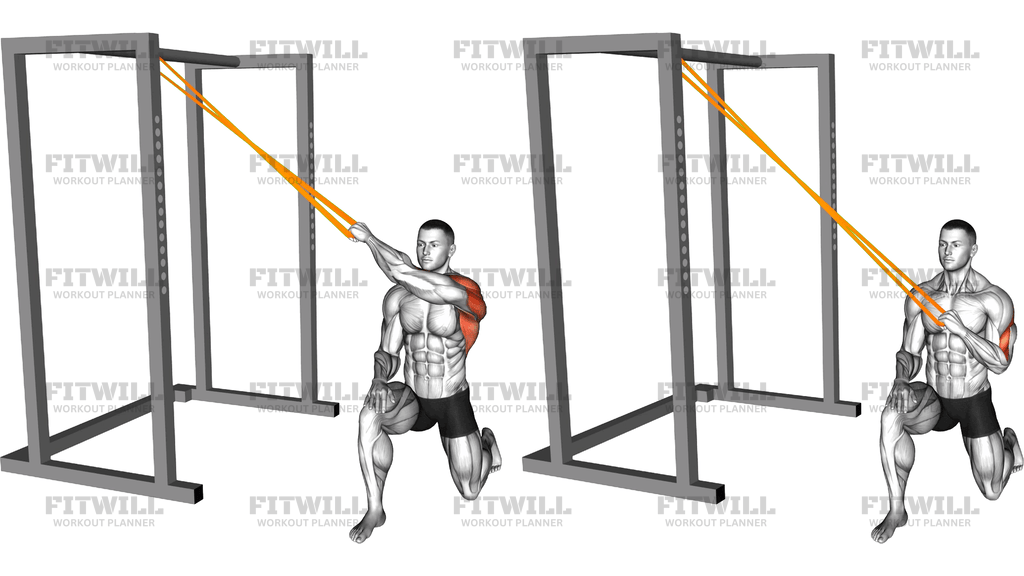
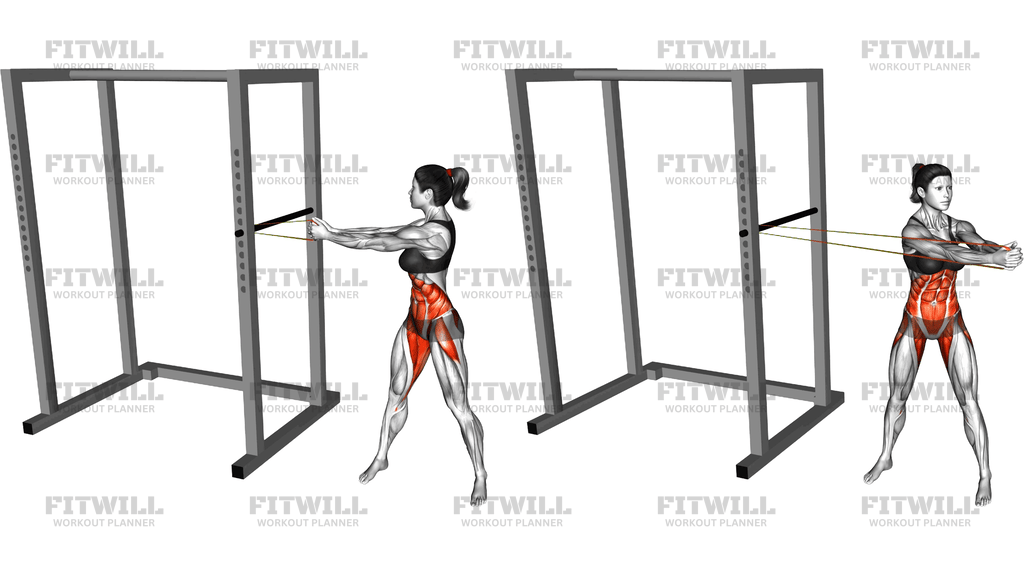
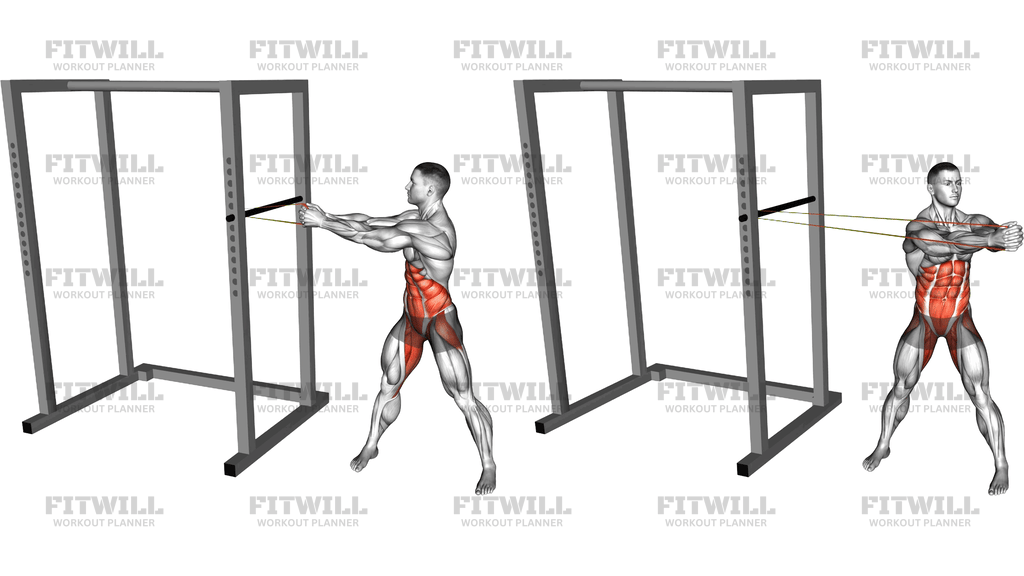
The Resistance Band Rotary Pull is a standing rotational pull where a band is anchored at roughly chest height and you pull it from an extended, rotated position across your body until your hand reaches your ribs. Unlike a static anti-rotation press such as a Pallof press, this variation deliberately asks your trunk to rotate under load, making it a controlled strength exercise for the obliques rather than a pure stability drill.
The primary work comes from the obliques on the pulling side, which drive the trunk rotation, while the rectus abdominis, deep core, and glutes keep your pelvis and lower body organized as you pivot. Your lat, rear shoulder, and upper back handle the actual pulling, and the wide, bent-knee stance forces your legs to stabilize the whole movement. Because a band's tension increases as it stretches, the rotation becomes harder exactly where your muscles are shortest, which teaches you to stay strong through the end range.
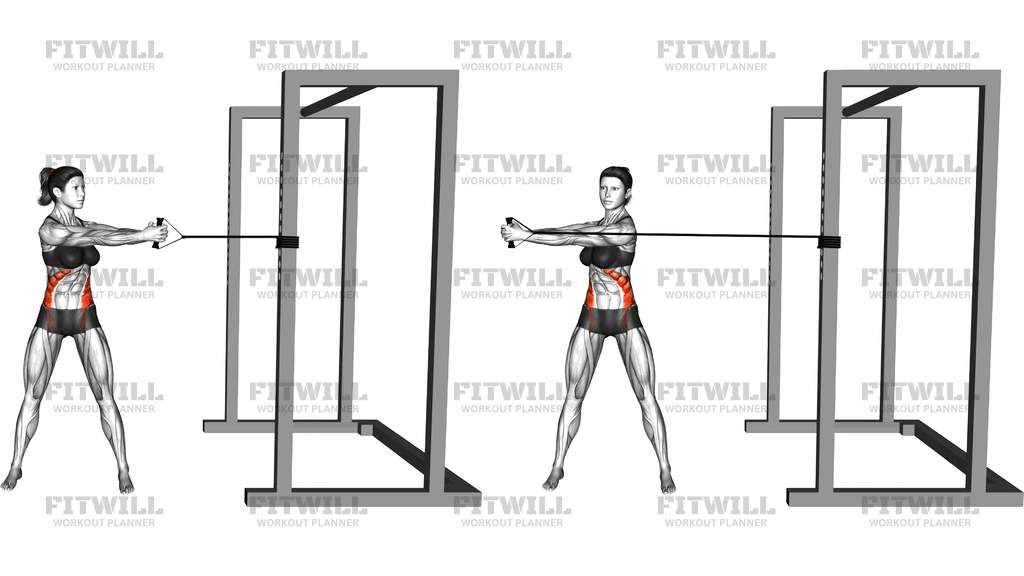
Setup matters more here than in most band exercises. Anchor the band at chest height on a rack or sturdy upright, and stand far enough away that the band already has tension before you start pulling. Your starting position should be a staggered stance with your torso turned toward the anchor and your near arm extended straight along the band. If the band starts slack, the first third of the pull contributes nothing and you lose the benefit at the point where rotation control is most valuable.
Execution is a coordinated whole-body turn, not an arm row. Pull the band toward your lower chest while rotating your torso away from the anchor and pivoting your back foot so your hips turn with you. Finish with your hand at your ribs, your chest facing away from the anchor, and your weight settled over your front leg. Return slowly by reversing the same path, letting the band draw your arm and torso back to the extended starting position under control.
This exercise suits lifters who want rotational strength for throwing, swinging, or changing direction, as well as anyone who has mastered basic planks and Pallof presses and wants to progress to dynamic trunk work. It fits well as an accessory after main lifts, typically for 8 to 12 controlled reps per side. Keep the load moderate; the goal is a smooth, full-body rotation you can repeat with identical form on both sides, not a maximum-effort yank against the band.
[ Workout Log & Planner ]
Put your next workout in Fitwill
Keep your plan and training log ready when you are.


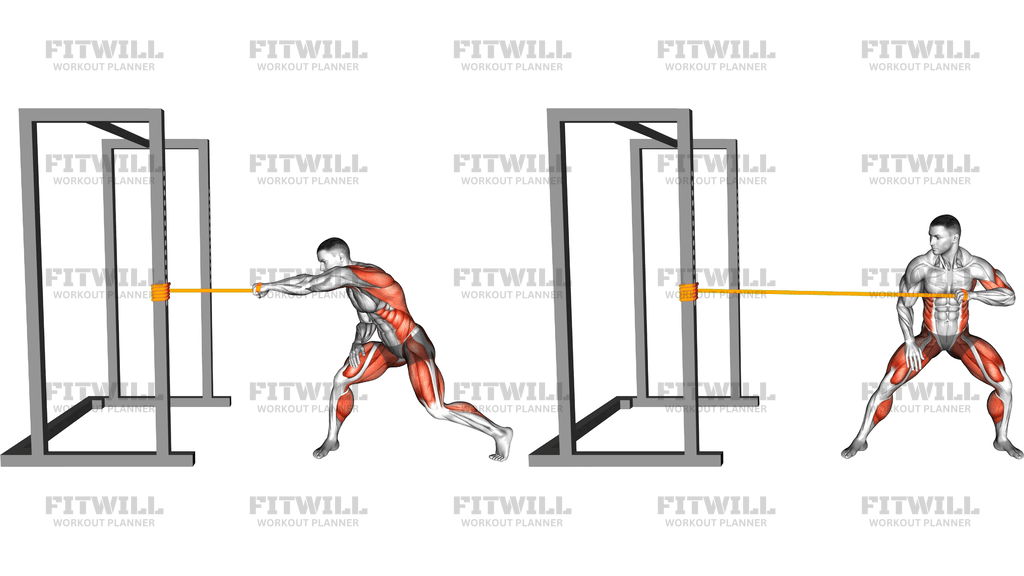
Instructions
- Anchor the resistance band securely at chest height on a rack upright, and grip the free end in one hand with the band looped once around your palm for a secure hold.
- Stand far enough from the anchor that the band is taut with your arm extended, in a staggered stance with your inner foot forward and your torso rotated toward the anchor.
- Rest your free hand lightly against your front thigh for balance, and set a soft bend in both knees.
- Brace your core and pull your shoulder blade back to remove slack before initiating the turn.
- Pull the band toward your lower chest while rotating your torso away from the anchor, pivoting your back foot so your hips turn with your shoulders.
- Finish with your hand at your ribs, chest facing away from the anchor, and your weight over your front leg; pause briefly in this rotated position.
- Reverse the movement slowly, letting the band draw your arm and torso back to the extended start without letting it snap you forward.
- Exhale as you pull and rotate, and inhale as you return to the starting position.
- Complete all reps on one side, then reset your stance and repeat on the other side so the band pulls from the opposite direction.
Tips & Tricks
- If the band goes slack at the start of each rep, step farther from the anchor so there is constant tension from the first inch of the pull.
- Common mistake: turning it into a standing row by pulling only with the arm. Drive the rotation from your trunk and pivot the back foot so the hips contribute.
- If your lower back arches or twists instead of your mid-back rotating, slow the tempo and reduce to a lighter band until the turn comes from the ribs, not the lumbar spine.
- Keep the pulling elbow roughly in line with the band rather than flaring it high; a high elbow shifts work to the shoulder and away from the obliques.
- Distribute your weight over the whole front foot. Rolling onto the outside edge during the turn is a sign the rotation is too fast or the band too heavy.
- Match reps side to side by time or count, not by effort, since your stronger rotation side will happily do more work if you go by feel.
- Avoid letting the band pull you back into the start position; the eccentric return should take about the same time as the pull itself.
- Loop the band around your hand rather than pinching the end in your fist so a loss of grip does not send the band flying toward your face.
Frequently Asked Questions
Which muscles does the Resistance Band Rotary Pull work?
The obliques are the primary movers because they drive the trunk rotation, supported by the abs, glutes, lats, and rear shoulders. The legs work isometrically to stabilize the wide stance throughout the pull.
How is the Resistance Band Rotary Pull different from a Pallof press?
A Pallof press trains you to resist rotation, while the Rotary Pull deliberately rotates your trunk against the band's resistance. The pull builds rotational strength; the press builds anti-rotational stability, and the two complement each other.
What height should the band be anchored at?
Anchor it at about chest height so the band runs roughly horizontal when your arm is extended. Anchoring much higher or lower changes the pulling angle and shifts work away from the obliques.
Is the Resistance Band Rotary Pull suitable for beginners?
Yes, if you start with a light band and a shorter range, turning only partway before returning. Beginners should master keeping the pelvis steady during the turn before using heavier tension or full end-range rotation.
Why do I need to pivot my back foot during the pull?
Pivoting lets your hips rotate with your shoulders, which keeps the turn distributed through your trunk and hips instead of forcing the rotation entirely from your lower back. It also lets you finish in a strong, balanced position over your front leg.
My lower back aches after this exercise. What am I doing wrong?
This usually means the rotation is coming from your lumbar spine or your torso is overextending at the end of the pull. Use a lighter band, keep your ribs stacked over your pelvis, and rotate from the mid-back with the hips turning alongside.
Can I substitute a cable machine for the band?
Yes, a cable set at chest height works well and provides constant tension. The band differs by getting harder as it stretches, which challenges the end of the rotation more than the start.
How many reps and sets should I do?
Two to three sets of 8 to 12 controlled reps per side works well as an accessory movement. Because it is a rotational exercise, prioritize smooth, identical form on both sides over heavy tension.
Is it safe to perform the Resistance Band Rotary Pull explosively?
Fast rotations are appropriate only once you can control the return phase, and the band should never be allowed to snap you back to the start. For most people, a controlled tempo with a brief pause at the rotated position is the safer and more productive choice.