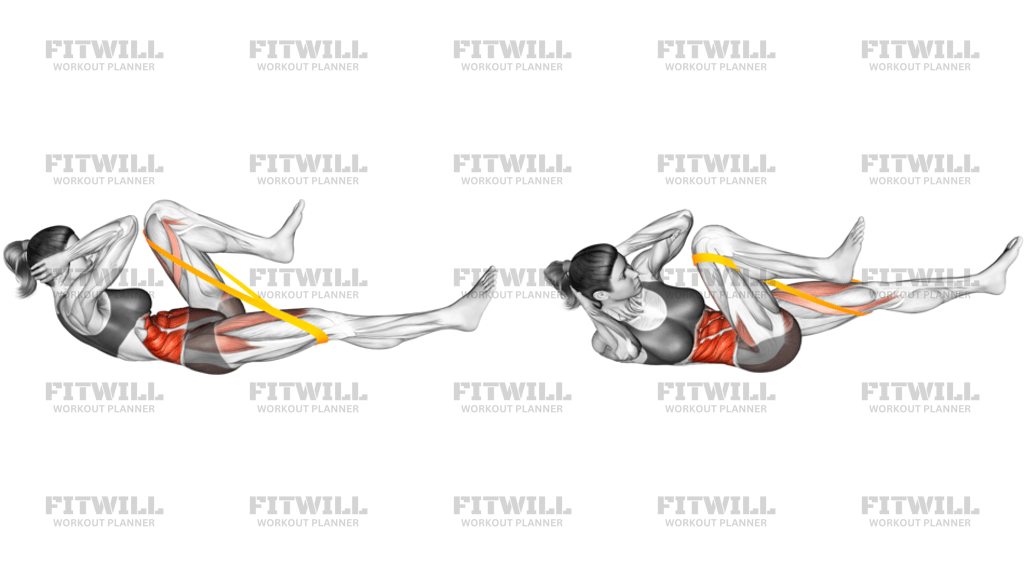
Resistance Band Reverse Crunch
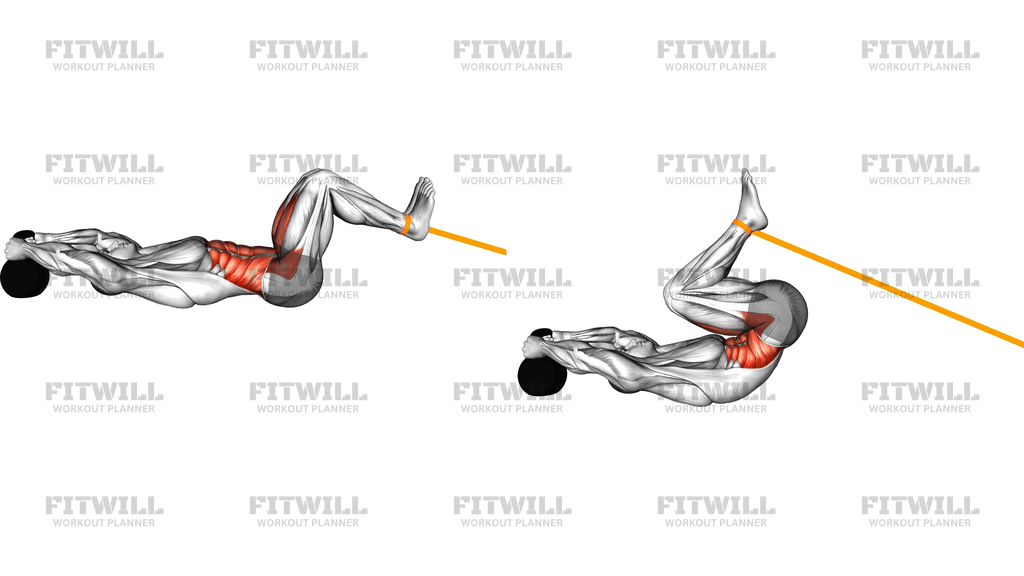
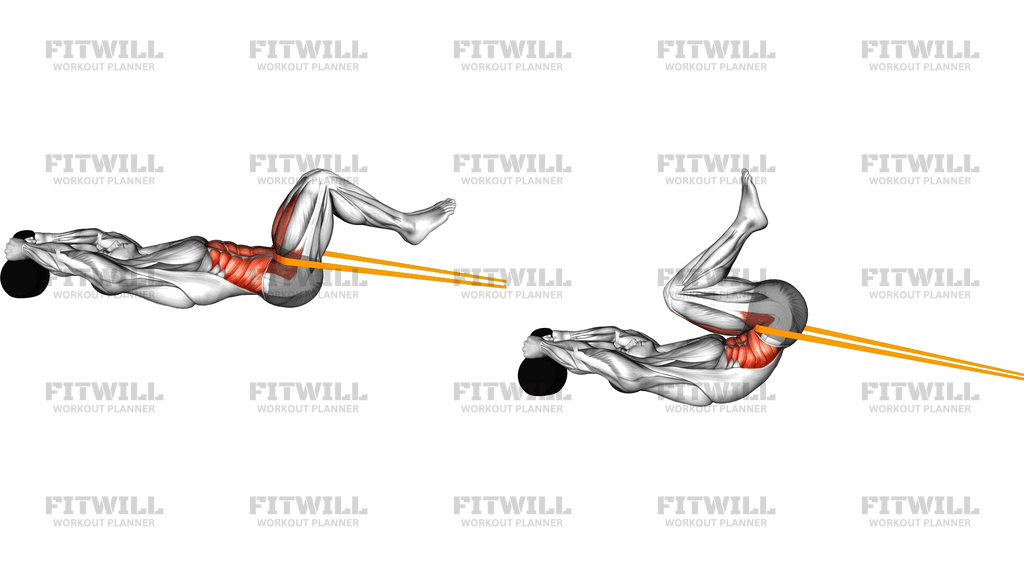
Resistance Band Reverse Crunch is a band-loaded core exercise that trains the abs to curl the pelvis upward instead of simply swinging the legs. The resistance band adds tension through the reverse crunch path, so the rep becomes harder where the abs have to control the tuck and the return. It is a useful option when you want direct abdominal work that stays more focused on pelvic control than on a fast, momentum-driven leg raise.
The main target is the rectus abdominis, with the obliques and deep core muscles helping keep the torso organized while the hips curl. The hip flexors assist during the knee bend, but they should not dominate the movement. When the setup is right, Resistance Band Reverse Crunch gives you a clear feel for the lower abs working through a short, controlled range rather than a loose, swinging motion.
The setup matters because this exercise only works well when the band is tensioned in a way that matches the curl. Lie on your back, position yourself so the band pulls from behind you toward the hips or upper thighs, and bend the knees before each rep. If the band is too slack at the bottom or too aggressive at the top, the set turns into a jerk instead of a clean abdominal contraction.
From there, brace, exhale, and curl the pelvis toward the ribs by drawing the knees in and lifting the tailbone slightly off the support. The chest should stay quiet while the lower spine and pelvis do the visible work. A good rep finishes with a brief squeeze at the top, then a controlled return until the low back settles back down without losing band tension.
Resistance Band Reverse Crunch is useful as accessory core work, in an abdominal circuit, or after a main lift when you want strict trunk training without heavy spinal loading. It is also a practical regression for people who struggle to feel reverse crunches without extra load. Keep the resistance manageable, keep the motion smooth, and stop the set when the hips start rocking or the neck and hip flexors take over.
[ Workout Log & Planner ]
Put your next workout in Fitwill
Keep your plan and training log ready when you are.


Instructions
- Lie on your back on a mat or flat bench and anchor the band so it pulls from behind you toward your hips or upper thighs.
- Position yourself far enough from the anchor that the band already has light tension before the first rep.
- Bend your knees and bring your thighs over your hips so your legs are ready to curl instead of swing.
- Set your arms where they help you stay stable, press your shoulders down, and keep your head relaxed on the support.
- Exhale and brace your core, then roll your pelvis upward by drawing your knees toward your chest.
- Lift until your tailbone comes slightly off the support and the abs are clearly controlling the motion.
- Pause for a beat at the top without letting your legs snap or the band yank you backward.
- Lower slowly until your lower back returns to the support, then reset your brace before the next repetition.
Tips & Tricks
- Start with a light band; the resistance should challenge the curl, not force you to jerk off the floor.
- If your lower back pops up too early, shorten the range and focus on tipping the pelvis instead of lifting the knees higher.
- Keep your chin softly tucked so your neck does not take over when the band gets heavy at the top.
- A clean reverse crunch feels like the tailbone lifts first, not like the whole torso rocks.
- If the anchor point makes the band slack at the bottom, move closer until the start position stays loaded.
- Use a slow lowering phase so the abs keep working after the top squeeze instead of dropping straight down.
- If your hip flexors burn more than your abs, reduce the band tension and make the tuck smaller and cleaner.
- Stop the set when the band starts pulling you into a swing; that usually means the load is too heavy for strict reps.
Frequently Asked Questions
What muscles does Resistance Band Reverse Crunch work most?
It mainly targets the rectus abdominis, with the obliques and deep core muscles helping control the tuck. The hip flexors assist, but they should not be the driver of the rep.
Where should the band be anchored for Resistance Band Reverse Crunch?
Anchor it so it pulls from behind you toward your hips or upper thighs and keeps light tension at the start. If the band goes slack at the bottom, move closer to the anchor.
Should my feet stay on the floor during this exercise?
No. In a reverse crunch, the legs stay bent and the pelvis curls up while the low back stays controlled on the support. Planting the feet turns it into a different movement.
How is Resistance Band Reverse Crunch different from a regular crunch?
A regular crunch lifts the chest, while this movement curls the pelvis and tailbone upward. That shift puts more emphasis on lower-abdominal control and less on ribcage flexion.
Is Resistance Band Reverse Crunch good for beginners?
Yes, if the band is light and the range stays short and deliberate. Beginners usually do best when they can pause at the top and lower without swinging.
What is the most common mistake on Resistance Band Reverse Crunch?
The biggest mistake is throwing the knees upward and letting the band yank the hips around. Keep the movement small and let the pelvis roll first.
Can I do Resistance Band Reverse Crunch on a bench instead of the floor?
Yes, as long as your hips have room to curl and the support lets your lower back settle between reps. A flat mat is usually easier when you are learning the band path.
How do I know the resistance is too heavy?
If your neck tightens, your hips rock, or you cannot lower slowly, the band is too heavy. The load should let you keep the tuck crisp and the return controlled.