Pilates Machine Russian Split
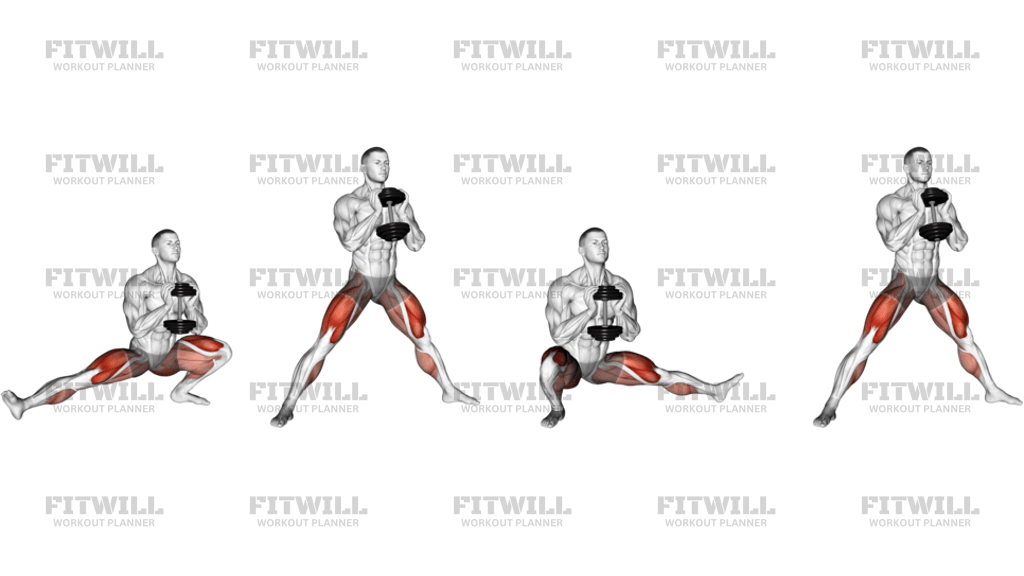
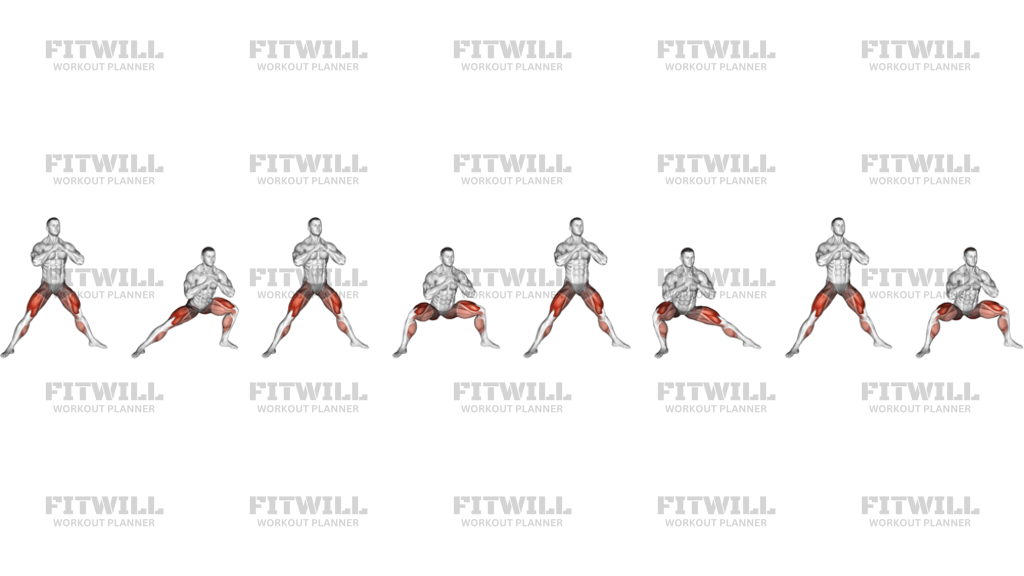
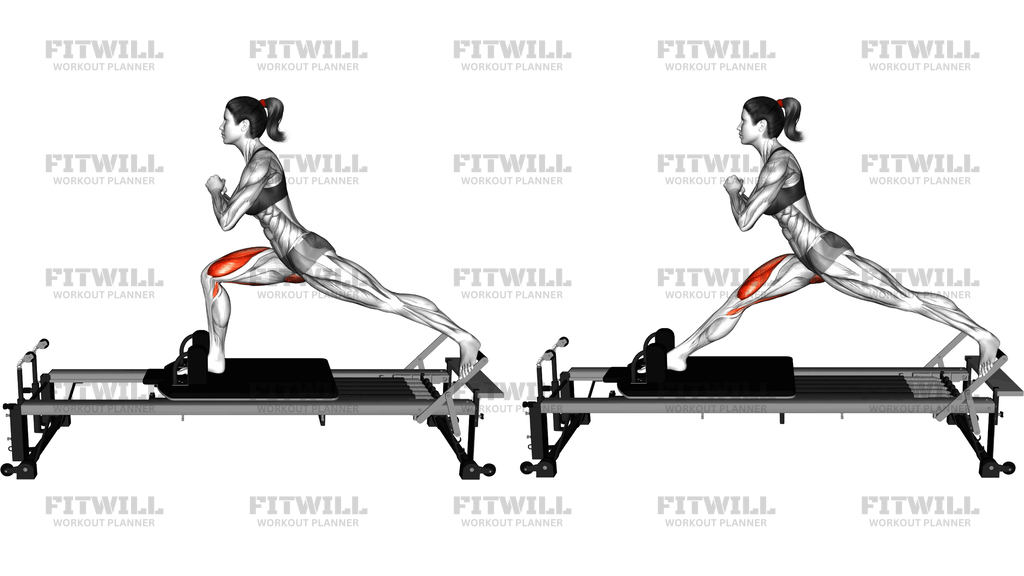
The Pilates Machine Russian Split is a standing sliding split performed on a Pilates reformer. One foot is planted on the moving carriage while the other stays fixed on the rear platform at the end of the machine's frame. As you allow the carriage to glide away, the front leg straightens and the hips sink into a deep split position, then you pull the carriage back in using the strength of the front leg and hips. It looks dramatic, but the motion is slow, controlled, and highly deliberate.
This movement is best known for the intense load it places on the front thigh. The quadriceps work eccentrically as the carriage slides out and concentrically as you draw it back in, which makes it a favorite for building single-leg strength through a long range. At the same time, the rear leg sits in a deep hip flexor stretch, so you train strength and flexibility in the same rep. The glutes, hamstrings, and inner thighs help control the depth, and the core has to stay engaged to keep your torso upright while your legs are doing very different things.
The setup is what makes or breaks this exercise. Because one foot is on a moving surface and the other is on a fixed platform, the split width is determined by where you place your feet before you start, and the spring load determines how much resistance the carriage gives you. Too little spring and the carriage runs away from you; too much and you cannot reach a meaningful range. Take the time to get the foot placement and spring selection right before your first rep.
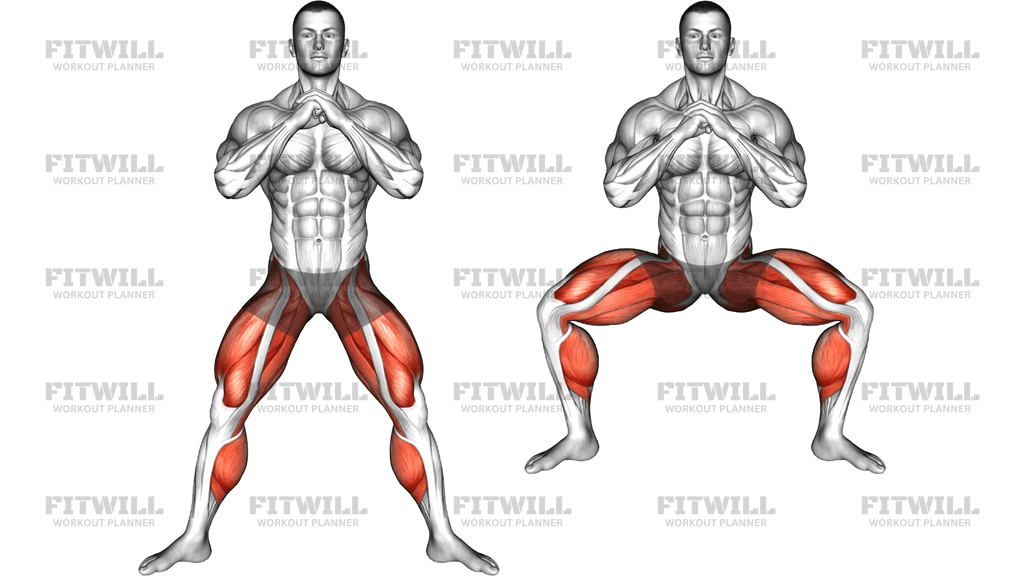
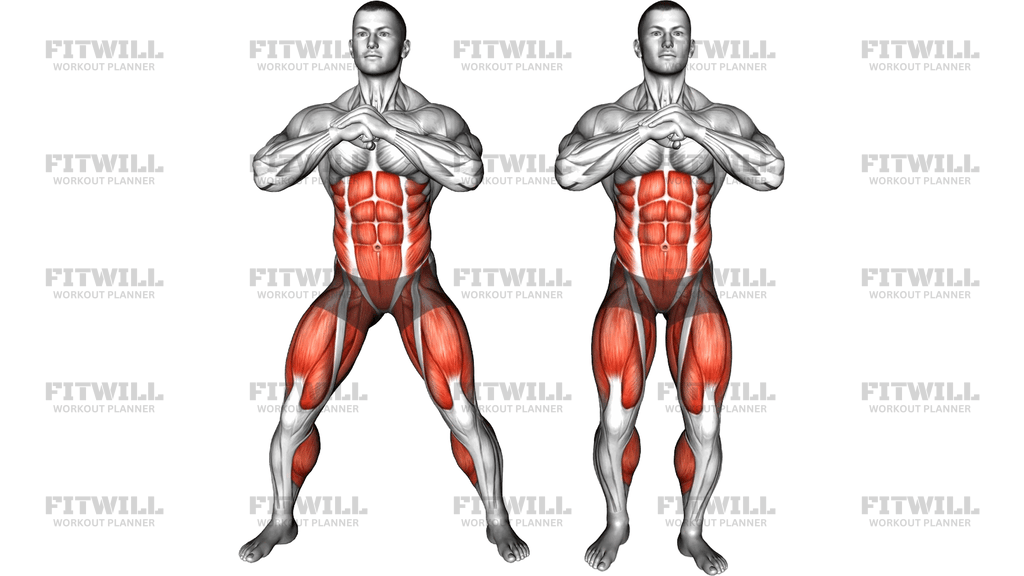
To execute it well, keep your weight balanced between both legs and your torso tall, rather than collapsing forward or dumping into the front knee. Slide the carriage out only as far as you can control with a smooth, even speed, pause briefly at your end range, then pull the carriage back with the front leg doing the work. The hands are usually held in front of the chest in a guard-like position, which encourages you to balance without grabbing for support.
You will see the Pilates Machine Russian Split used in intermediate and advanced reformer programming, often near the end of a leg-focused session when the thighs and hips are already warm. Dancers and skaters use it for split-specific strength, while general clients use it to expose and fix left-right imbalances, since each leg has to handle its own job independently. It is not a beginner reformer exercise, but a confident intermediate with good carriage control can work on it productively.
Practically speaking, respect the eccentric portion. Most people can slide out further than they can control back in, and that mismatch is where form breaks down. Move within a range where the carriage speed stays even, keep the front knee tracking over the foot, and treat depth as something you earn over weeks, not something you force on day one.
[ Workout Log & Planner ]
Put your next workout in Fitwill
Keep your plan and training log ready when you are.


Instructions
- Set the reformer to a moderate spring load, heavy enough that the carriage will not run away from you when you stand on it.
- Place your front foot flat on the carriage, pressed against the shoulder rests, with the toes pointing forward and the whole foot in contact.
- Step your rear foot onto the rear platform at the end of the frame, far enough back that your stance is already a comfortable split, and grip the machine briefly until you are stable.
- Stand tall and lift your hands in front of your chest in a guard position, then brace your core as if preparing to absorb a light push.
- Inhale to prepare, then slowly let the carriage slide away, straightening the front leg and lowering the hips into the split while the rear foot stays anchored.
- Stop at the deepest point you can hold with an even carriage speed and an upright torso; the front thigh should feel loaded, not the front knee joint.
- Exhale and pull the carriage back in by driving through the front foot and engaging the front thigh and glute, keeping the rear leg passive.
- Pause briefly with the carriage back at the start, reset your balance and brace, then complete all reps on one side before switching legs.
- Keep the movement slow and symmetrical on both the way out and the way in; if the return is faster than the slide out, reduce the range.
Tips & Tricks
- The most common mistake is letting the carriage dictate the speed. If it accelerates away from you mid-slide, add a spring or shorten the range so you, not gravity and spring tension, control the tempo.
- Watch the front knee: it should bend and straighten in line with the toes. If it drifts inward as the carriage slides out, consciously press the front knee slightly outward over the second toe.
- Do not let the hips twist open. Both hip points should stay facing forward, which usually means narrowing the split slightly rather than rotating to gain depth.
- A collapsing torso usually means the core has disengaged. Think of lifting through the crown of the head and keeping the ribs stacked over the pelvis instead of leaning toward the front thigh.
- If the rear hip flexor cramps or pinches at the bottom, reduce the split width and spend a few sessions building tolerance before chasing a deeper position.
- Gripping the machine during the working reps turns this into a different exercise. Use your hands only to get into and out of the setup, then take them away.
- Bare feet or grip socks work best here; slippery footwear on the carriage shoulder rest is a genuine safety issue with one foot on a moving surface.
- Match your depth to your weakest rep. If the last two reps are shakier than the first two, end the set rather than sinking deeper to compensate for fatigue.
- Always do both sides, and start with your tighter or weaker leg so the second side can match its range rather than overshooting it.
Frequently Asked Questions
Which muscles does the Pilates Machine Russian Split work the most?
The front thigh carries most of the load, so the quadriceps are the primary muscle. The glutes, hamstrings, and hip flexors assist and stabilize, while the rear hip flexors get a strong static stretch at the bottom of the split.
Is the Pilates Machine Russian Split suitable for beginners?
It is generally an intermediate to advanced reformer exercise because one foot is on a moving carriage while the other is fixed. Beginners should build carriage control and single-leg strength with simpler standing or lunging reformer work first.
How do I set up the foot position for the Pilates Machine Russian Split?
Place the front foot flat on the carriage against the shoulder rests and the rear foot on the rear platform at the end of the frame. Set the stance to a comfortable split before you start, because the distance between your feet cannot change once the carriage begins moving.
How much spring resistance should I use for the Pilates Machine Russian Split?
Start with a moderate to heavier spring so the carriage moves slowly and predictably. As your control improves, you can lighten the load, which makes the exercise harder because you have to brake the carriage yourself.
Why does my front knee hurt during the Pilates Machine Russian Split?
Discomfort usually means the knee is drifting inward or out of line with the toes, or that you are going deeper than your control allows. Keep the knee tracking over the second toe, shorten the range, and add spring support before continuing.
Can the Pilates Machine Russian Split improve my flexibility?
Yes, the rear leg sits in a deep hip flexor stretch while the front leg works through a long range, so regular practice can improve split mobility. Depth should increase gradually as your strength and control allow.
What can I substitute if I do not have access to a reformer for the Pilates Machine Russian Split?
Slide lunges with a towel or disc on a smooth floor under the front foot, or controlled floor splits, train similar qualities. Neither replicates the carriage's resistance exactly, but both develop the same strength-through-range pattern.
How many reps and sets of the Pilates Machine Russian Split should I do?
Because each rep is slow and demanding, 5 to 8 controlled reps per side for 2 to 3 sets is a solid working range. Stop the set when the carriage speed becomes uneven or your torso starts to lean.
Should I hold onto the reformer during the Pilates Machine Russian Split?
Use your hands only to get into and out of the setup position. During the working reps, the hands stay lifted in front of the chest so your legs and core have to control the movement.