Dumbbell Cossack Squat
Dumbbell Cossack Squat is a loaded lateral squat performed from a wide stance with a single dumbbell held at the chest. The movement shifts your body side to side so one leg works through a deep squat while the other stays long and more open. It is useful for building lower-body control, hip mobility, and strength through the inner thighs, glutes, quads, and adductors.
The goblet-style dumbbell position matters because it helps keep the torso tall while you sit into one hip. Hold the dumbbell close to the sternum, keep the elbows in front of the ribs, and let the weight act as a counterbalance as you sink to one side. A good rep stays organized through the trunk so the hips, knees, and feet can do the work instead of the chest folding forward.
On each descent, shift your weight toward the bent leg, keep that foot flat, and let the knee travel in the same direction as the toes. The other leg should stay straighter and more extended, with the foot still active so you do not collapse into the stretch. In the bottom position, the body should feel long from hip to ankle on the straight side and compressed through the working side without losing balance.
This exercise fits well in warmups, lower-body accessory work, mobility-strength circuits, and unilateral leg training. It is also a good choice when you want to train side-to-side strength with a slower tempo and a controlled depth. If the hips, knees, or adductors feel pinchy, shorten the range and stay within a pain-free position instead of forcing a deeper squat.
The best reps are smooth and deliberate. Lower under control, pause briefly if needed, and drive back to center without bouncing. Keep the dumbbell close, breathe steadily, and let the movement stay clean from rep to rep. The goal is not to rush the deepest position; it is to own the transition from one side to the other with control and repeatability.
[ Workout Log & Planner ]
Put your next workout in Fitwill
Keep your plan and training log ready when you are.


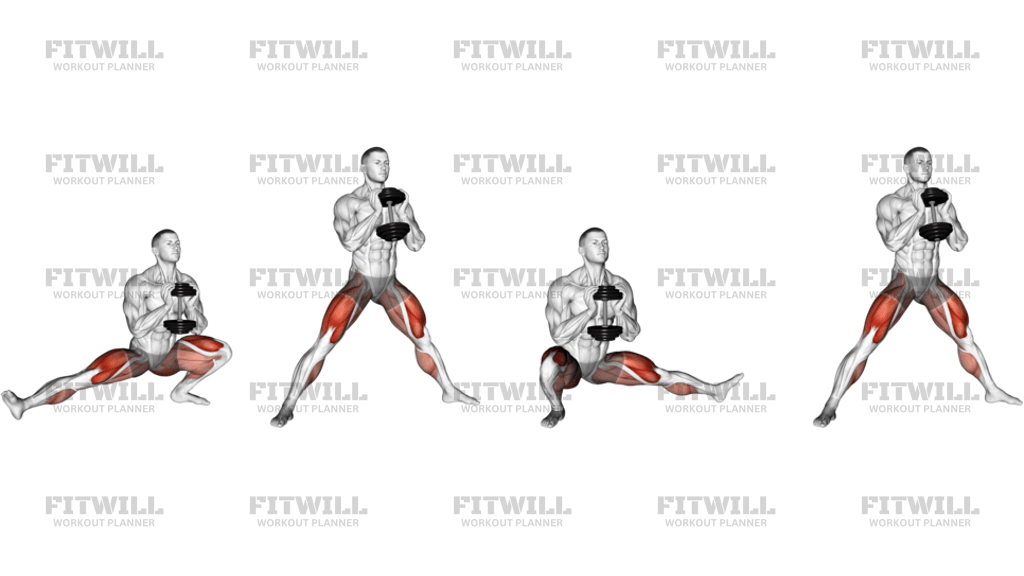
Instructions
- Stand with your feet wider than shoulder width, turn the toes slightly out, and hold one dumbbell vertically at your chest with both hands.
- Keep your elbows close to your torso, brace your trunk, and keep your eyes forward before you move.
- Shift your weight to one side and bend that knee while sending the hips back and down toward that hip.
- Keep the working heel flat and let the knee track in line with the toes as you lower.
- Let the opposite leg stay long and more extended instead of letting both knees fold into a regular squat.
- Descend as far as your hips and adductors allow without rounding your back or losing balance.
- Pause briefly in the bottom position, then drive through the bent-leg foot to bring your hips back to center.
- Keep the dumbbell close to your chest as you rise and switch sides on the next repetition or after the prescribed rep count.
- Inhale as you lower, exhale as you drive up, and set the dumbbell down safely when the set is finished.
Tips & Tricks
- Keep the dumbbell high on the sternum; if it drifts forward, your torso will tip and the squat becomes harder to control.
- Let the working knee open in the same direction as the toes instead of caving toward the midline.
- Keep the straight leg active and long, but do not force it into a painful lockout if your adductors are tight.
- Use a stance wide enough to sit between your hips, but not so wide that you cannot keep the planted foot flat.
- If the heel on the bending side starts to lift, reduce depth or narrow the stance slightly.
- Move slowly through the transition from side to side so the inner thigh stretch stays controlled rather than springy.
- Do not turn the rep into a forward fold; the chest should stay proud and the spine should stay long.
- Choose a light dumbbell first, because load can hide balance errors in this movement.
- Stop the set when the bottom position starts to collapse, especially if your knee drifts inward or your torso twists.
Frequently Asked Questions
What muscles do Dumbbell Cossack Squats work?
They strongly involve the quads, glutes, adductors, and inner-thigh muscles, with the core and upper back helping keep the dumbbell steady at the chest.
How should I hold the dumbbell during the squat?
Hold it vertically with both hands at your chest, close to the sternum, so it acts like a goblet counterbalance instead of pulling you forward.
Should both legs bend the same amount?
No. One leg should take the squat while the other stays much straighter and longer so you can load one side at a time.
How wide should my stance be?
Wide enough to shift side to side and keep the working heel down, but not so wide that your hips dump forward or the feet lose contact with the floor.
Can beginners do this exercise?
Yes, but start with a shallow range, bodyweight only if needed, and a slower tempo until you can keep the chest tall and the knee tracking cleanly.
What is the most common mistake?
The most common error is turning the movement into a forward fold or letting the bent knee cave inward as you sink to the side.
Is it normal to feel a stretch in the inner thigh?
Yes. The straight leg and the deep side shift both load the adductors, but the stretch should feel strong rather than sharp or pinchy.
What should I do if my heel lifts or I lose balance?
Shorten the depth, slightly narrow the stance, and keep the dumbbell close to your chest until you can keep the foot flat through the whole rep.
How can I make the movement harder without using a much heavier dumbbell?
Slow the lowering phase, pause in the bottom position, or increase range only as far as you can keep the spine long and the feet planted.