Deep Sumo Squat Pulse
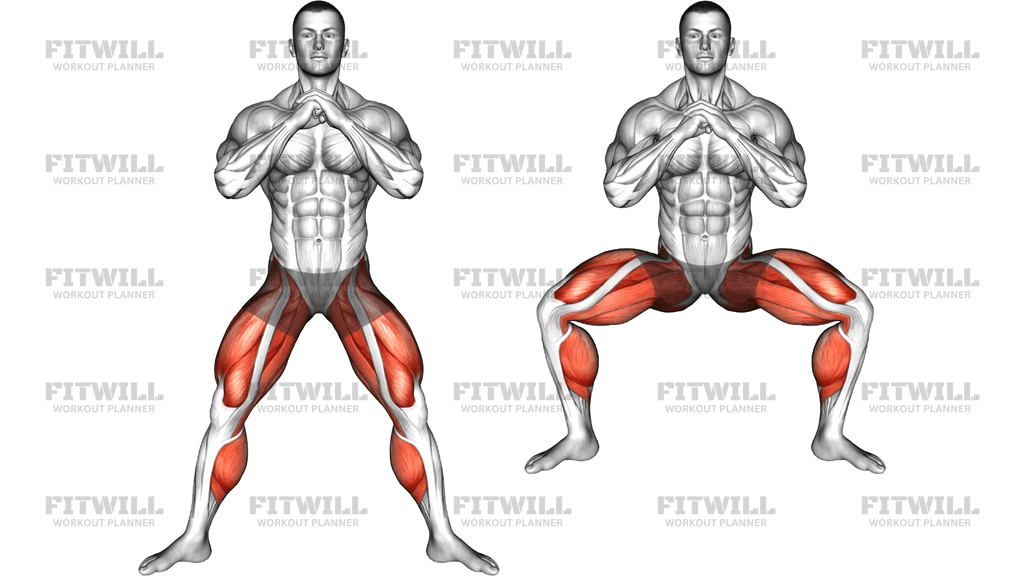
The Deep Sumo Squat Pulse is a bodyweight lower-body exercise that combines an ultra-wide sumo stance with a deep squat position and small, controlled pulsing movements at the bottom. Instead of standing all the way up between reps, you sink into a deep sumo squat and stay there, driving small up-and-down pulses that keep constant tension on the glutes, inner thighs, and quads. The hands are typically clasped in front of the chest, which helps counterbalance the torso and keeps the chest tall throughout the set.
This movement is especially useful for anyone who wants to build strength and endurance in the adductors and glutes without equipment. The wide stance with toes turned out shifts a large share of the work to the inner thigh muscles and the deep hip musculature, while the pulse keeps those muscles under continuous tension near their most stretched and most challenged position. Because the range at the bottom is small, the burn builds quickly, making this a popular finisher at the end of a leg session or a standalone drill in bodyweight and home workouts.
Setup matters more than it might seem. A stance that is too narrow turns this into an ordinary squat and removes the inner-thigh emphasis, while feet that are not turned out enough put the knees and hips in an awkward path as you descend. Depth is the other key variable: you need to be genuinely deep, with thighs at or below parallel and hips open, because the pulses only work correctly when the bottom position is stable and your knees track over your toes.
To execute it well, drop into the deep sumo position first, then pulse by only a few inches, driving up through the floor with your heels and squeezing the glutes and inner thighs on each small rise. The torso stays upright and the chest stays lifted; if you find yourself folding forward or rocking, the pulses are too big or you are too fatigued to hold the position. Keep every rep smooth and deliberate rather than bouncing.
This exercise fits well as a burnout after barbell or dumbbell squat work, as a mobility-friendly strength drill for people building comfort in deep hip rotation, or as part of a no-equipment leg circuit. Common form points include pressing the knees outward so they do not cave inward, keeping weight distributed across the whole foot with a bias toward the heels, and bracing the abdominal muscles to protect the lower back as fatigue sets in. Because the bottom position is demanding, stop the set when your knees start drifting in or your torso collapses rather than pushing through sloppy reps.
[ Workout Log & Planner ]
Put your next workout in Fitwill
Keep your plan and training log ready when you are.


Instructions
- Stand with your feet much wider than shoulder width, toes turned out at roughly 30 to 45 degrees, and let your arms hang relaxed.
- Clasp your hands together in front of your chest with elbows pointing down, which acts as a counterweight and helps keep your torso upright.
- Brace your abdominal muscles and pull your shoulders back so your spine is neutral before you descend.
- Push your hips back and bend your knees out over your toes, lowering until your thighs are at or below parallel in the deep sumo position.
- From the bottom, pulse by rising only a few inches, then lower back down to the deep position with control.
- Keep your weight spread across the whole foot with pressure biased toward the heels, and drive each pulse up through the floor.
- Press your knees outward throughout the set so they keep tracking in line with your toes instead of collapsing inward.
- Exhale on each upward pulse and inhale as you lower back into the deep position.
- After your final pulse, drive through the heels and stand fully upright to release the tension and reset your stance.
- Rest briefly, shake out the hips, and reset your foot position before starting the next set.
Tips & Tricks
- If your heels lift at the bottom, widen your stance slightly or turn your toes out a bit more rather than shortening your depth.
- Pulses should travel only a few inches; large bouncing reps turn this into momentum work and take tension off the inner thighs.
- Knees caving inward is the most common fault here — cue yourself to spread the floor apart with your feet on every pulse.
- If your hands drop away from your chest as you tire, your torso is likely tipping forward; re-clasp them and lift the chest to rebalance.
- Warm up the hips with a few bodyweight sumo squats through the full range before holding and pulsing in the deep position.
- Expect the inner thighs to burn before the glutes; if you feel nothing there, your stance is probably too narrow.
- Stop the set when form breaks — wobbling, rocking, or knee collapse means the deep position is no longer under control.
- If deep hip rotation feels pinched, reduce depth slightly for the first few sessions and work toward the full bottom position gradually.
- Pair this with a standing calf or quad stretch afterward, since the long hold leaves the hip and thigh muscles thoroughly worked.
Frequently Asked Questions
What muscles does the Deep Sumo Squat Pulse work?
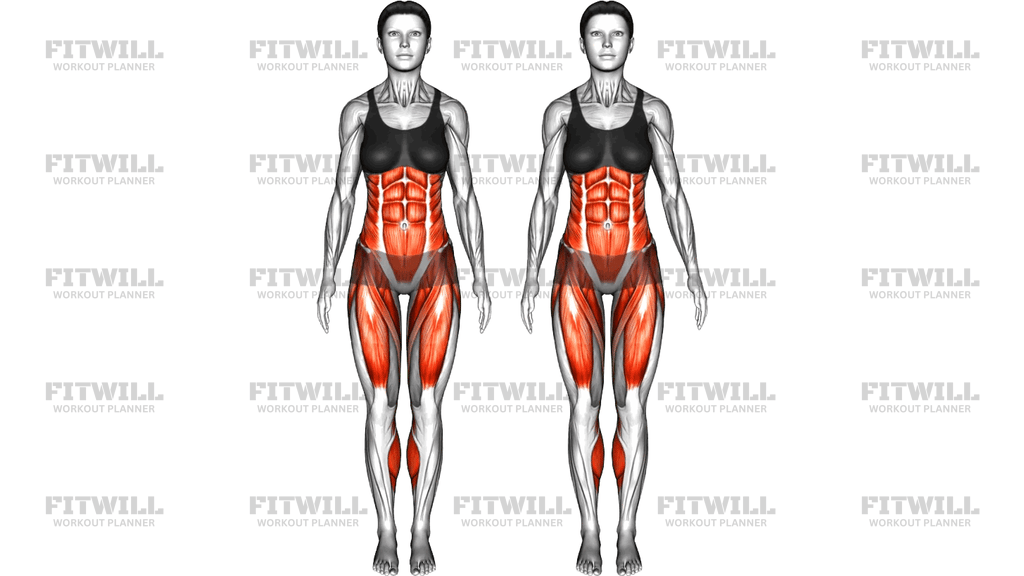
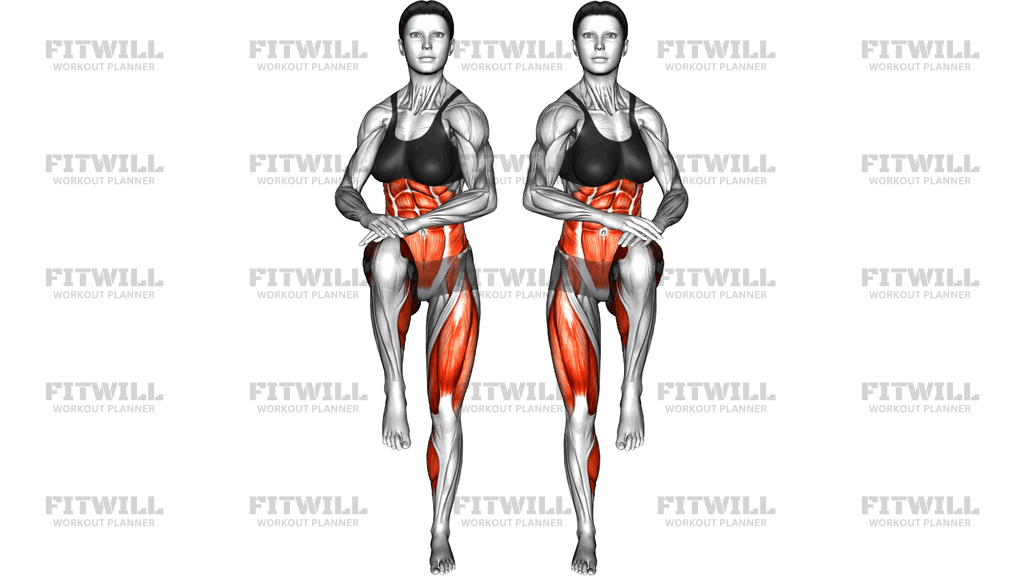
The primary work comes from the glutes and inner thighs, with the quads supporting the deep knee bend. The outer hips and core also work to hold the wide-stance position steady while you pulse.
Why does the Deep Sumo Squat Pulse target the inner thighs more than a regular squat?
The very wide stance with toes turned out places the hip joints in external rotation, which loads the adductor muscles heavily to control the legs. Pulsing in that deep position keeps the inner thighs under constant tension.
Is the Deep Sumo Squat Pulse suitable for beginners?
Yes, as long as the range is matched to your current mobility. Beginners can use a slightly shallower bottom position and shorter pulse sets, then progress to full depth as the hips and knees get comfortable with the wide stance.
How deep should I squat before starting the pulses?
Aim for a position where your thighs are at or below parallel and your knees track over your toes. The pulses are most effective when the bottom position is deep and stable, but never force a depth that causes pinching or pain.
How big should each pulse be?
Keep each pulse to a few inches of travel. If you are rising halfway up and dropping back down, it becomes a series of small squats rather than a pulse, and the continuous tension on the glutes and adductors is lost.
Why do my knees want to cave in during this exercise?
The wide stance demands strong hip control, and fatigue lets the knees drift inward. Consciously press your knees outward over your toes and think about spreading the floor with your feet; if the drift continues, end the set.
Can I add weight to the Deep Sumo Squat Pulse?
Yes, once bodyweight pulses feel controlled, holding a dumbbell or kettlebell at chest level in place of the clasped hands adds resistance. Add load only after you can hold the deep position without your torso folding forward.
What can I substitute if deep hip rotation is uncomfortable?
A standard bodyweight squat pulse with a narrower stance, or a glute bridge pulse, trains similar muscles with far less demand on hip external rotation. Work on hip mobility separately before returning to the wide stance.
How should I place the Deep Sumo Squat Pulse in my workout?
It works best as a finisher after your main lower-body lifts, when a high-rep burn on the glutes and inner thighs is the goal. It also fits well into bodyweight circuits where no equipment is available.
Is it safe to hold a deep squat position for many pulses?
For healthy knees and hips it is generally fine, but the position is demanding on the joints under fatigue. Keep sets moderate, maintain outward knee tracking, and stop if you feel sharp pain rather than muscle burn.