Suspension Pull Through
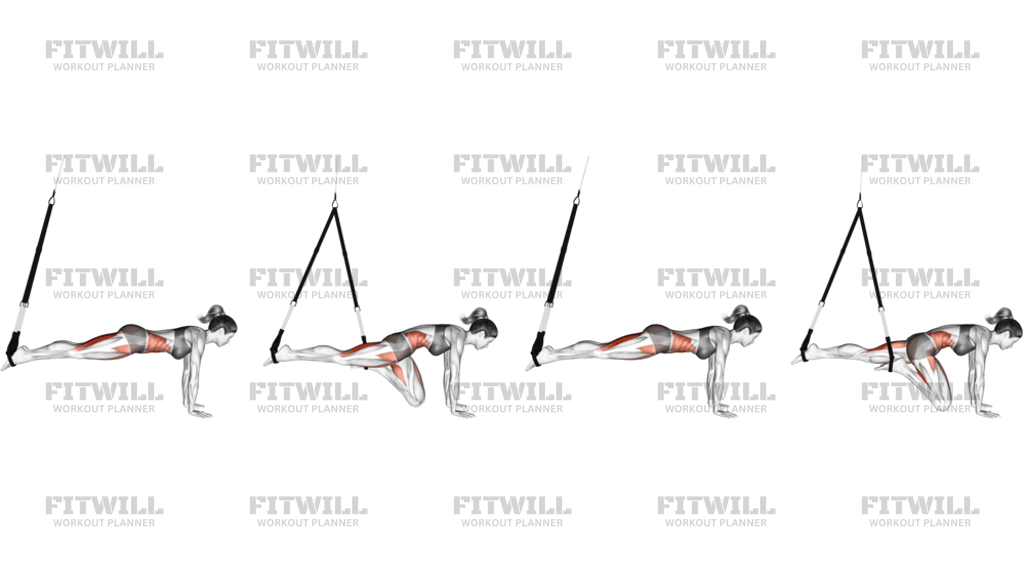
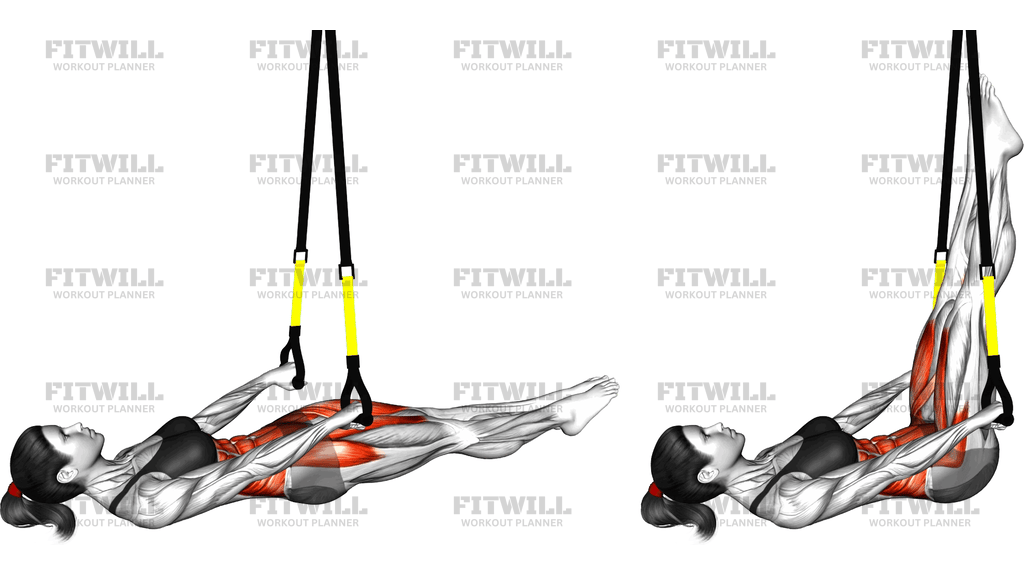
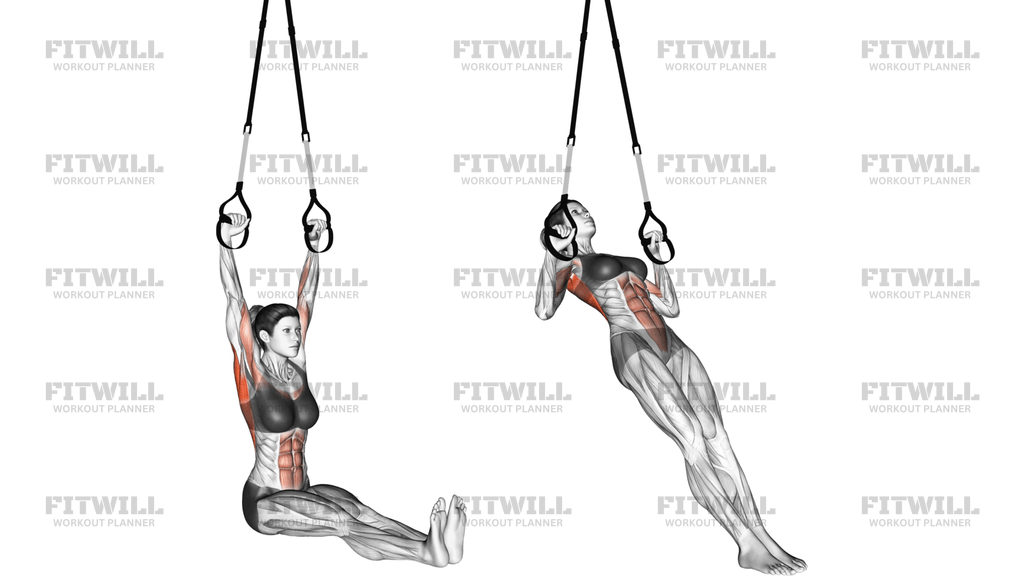
Suspension Pull Through is a suspension-based core and body-control exercise performed with the feet or heels in the straps and the hands on the floor. The image shows a long reverse-plank position that folds into a tight tucked position, so the movement is less about raw pulling strength and more about controlling the body as it shortens and lengthens through the suspension setup.
That setup makes the exercise valuable for the trunk, shoulders, and hips at the same time. The hands have to support the upper body while the straps challenge the lower body, so the torso, glutes, hamstrings, and hip flexors all have to stay organized. The most useful reps are the ones where the straps stay quiet, the shoulders stay stacked, and the spine does not collapse when the legs come in.
Starting position matters here because a small setup mistake changes the whole exercise. The hands should be planted under the shoulders with the chest open, the shoulders active, and the straps adjusted so the legs can extend without dragging the body out of position. From there, brace the ribs, squeeze the glutes, and pull the legs or knees in under control instead of swinging them through the rep.
The return phase is just as important as the tuck. Extending back out should feel deliberate, with the shoulders staying steady and the hips finishing in a long line before the next rep begins. If the low back starts to arch, the straps swing, or the tuck becomes a kick, the set is too hard or the range is too big for that load.
This exercise fits well in core work, suspension training, accessory strength, or movement-control circuits. It is especially useful when you want a supported reverse-plank pattern that also challenges anti-extension and hip control. Beginners can use a shorter range or bent knees, while advanced lifters can slow the tempo and keep the transition smooth without losing tension.
[ Workout Log & Planner ]
Put your next workout in Fitwill
Keep your plan and training log ready when you are.


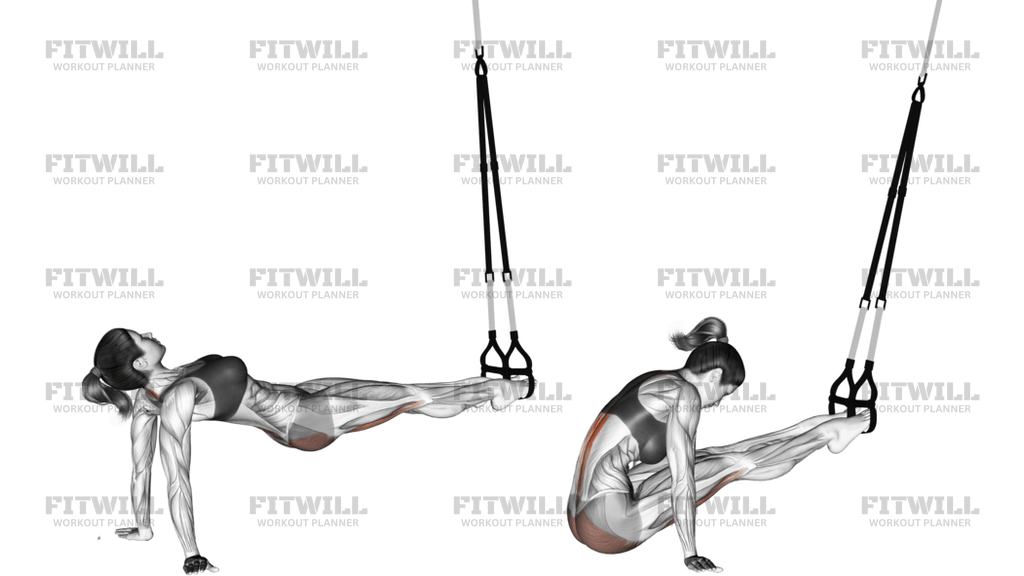
Instructions
- Set the suspension straps low enough that your heels or ankles can stay in the cradles while your hands reach the floor comfortably.
- Place your hands on the floor under your shoulders and sit in front of the anchor so you can extend into a reverse plank.
- Press through your palms, lift your hips, and line up your shoulders, hips, and knees before you start the first rep.
- Keep your chest open and your shoulders active, then brace your midsection so the body stays steady as the legs move.
- Pull your knees in toward your chest by bending at the hips and knees, letting the straps guide the lower body without swinging.
- Keep the movement smooth and controlled as you fold into the tucked position, with the shoulders staying square and the neck relaxed.
- Pause briefly in the tightest position if you can hold it without losing the line through your upper body.
- Press back out through the hands and extend the legs until you return to a long, straight reverse-plank position.
- Reset your hips, breathe out on the tuck and in on the extension, then repeat for the planned reps.
Tips & Tricks
- If the straps swing, shorten the range before adding more speed or load.
- Keep the shoulders pushed away from the floor so the upper body does not sink between the shoulder blades.
- Think about pulling the knees in with the hips, not kicking the feet through the straps.
- A slight bend in the knees is fine if it helps you keep the tuck smooth and the pelvis controlled.
- Do not let the low back arch when you extend back into the reverse plank.
- Press your palms into the floor hard enough to keep the torso from rotating as the legs come in.
- Exhale as the body folds and inhale only after you have finished the return to the long position.
- Stop the set if the tucked rep turns into a fast swing or the straps start yanking your shoulders forward.
Frequently Asked Questions
What does Suspension Pull Through work most?
It emphasizes the core, hip flexors, glutes, and hamstrings while the shoulders and arms hold the reverse-plank support position.
What should the starting position look like?
Start with your palms under your shoulders, chest open, and your heels or ankles supported in the straps so you can hold a straight reverse plank.
Is this the same as a suspension pike?
It is similar in that the lower body folds under tension, but this version keeps more of a reverse-plank support feel through the hands and shoulders.
Why do my straps keep swinging?
The rep is probably too fast or the tuck is too deep for your current control. Shorten the range and slow the return until the straps stay quiet.
Should I feel this in my shoulders too?
Yes. The hands and shoulders have to stabilize the body, but the movement should still be driven by the tuck and extension of the lower body.
Can beginners do this exercise?
Yes, if they use a shorter range, bent knees, and a slow tempo so the reverse-plank support stays solid.
What is the most common form mistake?
Letting the low back sag on the way back out or using momentum to snap into the tuck instead of controlling the fold.
How can I make it harder without changing the machine?
Slow the extension, pause in the tucked position, or keep the legs straighter as long as you can still hold the shoulders and pelvis steady.