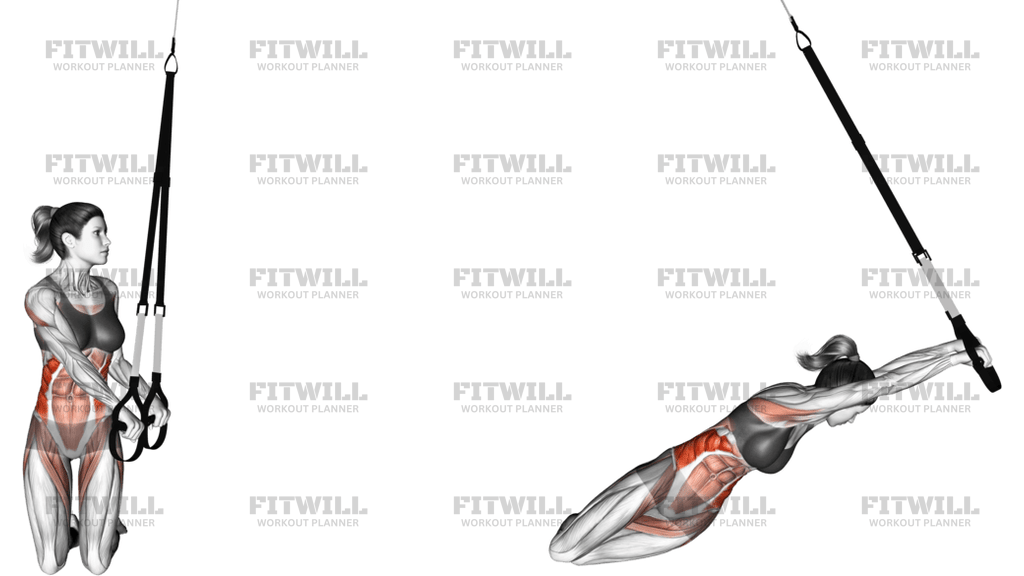
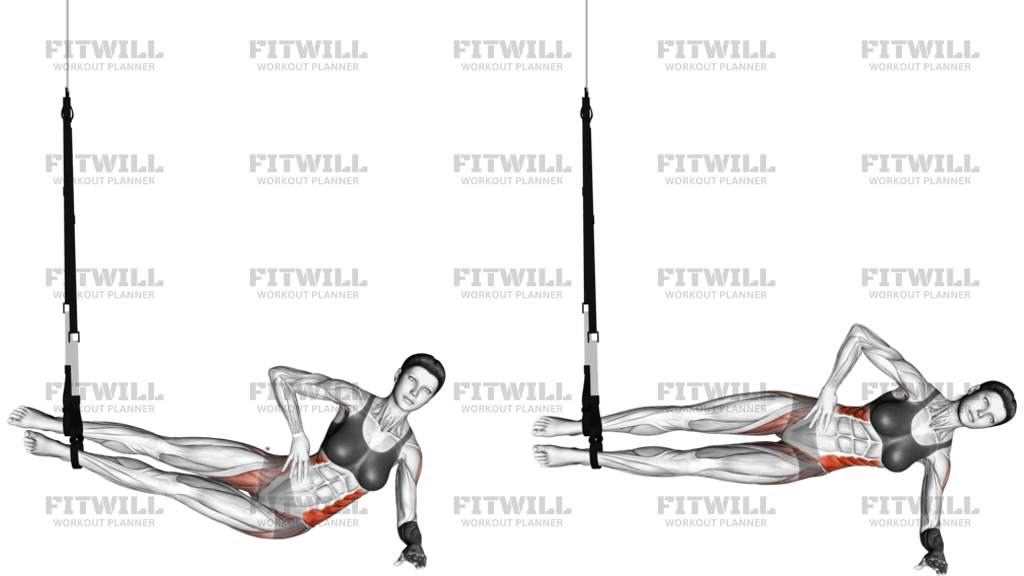
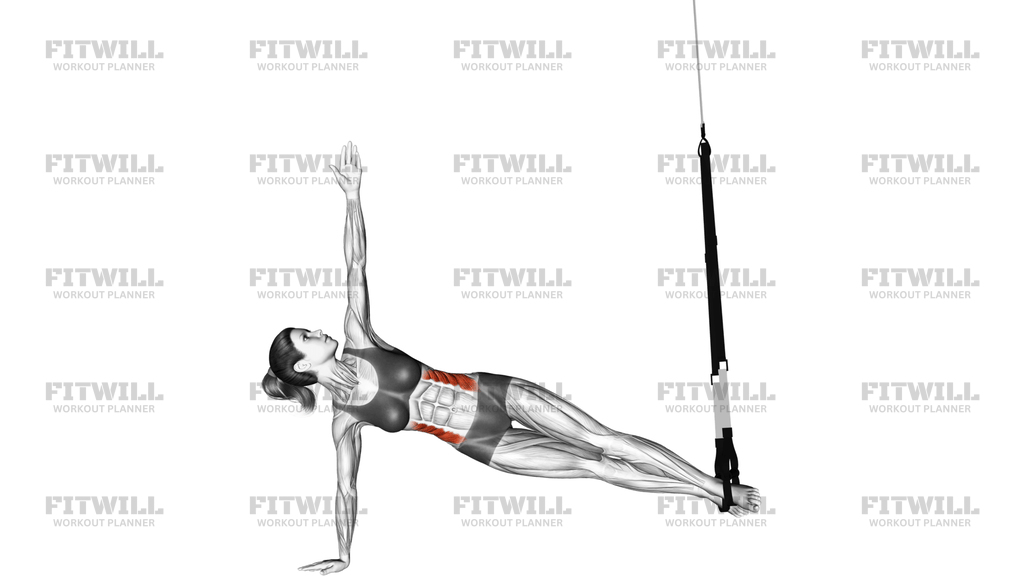
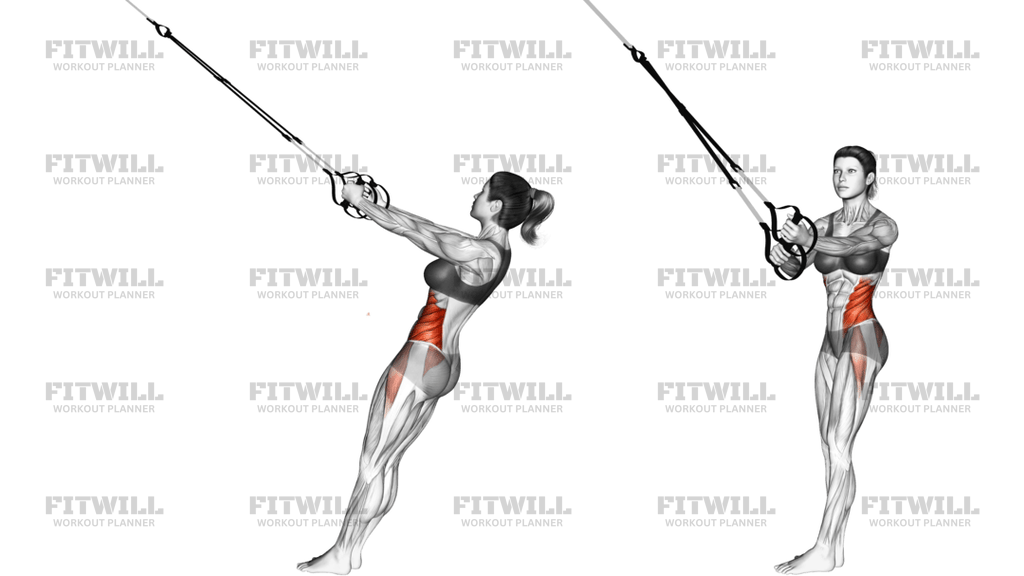
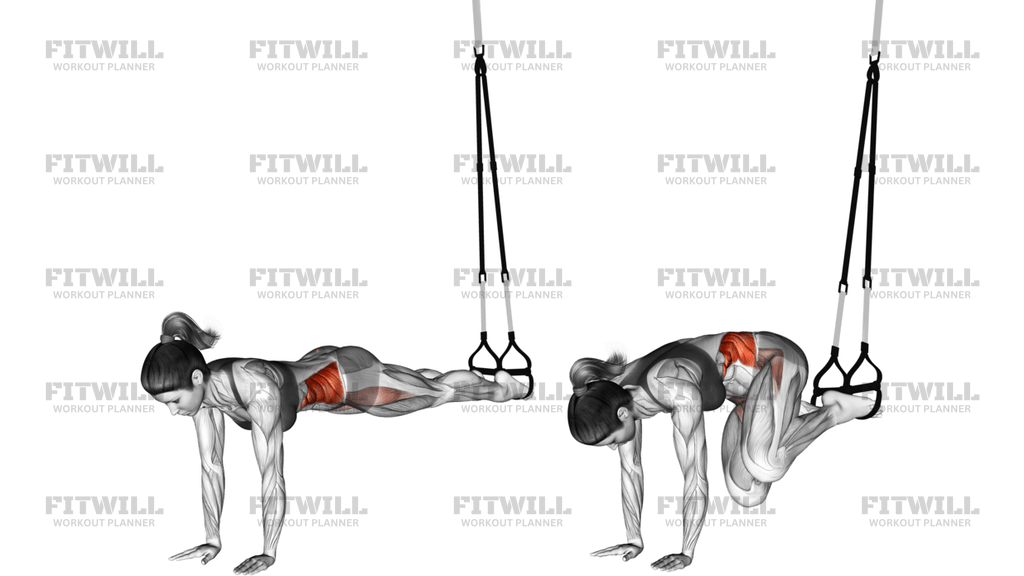
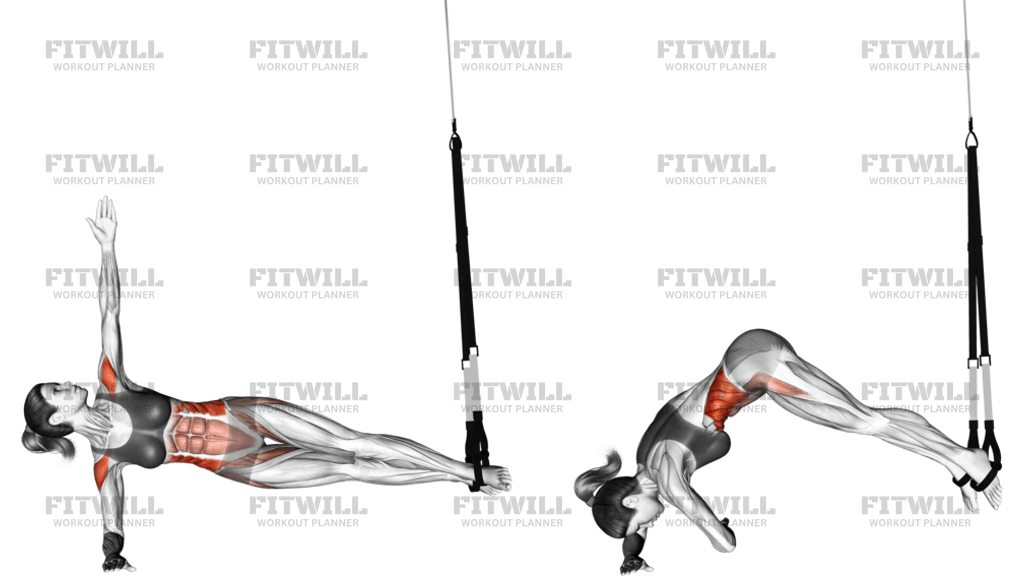
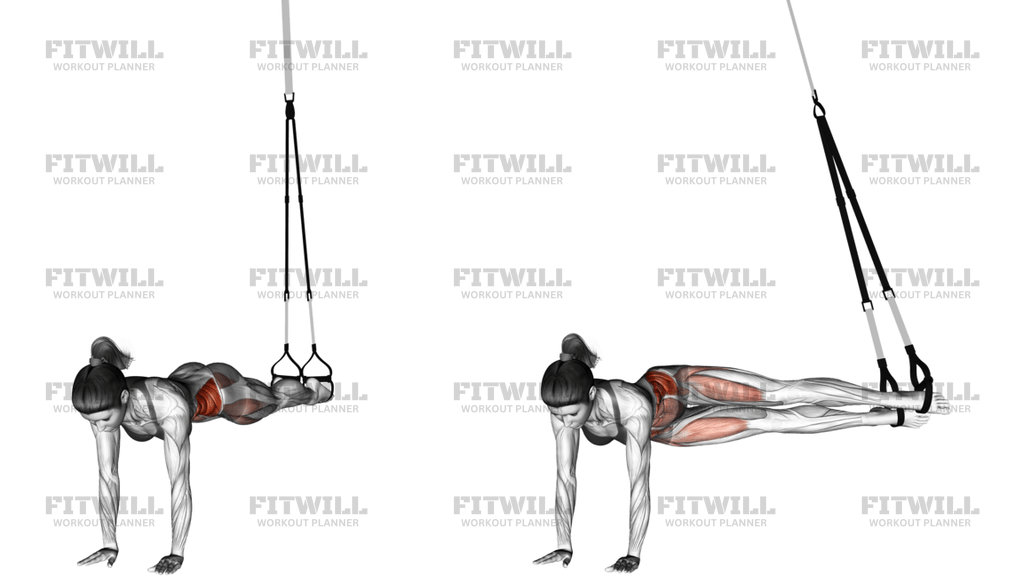
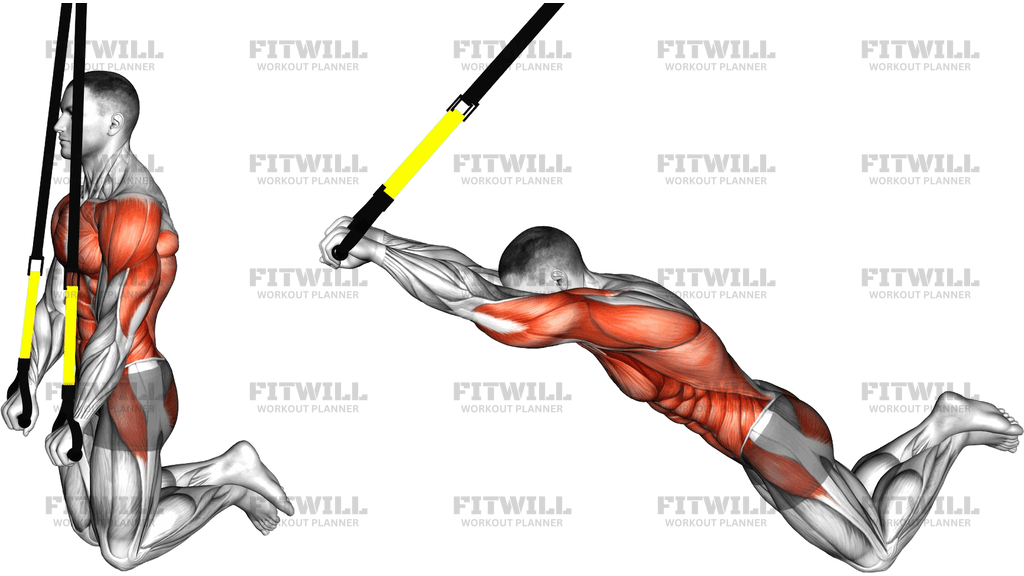
Suspension Twist-Up
Suspension Twist-Up is a standing suspension-trainer core exercise that challenges the obliques, abs, and hip stabilizers while you control your body angle against the anchor point. The straps let you load the trunk without sitting, kneeling, or lying down, so the exercise rewards a clean setup: feet planted, arms long, shoulders packed, and tension already in the straps before the first rep starts.
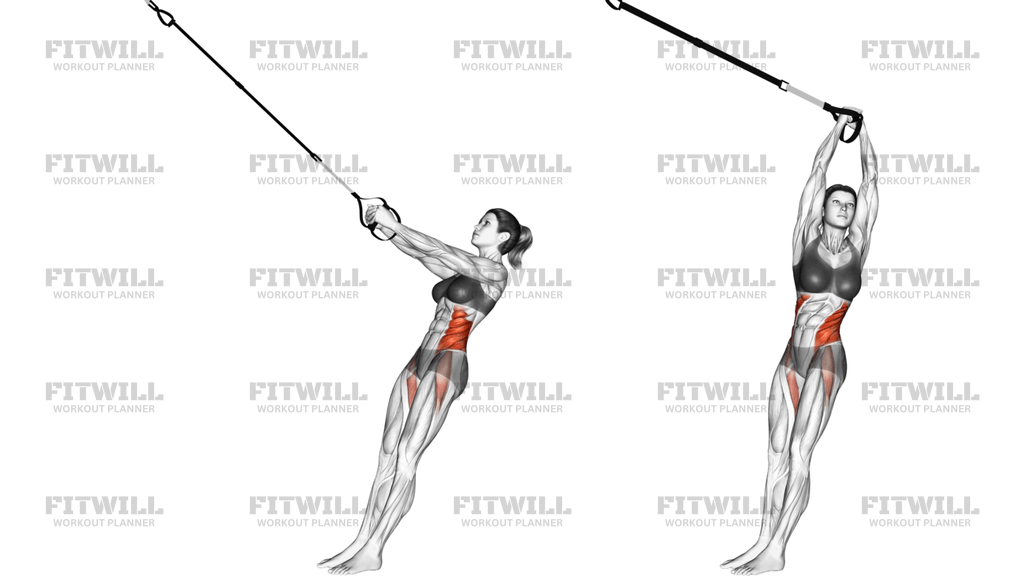
The visible movement is a coordinated twist-up through the torso, not a yank with the arms. As you pull yourself back toward the anchor and return to a taller position, the ribs should stay stacked over the pelvis and the trunk should rotate only as far as you can control. That makes the external obliques do the main work, with rectus abdominis, transversus abdominis, and spinal stabilizers helping to keep the torso from arching, swaying, or collapsing.
The setup matters because the line from hands to anchor changes the whole feel of the rep. Stand facing the anchor, hold the handles with straight arms, and lean back enough that the straps stay taut without forcing your shoulders up. If the straps go slack or the body turns into a hinge at the lower back, the exercise turns into momentum training instead of trunk control. A light to moderate load is usually enough; the goal is a smooth, repeatable twist-up with no jerking.
Use Suspension Twist-Up when you want a core movement that blends anti-extension, rotation control, and standing balance. It fits well in warmups, accessory work, and core circuits because it teaches you to brace, rotate, and return under control while keeping breathing steady. Keep the neck relaxed, keep the feet grounded, and stop the set when the torso starts to drift, the shoulders shrug, or the straps stop feeling smooth and continuous.
[ Workout Log & Planner ]
Put your next workout in Fitwill
Keep your plan and training log ready when you are.


Instructions
- Set the suspension straps so both handles hang at a height you can grip with straight arms while standing facing the anchor.
- Stand on flat feet a short step from the anchor, grasp both handles, and keep your hands just in front of your shoulders.
- Lean back until the straps are taut and your body makes a long line from ankles through hips to shoulders.
- Set your ribs over your pelvis, soften your knees slightly, and keep your shoulders down away from your ears.
- Brace your midsection, then begin the twist-up by pulling your torso back toward upright instead of jerking with your arms.
- Let the chest and shoulders rotate only as far as you can keep the pelvis and lower back under control.
- Finish tall without overextending the low back, then reverse the same path slowly to return to the leaned-back start.
- Keep tension in the straps and breathe out on the effort, then repeat for the planned reps.
Tips & Tricks
- If the handles drift above shoulder height, shorten the lean-back angle so the rep stays in the trunk instead of the shoulders.
- Keep the straps tight before every rep; a loose start usually turns into a swing instead of a twist-up.
- Think about pulling the ribs and sternum back under the anchor, not just bending the elbows.
- A slight knee bend helps you keep the hips stacked and prevents the lower back from taking over.
- Rotate only within a range where both handles stay smooth and even; uneven strap tension usually means you are overtwisting.
- Exhale through the effort phase so the obliques can help finish the rep without the torso flaring open.
- Stop the set if your neck starts craning forward or the shoulders rise toward the ears.
- Choose a load that lets you control the return for the full eccentric path; the lowering phase should look as deliberate as the pull.
Frequently Asked Questions
What muscles does Suspension Twist-Up target most?
The obliques are the primary target, with the abs, deep core, and spinal stabilizers helping keep the twist controlled.
Can beginners perform this exercise?
Yes, if the straps are set light and the lean-back angle is modest. Beginners should keep the range short enough that the torso stays steady.
How do I know the strap length is right?
You should be able to hold the handles with straight arms while the straps stay taut and your shoulders remain down. If you have to shrug or lose balance, adjust the length.
Should my feet move during the rep?
No. Keep both feet planted so the core controls the twist-up instead of turning it into a stepping or swaying drill.
What is the most common form mistake?
People usually yank with the arms or arch the lower back at the top. The rep should rise from the torso while the ribs stay stacked over the pelvis.
How can I make the movement easier?
Step closer to the anchor, keep the lean-back angle smaller, and reduce how far you rotate at the top of each rep.
What should I do if my shoulders feel it more than my waist?
Lower the load, keep the handles just in front of the shoulders, and think about pulling the ribs and torso rather than the hands.
Where does this fit best in a workout?
It works well in core circuits, warmups, or accessory blocks after the big lifts, when you can focus on clean control and breathing.