Suspension Upper Back Stretch
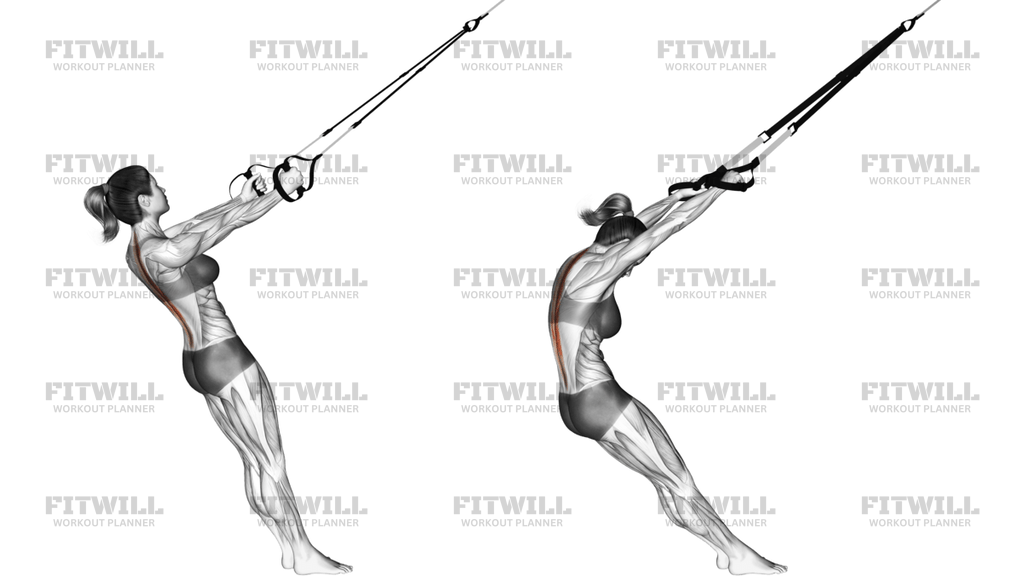
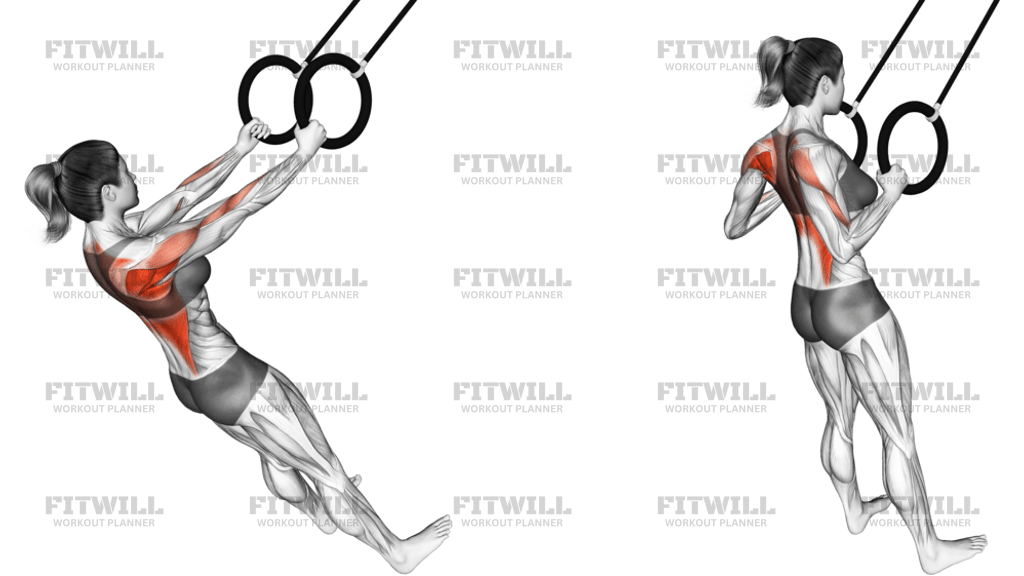
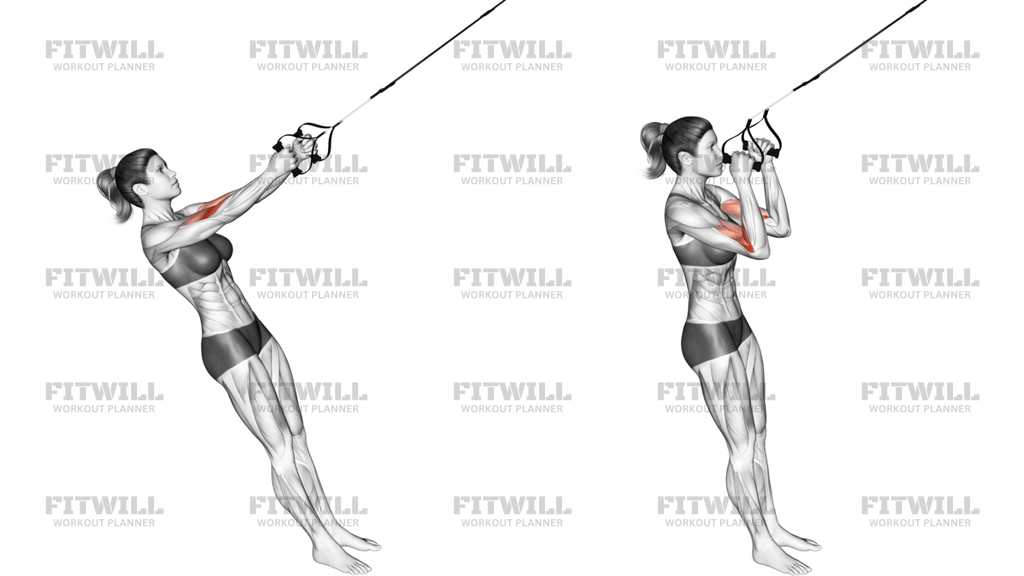
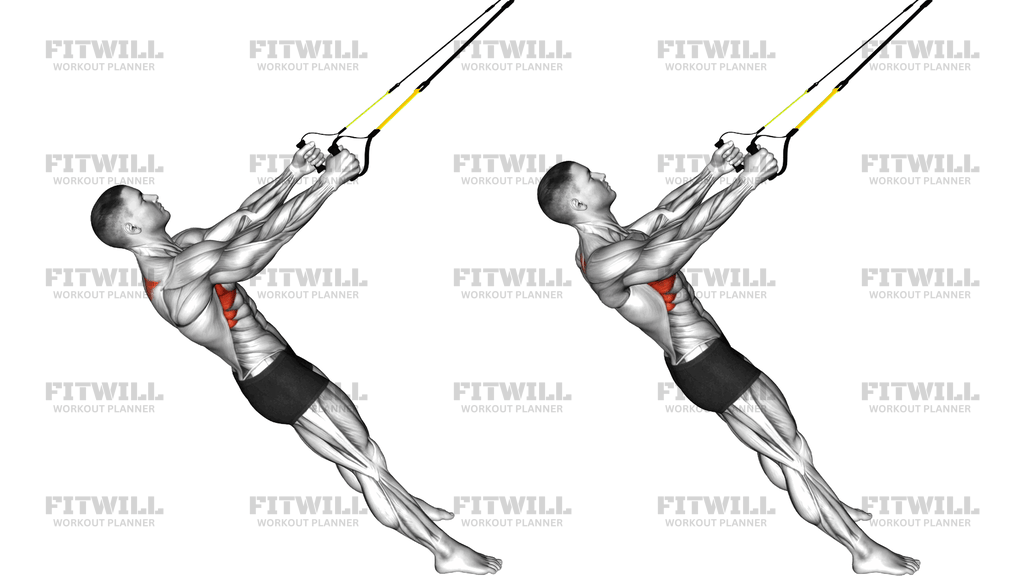
Suspension Upper Back Stretch is a suspension-based mobility exercise that opens the upper back, lats, and shoulders while you support your body with the straps overhead. The body position in the image shows a long lever from the hands to the feet, so the stretch comes from leaning away from the anchor and letting the thoracic spine lengthen instead of pulling aggressively through the arms. It is useful when the upper back feels tight from pressing, pulling, overhead work, or long periods of sitting.
The setup matters because small changes in foot placement, strap length, and ribcage position change where the stretch lands. When you stand too close, the tension can stay in the shoulders and arms; when you step too far back, you can dump into the low back and lose the upper-back emphasis. The goal is a controlled diagonal line from the feet to the hands, with the shoulders reaching forward and the chest staying softly lowered so the spine can open without strain.
Use a slow breathing pattern to help the ribs and upper back relax into the suspension. As you lean back, keep the elbows long and let the shoulder blades move rather than pinning them hard together. The best repetitions do not chase maximum depth. They create a smooth, repeatable stretch through the thoracic spine, rear shoulders, and lat line while the neck stays relaxed and the jaw stays unclenched.
This stretch fits well in a warm-up, recovery circuit, or between heavier upper-body sets when you need to restore shoulder and upper-back motion. It is especially useful before rows, pulldowns, presses, or overhead lifting because it can reduce stiffness without fatiguing the body. Beginners can use it easily if they keep the lean modest and stay attentive to the straps, because the suspension angle can become demanding quickly once the feet move farther from the anchor.
Treat the movement as a controlled mobility drill, not a passive hang. The feeling should be a strong but manageable opening across the upper back and shoulders, with no sharp pinch in the front of the shoulder or compression in the low back. If the stretch feels too intense, shorten the stance or bring the hands slightly lower until the position feels organized.
[ Workout Log & Planner ]
Put your next workout in Fitwill
Keep your plan and training log ready when you are.


Instructions
- Adjust the suspension straps overhead and stand facing the anchor with both hands on the handles, arms straight and shoulder-width apart.
- Walk your feet back until your body forms a long diagonal line and the straps are taut before you start the stretch.
- Keep your feet planted, ribs down, and neck long so the tension stays in the upper back instead of the low back.
- Let your chest sink slightly between your arms as you hinge back and allow the upper back to lengthen.
- Reach through the handles and keep the elbows extended instead of bending the arms to pull yourself deeper.
- Breathe in through the nose as you settle into the stretch, then exhale slowly to soften the ribs and shoulders.
- Pause in the end position for a controlled stretch without bouncing or shrugging toward the ears.
- Walk the feet forward and return to the starting angle under control before repeating the next rep or hold.
Tips & Tricks
- A shorter stance makes the stretch easier to manage; stepping farther back increases the load on the upper back and shoulders quickly.
- Keep the handles slightly in front of the shoulders instead of letting the arms drift behind you, which can shift stress into the front of the shoulder.
- Think about lengthening from the armpits to the hips rather than arching the lower back to fake a bigger stretch.
- If the neck tightens, soften the chin and keep the gaze neutral instead of looking up at the anchor point.
- Let the shoulder blades move with the reach instead of squeezing them hard together.
- Use steady exhales at the deepest point to help the ribcage settle and the upper back open.
- Stop the stretch if you feel pinching in the shoulder joint or a sharp pull in the front of the chest.
- Keep the feet flat and balanced so you can control how much of your bodyweight you are sending into the straps.
Frequently Asked Questions
What does the Suspension Upper Back Stretch target most?
It mainly targets the upper back and thoracic region, with a strong stretch through the lats, rear shoulders, and surrounding trunk muscles.
How far should I step back from the suspension anchor?
Only step back until the straps are taut and you can hold a long, controlled diagonal line without losing your rib position.
Should my elbows stay straight on the handles?
Yes. Keep the arms long so the stretch stays in the upper back and shoulders instead of turning into a pulling exercise.
Why do my lower back and ribs feel it more than my upper back?
That usually means you stepped back too far or let the ribs flare. Shorten the stance and keep the pelvis and ribs stacked.
Can I use this before pressing or rowing workouts?
Yes. It works well in a warm-up because it helps restore overhead reach and upper-back length before upper-body lifting.
Is this a passive stretch or an active one?
It is an active-controlled stretch. You support some bodyweight through the straps while still controlling the body line and breathing.
What should I avoid at the bottom of the stretch?
Avoid bouncing, shrugging, or forcing the chest down so far that the shoulders pinch or the low back arches.
Can beginners do the Suspension Upper Back Stretch safely?
Yes, as long as they keep the stance short, use a small lean, and stop before the shoulders or low back feel strained.