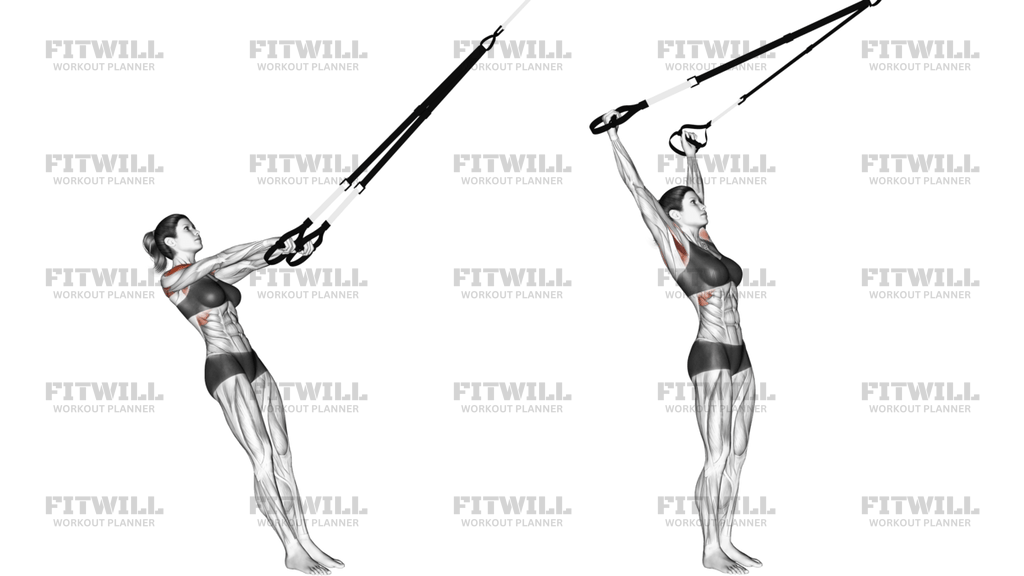
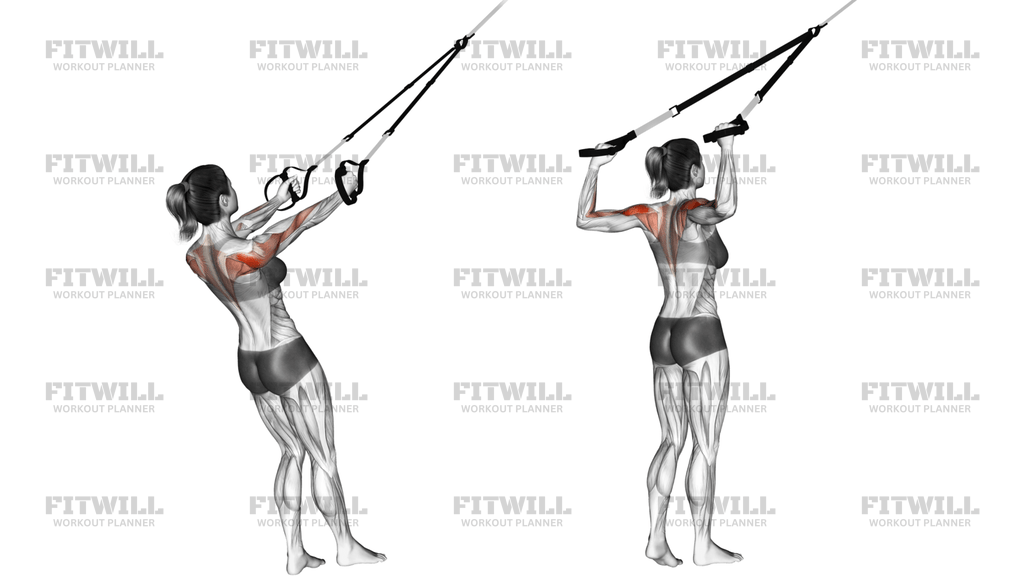
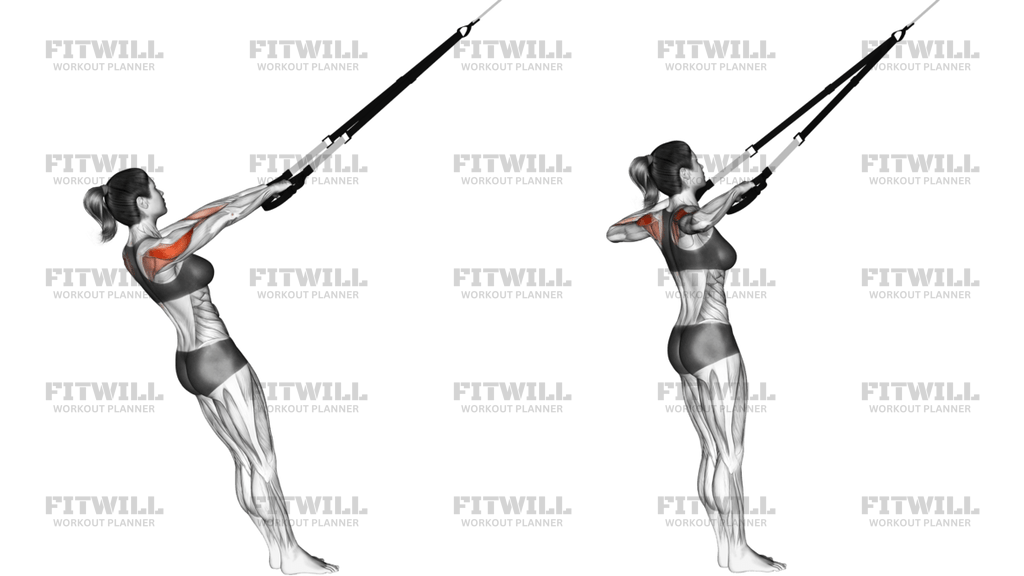
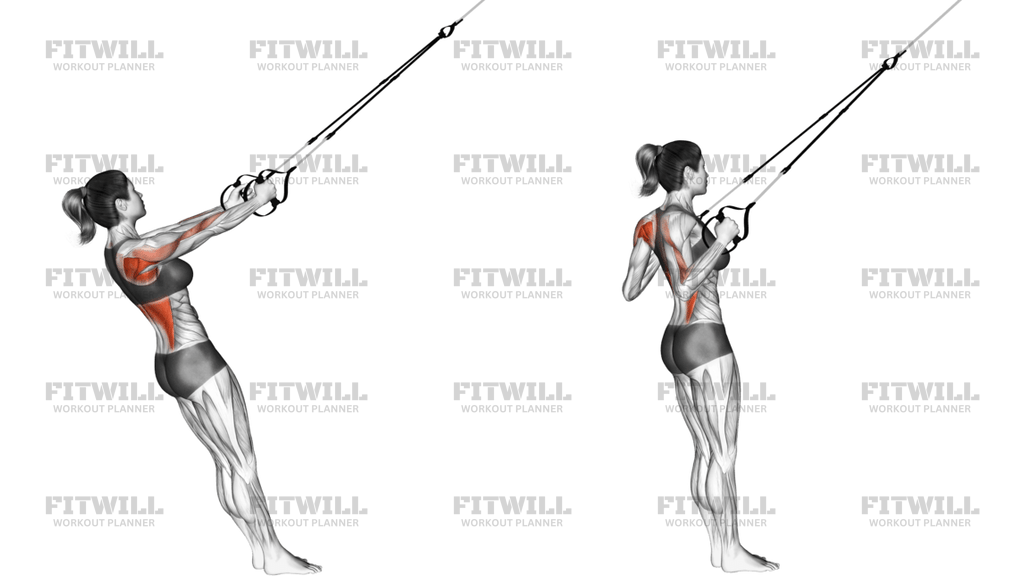
Suspension Bent Knee Inverted Row
Suspension Bent Knee Inverted Row is a suspension-based horizontal pulling exercise that trains the upper back, lats, biceps, and rear shoulder support while also demanding a strong midline. With your knees bent and feet planted, your body stays in a shorter lever position than a straight-leg row, which usually makes the movement more approachable while still challenging scapular control and trunk stiffness.
The bent-knee setup matters because it helps you keep the torso in one line from shoulders to knees or ankles while you pull. That steady line lets the shoulder blades move cleanly instead of turning the rep into a hip-dominant heave. For most lifters, this makes Suspension Bent Knee Inverted Row a useful option for building pulling strength, improving body control, and teaching the shoulder blades to retract and depress without losing ribcage position.
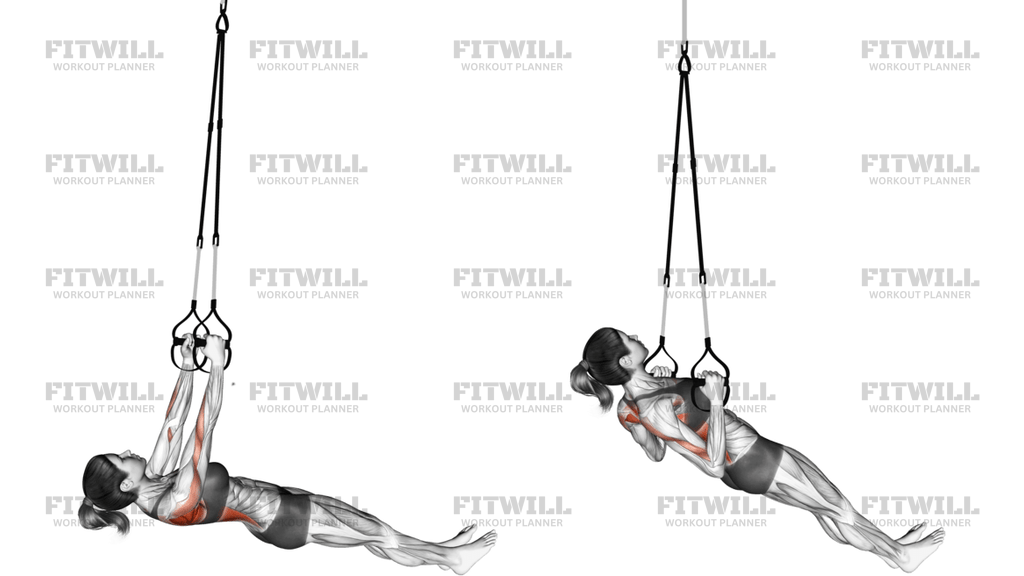
Start by adjusting the suspension straps so the handles hang at about lower-chest height, then lean back with both hands gripping the handles and your palms facing each other. Walk your feet forward, bend your knees, and plant your heels so your body forms a straight line from head to knees. Before each rep, set your shoulders down away from your ears, brace your abdomen, and keep your ribs from flaring as you prepare to pull.
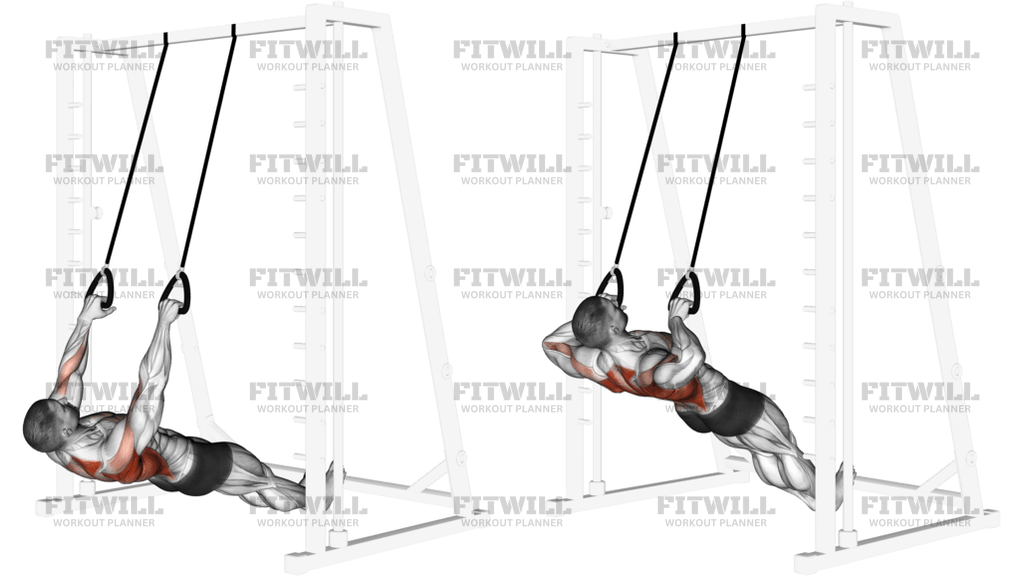
During the pull, drive the elbows back and slightly down while bringing the handles toward the sides of your lower ribs or chest. Keep your body rigid as a single unit instead of letting the hips sag or the chin jut forward. Pause briefly at the top with the shoulder blades squeezed together, then lower under control until the arms are fully extended and the shoulders stay organized. Breathe out as you pull and inhale on the way down.
This exercise works well in strength sessions, accessory work, or warmups when you want horizontal pulling without loading the spine the way a heavy barbell row might. It is also easy to scale by changing how far you walk your feet forward, which makes it useful for beginners and advanced lifters alike. Keep the movement smooth, avoid jerking off the straps, and stop the set if you can no longer keep the torso locked in the bent-knee plank position.
[ Workout Log & Planner ]
Put your next workout in Fitwill
Keep your plan and training log ready when you are.


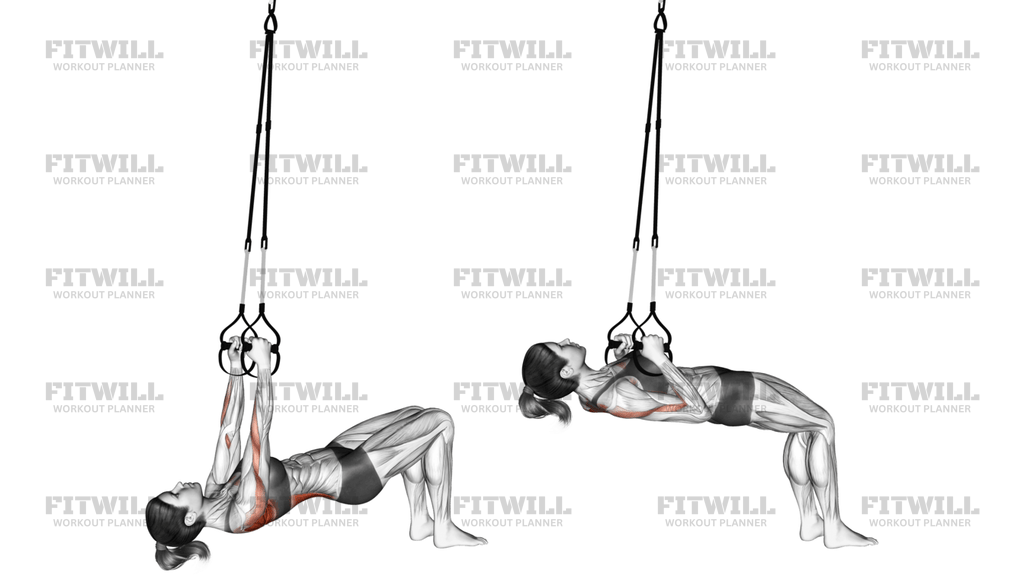
Instructions
- Set the suspension straps so the handles hang around lower-chest height, then grip both handles with your palms facing each other.
- Walk your feet forward, bend your knees, and plant your heels so your body can stay in a straight line from head to knees or heels.
- Lean back until your arms are straight and your shoulder blades are set down away from your ears.
- Brace your abdomen and keep your ribs from flaring before you start the pull.
- Pull the handles toward the sides of your lower ribs by driving your elbows back and slightly down.
- Keep your hips level and your body rigid as you lift, without twisting or sagging.
- Squeeze your shoulder blades together for a brief pause at the top of the row.
- Lower yourself slowly until your arms are straight again and the straps feel steady.
- Exhale as you pull, inhale on the way down, and reset your shoulders before the next rep.
Tips & Tricks
- The more upright you stand, the easier the row; walk your feet forward to make the angle harder.
- Keep your chest lifted toward the handles, not your chin, so the pull comes from the back instead of the neck.
- If the straps wobble, shorten the top range slightly and control the lowering phase before adding more angle.
- Think about pulling the elbows to your back pockets rather than yanking the handles with your hands.
- Do not let the hips drop when you reach the bottom; keep the knees bent and the torso aligned like a plank.
- A brief pause at the top helps stop momentum and makes the mid-back do more of the work.
- If your shoulders shrug, lower the handles a little or bend the knees more to improve control.
- Stop the set when you can no longer keep the ribs down and the body straight through each rep.
Frequently Asked Questions
What muscles does Suspension Bent Knee Inverted Row train?
It mainly trains the upper back, lats, and biceps, with the rear shoulders and mid-back helping control the shoulder blades.
Is the bent-knee version easier than a straight-leg suspension row?
Yes. Bending the knees shortens the lever, which usually makes it easier to keep the torso rigid and the pull controlled.
Where should the handles land at the top of the rep?
Aim to bring them to the lower ribs or lower chest while keeping the elbows driving back instead of flaring wide.
Should my body stay straight during Suspension Bent Knee Inverted Row?
Yes. Keep your torso and thighs in one line and avoid letting the hips sag or pike as you pull.
How do I make Suspension Bent Knee Inverted Row harder?
Walk your feet farther forward so your body is closer to horizontal, then keep the same strict body line.
What should I do if my shoulders shrug up toward my ears?
Reduce the angle a little and start each rep by setting the shoulders down before pulling.
Is this a good substitute for a barbell row?
It can be a good substitute when you want horizontal pulling with less spinal loading and a more stable setup.
Do I need to keep my feet planted the whole time?
Yes. Drive through the heels and keep the knees bent so your lower body stays stable while the upper body rows.