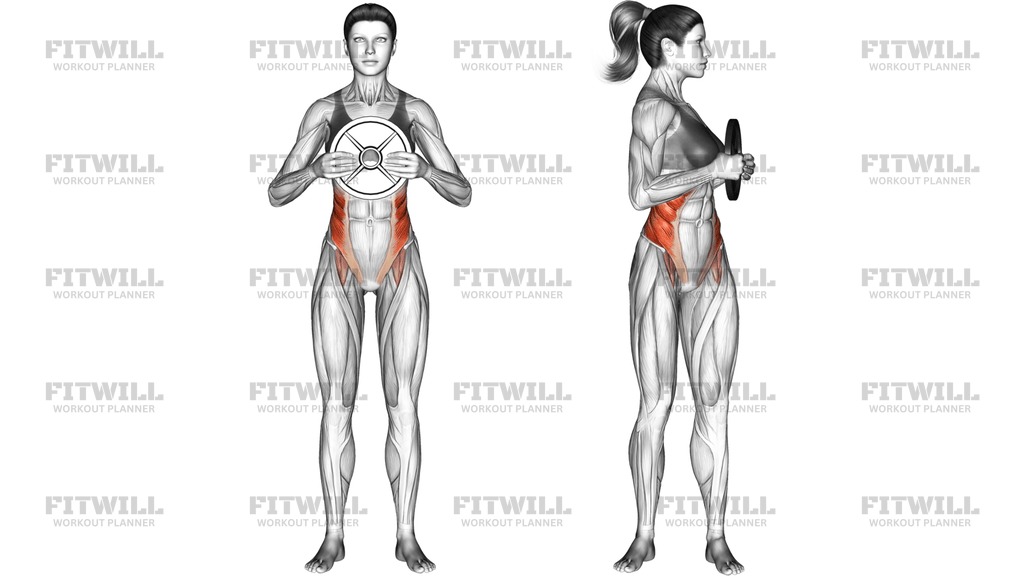
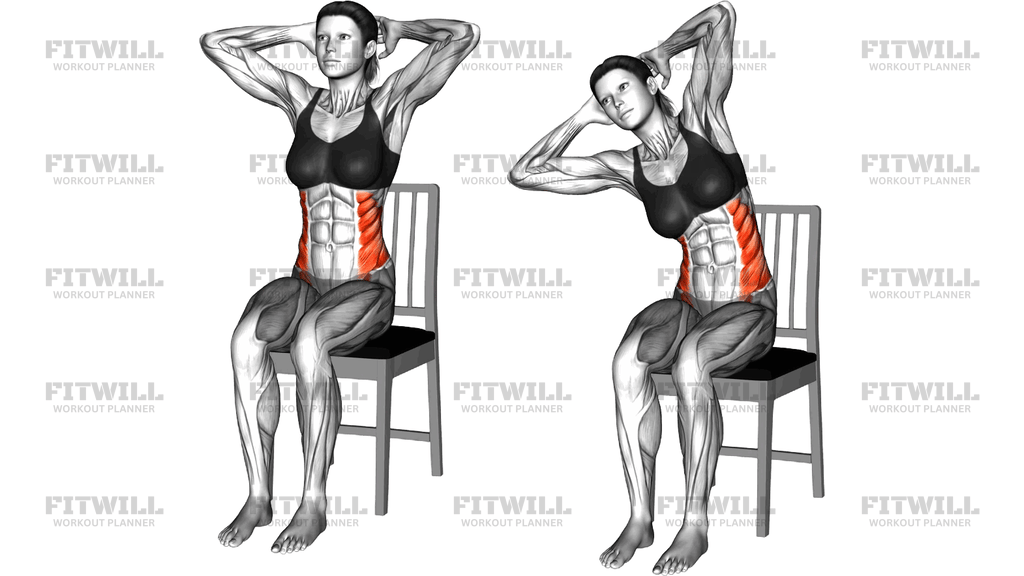
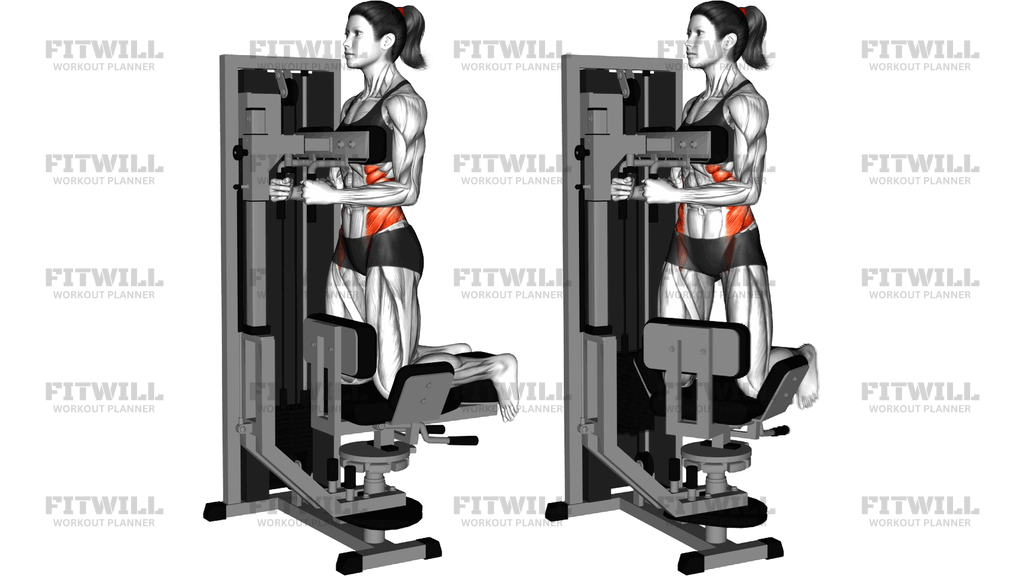
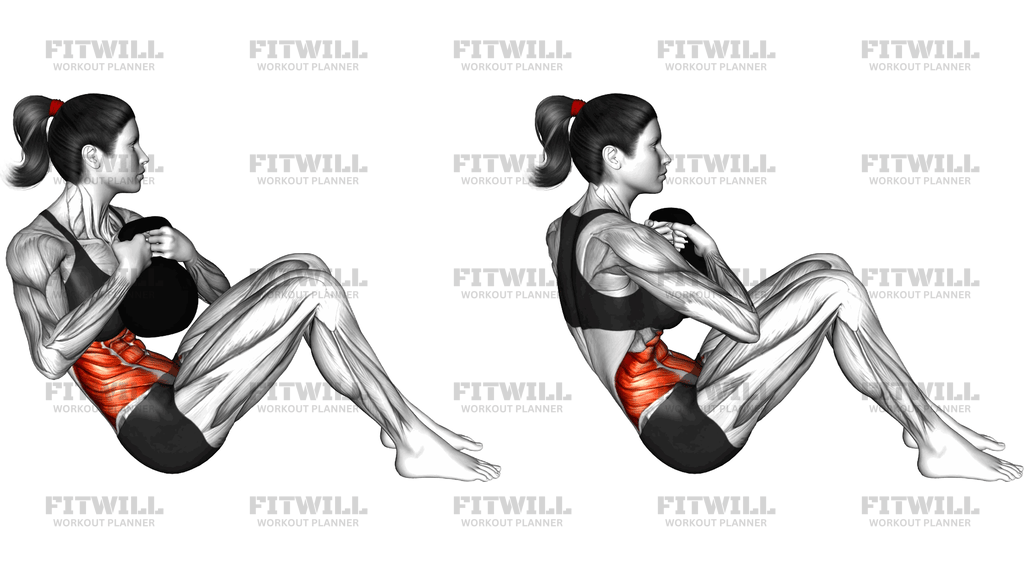
Weighted Plate 45 Degrees Side Bend
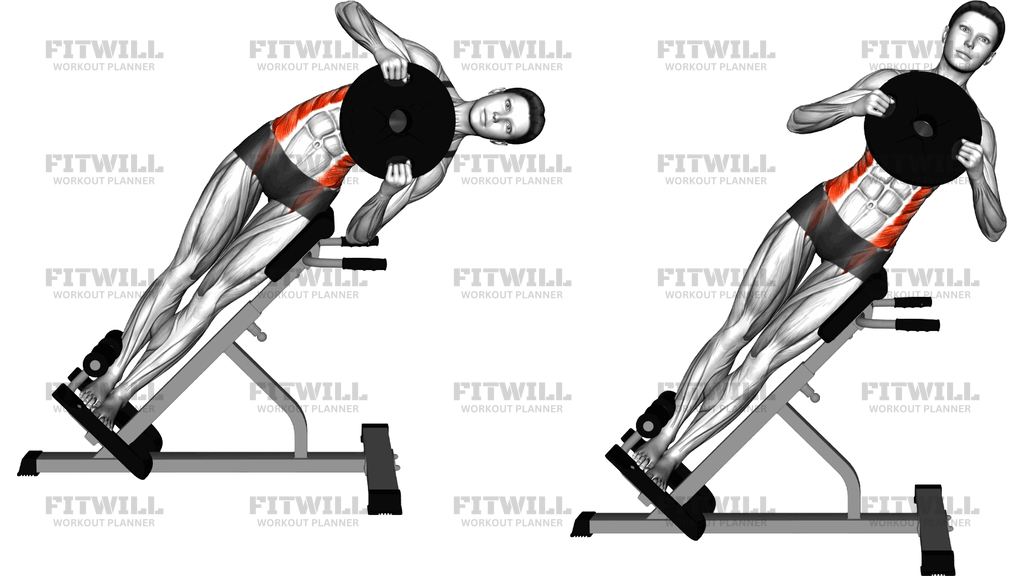
The Weighted Plate 45 Degrees Side Bend is a lateral flexion exercise performed on an angled bench, typically the same 45-degree hyperextension bench you would use for back extensions. You lie on your side across the pad with your feet anchored under the rollers, hold a weight plate against your chest with both hands, and bend sideways at the waist to lower your upper body toward the floor before pulling yourself back up to a straight line. The highlight of the movement sits right at the side of your trunk: the obliques on the underside of your body do most of the work as they control the descent and drive the lift.
Because the bench fixes your legs and hips in place, this version of the side bend is more demanding than standing variations. Your lower body cannot compensate, so the side of your waist has to handle the load on its own through the entire range. It trains the obliques along with the quadratus lumborum and deep trunk muscles that resist and produce side-to-side movement, which carries over to sports with rotational and lateral demands like tennis, throwing, and swinging sports.
The setup matters more here than in most core exercises. Your hip bone should sit on top of the pad, not your waist, so the bench acts as a hinge point at the hip crest rather than blocking the movement. The plate stays held tight to your chest with both hands throughout, which keeps the added weight close to your spine and prevents it from swinging or pulling your shoulders out of line.
Execution should be slow and deliberate. Lower your upper body toward the floor under control, keep your head and shoulders stacked so you are bending sideways rather than twisting, and stop once you feel a stretch along the lower side of your trunk. Pull back up by squeezing the side of your waist until your body forms one straight line from head to heels. Avoid the temptation to drop quickly into the bottom position; the eccentric portion is where much of the muscle-building stimulus lives.
This exercise suits lifters who already handle bodyweight side work comfortably and want progressive overload for their obliques. Start with a light plate or even no plate to learn the range, and build up gradually. If you feel the work shifting into your lower back or hips rather than the side of your waist, reduce the range or the weight before adding more.
[ Workout Log & Planner ]
Put your next workout in Fitwill
Keep your plan and training log ready when you are.


Instructions
- Set the 45-degree bench so the pad supports you at hip height, and anchor your feet securely under the foot rollers.
- Lie on your side across the pad so the top of your hip bone rests on it, with your legs stacked and your body forming a straight line from head to heels.
- Hold a weight plate flat against your chest with both hands, wrapping your fingers around the edges to keep it secured in place.
- Brace your trunk and squeeze your glutes so your hips stay fixed against the pad and your lower body does not shift.
- Bend sideways at the waist, lowering your upper body toward the floor in a controlled arc until you feel a stretch along the lower side of your trunk.
- Pause briefly at the bottom, keeping the plate pressed to your chest and your shoulders stacked over each other without twisting.
- Pull yourself back up by contracting the obliques on your lower side until your body returns to one straight line.
- Exhale as you bend down and inhale as you lift back to the top.
- Complete all reps on one side, then carefully dismount, switch sides, and repeat with the same weight and range.
Tips & Tricks
- Place the pad under your hip bone, not your waist or ribs. If the pad sits too high it blocks the bend; too low and your lower back takes over the movement.
- The most common mistake is dropping fast into the bottom position and bouncing out of the stretch. Lower for two to three seconds to keep tension on the obliques.
- Keep your head in line with your spine. Craning your chin up or letting your head hang changes the leverage and strains your neck.
- Do not rotate your chest toward the ceiling as you lower. If your shoulders twist, you are turning it into a rotation exercise instead of a side bend.
- Start with a very light plate, such as a 2.5 or 5 pound plate, before progressing. The angled position makes even small plates feel much heavier than standing side bends.
- If no plate feels appropriate yet, perform the exercise holding your hands at your chest to learn the range before adding load.
- Stop the descent when you feel the stretch along the lower side of your waist. Forcing extra range by collapsing into the pad or rounding hard can overload your spine.
- Keep both hands gripping the plate edges firmly. A plate that slips or tilts mid-rep pulls your shoulders off axis and ruins the path.
- Expect the underside obliques to fatigue quickly. If your form breaks down before your target reps, shorten the set rather than reducing control.
Frequently Asked Questions
Which muscles does the Weighted Plate 45 Degrees Side Bend work?
The obliques on the side of your trunk closest to the floor are the primary movers, supported by the quadratus lumborum and the deep stabilizing muscles of the core. Your lower back and glutes work statically to hold your body in line on the bench.
Why hold the plate against the chest instead of at the side?
Holding the plate flat against your chest with both hands keeps the load close to your trunk and lets you control it securely while your body is angled. Holding weight at your side on an unstable bench position would be awkward and harder to control.
Is the Weighted Plate 45 Degrees Side Bend suitable for beginners?
Beginners should start without a plate or with a very light one, because the angled position amplifies the load on the waist. Once you can control the full range smoothly with bodyweight only, add a small plate and progress gradually.
How do I know if my hips are positioned correctly on the bench?
The top of your hip bone should rest on the pad so your trunk can hinge freely sideways at that point. If the pad presses into your waist or ribs, the movement will feel blocked and your range will be cut short.
What is the most common mistake in this exercise?
Dropping quickly toward the floor and using momentum to bounce back up. This removes tension from the obliques and shifts stress onto your spine, so keep both the lowering and lifting phases slow and controlled.
Should I do both sides in the same set or alternate?
Finish all repetitions on one side, then switch to the other rather than alternating rep by rep. This keeps you from having to reposition on the bench constantly and makes it easier to match work between sides.
What can I use instead of a weight plate?
A dumbbell or kettlebell hugged to your chest works with the same bench setup, or you can perform the movement with your hands held at your chest for a bodyweight version. Cable side bends on a lower pulley are a standing alternative that loads the obliques similarly.
How heavy should the plate be?
Choose a weight you can lower and lift under control for your target reps without twisting, bouncing, or losing the straight body line. Because the bench removes leg compensation, the same plate will feel significantly harder here than in a standing side bend.
Is it safe for my lower back?
When performed with controlled tempo, an appropriate weight, and the pad correctly placed at the hip, it is a well-tolerated core exercise. Keep the range to a comfortable stretch, avoid rounding forcefully at the bottom, and stop if you feel sharp pain rather than muscle effort.