Seated Alternate Back Rotation On A Chair
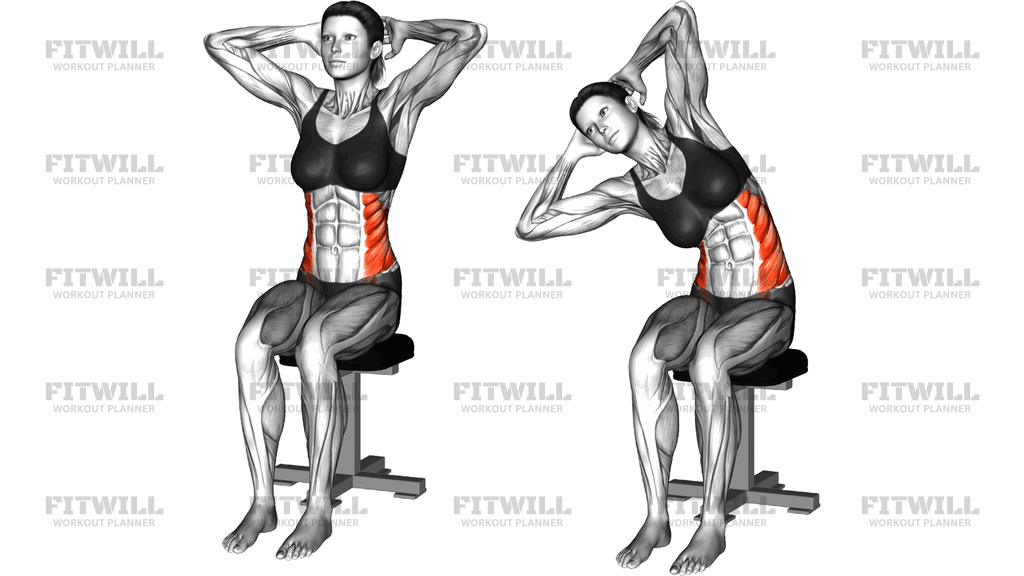
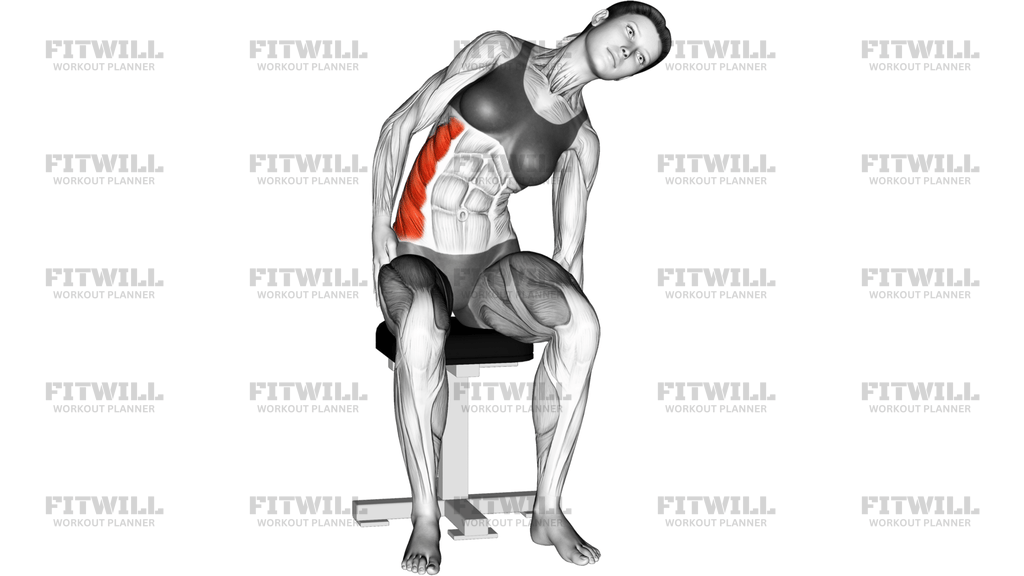
The Seated Alternate Back Rotation On A Chair is a simple trunk rotation drill performed while sitting upright on an ordinary chair with your feet planted wide and both hands resting on your knees. From that position, you rotate your upper body toward one side, letting your shoulders and chest turn while your hips stay anchored to the seat, then rotate back through the middle and toward the opposite side. The alternating rhythm makes it a convenient way to loosen the waist and midsection without any equipment beyond something sturdy to sit on.
This movement is especially useful for people who spend long hours seated at a desk or in a vehicle, because prolonged sitting tends to leave the thoracic spine and waist feeling stiff. It also works well as a warm-up before strength training, golf, tennis, baseball, or any sport that involves swinging or throwing, since those activities rely heavily on pain-free rotation through the trunk. Older adults and beginners often appreciate it too, because the chair provides a stable base and removes any balance demands.
The main muscles working here are the obliques on the sides of your waist, which drive the twisting motion and control the return. The rectus abdominis helps hold your trunk together as you turn, while the muscles along the spine and the mid-back contribute as your shoulders rotate. Because you are not moving any external load, the benefit comes from range of motion and controlled movement rather than heavy muscular effort, so think of it as teaching the trunk to rotate smoothly rather than taxing it.
Setup matters more than it looks. Sit toward the front half of the chair with your sit bones evenly weighted, feet flat and wider than your hips, and knees bent roughly over your ankles. That wide, stable base is what keeps your hips from twisting along with you, which is the whole point of the drill. If your hips rotate, your lower back does most of the turning instead of the waist and mid-back, and you lose much of the benefit while adding shear to the lumbar spine.
To execute it well, keep your spine long and your gaze forward as you begin each turn. Rotate by leading with the shoulder and chest rather than by cranking your head or pulling hard on one knee. Move to a comfortable end range, pause briefly, then rotate back through center and continue to the other side. The pace should be slow enough that you could stop the turn at any point.
A few practical points keep this safe. Never force the rotation into a sharp or painful range, and avoid bouncing at the end of the turn. If you have a history of lower back issues or a recent spinal injury, keep the range modest and check with a qualified professional before adding rotational drills. Done with control, a set of eight to ten alternations per side is usually enough to feel the waist and back move more freely.
[ Workout Log & Planner ]
Put your next workout in Fitwill
Keep your plan and training log ready when you are.


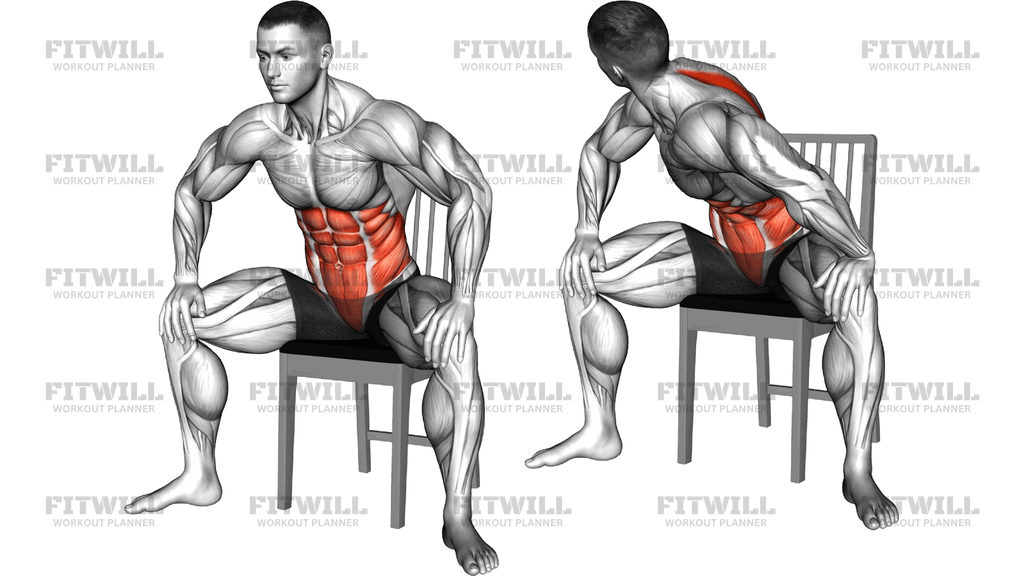
Instructions
- Sit sideways-free on a sturdy chair with your sit bones evenly placed on the seat and your spine tall.
- Set your feet flat on the floor, wider than hip width, with knees bent so they line up roughly over your ankles.
- Rest both hands on your knees or the tops of your thighs and brace your trunk lightly, as if preparing for a gentle nudge.
- Inhale, then exhale as you rotate your shoulders, chest, and head together toward your right side.
- Let your arms move passively with the turn so your hands stay in contact with your thighs; do not push off one knee to force the twist.
- Stop at a comfortable end range where your hips are still facing forward, and hold there for one or two seconds.
- Rotate back through the center without collapsing your posture, then continue immediately toward your left side.
- Keep breathing steadily throughout, exhaling into each turn and inhaling as you come back through the middle.
- Complete 8-10 rotations per side, then sit upright for a moment and reset your posture before finishing or repeating.
Tips & Tricks
- A common mistake is letting the opposite hip lift off the seat as you turn; keep both sit bones pressed down so the rotation comes from the waist and mid-back instead of the pelvis.
- Do not yank your head around ahead of your shoulders; the eyes and head should travel with the chest, which protects the neck and keeps the turn smooth.
- Pressing down hard on one knee to pry yourself deeper is a frequent error; your hands are just passengers riding the thighs, not levers.
- If your lower back complains, reduce the range rather than pushing through; the turn should be felt along the sides of your waist, not as a pinch in the lumbar spine.
- Keep your spine long instead of slumping; rotating on a rounded back changes where the movement happens and can irritate the discs.
- Use a chair without wheels and, ideally, without arms so the rotation path stays clear and the seat cannot slide out from under you.
- Slow the turn down if you find yourself swinging; momentum makes the drill feel easier but does far less for the obliques and mid-back.
- Moving the feet closer together makes the base less stable and encourages hip rotation, so keep that wide stance throughout.
- Treat the pause at the end of each turn as part of the exercise; a brief hold at the end range does more for stiffness than rushing extra repetitions.
Frequently Asked Questions
Which muscles does the Seated Alternate Back Rotation On A Chair work?
The obliques on the sides of your waist drive the rotation, with support from the abdominal wall and the muscles along the spine. Because there is no external load, the emphasis is on controlled range of motion rather than strong muscle contraction.
Can I do the Seated Alternate Back Rotation On A Chair as a warm-up?
Yes, it works well before sports or lifting sessions that involve twisting, such as golf or tennis. A few easy rotations per side raise movement quality in the trunk without fatiguing anything.
Why do my hips twist along with my shoulders during the Seated Alternate Back Rotation On A Chair?
That usually means your stance is too narrow or you are turning too far. Widen your feet, keep both sit bones heavy on the seat, and shorten the range until only your upper body rotates.
Is it bad to feel the Seated Alternate Back Rotation On A Chair in my lower back?
Mild muscular work along the spine is normal, but a sharp or pinching sensation is a signal to ease off. Reduce the rotation range, sit taller, and make sure the turn is coming from your waist rather than your lumbar spine.
How many repetitions of the Seated Alternate Back Rotation On A Chair should I do?
Eight to ten controlled rotations per side is a solid working set. You can repeat it two or three times, especially if you are using it to loosen stiffness from long sitting.
What kind of chair works best for the Seated Alternate Back Rotation On A Chair?
Use a stable, armless chair that will not tip or roll, with your feet flat on the floor. A chair with arms blocks the rotation path, and a rolling stool makes the exercise unsafe.
Can beginners do the Seated Alternate Back Rotation On A Chair?
Yes, it is one of the most accessible trunk rotation drills because the chair provides balance support and there is no added weight. Beginners should simply keep the range modest and prioritize smooth, unforced turning.
What can I use instead of a chair for the Seated Alternate Back Rotation On A Chair?
Any stable seat works, such as a bench or sturdy box, as long as your hips are above your knees and your feet can rest flat. Standing or floor-based trunk rotations are reasonable substitutes if no seat is available.
Should I hold the twist at the end of the Seated Alternate Back Rotation On A Chair?
A brief one-to-two second pause at your comfortable end range helps the waist and mid-back settle into the position. Avoid long forced holds or bouncing, which tend to provoke strain rather than mobility.