Lever Kneeling Twist
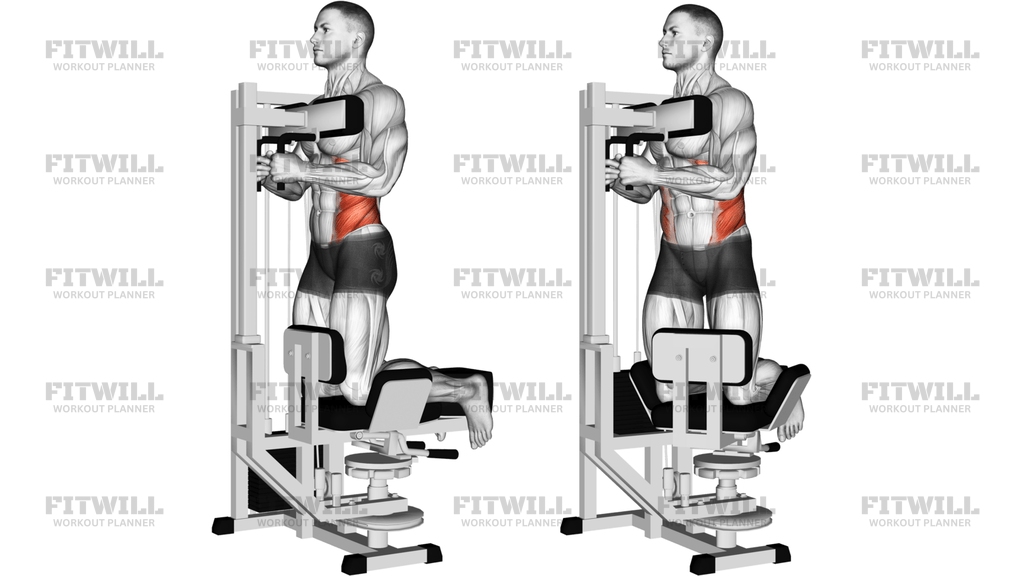
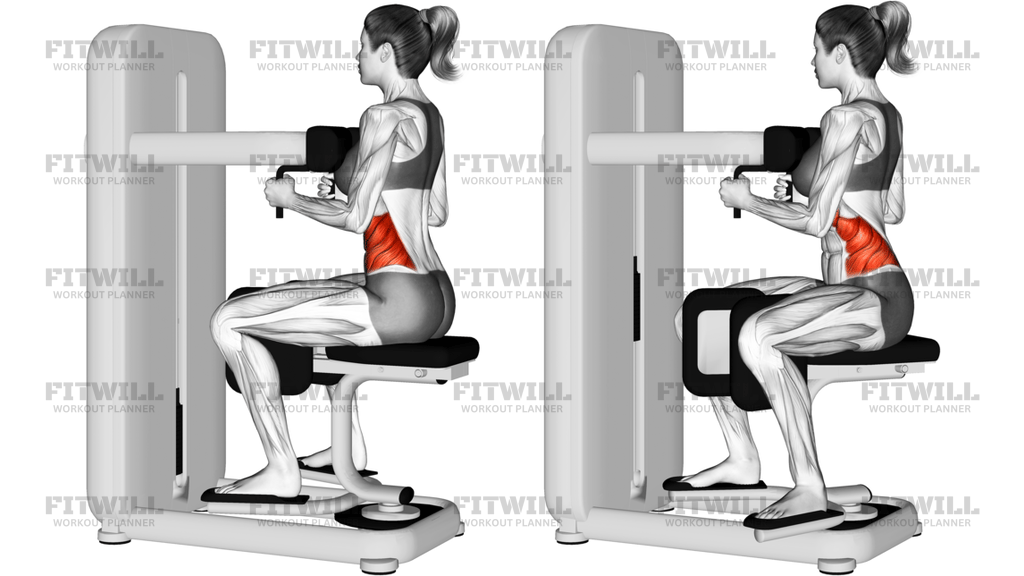
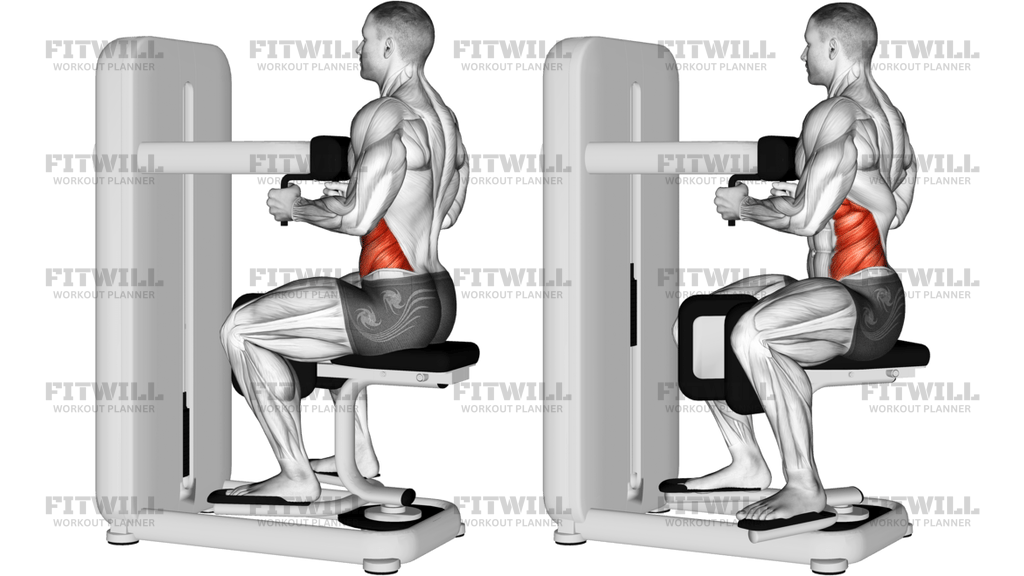
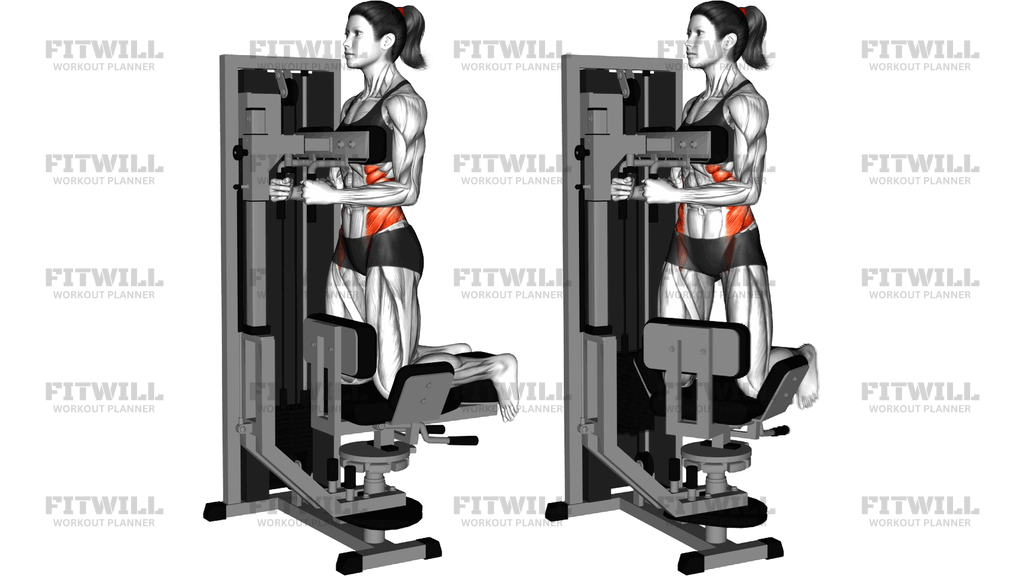
The Lever Kneeling Twist is a machine-based rotational exercise performed on a leverage machine with a rotating seat and padded arm restraints. You kneel upright with your shins secured against the support pad, press your upper arms against the pads, grip the handles, and rotate your entire torso from the waist while the machine's weighted arm provides resistance. Because your lower body is anchored and your arms are fixed in place, the movement isolates spinal rotation in a way that's hard to replicate with free weights or cable work.
This exercise is built around the obliques, the muscles running along the sides of your waist that handle rotation and anti-rotation. The rectus abdominis assists as you hold your trunk rigid through the turn, and the deep stabilizers of the lower back and trunk work to keep the rotation controlled rather than sloppy. Kneeling also removes help from the legs and hips, so the waist does the work instead of momentum from a standing stance.
The setup is what makes this version valuable. Securing the shins against the pad locks your pelvis down, which means the twist comes from your thoracic and lumbar spine rather than from your hips swinging around. Pressing the upper arms firmly into the pads keeps the shoulder girdle and chest connected to the machine's resistance arm, so the load transfers through your trunk instead of being absorbed by your arms. If either anchor point is loose, you lose most of the benefit.
To execute it well, rotate with intent rather than speed. Turn the torso as one solid block, pause briefly at the end of the range, and bring the weight back under control without letting it slam down. The return phase is where most people waste the exercise; treat it as half the rep. Breathe out as you rotate into the twist and inhale on the way back to center.
This movement suits lifters who want direct oblique work without loading the spine with a barbell, and it's a common choice in programs targeting the waist. It also works well for anyone rehabbing back toward rotational strength under controlled conditions, since the machine dictates the arc and range. Keep the weight moderate at first, because rotational resistance feels heavier than it looks and the lumbar spine is the limiting structure if you rush it.
[ Workout Log & Planner ]
Put your next workout in Fitwill
Keep your plan and training log ready when you are.


Instructions
- Adjust the machine so the seat height lets you kneel upright with your shins resting against the front pad and your knees on the seat.
- Set the arm pads at chest-to-shoulder height so that, facing the machine, your upper arms press firmly into both pads.
- Grip the handles with both hands and square your shoulders so your chest faces forward before starting.
- Brace your abdominal wall and keep your torso tall, as if a string is pulling the crown of your head toward the ceiling.
- Exhale and rotate your torso to one side as a single unit, driving the machine's resistance arm through its arc while your pelvis and knees stay anchored on the pad.
- Pause for a beat at the end of the rotation, squeezing the oblique on the working side without letting your shoulders slump forward.
- Inhale and slowly rotate back to the starting position under control, resisting the weight as it returns rather than letting it pull you around.
- Complete all repetitions on one side, then reset your posture, switch the rotation direction, and work the other side for the same number of reps.
- Between sets, stand up carefully from the kneeling position, recheck the seat height and pad contact, and adjust the load before your next set.
Tips & Tricks
- The most common mistake is rotating from the hips instead of the waist. If your knees and shins slide or twist on the pad, the pelvis is moving, so lighten the load and consciously press your shins into the support.
- Do not let the machine's weight arm whip you back to center. The eccentric return is where the obliques get most of their work, so take one to two full seconds coming back.
- Keep your elbows and forearms pressed against the pads for the whole set. If your arms drift away, the resistance transfers to your shoulders and the rotation loses tension.
- Stay upright through the spine. Leaning your chest into the pads turns the twist into a push and shifts stress away from the waist.
- Rotate to a range you can pause at, not the furthest point you can reach. A controlled stop with tension beats a bigger swing with none.
- Keep your neck in line with your torso and look straight ahead rather than craning around to follow the turn, which strains the upper back and neck.
- If one side feels noticeably stronger, start each set with the weaker side and match the reps, rather than doing extra volume on the strong side.
- Warm up the trunk with a few body-weight standing rotations before loading the machine, especially in colder gyms where the lower back tightens up quickly.
Frequently Asked Questions
Which muscles does the Lever Kneeling Twist work?
The obliques along the sides of your waist are the primary movers, since they drive spinal rotation. The rectus abdominis, deep core stabilizers, and the muscles of the lower back assist as you hold the torso rigid and control the return.
Why is this twist done kneeling instead of standing?
Kneeling with the shins secured locks the pelvis in place, so rotation has to come from the trunk rather than from the hips and legs. This makes the obliques work through a cleaner arc with less help from momentum.
Is the Lever Kneeling Twist suitable for beginners?
Yes, provided you start with a light weight and a shorter range. The machine guides the path of rotation, which makes it more forgiving than loaded twists with free weights, but the lumbar spine still needs time to adapt to rotational loading.
How far should I rotate on each rep?
Rotate as far as you can turn while keeping your shins flat on the pad, your arms pressed into the pads, and your chest upright. If your pelvis starts twisting or your shoulders collapse forward, you have gone past your useful range.
What is the most common mistake on the Lever Kneeling Twist?
Rushing the return and letting the weight arm swing the torso back to center. The lowering phase should be slow and resisted, otherwise the obliques only work during half of each rep.
What can I use if my gym has no leverage twist machine?
A cable machine with a handle at chest height and a half-kneeling or standing position is the closest substitute, as is a band-resisted torso rotation with the feet anchored. Both need more self-control to keep the hips from rotating.
How heavy should I go on this exercise?
Choose a load you can rotate for 10 to 15 controlled reps per side with a clear pause at the end of each turn. The obliques respond well to moderate loads and clean technique, and the lower back tolerates heavy twisting loads poorly.
Should I twist both directions in the same set?
The standard setup has you complete one side, then reset and work the other side, which keeps each set focused and symmetric. Do the same number of reps on both sides, and start with your tighter or weaker side.
Is the Lever Kneeling Twist safe for people with lower back issues?
Anyone with a current or recurring back problem should check with a qualified professional before adding loaded rotation. If cleared, use a light weight, a shorter range, and slow tempo, and stop if you feel anything beyond normal muscular effort in the lower back.