Suspension Face Pul
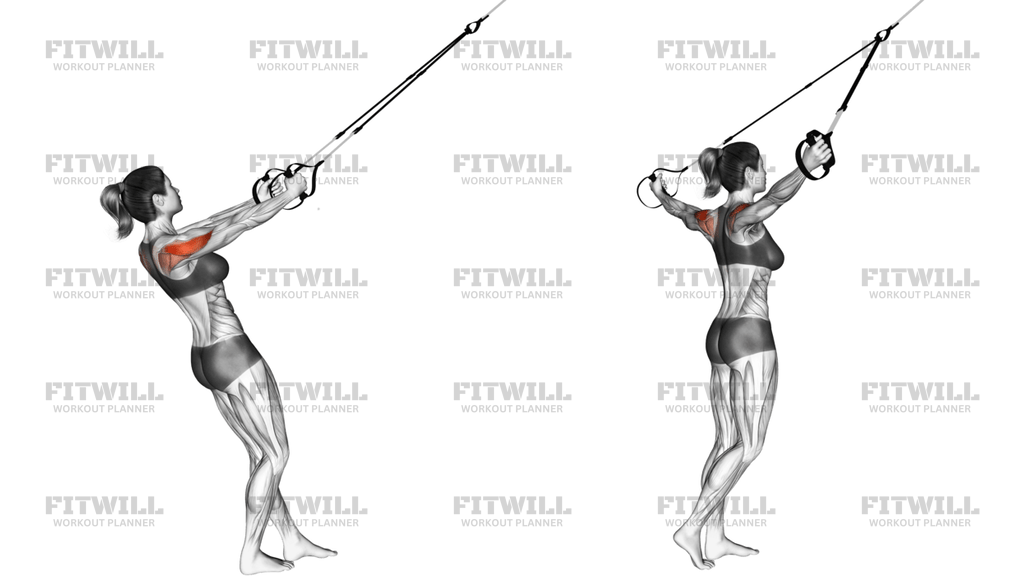
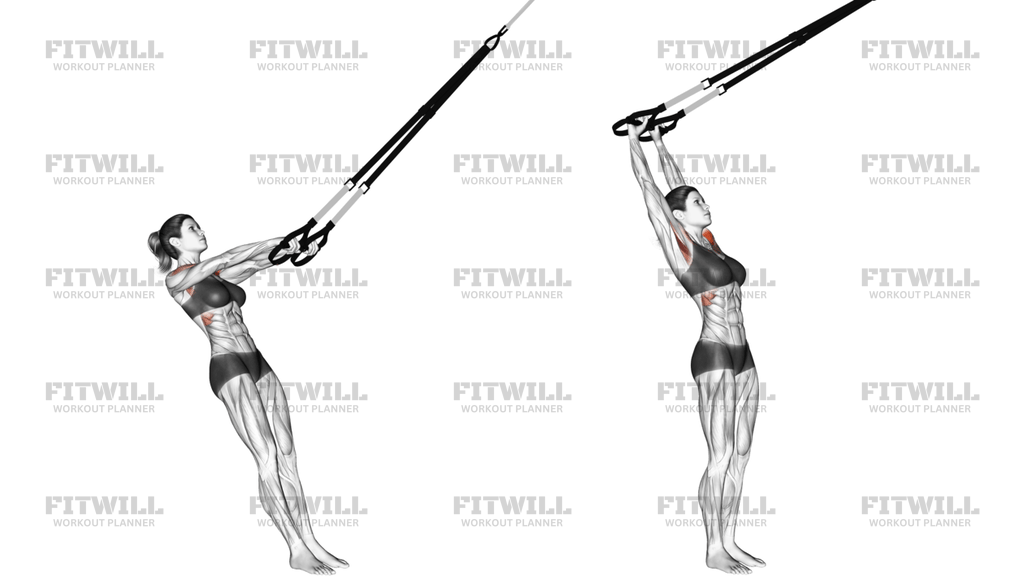
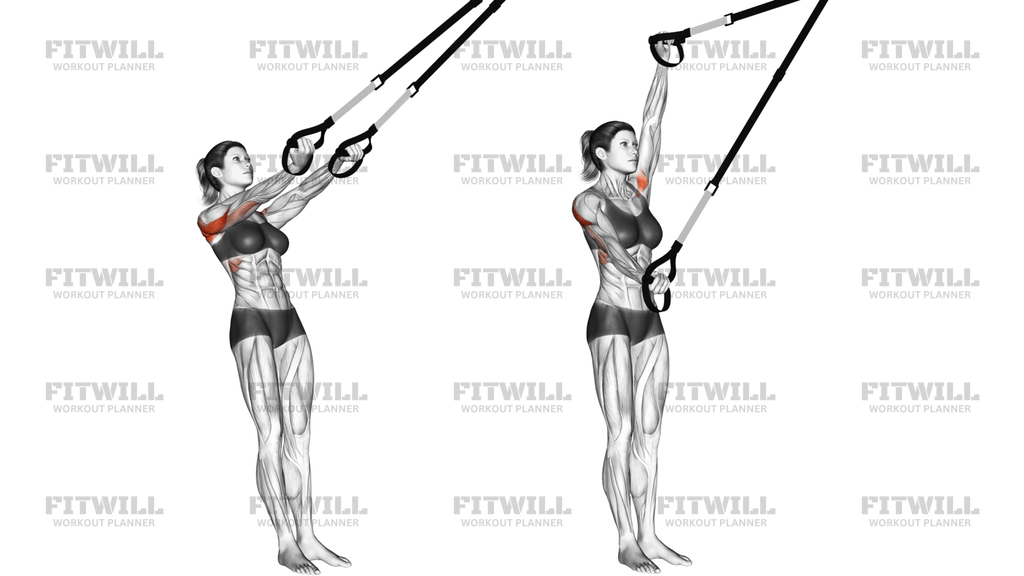
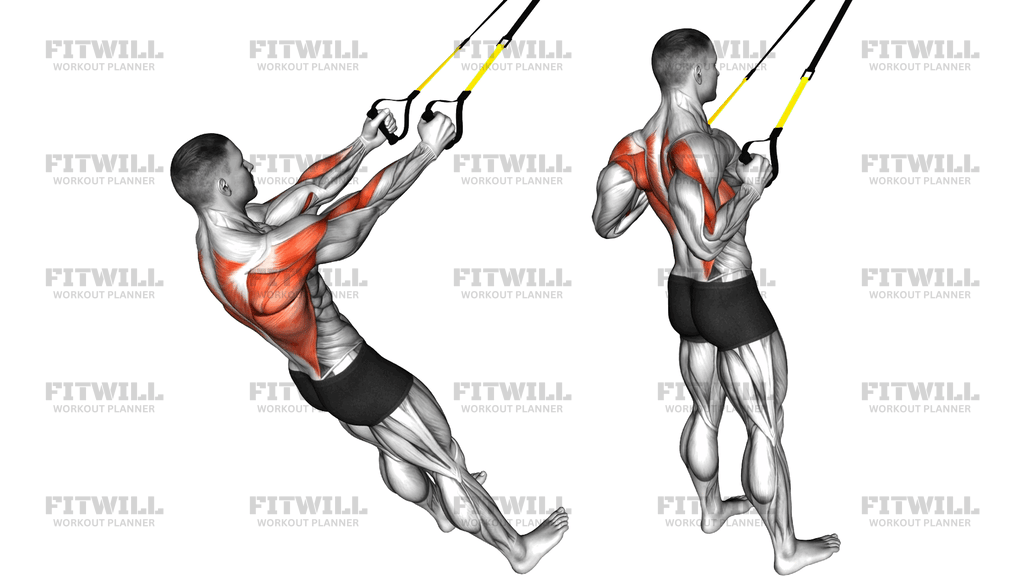
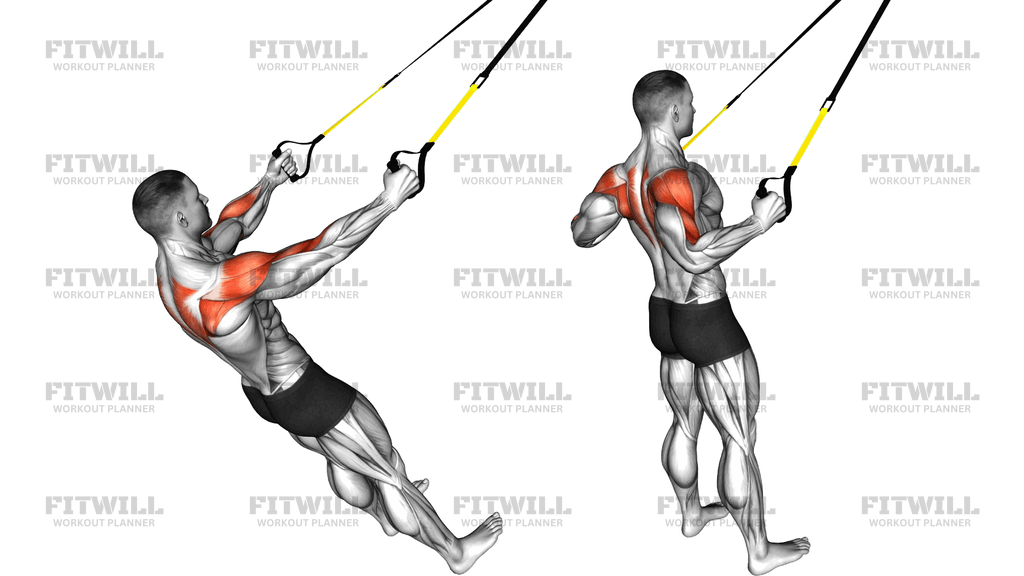
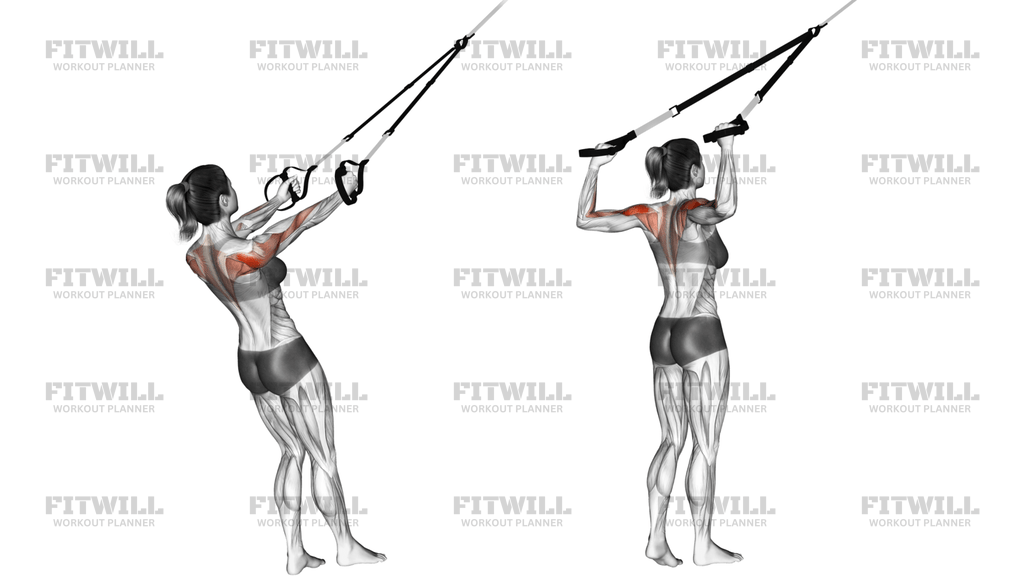
Suspension Face Pull is a suspension-based upper-back and shoulder exercise that trains the rear delts, mid traps, rhomboids, and rotator cuff through a controlled pulling pattern. The image shows the body leaning back from two suspension handles, so the exercise depends on finding the right angle of tension before the first rep. That setup matters: if you start too upright, the straps go slack; if you lean too far back, the set turns into a row and the shoulders lose the face-pull emphasis.
This movement is usually used to improve shoulder posture, scapular control, and pulling balance around the upper body. The primary emphasis is on the deltoids, especially the rear portion, while the traps and upper back help finish the pull and hold the shoulder blades in a strong position. In anatomy terms, the main work centers on the deltoids, with help from trapezius, rhomboids, and triceps brachii. It is a useful accessory when the goal is cleaner shoulder mechanics rather than heavy loading.
Set the anchors high, grab the handles with neutral wrists, and step back until the straps are taut with your arms extended in front of you. Take a staggered stance and keep a long line from ribs to head without letting the lower back arch. From there, pull the handles toward your temples or cheekbones while driving the elbows out and back. Finish with the hands beside the face, the upper arms roughly in line with the shoulders, and the shoulder blades squeezed without shrugging up into the neck.
Lower the handles slowly to full reach and keep the torso from drifting forward at the end of each rep. The goal is a smooth pull, a brief squeeze near the face, and a controlled return to the stretched position. Because the movement is sensitive to angle and posture, the best sets are the ones where every rep looks nearly identical. Use it for warm-ups, accessory work, or higher-rep strength endurance work when you want the upper back and shoulders to stay honest and controlled.
[ Workout Log & Planner ]
Put your next workout in Fitwill
Keep your plan and training log ready when you are.


Instructions
- Set the suspension anchors high and take the handles with neutral wrists and thumbs wrapped securely.
- Step back until the straps are taut, then lean back just enough to create steady tension without losing balance.
- Set a staggered stance, keep your ribs down, and hold your head in line with your torso.
- Start with your arms extended forward and slightly upward so the handles point toward the anchor point.
- Pull the handles toward your temples or cheekbones while driving your elbows out and back at shoulder height.
- Finish the pull with your hands beside your face and your shoulder blades squeezed together without shrugging.
- Pause briefly at the top, then lower the handles slowly until your arms are long again and the straps stay under control.
- Reset your posture and repeat for the planned number of reps, exhaling on the pull and inhaling on the return.
Tips & Tricks
- If the straps go slack at the start, step farther back; if your shoulders are yanked forward, shorten the range slightly.
- Keep the elbows high and wide rather than tucking them to your sides, or the movement turns into more of a row.
- Think about pulling the handles to eyebrow level or temple level, not to the chest.
- Let the shoulder blades move, but do not shrug the upper traps hard at the finish.
- A small backward lean is enough; turning the exercise into a standing row usually reduces the face-pull effect.
- Keep the wrists neutral and avoid bending them back as the handles get close to your face.
- Slow the lowering phase so the rear delts and upper back stay loaded instead of bouncing off the bottom.
- Use lighter tension than you think you need; this exercise rewards clean scapular control more than heavy resistance.
Frequently Asked Questions
What muscles does Suspension Face Pull work most?
It mainly targets the rear delts, with strong help from the mid traps, rhomboids, and other upper-back stabilizers.
Where should the handles finish in the rep?
The handles should come up toward the temples or cheekbones, with the elbows high and the hands beside the face.
How far back should I lean from the suspension straps?
Lean back only enough to keep the straps taut and your body stable; too much angle usually turns the drill into a row.
Can beginners do a suspension face pull?
Yes, if the straps are set high and the resistance is light enough to keep the shoulders and neck relaxed.
Should my elbows stay low like a row?
No. This version works best when the elbows stay around shoulder height and travel out and back instead of down.
What is the biggest mistake with suspension face pulls?
The most common problem is shrugging hard or leaning so far back that the movement becomes a body swing instead of a controlled pull.
Is this more of a shoulder or back exercise?
It is a shoulder and upper-back accessory, with the rear delts and scapular retractors doing most of the work.
How can I progress this movement safely?
Increase tension only after you can keep the same hand path, elbow height, and controlled return on every rep.