Eccentric Single Arm Pull Up
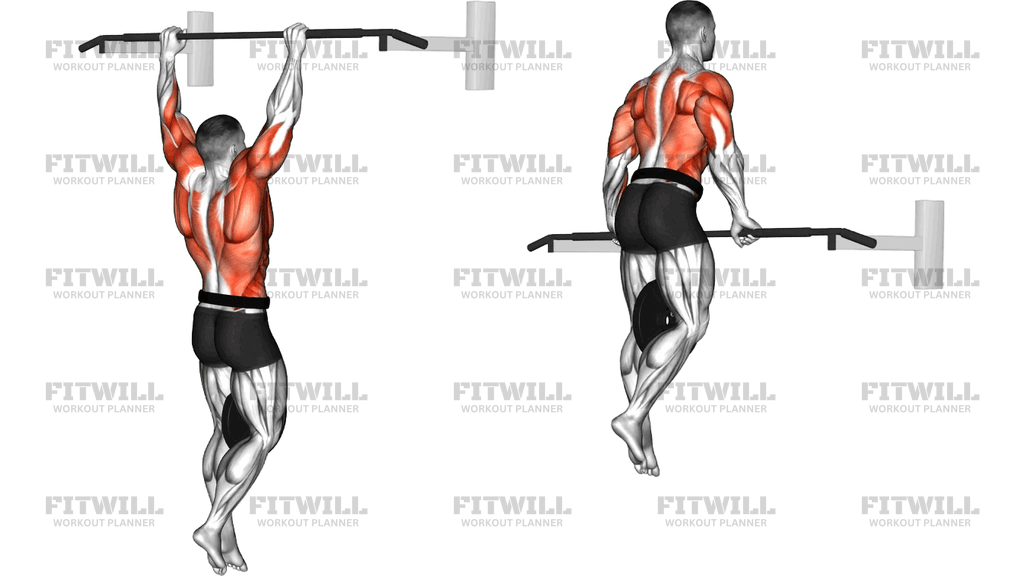
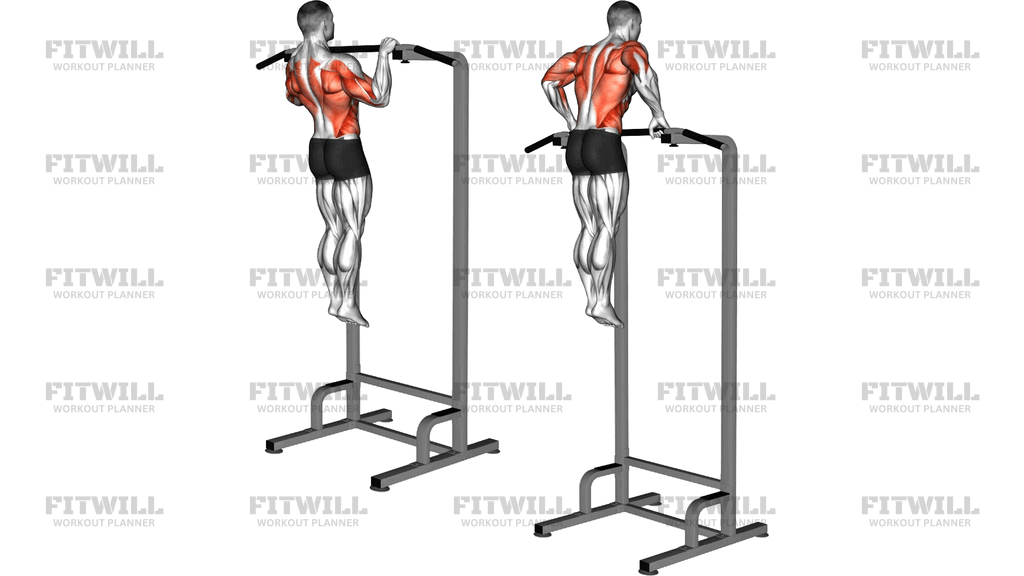
The Eccentric Single Arm Pull Up is the lowering-only half of a one-arm pull up, and it is one of the most effective bridges between a regular two-arm pull up and a true single-arm pull up. You start at the top of the bar, take your free hand away, and resist gravity with one arm as you lower yourself down as slowly as you can manage. Because muscles can handle significantly more load during the lowering phase than when pulling up, this variation lets you train one-arm strength long before you are strong enough to pull yourself up with one arm.
The primary work lands on the lats of the working side, with heavy contributions from the biceps, teres major, and mid-traps and rhomboids as the shoulder blade controls your descent. Your grip takes a serious beating too, since the entire body weight runs through one hand. The core works isometrically the whole time to stop your torso from twisting as the single-sided load tries to rotate you off the bar.
Setup matters more here than in most pulling exercises. You need a sturdy pull-up bar high enough that your feet clear the floor at full hang, and you need a reliable way to reach the top position: either pull up with both arms, use a box or rack to step up, or have a partner assist you to the top. A shoulder-width, underhand or neutral grip on the working arm gives most people the strongest, safest position, and the free hand can lightly rest on the wrist or bar until the descent begins.
Execution is all about controlled tension. From the top position with your chin over the bar, squeeze the working arm hard, brace the trunk, and lower over five to eight seconds, keeping the working elbow tracking down rather than flaring wide. Fight the descent all the way to a full hang with the arm extended. If you drop quickly or spin sideways, the set is over; step back up and reset rather than grinding out sloppy reps.
This movement suits intermediate to advanced trainees chasing their first single-arm pull up, climbers and grapplers who need one-sided pulling strength, and anyone whose two-arm pull ups have stalled. Keep the volume low, one to four total reps per side per session is plenty, because eccentric work creates significant muscle soreness. If your shoulder or elbow complains during the lowering phase, shorten the descent time or return to two-arm eccentrics until the joints adapt.
[ Workout Log & Planner ]
Put your next workout in Fitwill
Keep your plan and training log ready when you are.


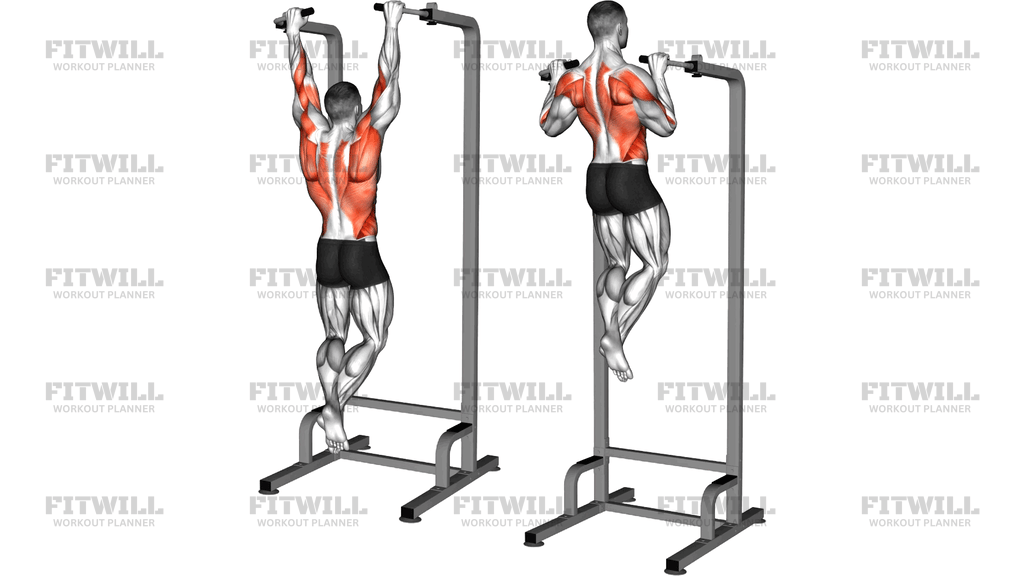
Instructions
- Set up at a sturdy pull-up bar that is high enough for your feet to clear the floor when you hang with one arm.
- Reach the top position by pulling up with both arms or stepping up from a box, so your chin is above the bar and your chest is close to it.
- Grip the bar with your working hand at roughly shoulder width, using an underhand or neutral grip, and let your free hand lightly support the bar or your working wrist.
- Squeeze your working arm and shoulder blades together, brace your core, and lift your free hand completely off the bar.
- Lower yourself slowly over five to eight seconds, keeping the working elbow pointing down and your torso square to the bar instead of twisting away.
- Continue fighting the descent until your working arm is fully extended and you are hanging straight down from one hand.
- Exhale steadily through the lowering phase; do not hold your breath or collapse into the bottom.
- At the bottom, hold the single-arm hang briefly, then release or use both hands to drop down to the floor safely.
- Reset your grip and stance, then step or pull back to the top position for the next rep.
- Complete all reps on one side, then switch arms and match the lowering time on the other side.
Tips & Tricks
- The most common mistake is dropping fast in the middle third of the descent, where the lever arm on the shoulder is longest; slow down deliberately from chin level to mid-range, then accept a slightly faster finish at full extension.
- If your torso swings or rotates during the lower, squeeze your glutes and cross your ankles like the hang position demands, and think about pulling the bar toward the working shoulder rather than letting the shoulder fall away from the bar.
- Start with a three-second descent for your first few sessions even if you could go slower; eccentric one-arm work causes more next-day soreness than the total time suggests.
- Keep a slight bend ready in the elbow at the very top rather than locking out and hanging passively, which shifts stress onto the elbow joint before you begin lowering.
- Use a box or the rack to step to the top instead of kipping up; a swinging start ruins the controlled tension the whole set depends on.
- If five seconds is impossible with one arm, do the same lowering protocol with both hands first, or let your free hand take some load on the bar and gradually transfer weight to the working arm.
- Chalk the working hand; a sweaty grip on a single-arm lower is the usual reason people lose the bar halfway down.
- Stop the set the moment your descent time drops below roughly half of your first rep, since sloppy fast eccentrics train nothing but bad habits.
- Keep your neck neutral by looking slightly upward at the bar rather than craning your chin over it, which strains the upper traps during the hold at the top.
Frequently Asked Questions
What muscles does the Eccentric Single Arm Pull Up work?
The working-side lats, biceps, teres major, and mid-back muscles do most of the braking, while the forearms and grip hold your full body weight and the core resists rotation. The obliques and deep core work hard to keep your torso square to the bar.
Can beginners do the Eccentric Single Arm Pull Up?
Most beginners should start with two-arm eccentric pull ups and band-assisted work first. If you cannot yet perform several strict two-arm pull ups, the one-arm eccentric will likely be too heavy to control and hard on the elbow and shoulder.
How do I get to the top position to start each rep?
Pull up with both arms and then remove your free hand, or step up from a box so your chin starts above the bar. Having a partner support you to the top also works, but never jump into the hang with a loose grip.
How long should each lowering phase last?
Aim for five to eight seconds once you are comfortable, but build up from around three seconds. Quality of tension matters more than the clock; a slow, smooth descent beats a shaky ten-second drop.
Why do I twist sideways when I take my free hand off the bar?
With only one hand on the bar, nothing stops your torso from rotating except your own core and lat control. Brace your trunk, squeeze your glutes, and think about pulling the bar toward the working shoulder as you lower.
What grip works best for the Eccentric Single Arm Pull Up?
An underhand or neutral grip at shoulder width is usually strongest and most comfortable for the working elbow. A pronated grip is fine too, but most people find it noticeably harder on a single arm.
How many reps should I do per session?
Keep it to one to four total singles per side, with full rest between reps. Eccentric overload creates substantial muscle damage, and more volume usually just leaves you too sore to train the rest of the week.
Is the Eccentric Single Arm Pull Up safe for the elbows and shoulders?
It is generally safe for healthy joints when you control the tempo and avoid locking out at the top or crashing at the bottom. If you feel sharp pain rather than muscular effort, regress to two-arm eccentrics or assisted one-arm lowers and build up gradually.
What can I substitute if one-arm eccentrics are too hard?
Do slow two-arm eccentric pull ups, or perform the one-arm lower while your free hand grips the working wrist or takes partial load on the bar. Band-assisted single-arm pulldowns also build the same one-sided pulling strength with less load.
Will this exercise help me get my first single-arm pull up?
Yes, it is one of the most direct tools for that goal, because the lowering phase lets you overload the pulling muscles beyond what a full concentric one-arm rep would allow. Pair it with single-arm hangs, scapular work, and assisted one-arm rows for the best transfer.