Hamstring Bridge (Version 2)
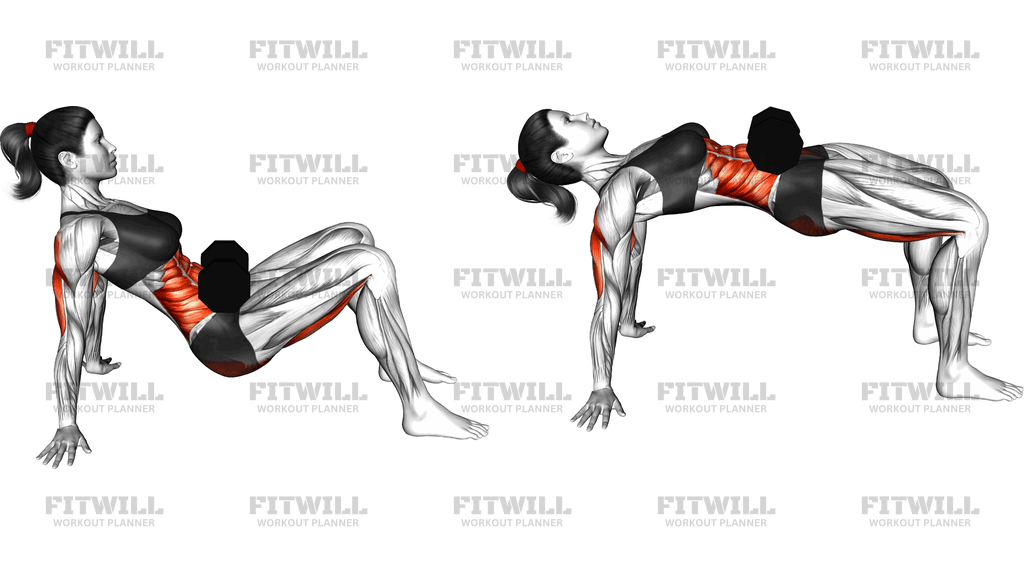
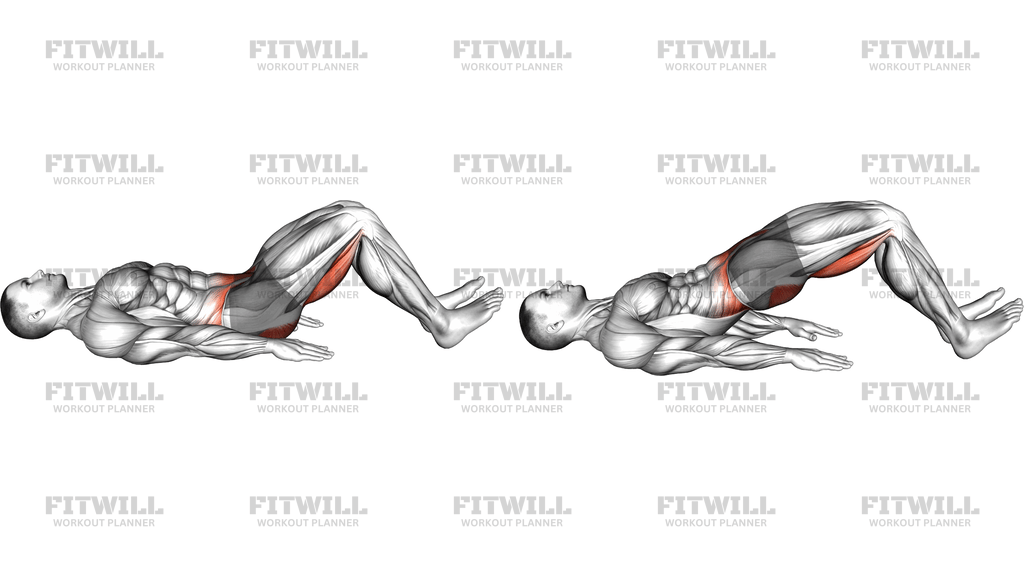
The Hamstring Bridge (Version 2) is a floor-based hip hinge performed lying on your back with the knees bent and the feet placed close together. Instead of the wide, stable base used in a standard glute bridge, this version brings the heels in toward the midline, which shifts more of the work into the hamstrings as they drive the hips upward alongside the glutes. It requires no equipment beyond a bit of floor space, and the arms simply rest at the sides for balance.
This movement suits a wide range of trainees. Beginners can use it to learn what it feels like to extend the hips without arching the lower back, while more experienced lifters often use it as a warm-up before deadlifts, good mornings, or leg curls, or as a finishing exercise to accumulate hamstring and glute volume without loading the spine. It is also a practical choice for home training, hotel workouts, or rehab-style programming where minimal equipment is preferred.
The primary muscles at work are the hamstrings along the back of the thigh, supported strongly by the glutes. The erector spinae and deep core stabilize the pelvis and trunk, and the adductors contribute because the close foot position asks the inner thighs to help hold the knees tracking forward. Because the resistance is only your body weight, the quality of the squeeze at the top matters far more than how high you lift.
Setup determines whether this variation hits the intended muscles. Lying flat with the heels tucked close and the knees bent, your torso and thigh should form a straight line at the top of the rep. If the feet drift too far forward, the quads take over; if the hips are pushed too high with an arched back, the lumbar spine does work the hamstrings and glutes should be doing. Keep the ribs down and the pelvis tucked slightly under as you lift.
Execution should be slow and deliberate. Press the heels into the floor, squeeze the glutes and hamstrings, and raise the hips until the body forms a straight line from shoulders to knees. Pause briefly at the top, feel the back of the thighs working, then lower with control until the hips hover just above the floor before starting the next rep. Avoid bouncing off the ground, as each rep should start from a deliberate brace rather than momentum.
A few practical safety points will keep this exercise productive. Move within a range where you can keep the lower back neutral rather than arching hard at the top, and stop the set if you feel the work shifting into your lumbar spine or the front of the hips. Because the hamstrings are working in a shortened position, a brief warm-up of easy hip hinges or leg swings beforehand helps the tissue feel ready, especially in early morning sessions.
[ Workout Log & Planner ]
Put your next workout in Fitwill
Keep your plan and training log ready when you are.


Instructions
- Lie on your back on the floor with your arms resting at your sides and your palms facing down.
- Bend both knees and place your feet flat on the floor, heels close together and directly below or slightly behind the knees.
- Take a breath, brace your abs lightly, and tuck the pelvis so your lower back rests flat against the floor.
- Press your heels and the backs of your arms into the floor to create a stable base.
- Drive through the heels and squeeze the glutes and hamstrings to lift the hips toward the ceiling.
- Stop when your shoulders, hips, and knees form a straight line, and hold that top position for a one-count squeeze.
- Lower the hips under control until they hover just above the floor, keeping tension in the hamstrings rather than dropping down.
- Exhale as you lift the hips and inhale as you lower them, keeping the breath steady throughout the set.
- Complete your reps, then reset by lowering the hips fully, letting the knees relax, and re-bracing before the next set.
Tips & Tricks
- If you feel this mostly in your lower back, you are arching at the top. Finish each lift by tucking the pelvis under instead of reaching for extra height.
- Keep the heels directly under the knees. If the feet drift forward, the quads take over and the hamstrings lose their shortened-position work.
- The knees tend to fall apart or splay outward in this close-stance version. Squeeze the inner thighs gently and keep the knees pointing straight ahead.
- Do not lift so high that your back rounds over your hands or the hips overextend; a straight shoulder-to-knee line is the correct end position.
- Pause for a full second at the top of each rep. Because the load is only body weight, that pause is where the hamstring contraction is actually earned.
- Press down through the heels, not the toes. Rising onto the balls of the feet turns this into a calf-driven movement and reduces hamstring involvement.
- Keep the neck relaxed and the head resting on the floor. Lifting the head forward often coincides with losing the rib-down position.
- If your hamstrings cramp near the knee, that is common in this shortened position; lower slightly, shorten the pause, and build up the hold time over several sessions.
Frequently Asked Questions
What muscles does the Hamstring Bridge (Version 2) work?
The hamstrings are the primary movers, with the glutes providing strong support. The lower back and abs stabilize the pelvis, and the adductors help keep the knees aligned in the close foot position.
How is this version different from a regular glute bridge?
The heels are placed close together and tucked in, which shortens the hamstrings and makes them work harder relative to the glutes. A standard glute bridge with a wider base shifts more emphasis toward the glutes.
Is the Hamstring Bridge (Version 2) suitable for beginners?
Yes. It is a low-load way to learn hip extension with a neutral spine. Beginners should focus on a smaller range with a strong squeeze rather than lifting as high as possible.
Why do my hamstrings cramp during this exercise?
The close-stance setup works the hamstrings in a shortened position, which can trigger cramping, especially if you hold the top too long. Shorten the pause, reduce the range slightly, and build hold time gradually.
How many reps and sets should I do?
For warm-ups or technique work, 2 sets of 10 to 15 controlled reps is typical. As a finishing exercise, 3 sets of 12 to 20 with a one-second top pause provides a solid hamstring and glute stimulus.
Should my feet be flat or on the heels only?
Keep the whole foot in contact with the floor but make the heel the main point of pressure. Driving through the heels keeps the tension on the hamstrings and glutes instead of the calves.
Can I do the Hamstring Bridge (Version 2) every day?
Because the resistance is only your body weight, frequent practice is generally fine if the muscles do not feel overly sore. Treat it like a skill drill on most days and push the volume harder only two or three times per week.
What can I use if this becomes too easy?
Progress by slowing the lowering phase, adding longer pauses at the top, or moving to single-leg bridges. You can also place a resistance band across the hips for added load.
Is it normal to feel this in my lower back?
No, the work should stay in the back of the thighs and hips. If your lower back dominates, you are likely overextending at the top; tuck the pelvis slightly and stop the lift at a straight shoulder-to-knee line.