Hamstring Bridge Leg Kick (Version 2)
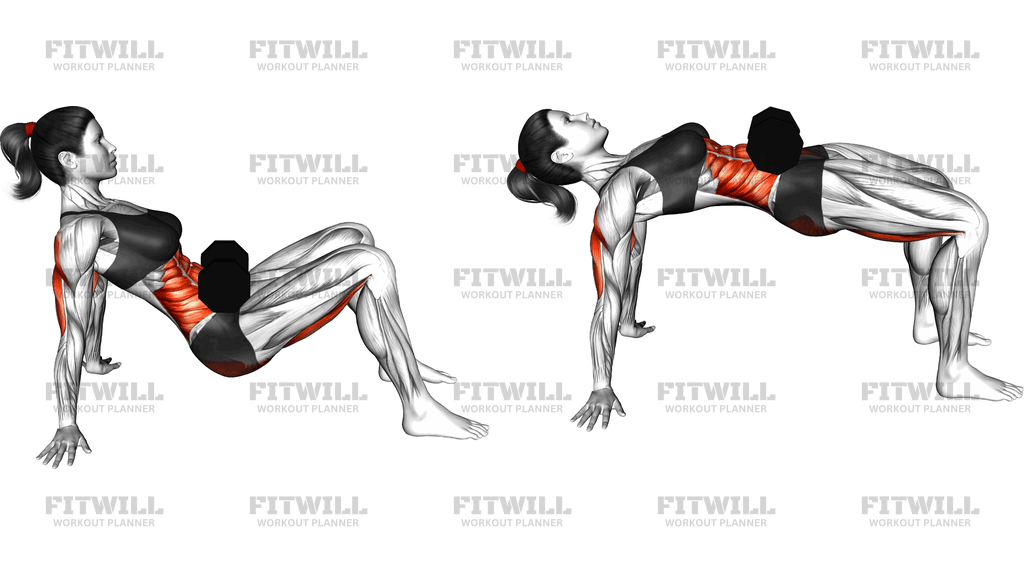
The Hamstring Bridge Leg Kick (Version 2) is a floor-based body weight exercise that combines a single-leg bridge with an extended-leg position, forcing one hamstring and glute complex to hold your hips up while the other leg reaches out. You lie on your back with one foot planted close to your hips, drive up into a bridge, and keep the working leg loaded while the free leg stays extended throughout the set. That extended leg is what separates this from a standard single-leg bridge: it removes the option of sharing the load and puts constant tension on the back of the standing thigh.
This movement works well for people who want to train hamstrings and glutes without equipment, or who find conventional bridges too easy once both feet are down. Because the hips have to stay level while one leg is unloaded, you also get a real demand on the deep core and lower back stabilizers. Runners, sprinters, and anyone recovering general hip strength after time off tend to benefit from this pattern, since it trains hip extension one side at a time and exposes left-to-right differences quickly.
The setup matters more here than in a regular bridge. Your planted foot should sit close enough to your hips that you can lift them without the knee drifting forward, and your arms stay flat on the floor beside you for balance rather than pushing the hips up. If the foot is too far away, the hamstring loses its leverage and the lower back takes over the job instead. The extended leg should reach straight out with the thigh roughly in line with the other thigh, not splayed open or dropped toward the floor.
Execution is simple but demanding: press the planted foot into the floor, squeeze the glute on that side, and lift the hips until your body forms a straight line from shoulders to knee. Pause briefly at the top, keeping the hips square, then lower with control until the hips touch back down. Every rep should be driven by the standing leg, not by momentum or by rocking the pelvis. If your hips tilt or the extended leg starts swinging, that is the signal to slow down or shorten the set.
A practical progression path is to master the two-leg glute bridge first, then move to this kick variation, and eventually add tempo work or a pause at the top. Two to four sets of eight to twelve reps per side is a sensible working range. Because the movement loads the hamstrings in a shortened position and the lower back stabilizes throughout, keep the range honest and stop the set as soon as form starts to tilt, rather than pushing through with a strained lower back.
[ Workout Log & Planner ]
Put your next workout in Fitwill
Keep your plan and training log ready when you are.


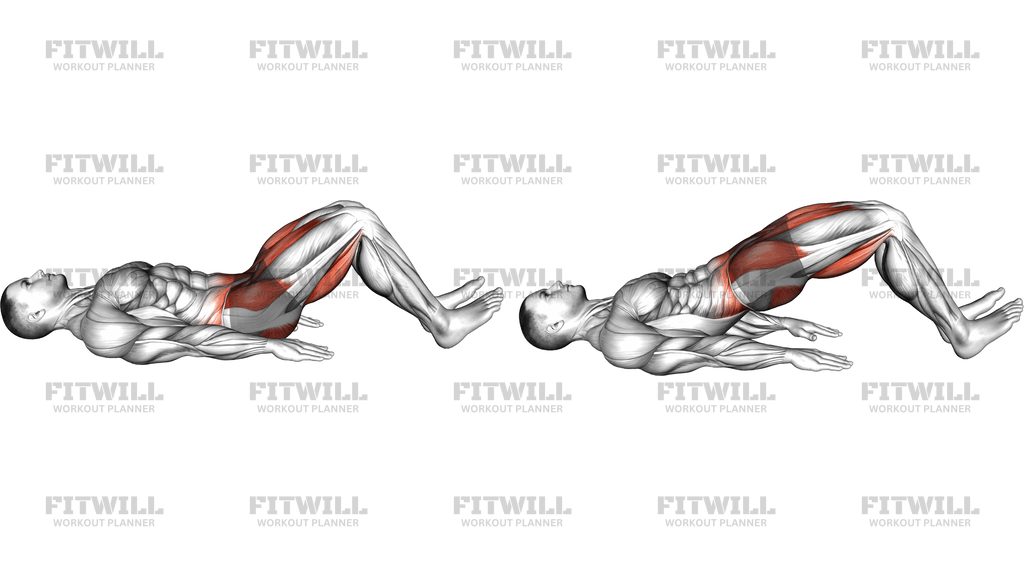
Instructions
- Lie on your back on a mat with your knees bent and feet flat on the floor, hip-width apart, arms resting at your sides with palms down.
- Extend one leg straight out so the thigh lines up with the other thigh, and point the foot of the extended leg forward or pull the toes toward you, whichever keeps the leg quiet.
- Shift your weight fully onto the planted foot and slide it closer to your hips if needed, so the knee stays over the ankle when you lift.
- Brace your abdominal muscles lightly and press your lower back gently toward the floor before you begin the lift.
- Drive the planted foot into the floor, squeeze the glute on that side, and raise your hips until your body forms a straight line from shoulders to knee of the standing leg.
- Hold the top position for one to two seconds, keeping both hips level and the extended leg still, without letting it drop toward the floor.
- Lower your hips under control until they lightly touch the floor, keeping tension in the standing hamstring rather than collapsing.
- Exhale as you lift the hips and inhale as you lower them, keeping the breath steady instead of holding it.
- Complete all repetitions on one side, then extend the opposite leg and match the rep count before moving on.
Tips & Tricks
- If your hips sag on one side, the extended leg is usually drifting out or down — keep the free thigh stacked over the planted thigh and reach the heel forward instead.
- Foot placement is the most common setup error: too far from the hips turns this into a hamstring pull on the lower back, so bring the foot in until the knee sits roughly above the ankle at the top.
- Do not push off with your hands; the arms are there for balance, and pressing palms into the floor steals work from the hamstrings and glutes.
- If the extended leg shakes or swings, bend the standing knee slightly less at the start — a lower bridge height with a level pelvis beats a high bridge with a twisted one.
- Avoid arching your lower back to fake extra height; the lift should stop when the hips are in line with the shoulders and knee, not beyond it.
- Drive through the heel of the planted foot rather than the toes, which keeps the hamstring and glute engaged instead of shifting work toward the quad.
- Slow the lowering phase to two or three seconds if the reps feel easy — the eccentric is where this movement builds most of its strength.
- If you feel cramping in the standing hamstring, that is normal early on; reduce the hold time at the top and build back up over a few sessions.
Frequently Asked Questions
Which muscles does the Hamstring Bridge Leg Kick (Version 2) work?
The hamstrings and glutes of the planted leg do the primary work, while the deep core and lower back stabilize the pelvis against the offset from the extended leg. The hip flexors of the free leg also work lightly to hold it in the reaching position.
How is the Hamstring Bridge Leg Kick (Version 2) different from a regular single-leg glute bridge?
In this version the non-working leg stays extended straight out for the entire set, which increases the balance and pelvic-control demand and makes it harder to cheat with the free leg. A standard single-leg bridge often lets the bent free leg assist through the hip.
Is the Hamstring Bridge Leg Kick (Version 2) suitable for beginners?
Yes, if you can already perform a comfortable two-leg glute bridge with good hip extension. Beginners can start with fewer reps per side and shorten the pause at the top until control improves.
Why does my lower back work so hard during this exercise?
Usually the planted foot is too far from the hips or the hips are being lifted by arching rather than by squeezing the glute. Move the foot closer and stop the lift when the shoulders, hips, and knee form a straight line.
Should my hips stay level during the Hamstring Bridge Leg Kick (Version 2)?
Yes, keeping the pelvis square is the main technical challenge. If one hip drops toward the extended-leg side, the stabilizing demand has exceeded your current control, so reduce reps or add a short pause to reset each rep.
Can I do this exercise without a mat?
You can, but a mat or carpeted surface is more comfortable for the shoulders, arms, and hips, especially since the hips return to the floor on every repetition.
What can I use instead of the Hamstring Bridge Leg Kick (Version 2)?
A standard single-leg glute bridge, a two-leg glute bridge with a slower tempo, or a stability ball leg curl all cover similar hamstring and glute work. Choose the single-leg bridge if the extended-leg balance is the limiting factor.
How many reps and sets should I do of the Hamstring Bridge Leg Kick (Version 2)?
Two to four sets of eight to twelve controlled repetitions per side works well for most people. Stop the set when the hips can no longer stay level, not when the hamstring simply burns.
Is it safe to do the Hamstring Bridge Leg Kick (Version 2) every day?
Because it is a moderate body weight load, it can be performed frequently, but treat it like any strength exercise and allow at least a day between harder sessions. If the lower back feels fatigued rather than the glutes and hamstrings, reduce the volume.