Walking On Spot
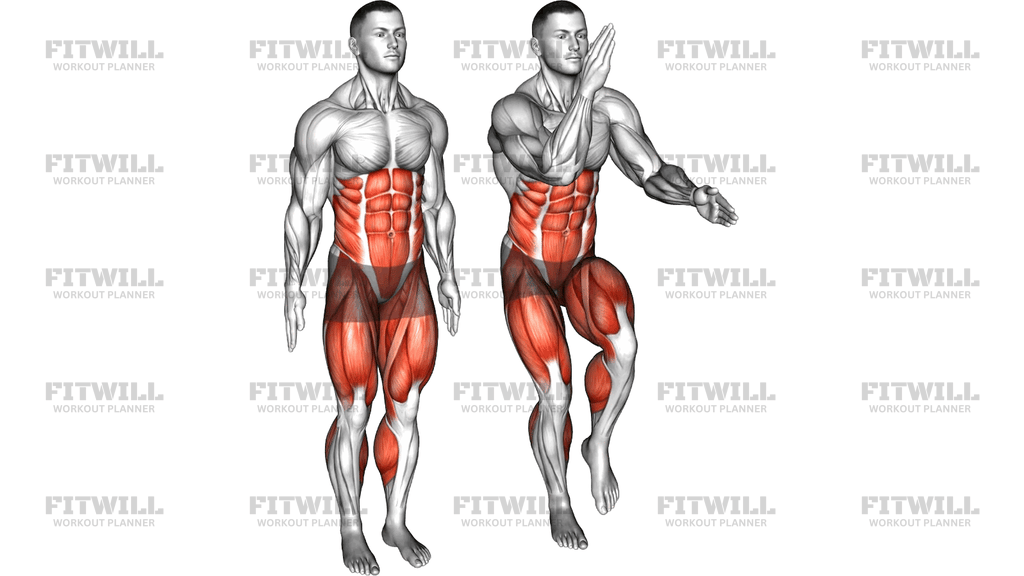
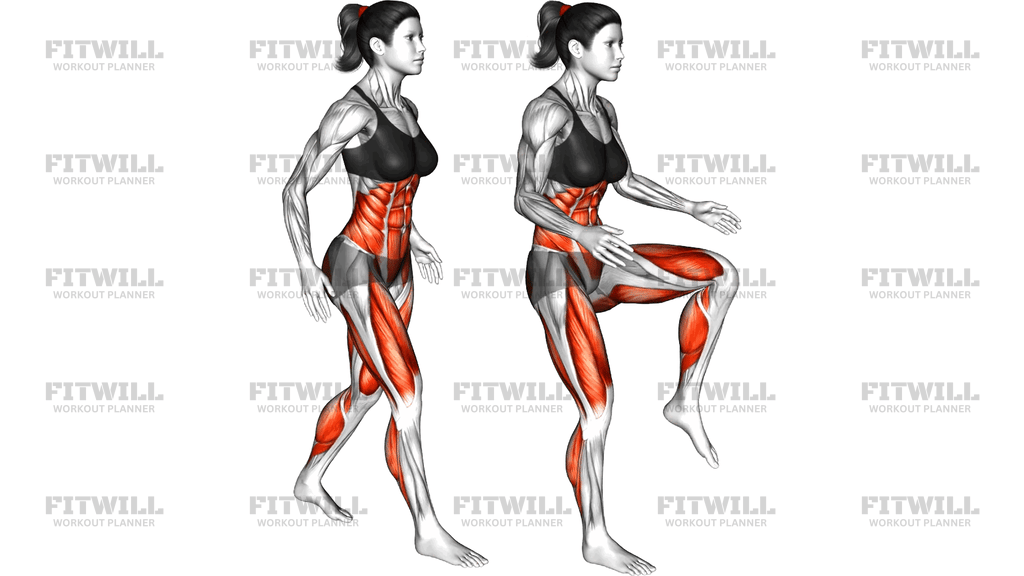
Walking On Spot is exactly what it sounds like: you march or step in place without traveling anywhere, lifting each foot off the floor in an alternating rhythm while your arms swing naturally as they would during a brisk walk. It is one of the simplest low-impact cardio movements you can do, and because it requires no equipment and almost no space, you can perform it in a living room, hotel room, or beside your desk.
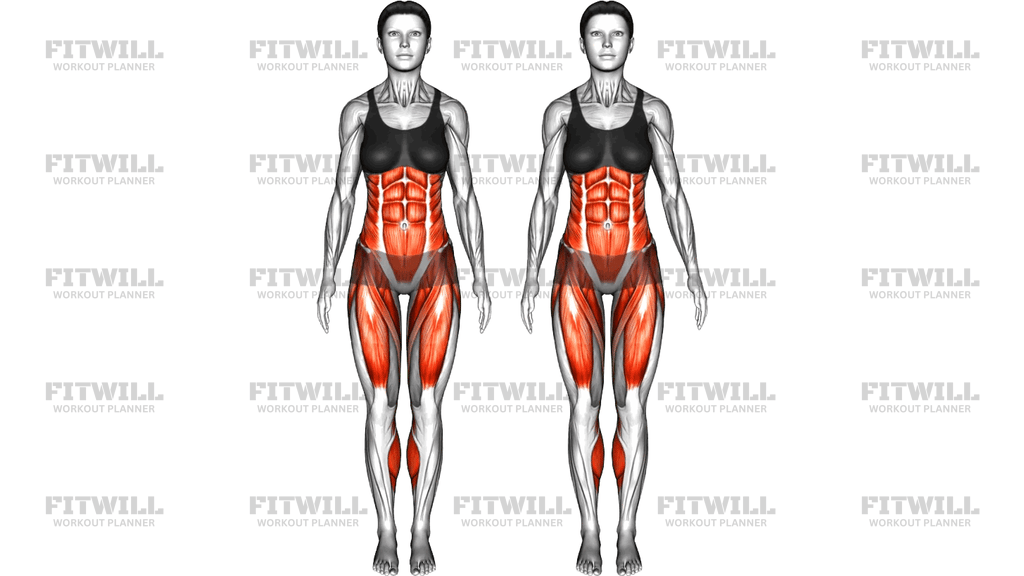
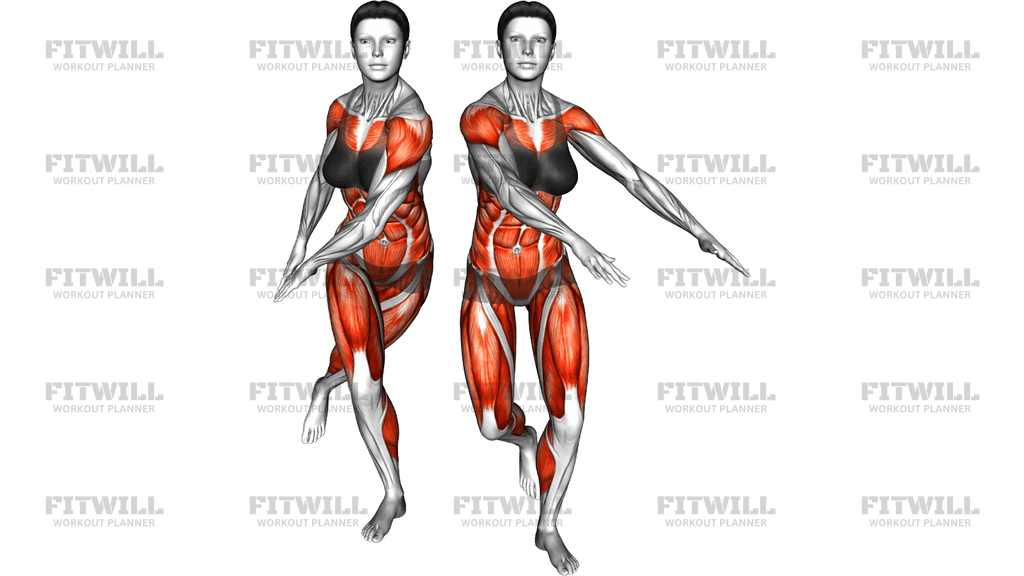
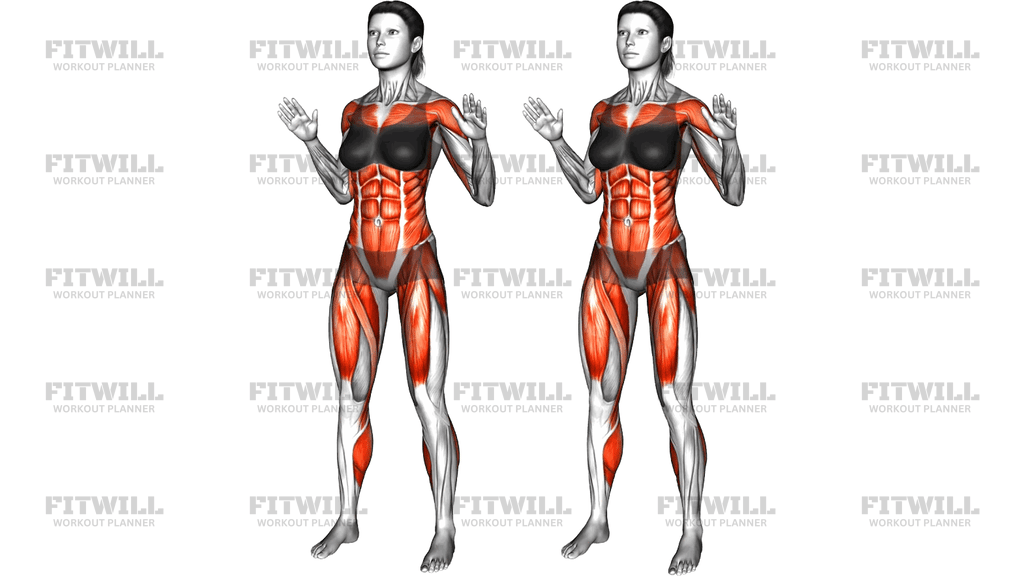
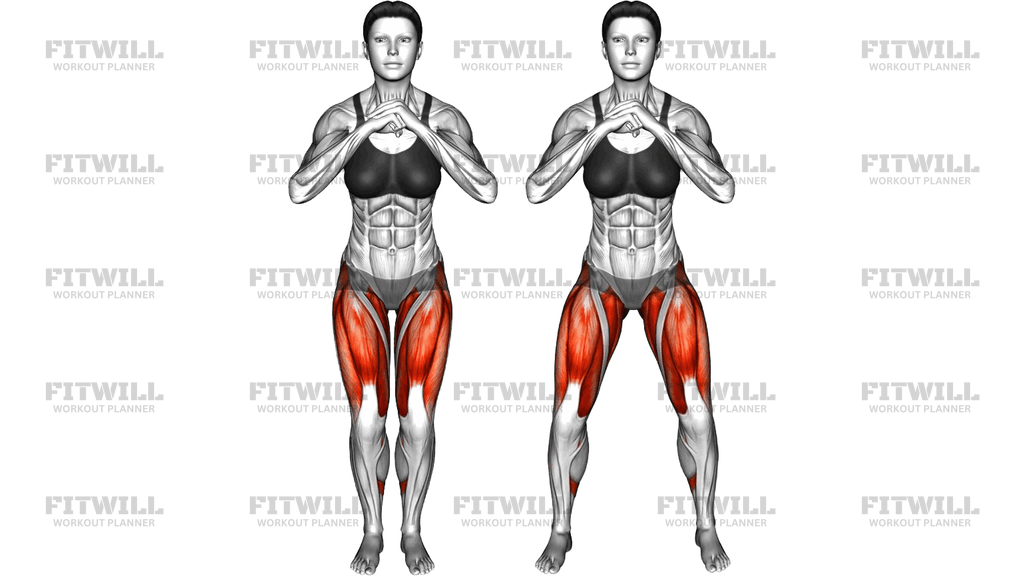
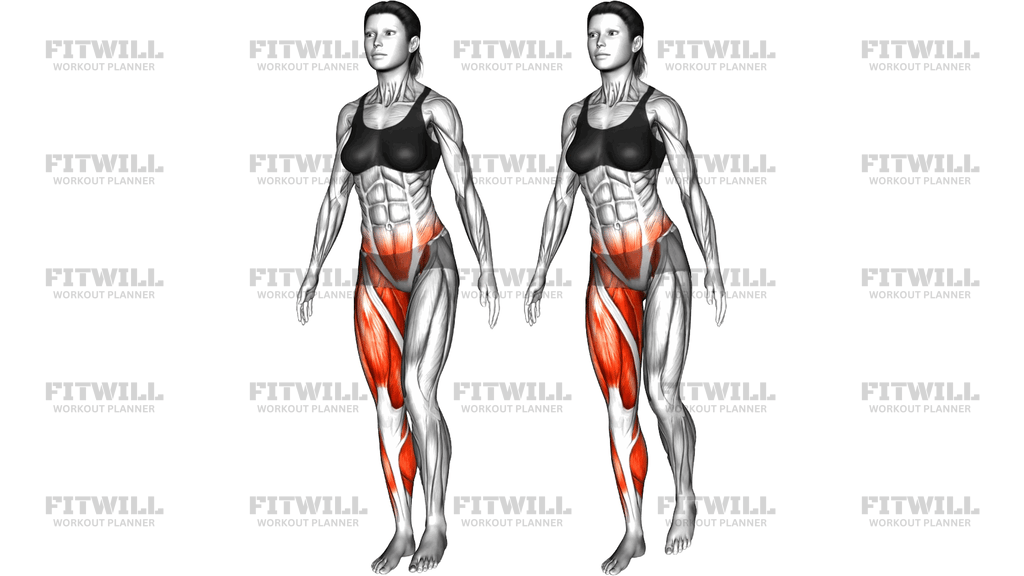
The movement mainly works the quadriceps, which drive each lift of the leg, along with the calves, hamstrings, and glutes, which absorb your body weight every time a foot lands. Your hip flexors raise the thigh with each step, and your core stays lightly engaged the whole time to keep your torso upright. The arms add an upper-body rhythm that raises your heart rate more than leg movement alone.
Walking On Spot is a good fit for beginners building an exercise habit, older adults who want gentle cardiovascular work, and anyone warming up before a workout or stretching a long sedentary break into something active. Because your feet stay under your body and there is no forward momentum, the impact on the knees and ankles stays low compared to jogging.
Setup matters more than people expect. Stand tall with your feet roughly hip-width apart, shoulders relaxed, and eyes forward rather than down at your feet. If your torso leans back or your head juts forward, the rhythm tends to break down and your lower back takes extra stress. Keep the knees soft on every landing instead of snapping them straight.
To execute it well, shift your weight onto one foot, lift the opposite knee to a comfortable height, then place that foot back down and repeat with the other side. Bend your elbows around 90 degrees and let them swing in opposition to your legs, just like a natural walking pattern. Once the rhythm feels smooth, you can raise your knee height or quicken your pace to increase the effort.
Aim for a pace where you can still breathe through your nose or hold a conversation if the goal is steady cardio, or push the tempo for short intervals if you want a tougher conditioning effect. Stop if you feel sharp joint pain or dizziness, and step off onto a stable surface if you need a break.
[ Workout Log & Planner ]
Put your next workout in Fitwill
Keep your plan and training log ready when you are.


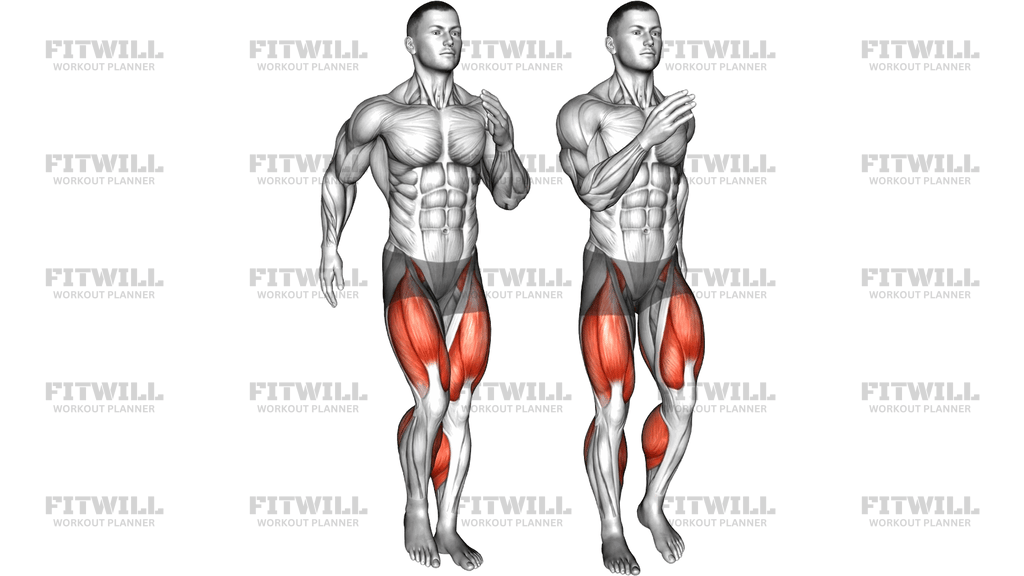
Instructions
- Stand upright with your feet hip-width apart, arms relaxed at your sides, and your gaze straight ahead.
- Bend your elbows to about 90 degrees and hold your hands loosely, ready to swing with each step.
- Brace your core lightly and shift your body weight onto your left foot.
- Lift your right knee to a comfortable height, roughly so the thigh is a few inches off vertical, keeping your torso tall.
- Place your right foot back down under your body and immediately lift your left knee as your weight transfers across.
- Swing your arms in opposition to your legs, right arm forward as the left knee lifts and vice versa.
- Land each foot softly on the ball of the foot first, keeping the knees slightly bent rather than locking them straight.
- Breathe steadily and rhythmically, inhaling for a few steps and exhaling for a few steps rather than holding your breath.
- Continue at a consistent pace for your target time, then slow the stepping gradually for several counts before stopping.
- Finish by standing still for a moment and letting your breathing settle before moving on to your next activity.
Tips & Tricks
- A very common mistake is stomping the feet down flat; land on the ball of the foot first and let the ankle and knee absorb the step quietly.
- If your lower back starts to ache, you are probably leaning back or arching as you lift your knees. Stand an arm's length from a wall and check that your hips stay stacked under your shoulders.
- Raising the knees too high too soon turns the movement into a march and fatigues the hip flexors quickly. Start with a modest knee lift and only increase it when the rhythm feels automatic.
- Keep your shoulders down and relaxed; hitching them up while the arms swing is a sign of unnecessary tension.
- Use a clock or count steps in blocks of twenty to keep your pace honest, because stepping in place tends to slow down without you noticing.
- If balance feels shaky, stand near a wall or the back of a sturdy chair and let one hand hover nearby for support until you are confident.
- To raise the intensity, speed up your step rate or extend your arms slightly forward, which increases the workload on the shoulders and heart.
- Wear cushioned shoes or step on a mat if you are on a hard floor, especially during longer sessions.
- Watch that your knees track over your toes on each landing; letting them drift inward suggests you need to slow down and focus on foot placement.
Frequently Asked Questions
What muscles does Walking On Spot work?
The quadriceps do most of the work as you lift and lower each leg, while the calves, hamstrings, and glutes handle the landings. The hip flexors raise the thigh and the core stabilizes your upright posture throughout.
Is Walking On Spot good cardio for beginners?
Yes, it is one of the easiest entry points into cardio because it is low-impact, needs no equipment, and the pace is fully under your control. Start with a few minutes at a conversational pace and build up gradually.
How long should I perform Walking On Spot?
Five to ten minutes works well as a warm-up, while twenty to thirty minutes at a steady pace provides a meaningful cardio session. You can also use one to two minute bursts between strength exercises.
Should my knees lift high or stay low during Walking On Spot?
Start with a modest, comfortable knee lift and keep the rhythm smooth. Higher knees raise the intensity and shift more work to the hip flexors and quads, but they also fatigue you faster and demand better balance.
Why do my arms need to swing during Walking On Spot?
The counter-rotating arm swing mimics natural gait, helps drive the rhythm of your legs, and raises your heart rate more than stepping with still arms. Keep the elbows bent around 90 degrees and the shoulders relaxed.
Can I do Walking On Spot instead of going for a walk?
It is a reasonable substitute when weather, space, or time prevent an outdoor walk, and it burns energy at a similar rate at an equal pace. What it lacks is the variety of terrain, so add intervals of faster stepping to compensate.
Is Walking On Spot safe for people with knee problems?
The movement is low-impact because your feet stay under your body with no forward momentum, which makes it gentler than jogging for many people. Still, keep knee lifts low, land softly, and stop and consult a professional if you feel joint pain.
How can I make Walking On Spot more challenging?
Increase your step rate, lift the knees higher, pump the arms more vigorously, or add intervals where you step as fast as possible for thirty seconds. Holding light hand weights is another option once your form is consistent.
What is the most common mistake in Walking On Spot?
The most frequent issue is looking down at the feet and slouching forward, which rounds the upper back and disrupts breathing. Keep your eyes forward and your torso tall, and the whole movement feels smoother.