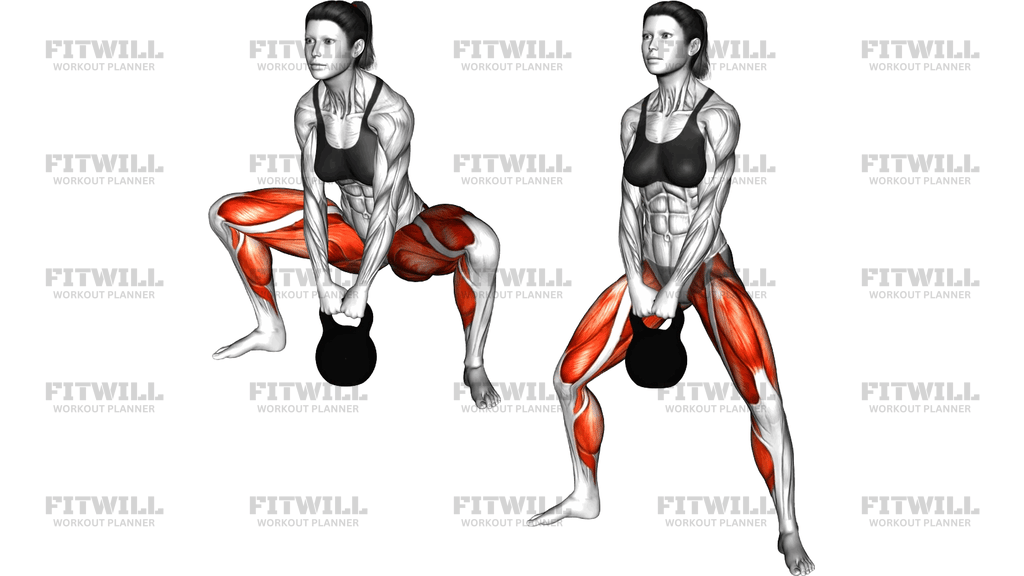
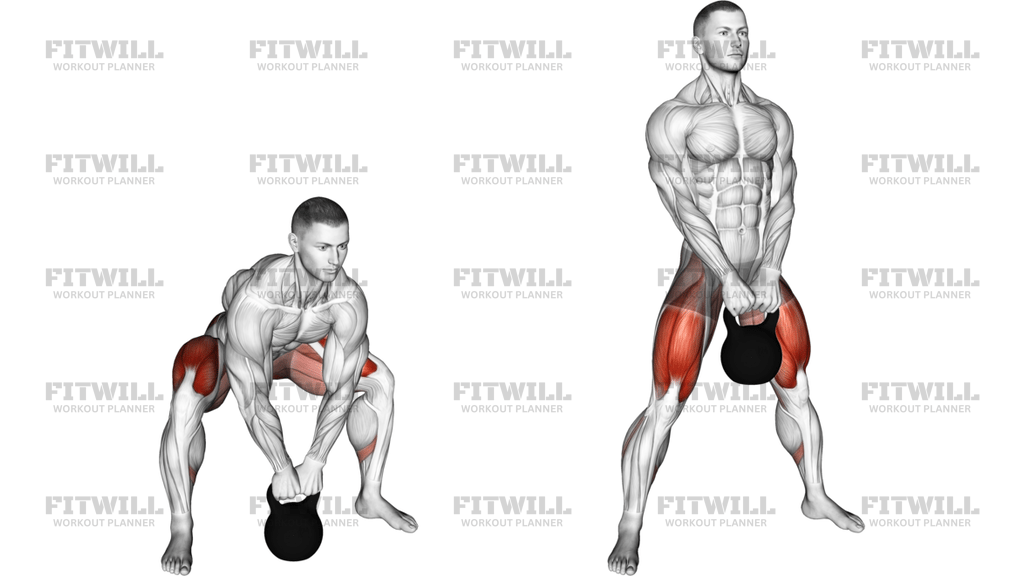
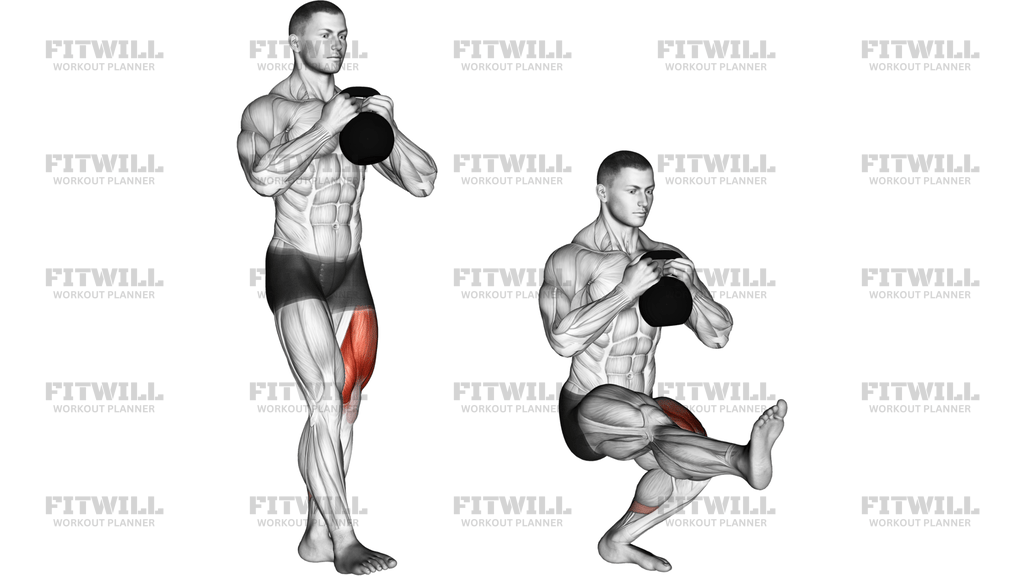
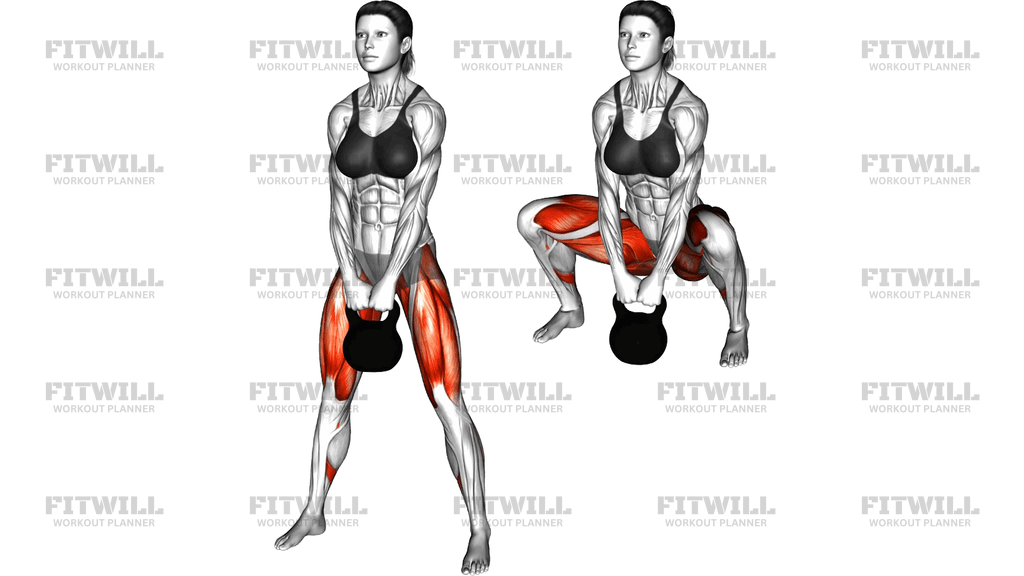
Kettlebell Goblet Forward Backward Lunge
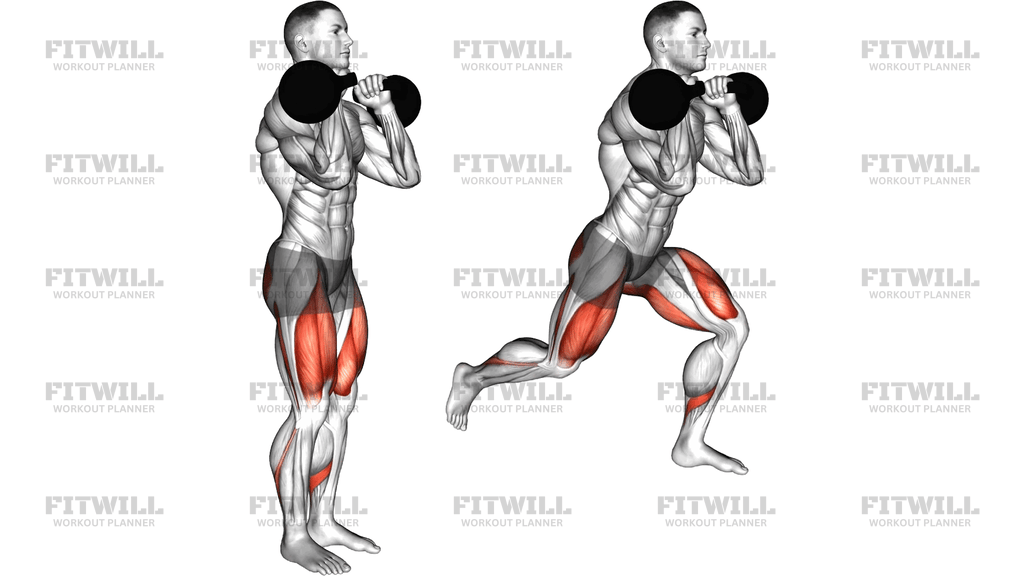
The Kettlebell Goblet Forward Backward Lunge takes one leg through both directions of the lunge pattern: you step forward into a front lunge, drive back to standing, then step the same leg backward into a reverse lunge before returning to the start. Holding a kettlebell in the goblet position at your chest keeps the load close to your center and forces your torso to stay tall, which makes this as much a trunk and balance challenge as a leg builder.
This movement works the quads hard on the forward step, where the front knee absorbs and drives your body weight, and hits the glutes and hamstrings on the reverse step, where the front hip has to extend against a stretched position. The constant goblet hold loads the upper back, shoulders, and forearms isometrically, while the single-leg stance each rep trains ankle and hip stability that bilateral squats simply cannot.
It suits lifters who already feel comfortable with basic split-stance work and want more volume on one leg without heavy barbells. Because the kettlebell sits at the chest rather than on the back, the spine sees far less compression, making this a practical choice for home training or for anyone managing fatigue around heavier squat days.
Setup matters here because the goblet position is your anchor for the whole set. Grip the kettlebell by the horns with both hands, pull it in against your sternum, and keep your elbows tucked down rather than flared wide. If the bell drifts away from your body mid-rep, your balance and rib position go with it, and the lunge quality drops immediately.
To execute well, step forward with one leg, lower until both knees reach roughly ninety degrees, then push through the front foot to stand. Without pausing, step the same leg straight back into a reverse lunge, again lowering until the back knee approaches the floor, and return to standing. That completes one rep. Complete all reps on one side before switching legs.
A practical coaching point: control the tempo rather than rushing between the two lunge directions. The transition from forward step to backward step is where most people lose their footing or let their torso fall forward. Move deliberately, keep your weight over the midfoot of the working leg, and treat each return to standing as a chance to reset your brace before the next step.
[ Workout Log & Planner ]
Put your next workout in Fitwill
Keep your plan and training log ready when you are.


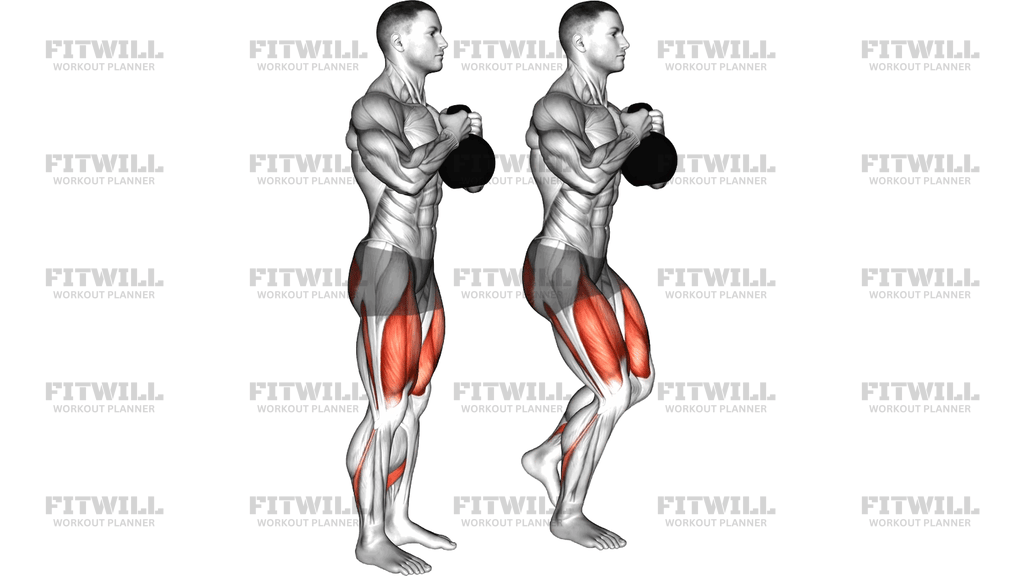
Instructions
- Stand tall with your feet hip-width apart and hold a kettlebell by the horns at chest height, bell hanging below your hands.
- Tuck your elbows down toward your ribs and pull the kettlebell in so it rests firmly against your sternum.
- Set your gaze on a fixed point ahead, brace your abs as if bracing for a light punch, and lift your chest.
- Step one leg forward about two feet and lower your hips until both knees bend to roughly ninety degrees, keeping the front shin close to vertical.
- Press through the whole front foot and drive back up to a full stand without leaning the kettlebell away from your chest.
- Immediately step the same leg backward, dropping the back knee toward the floor while the front knee stays stacked over the ankle.
- Push through the front foot again to return to the standing position, completing one forward-and-backward cycle.
- Exhale as you lower into each lunge and inhale as you drive back to standing, keeping the breath steady throughout.
- Finish all repetitions on one leg, then set the kettlebell down, reset your grip and brace, and complete the set on the other side.
Tips & Tricks
- If you wobble when switching from the forward step to the backward step, pause for a full second at standing with both feet planted before the reverse step until your balance improves.
- A short forward step that drives the front knee well past the toes usually means the stride is too small; lengthen the step so the front shin stays near vertical at the bottom.
- When the kettlebell pulls your shoulders forward, squeeze your lats and pull the bell harder into your chest rather than letting your arms carry it.
- Keep the back knee tracking in line with the back hip on both lunges; letting it cave inward is one of the most common faults in this combined pattern.
- Choose a kettlebell weight you could goblet squat for ten clean reps; going heavier tends to break your posture before your legs are actually challenged.
- Drive through the heel and midfoot on the reverse lunge and through the whole foot on the forward lunge to feel the difference in glute and quad emphasis.
- Look at a spot at eye level ten feet ahead; dropping your gaze to your feet shifts your weight forward and rounds your upper back.
- If knee discomfort shows up on the forward step, reduce depth to a comfortable range first and prioritize the reverse lunge portion while your legs adapt.
Frequently Asked Questions
What muscles does the Kettlebell Goblet Forward Backward Lunge work?
The quads do most of the work on the forward lunge, while the glutes and hamstrings take over on the reverse lunge. The core, upper back, and forearms work isometrically to hold the kettlebell at your chest the whole time.
Why lunge forward and backward with the same leg instead of alternating?
Doing both directions on one leg doubles the time under tension for that side and exposes left-right strength differences. It also demands more balance control than a standard alternating lunge because you stay on a single leg through two distinct movement patterns.
Is the Kettlebell Goblet Forward Backward Lunge suitable for beginners?
It can be, as long as you start with a light kettlebell or even body weight and master the forward and reverse lunge separately first. Once both patterns feel stable, combining them into one rep is a natural progression.
How should I hold the kettlebell during this exercise?
Grip the horns with both hands, keep the bell pressed against your sternum, and point your elbows down toward your ribs. If the bell drifts forward, your lower back tends to arch and your balance suffers.
How heavy should the kettlebell be?
Pick a weight that lets you complete all reps with an upright torso and controlled knee tracking. Because you perform two lunges per rep on one leg, the same bell will feel significantly harder than in a regular goblet squat.
Should I do all reps on one leg before switching?
Yes, completing the set on one side before switching keeps the loading consistent and makes it easier to compare strength between legs. Alternating legs mid-set turns this into more of a conditioning movement and blunts the single-leg strength focus.
What is the most common mistake in the Kettlebell Goblet Forward Backward Lunge?
Rushing the transition between the forward and backward step, which causes stumbling and a collapsed torso. Slowing down and standing fully tall between the two lunges fixes most balance and posture issues.
What can I substitute if I do not have a kettlebell?
A single dumbbell held vertically at your chest replicates the goblet position well, or you can hold a dumbbell in each hand at your sides. Body weight alone also works while you learn the forward-backward pattern.
Is it safe for my knees if the front knee travels forward?
Some forward knee travel is normal, but a controlled lunge with the shin close to vertical is generally more comfortable for most people. Lengthen your stride, lower with control, and stay within a depth that does not cause pain.
How does this exercise compare to a regular goblet squat?
The goblet squat trains both legs together with a purely vertical path, while this version splits the work leg by leg and adds a horizontal stepping element. That makes it better for addressing side-to-side imbalances and building single-leg stability.