Seated Squeezing Toes
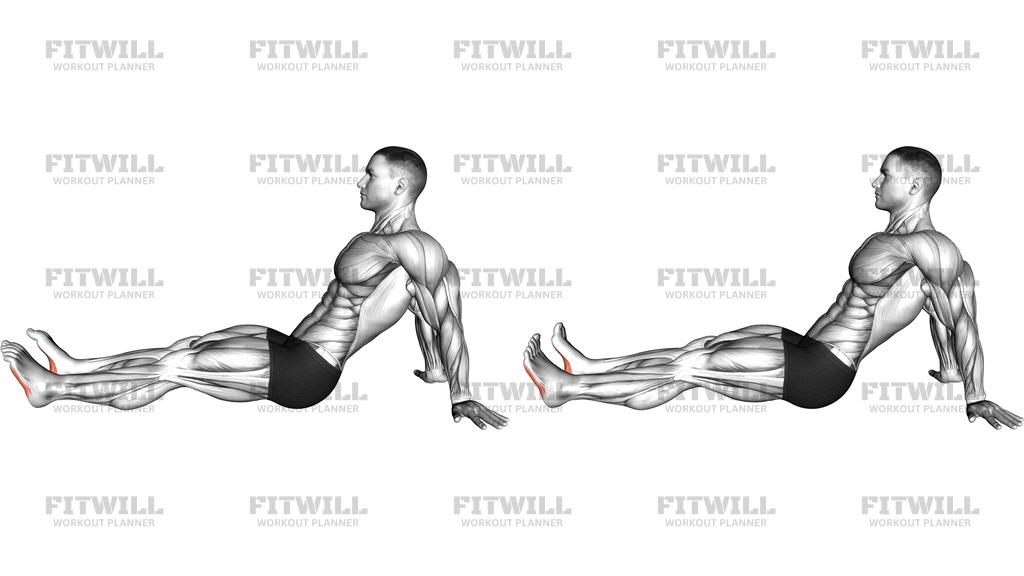
Seated Squeezing Toes is a small, focused foot exercise performed from a seated position on the floor with the legs extended straight ahead and the hands resting on the ground behind the hips for support. From this position, you repeatedly press the toes down and draw the sole of the foot together in a deliberate squeezing action, then release. The illustration marks the underside of the foot as the working area, which is exactly where the effort should be felt: the small intrinsic muscles of the foot along with the toe flexors running along the bottom of the lower leg.
This movement exists because most people's feet are locked in shoes all day and rarely work through their full range. The muscles that control toe flexion and arch support get weak and underused, which shows up as less stable footing during squats, lunges, running, and everyday standing. Seated Squeezing Toes gives those muscles direct, low-load work without any equipment, making it one of the easiest ways to start rebuilding foot strength.
The seated setup matters more than it looks. Sitting tall with the legs straight and hands planted behind you keeps the ankles relaxed and the lower leg out of the movement, so the effort stays in the toes and sole rather than being taken over by the calf. If you lean back too heavily or let the hips slump, the foot drifts out of position and the squeeze becomes sloppy. A firm seat on the floor, heels resting lightly on the ground, and a tall spine give you a stable base.
Execution is simple but demands attention. With the feet relaxed and the heels down, curl the toes downward and inward as if trying to grip the floor or scrunch the sole of the foot toward the heel. Hold the squeeze for a moment so you can actually feel the underside of the foot working, then release slowly and let the toes spread and lengthen before the next rep. The tempo should be unhurried; this is a control exercise, not a speed exercise.
It fits well into warm-ups before lower-body training, cool-downs after running or jumping, and dedicated foot-care routines for people who stand or walk for long hours. Because the load is tiny and the position is supported, it is appropriate for nearly anyone, including beginners returning from long layoffs or people easing into barefoot-style training.
Keep expectations realistic: this will not build visible muscle or dramatic strength, but it improves awareness, endurance, and control in a body part that is almost always neglected. Stop if you feel cramping in the arch, which is common at first, and work up gradually to longer holds.
[ Workout Log & Planner ]
Put your next workout in Fitwill
Keep your plan and training log ready when you are.


Instructions
- Sit on the floor with both legs extended straight in front of you and the heels resting lightly on the ground.
- Place your palms flat on the floor beside or slightly behind your hips, arms straight, and sit tall so your weight is supported through the hands and seat.
- Relax both feet and let the toes hang naturally; keep the knees soft but the legs essentially still for the whole set.
- Take a steady breath in, then curl the toes of both feet down and under as if trying to grip the floor beneath you.
- Squeeze the toes and the sole of each foot firmly toward the heel, and hold the contracted position for one to two seconds.
- Exhale as you slowly release the squeeze, letting the toes lengthen and spread back to a relaxed, neutral position.
- Pause briefly at the relaxed position so each rep starts from the same place rather than from leftover tension.
- Repeat for the desired number of repetitions, keeping the heels, ankles, and legs completely quiet throughout.
- When finished, gently flex and point the ankles a few times to reset the feet before standing up.
Tips & Tricks
- The most common mistake is letting the calf take over and turning this into a full ankle point; watch that your heel stays planted and only the toes curl.
- If your arch cramps on the first attempts, reduce the squeeze to about half effort for the first set; the cramping fades as the foot muscles adapt.
- Keep the toes squeezing straight down rather than scrunching sideways, which loads the foot evenly instead of pulling the small toes inward.
- Do not rush the release. Dropping the toes back instantly throws away the controlled portion of the rep, which is where much of the benefit lives.
- Sitting tall on the hands matters: if you slump backward, the foot angle changes and the squeeze becomes harder to isolate.
- Try one foot at a time if you cannot feel the work clearly with both feet moving together; single-foot reps make the sensation obvious.
- Aim for a firm but comfortable squeeze. White-knuckling the toes leads to cramping without improving the training effect.
- Bare feet or thin socks work better than cushioned shoes; you want to feel the floor through the toes to time the squeeze properly.
- If the backs of your legs feel tight in the seated position, bend the knees slightly rather than rounding your lower back to reach forward.
Frequently Asked Questions
What muscles does Seated Squeezing Toes work?
It primarily targets the small intrinsic muscles on the sole of the foot and the toe flexors, with supporting input from the deeper lower-leg muscles that assist in pointing the foot. The highlighted area in the movement is the underside of the foot, which is where you should feel it.
Why is the exercise done seated with the legs straight?
The seated position with the hands supporting you behind the hips relaxes the ankle and removes the calf from the movement, so the effort stays in the toes and the sole of the foot instead of turning into a calf exercise.
Is Seated Squeezing Toes suitable for complete beginners?
Yes. The load is your own body weight in a supported seated position, so nearly anyone can perform it. Beginners often feel arch cramping at first, which is normal and fades with lighter, shorter squeezes.
Should I feel my calves during Seated Squeezing Toes?
Not much. If the calves are doing the work, you are pointing the whole ankle instead of curling just the toes. Keep the heels planted and focus on drawing the toes and sole toward the heel.
Can I do Seated Squeezing Toes barefoot?
Barefoot or in thin socks is ideal because feeling the floor with your toes helps you time and grade the squeeze. Thick cushioned shoes blunt the feedback and make the movement harder to control.
What can I use instead if sitting on the floor is uncomfortable?
You can perform the same toe squeeze sitting on the edge of a chair or bench with the feet flat on the floor. The floor version with straight legs isolates the foot more, but the chair version trains the same action.
How long should I hold each squeeze?
One to two seconds is enough for most reps. If you want more endurance work, occasionally extend a hold to five seconds, but stop short of the point where the arch cramps.
When is the best time to include Seated Squeezing Toes in a workout?
It works well as a warm-up before squats, lunges, or running because it wakes up the feet, or as a cool-down finisher. Many people also do it as a standalone daily foot-care routine.
Is it normal for my arch to cramp during this exercise?
Yes, especially early on. The arch muscles are being asked to work in a way they usually do not. Lower the intensity, shorten the holds, and build up gradually; persistent cramping at low effort is worth mentioning to a professional.
How many repetitions of Seated Squeezing Toes should I do?
Ten to fifteen controlled repetitions per set, for one to three sets, is a sensible range. Since the resistance is minimal, quality and feel matter far more than volume.