Side Lying External Rotation
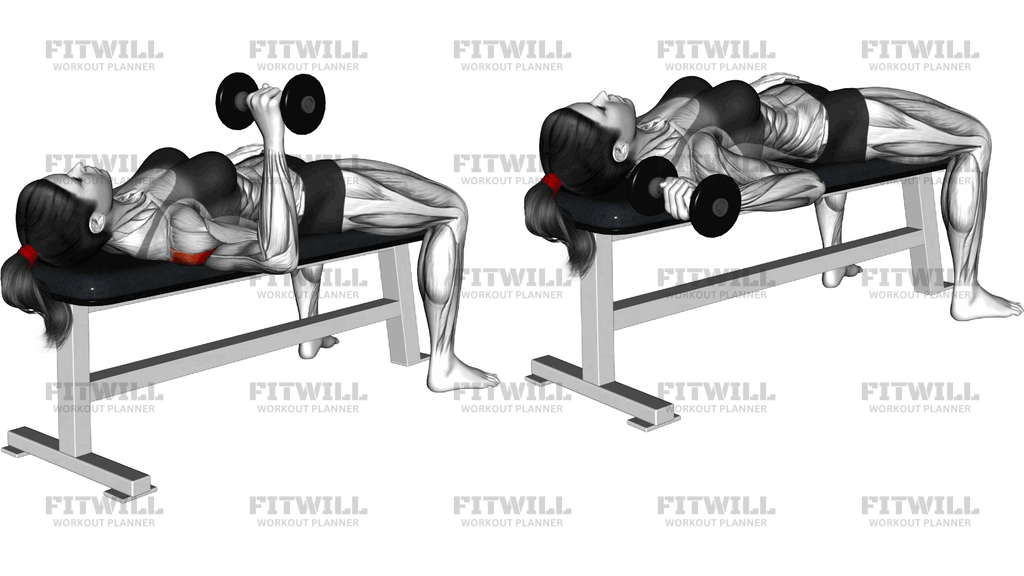
The Side Lying External Rotation is a small, focused isolation exercise for the rotator cuff, specifically the infraspinatus and teres minor on the back of the shoulder. You lie on your side with the working arm on top, elbow pinned against your ribs and bent to roughly 90 degrees, then rotate the forearm up and away from your torso against light resistance before lowering it back down under control. The side-lying position is what makes this drill so effective: gravity pulls straight down on the weight, so the resistance targets exactly the rotation you want to train, without the shoulder having to fight against body weight or awkward angles.
This is a classic prehab and rehabilitation movement, and it deserves a place in most lifters' routines even when nothing hurts. The rotator cuff muscles are small and easily outworked by the bigger pressing muscles, which is why many people develop an imbalance between strong internal rotation (from benching, pressing, and throwing) and weak external rotation. Strengthening the external rotators helps the shoulder joint stay centered and stable under load, which supports pressing strength and comfortable overhead movement. It is widely used by overhead athletes, swimmers, and anyone returning from shoulder discomfort, always with a coach or physical therapist guiding rehab cases.
The setup matters more here than in almost any other shoulder exercise. Your body position determines whether the resistance actually challenges the rotator cuff or simply gets absorbed by the torso. Lie on a mat with your legs stacked and your head supported, keep the working elbow glued to the top of your waist, and hold a very light dumbbell in the top hand. The elbow stays bent at a fixed 90 degrees throughout; the only joint that moves is the shoulder rotating the forearm up from your stomach toward the ceiling.
Execution should feel almost slow-motion. Rotate the forearm up until your hand points toward the ceiling or slightly past, pause briefly, then take two to three seconds to lower the weight back to the start in front of your waist. Because the range of motion is short and the muscles involved are small, the temptation is to add load or swing the forearm with momentum. Resist that temptation. A clean set of ten to fifteen reps with two to five pounds will do far more for shoulder health than a sloppy set with twenty.
You will usually see this exercise placed at the end of an upper body session as targeted rotator cuff work, in a warm-up before pressing days, or as a standalone shoulder care block two or three times per week. Keep reps in the twelve to twenty range, rest briefly between sides, and treat it as a precision drill rather than a strength test. If your shoulder complains during the movement rather than after, reduce the weight or the range and rebuild gradually.
[ Workout Log & Planner ]
Put your next workout in Fitwill
Keep your plan and training log ready when you are.


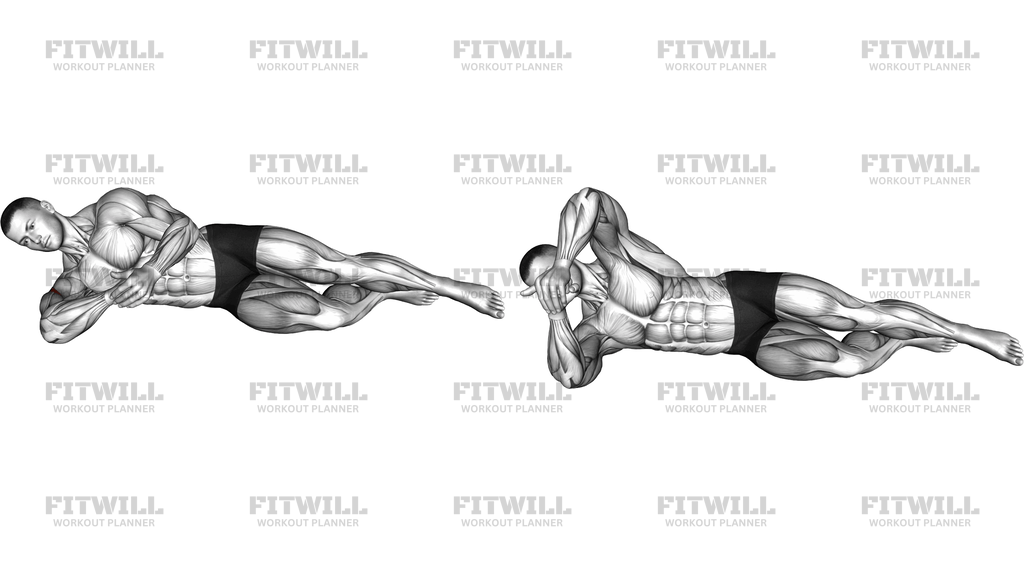
Instructions
- Lie on your side on an exercise mat with your legs stacked and your head resting on your bottom arm or a small support.
- Hold a very light dumbbell in your top hand, bend that elbow to 90 degrees, and rest your forearm across your stomach so the weight hangs in front of your waist.
- Place your bottom hand over the top arm or flat on the floor in front of you to keep your torso from rolling backward during the set.
- Brace your core lightly and lock the working elbow against the top of your hip so it cannot drift away from your ribs.
- Exhale and rotate your forearm up from your stomach, pivoting only at the shoulder, until your hand points toward the ceiling.
- Keep the 90-degree elbow bend fixed and the dumbbell level in your hand; do not let the wrist flop back or the forearm swing with momentum.
- Pause for a beat at the top with the rotation coming from the shoulder, not from lifting the elbow or twisting the torso.
- Inhale and lower the forearm back down over two to three seconds until the weight returns to the start in front of your waist.
- Complete all reps on one side, then roll over and repeat on the other arm, matching the rep count exactly.
Tips & Tricks
- If you feel this anywhere except the back of the shoulder, the weight is almost certainly too heavy; drop to one or two pounds and slow the tempo down.
- The most common cheat is the elbow peeling away from the ribs, which turns the movement into a partial rear-delt lift; wedge the elbow against your hip and check it stays there on every rep.
- Do not rotate past the point where your torso starts rolling backward; the range ends when your shoulder stops, not when your chest faces the ceiling.
- Keep the dumbbell resting lightly in a neutral grip with the wrist straight; a bent-back wrist shifts tension away from the shoulder and can aggravate the forearm.
- Rest your forehead or cheek on your bottom arm so your neck stays long; craning the head up to watch the movement tightens the neck and distracts from the shoulder.
- A towel rolled under the working armpit can help some lifters keep a small gap between the upper arm and ribs, which keeps the shoulder tracking comfortably.
- Because gravity loads the lowering phase differently at each angle, control the negative for a full two to three seconds instead of letting the forearm drop.
- Program this after your main lifts, not before heavy pressing, so fatigue in the external rotators does not compromise your heavier work.
- Expect very light loads to feel challenging by rep fifteen; progress by adding one or two reps at a time before adding any weight.
Frequently Asked Questions
Which muscles does the Side Lying External Rotation work?
It primarily targets the infraspinatus and teres minor, the two external rotators of the rotator cuff, with some support from the rear deltoid. The effect is highly localized to the back of the shoulder rather than the whole arm.
How heavy should the dumbbell be for Side Lying External Rotation?
Start with one to five pounds, even if you are otherwise strong. The rotator cuff muscles are small, and most people lose elbow position and form long before the muscle is challenged if they go heavier.
Why should my elbow stay touching my ribs during the Side Lying External Rotation?
Pinning the elbow to your side keeps the rotation happening at the shoulder joint, which is what loads the rotator cuff. If the elbow drifts up or back, the movement turns into a rear-delt raise and loses its purpose.
Is the Side Lying External Rotation good for beginners?
Yes, it is one of the safest ways to train the shoulder's external rotators because the side-lying position limits the range and the load is self-limiting. Beginners should focus on slow, smooth reps with the lightest available dumbbell.
Can I do the Side Lying External Rotation without a dumbbell?
Yes, you can perform the same rotation with no weight as an activation drill, or loop a light resistance band around your wrist for a similar effect. A dumbbell simply makes the resistance consistent through the full arc.
How many reps and sets of Side Lying External Rotation should I do?
Two to three sets of twelve to twenty controlled reps per side works well for most people. Because the range is short and the muscle is small, higher reps with light load beat low reps with heavy load here.
My shoulder pinches when I rotate up in the Side Lying External Rotation. What should I change?
Reduce the weight, shorten the range so you stop before the pinch, and make sure the elbow is staying against your ribs rather than lifting. If the discomfort persists, stop and get it assessed before continuing.
Should I do the Side Lying External Rotation before or after pressing?
Do it after your main pressing work, or on a separate shoulder care day. Fatiguing the external rotators immediately before heavy pressing can reduce shoulder stability when you need it most.
How is the Side Lying External Rotation different from standing cable external rotations?
The side-lying version uses a dumbbell with gravity pulling straight down, so resistance peaks as the forearm nears the ceiling and is easier on the joint at the bottom. Cable versions keep tension through the whole arc but require more setup and stability to keep the torso square.