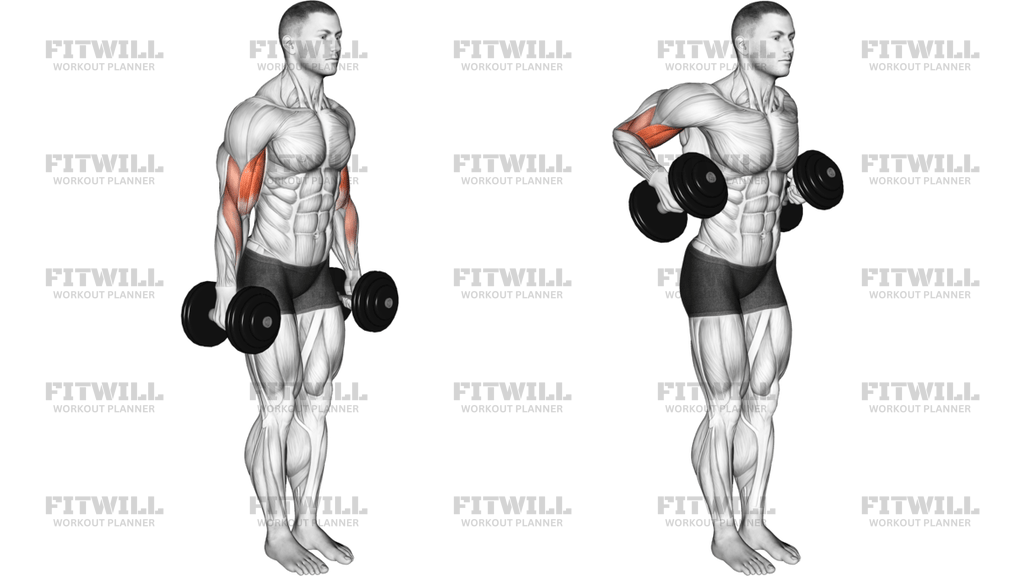
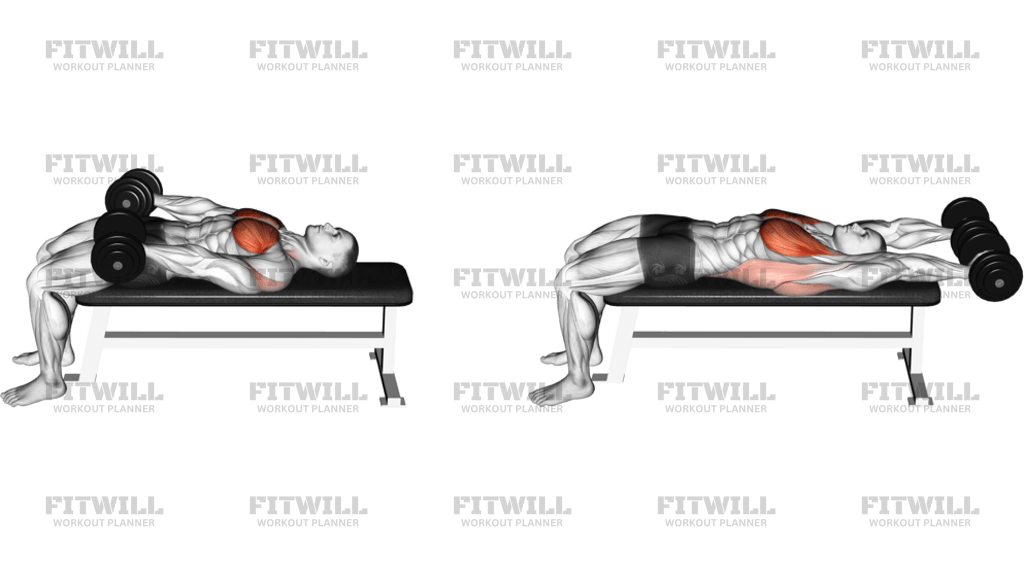
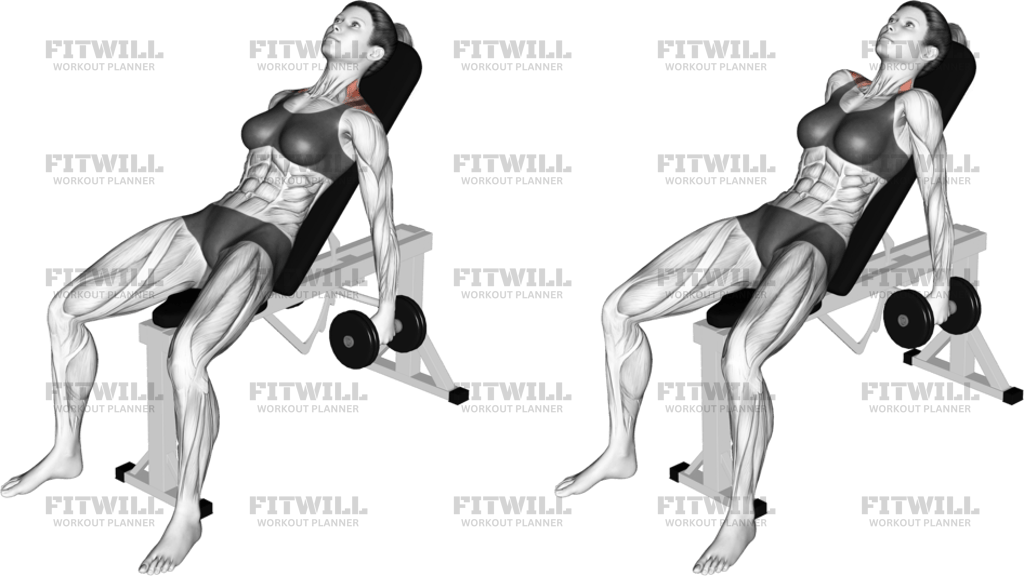
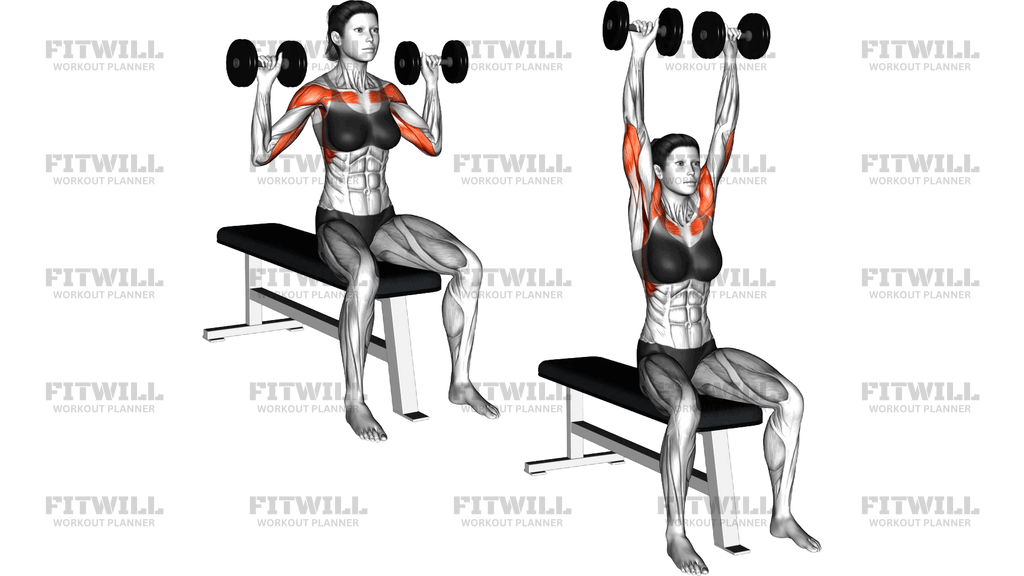
Dumbbell Straight Arm Bicep Swing
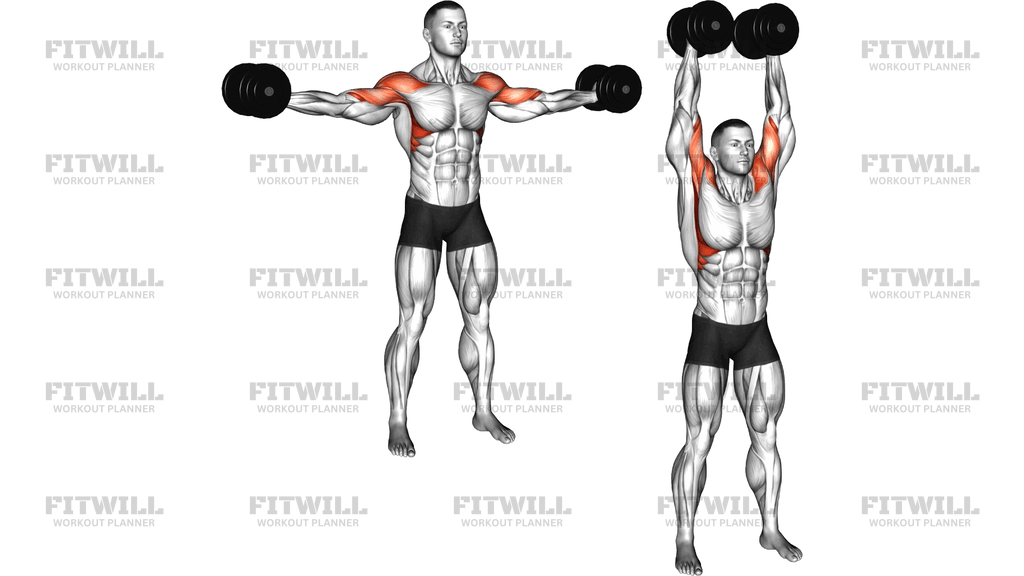
The Dumbbell Straight Arm Bicep Swing is a standing overhead movement where you hold a dumbbell in each hand and swing both arms from a wide T-position at shoulder height up to full extension overhead, all with the elbows locked straight. Because the arms never bend, the load travels a long arc driven mostly by the shoulders, upper chest, and trunk rather than by elbow flexion. The result is a hybrid exercise that blends elements of a lateral raise, front raise, and overhead press into one continuous swing.
This movement suits lifters who want to build shoulder endurance and overhead control without heavy pressing. It is also popular in warm-up routines, circuit training, and conditioning work, where lighter dumbbells and higher repetitions keep the shoulders and core working continuously. Because the trunk has to brace against a moving load at arm's length, the abs and obliques get meaningful stabilizing work even though they are not moving the weight directly.
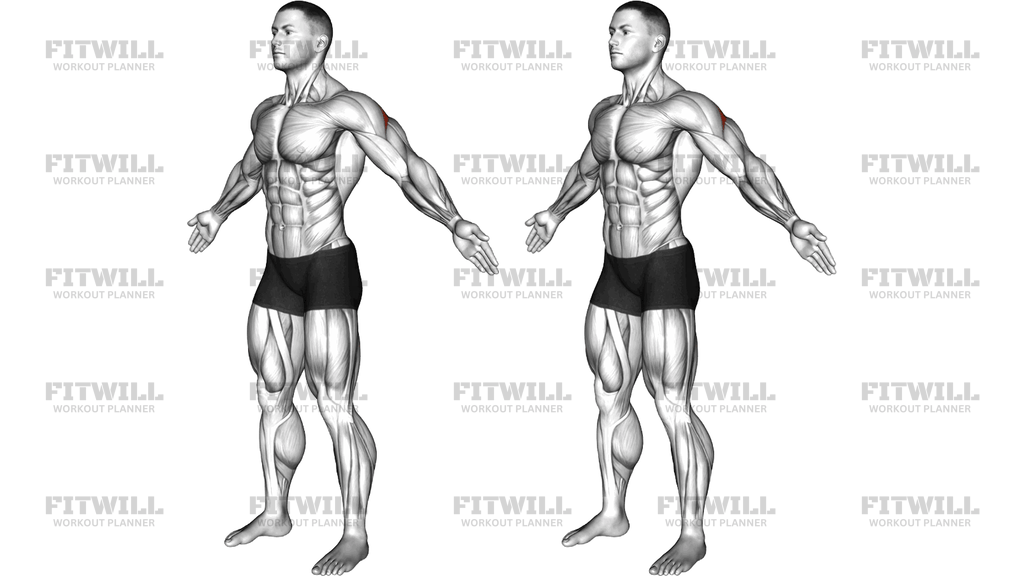
Setup matters more here than in most raises. Stand tall with feet about hip-width apart, a dumbbell in each hand, and raise the arms straight out to the sides until they are level with your shoulders. That T-position is your starting point. Your grip should be firm but not crushing, and your palms can face forward or down depending on what feels easiest on the shoulders. A rounded or leaning torso at this point will turn the swing into a momentum-driven heave, so take a moment to set your posture before the first rep.
Execution is a controlled arc, not a fling. From the T-position, sweep both straight arms up and slightly inward until the dumbbells meet or nearly meet above your head, then reverse the same path back down to shoulder height. The elbows stay extended the entire time, and the tempo should stay smooth enough that you could pause at the top or bottom. Breathe out as the arms travel up, inhale as they come down, and reset your stance and brace between reps if you feel your posture drifting.
The most common issue with this exercise is turning it into a swing in the bad sense: leaning back, shrugging, and using hip drive to throw the weights overhead. That shifts work away from the shoulders and strains the lower back. Choose a weight you could hold at shoulder height for a full ten seconds, keep your ribs stacked over your pelvis, and accept that light dumbbells are usually the right call here.
[ Workout Log & Planner ]
Put your next workout in Fitwill
Keep your plan and training log ready when you are.


Instructions
- Stand with your feet hip-width apart, holding a dumbbell in each hand at your sides with a firm, neutral grip.
- Raise both straight arms out to the sides until they are level with your shoulders, forming a wide T-position with palms facing forward or down.
- Roll your shoulders back and down, brace your abs, and keep your ribs stacked over your pelvis with a soft bend in the knees.
- Keeping both elbows fully locked straight, sweep your arms up and slightly inward in a smooth arc toward the ceiling.
- Continue the arc until the dumbbells are directly overhead, arms extended alongside your ears.
- Pause briefly at the top without shrugging the weights toward your neck.
- Lower along the same arcing path with control until your arms are back at shoulder height in the T-position.
- Exhale as the arms swing up, inhale as they lower back down.
- Complete the rep or reset your stance and brace before the next repetition if your posture has shifted.
Tips & Tricks
- Pick lighter dumbbells than you would use for a press. The long lever of a straight arm multiplies the load on the shoulder, so what feels easy bent-elbow often stalls halfway up here.
- If you catch yourself leaning back as the weights go overhead, squeeze your glutes and abs before the rep. The lean is usually a balance problem, not a strength problem.
- Watch for the elbows creeping into a slight bend during the hardest part of the arc. That turns the movement into a partial press; if it keeps happening, drop the weight instead of forcing the lockout.
- Keep the arc narrow at the top. Letting the dumbbells drift out over your head instead of finishing above it stresses the shoulder joint and makes the top position unstable.
- Avoid shrugging at the top of the swing. If your traps rise toward your ears, think about pushing the dumbbells away from your body rather than lifting them.
- Control the descent as much as the lift. Dropping the arms back to the T-position under gravity robs you of half the training effect and encourages the momentum-swing habit.
- Your wrists should stay neutral and in line with your forearm. Cocked or bent-back wrists under a straight-arm load are a common source of forearm and shoulder discomfort.
- If one arm starts finishing before the other, slow the tempo down and watch yourself in a mirror; uneven arcs usually show up before uneven strength does.
Frequently Asked Questions
Which muscles does the Dumbbell Straight Arm Bicep Swing work?
The front and side shoulders do most of the work to swing the straight arms overhead, with the upper chest assisting in the arc. Your core and obliques work hard to keep the torso upright while a load moves at arm's length.
Why do my elbows want to bend during the Dumbbell Straight Arm Bicep Swing?
Straight-arm swings place a long lever on the shoulder, so bending the elbow shortens that lever and makes the rep easier. If your elbows keep bending, the dumbbells are too heavy; switch to a lighter pair and relearn the locked-arm path.
Is the Dumbbell Straight Arm Bicep Swing good for beginners?
Yes, as long as the weight is light and the focus stays on control. Beginners often benefit from practicing the arc with no weight or very light dumbbells first to groove the shoulder-height to overhead path.
How heavy should the dumbbells be for this exercise?
Use a weight you can hold with straight arms at shoulder height for at least ten seconds before starting. Because the arms stay extended and the arc is long, most people need noticeably lighter dumbbells than for presses or curls.
Why does my lower back feel involved during the Dumbbell Straight Arm Bicep Swing?
Leaning back is a common compensation that lets momentum carry the weights overhead and shifts strain to the lumbar spine. Brace your abs, squeeze your glutes, and slow the tempo; if the lean persists, reduce the load.
Should my palms face forward or down in the T-position?
Either grip can work, but forward-facing palms tend to feel more comfortable for most shoulders on the way overhead. Try both with a light weight and use whichever keeps your wrists neutral and pain-free.
Can I substitute the Dumbbell Straight Arm Bicep Swing with raises or presses?
Lateral raises and front raises cover similar ground for the shoulders, and an overhead press builds pressing strength, but neither matches the continuous straight-arm arc of this movement. Use the swing when you want the long-lever, sustained-tension version; use raises and presses when you want to load heavier.
How many reps should I do for this exercise?
Because it is typically performed with light dumbbells, sets of 10 to 15 controlled reps work well for strength-endurance. For warm-ups or circuits, higher rep sets at a very light load are also common.
Is it safe to swing the dumbbells quickly overhead?
Fast, momentum-driven reps shift load onto the lower back and shoulder joint at the most vulnerable points of the arc. Keep the swing smooth and controlled; the name describes the path, not how hard you should throw the weight.