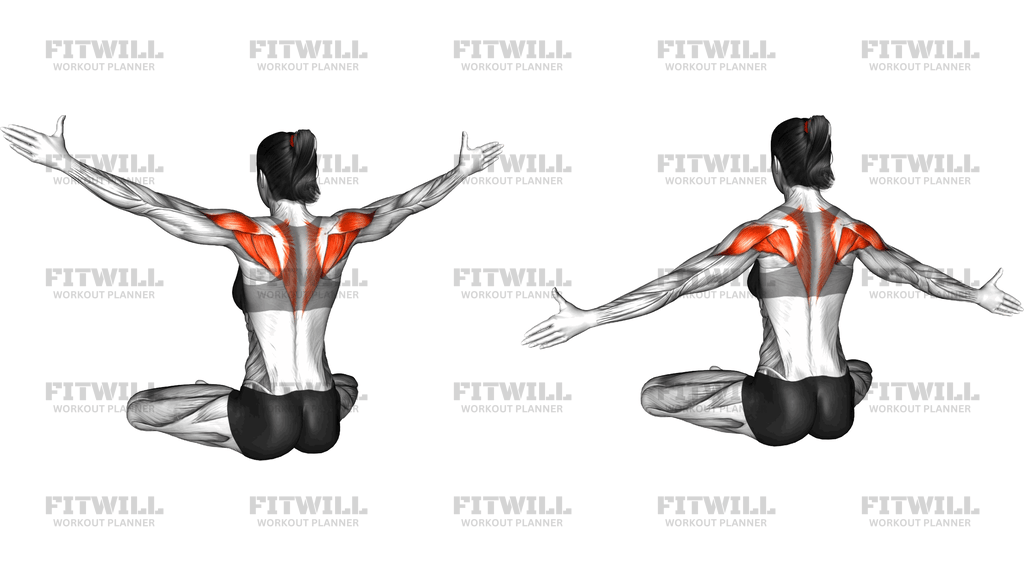
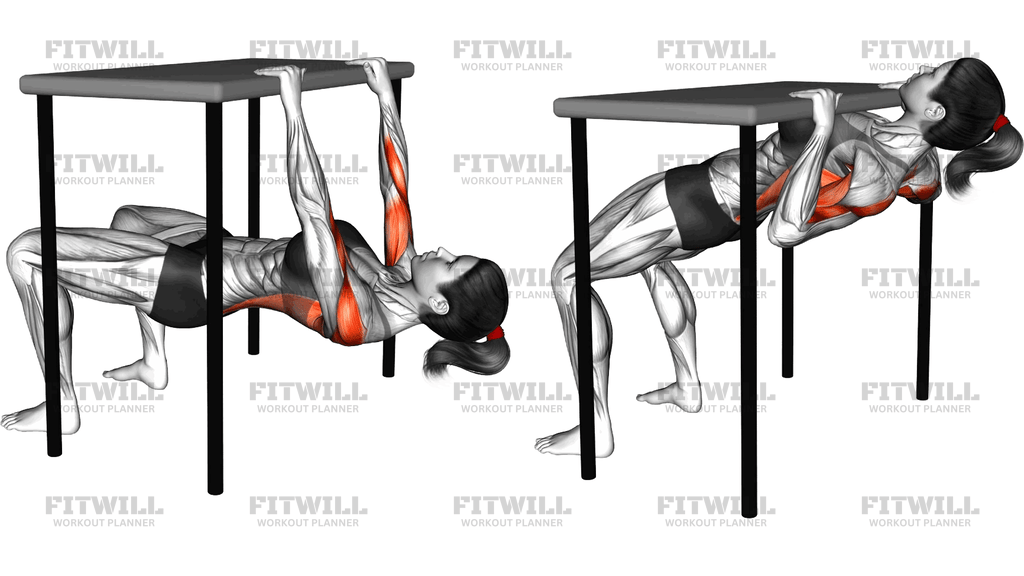
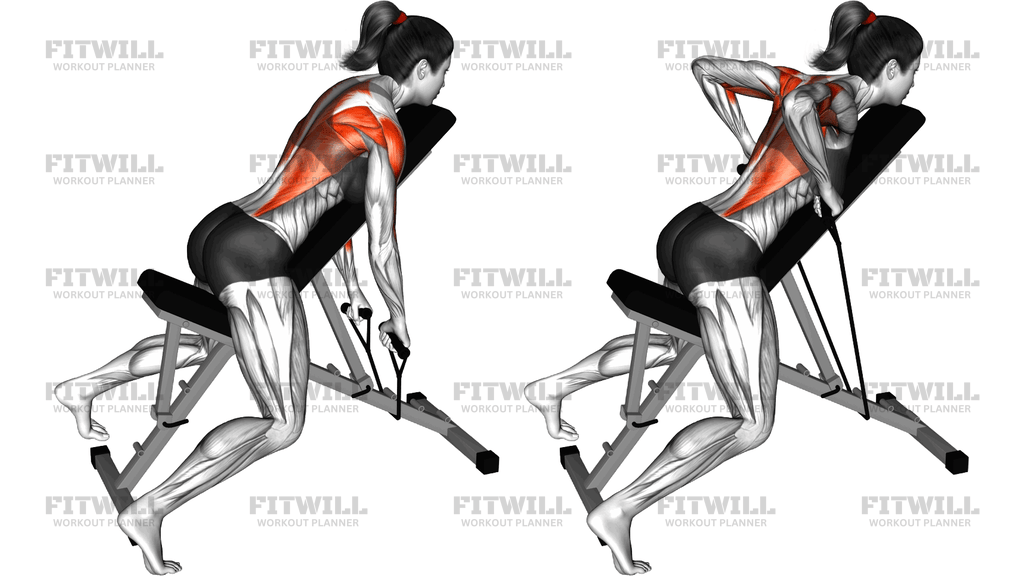
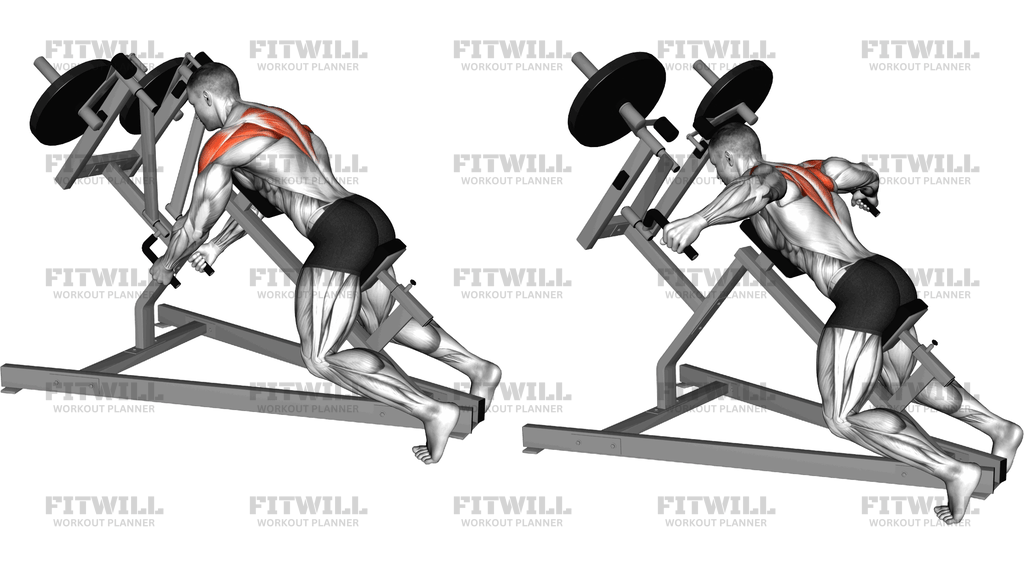
Bodyweight Standing Rear Delt Fly Pulse
The Bodyweight Standing Rear Delt Fly Pulse is a shoulder isolation exercise performed entirely without equipment. You stand upright, raise both arms out to your sides to about shoulder height, and then perform small, repeated pulsing movements in the final portion of the range. Because there is no external load, the resistance comes from holding your arms against gravity, which makes the rear shoulders work isometrically and through short, controlled contractions. The highlighted area of the movement is the rear deltoid at the back of the shoulder, with the middle traps and upper back assisting to keep the arms elevated.
This exercise suits anyone who wants to target the rear shoulders without dumbbells, cables, or bands. It is especially useful as a warm-up before pressing or pulling sessions, as a burnout finisher after heavier rear delt work, or as a low-friction option for home training and travel. People who spend long hours sitting often benefit from movements like this because the rear shoulders and upper back tend to be undertrained compared to the front of the shoulder.
Setup matters more than it might seem. Stand tall with feet about hip-width apart, arms raised straight out to the sides at shoulder height, and elbows soft rather than locked. Your torso should stay upright with no leaning back, and your shoulder blades should feel engaged rather than shrugged toward your ears. Since the pulse only travels a few inches, any sway or hunching in the torso will quietly steal work from the rear delts, so a stable base is what makes the short range effective.
To execute the movement, hold the arms-out position and pulse your hands upward and slightly backward in a small, controlled arc, then lower them a few inches and pulse again. Keep the motion smooth and continuous rather than bouncing, and breathe steadily throughout the set. The temptation is to swing the arms or drop the hands to buy momentum, but the value of this exercise lives in the fight against gravity during those small ranges.
In practice, this is a high-rep, short-range movement. Because the resistance is limited to the weight of your arms, sets tend to run longer, often in the 15 to 30 pulse range or time-based blocks of 20 to 40 seconds. It pairs well with face pulls, band pull-aparts, or bent-over rear delt raises in a broader shoulder or upper back session.
From a safety standpoint, the main risks are shoulder impingement-style irritation from shrugging or overextending the pulse, and neck tension from jutting the chin forward. Stay within a comfortable height, keep the elbows slightly bent, and stop the set when form starts to break down rather than pushing through burning shoulders with sloppy reps.
[ Workout Log & Planner ]
Put your next workout in Fitwill
Keep your plan and training log ready when you are.


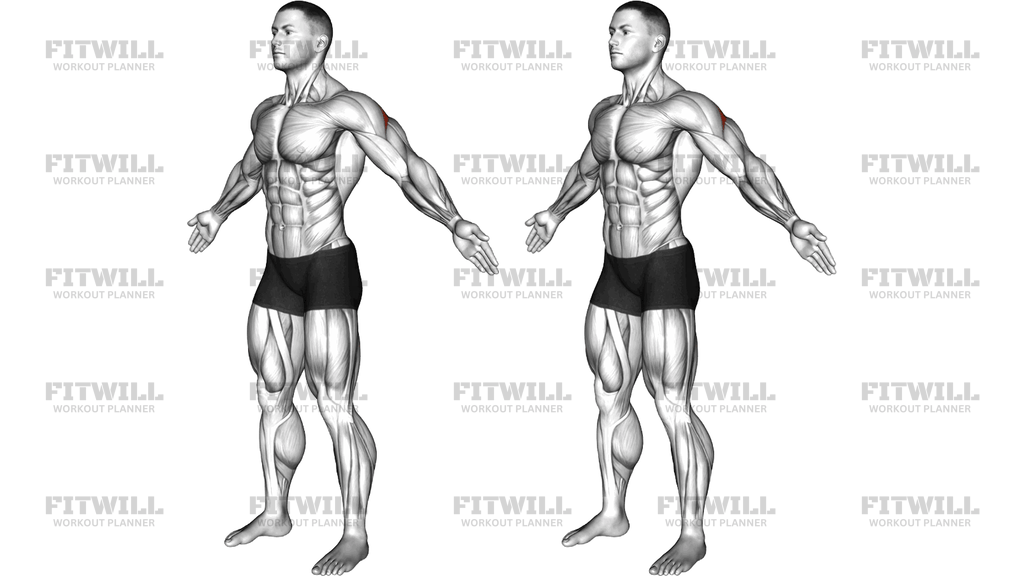
Instructions
- Stand upright with your feet hip-width apart and your weight evenly distributed across both feet.
- Raise both arms straight out to your sides until they reach roughly shoulder height, palms facing down or slightly forward.
- Bend your elbows just slightly, pull your shoulder blades gently back and down, and brace your core to keep your torso still.
- From the arms-out position, pulse your hands upward and slightly backward by a few inches, leading with the elbows rather than the wrists.
- Lower your arms a few inches below shoulder height and pulse back up, keeping the arc small and controlled.
- Keep your neck relaxed and your gaze forward; do not let your chin jut out as the shoulders fatigue.
- Exhale on each upward pulse and inhale as the arms lower, maintaining a steady breathing rhythm.
- Avoid leaning back or arching your lower back to lift the arms higher; if this happens, reduce the pulse height.
- Continue for your target reps or time, then lower your arms slowly to your sides and shake out the shoulders before the next set.
Tips & Tricks
- If you feel the burn shift to the front of your shoulders or your neck, your arms have probably drifted forward or your traps have taken over; retract the shoulder blades slightly and lower the arm height a touch.
- Think of pressing your hands out against invisible walls rather than just flapping them up and down; this keeps constant tension on the rear delts.
- A common mistake is making the pulses bigger as fatigue sets in. Shrink the range instead of letting the hands drop and swing.
- Keep a soft bend in the elbows the entire time. Locked elbows shift stress into the joint and reduce deltoid involvement.
- Slightly turning the palms down or thumbs down during the pulse biases the rear delts more than palms-forward positioning.
- Stand near a mirror sideways to check that your torso is not rocking; any lean means the legs and core should stiffen up.
- Because there is no external load, progress by adding pulses, extending time under tension, or slowing the tempo rather than chasing height.
- Use this as a warm-up activation with slow, low pulses before overhead pressing, or as a finisher with maximum-effort small pulses at the end of a shoulder day.
- If your shoulders fatigue faster than your form holds, split the set into two shorter blocks with a brief rest instead of one long grinding set.
Frequently Asked Questions
What muscles does the Bodyweight Standing Rear Delt Fly Pulse work?
The primary muscle is the rear deltoid at the back of the shoulder. The middle traps and upper back muscles assist by holding the arms elevated, and the core works lightly to keep the torso stable while standing.
Why pulse instead of doing full rear delt fly reps?
Pulsing in the top portion of the range keeps constant tension on the rear delts, which are hardest to load with bodyweight alone. The short range also lets you accumulate more time under tension without momentum.
Is the Bodyweight Standing Rear Delt Fly Pulse good for beginners?
Yes, it is a low-risk way to learn rear delt activation because there is no external load. Beginners should start with shorter sets of 10 to 15 pulses and focus on keeping the shoulder blades down and the torso still.
How high should my arms be during the pulses?
Set your arms at or just below shoulder height and pulse a few inches above and below that line. If you feel pinching at the top, lower the working height slightly rather than forcing the arms higher.
Why do my traps burn more than my rear shoulders?
This usually means you are shrugging or holding tension in the upper traps to keep the arms up. Actively press the shoulder blades down and back before starting, and check that your elbows are not drifting behind your torso.
How many reps or how long should a set last?
Since the resistance is only the weight of your arms, use higher volumes: 15 to 30 pulses or 20 to 40 second blocks work well. Stop the set when the pulses get jerky or your torso starts to sway.
Can I substitute the Bodyweight Standing Rear Delt Fly Pulse with another exercise?
Band pull-aparts, bent-over rear delt raises, or reverse cable flys all train the same area with more load. This exercise is a good substitute when no equipment is available or as a warm-up before those heavier options.
Should my palms face down or forward?
Palms facing down or slightly back tend to bias the rear delts, while palms facing forward shifts some emphasis toward the side shoulders. Start with palms down and adjust based on where you feel the work.
Is it safe to do this exercise every day?
For most people, yes, since the load is light and the range is small, but the rear delts still need recovery like any muscle. Two to four focused sessions per week is plenty, and daily use should stay at low-effort warm-up intensity.