Dumbbell Standing Drag Curl Version 2
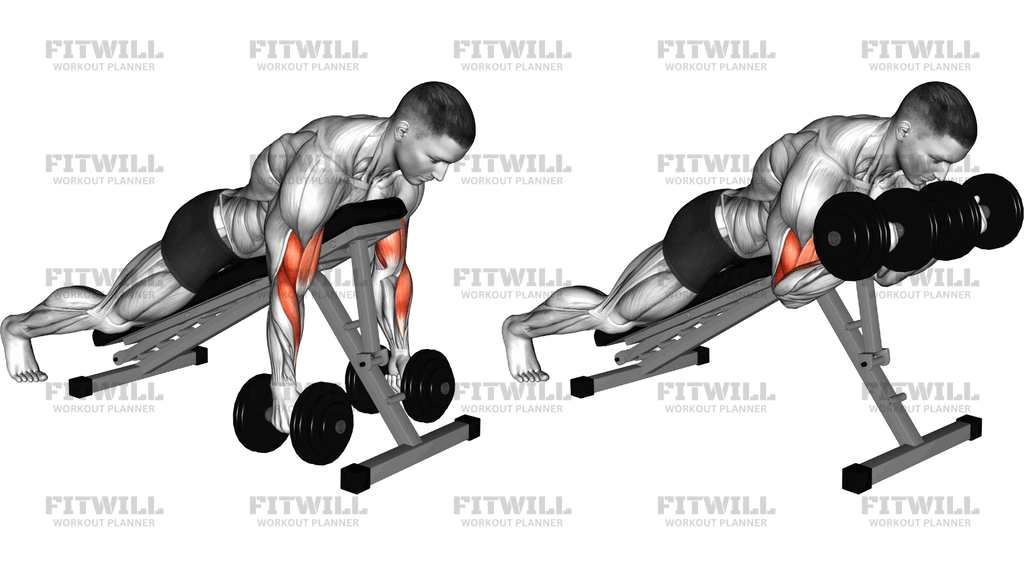
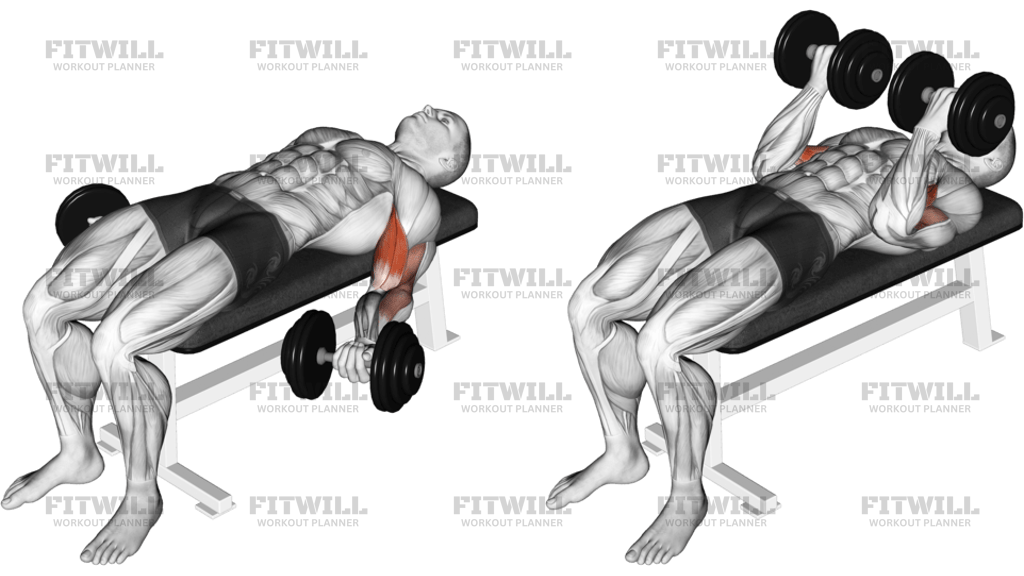
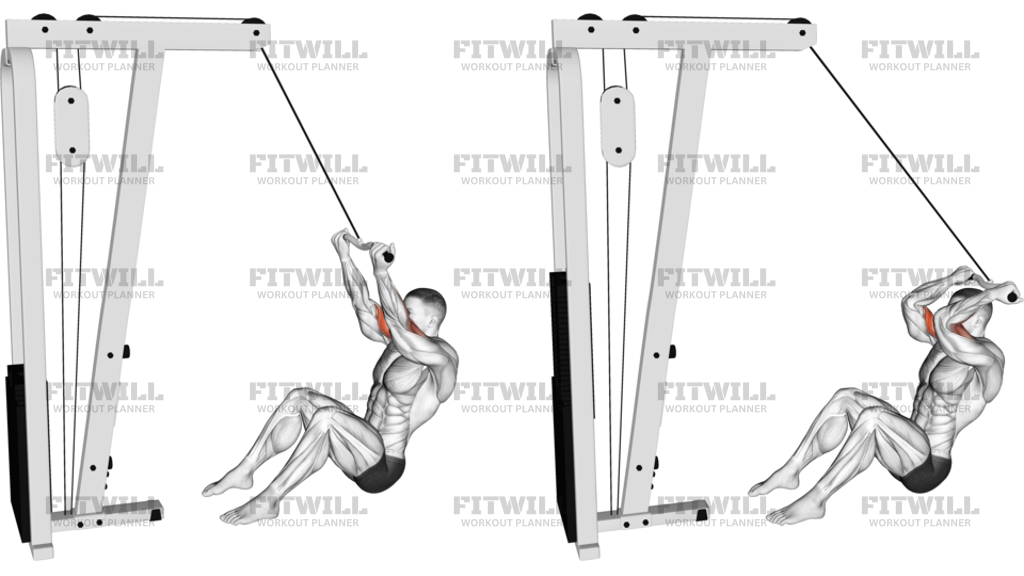
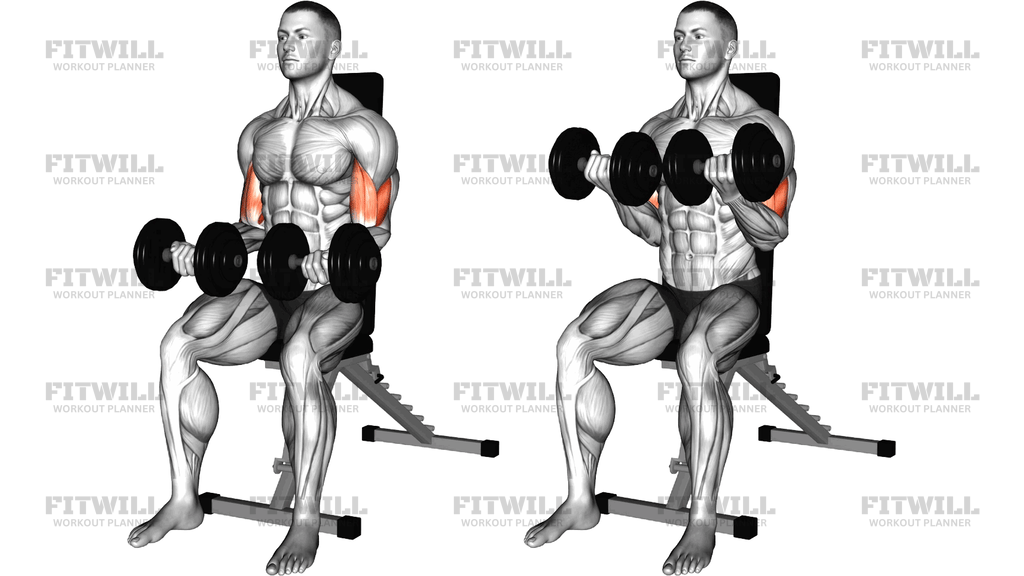
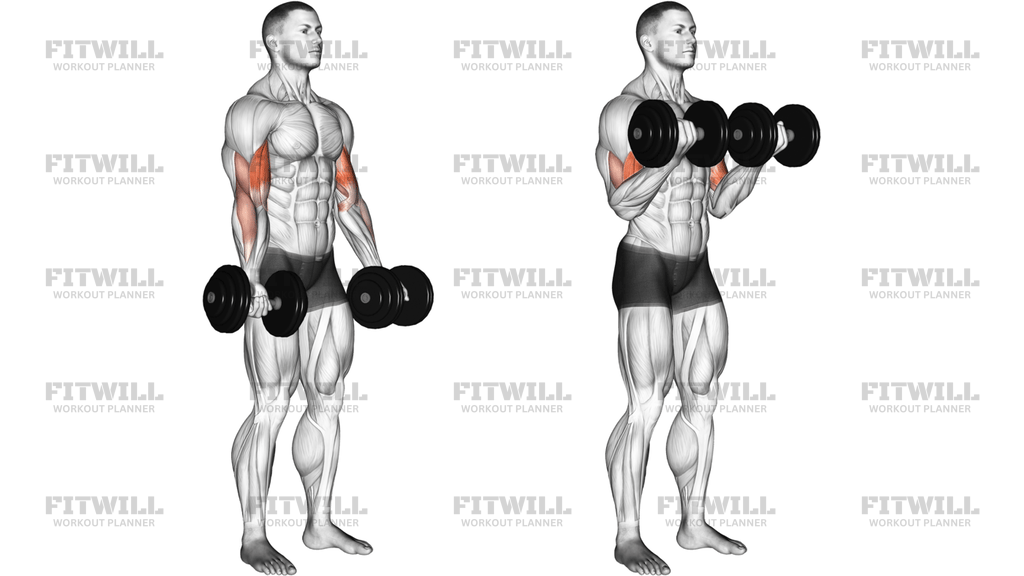
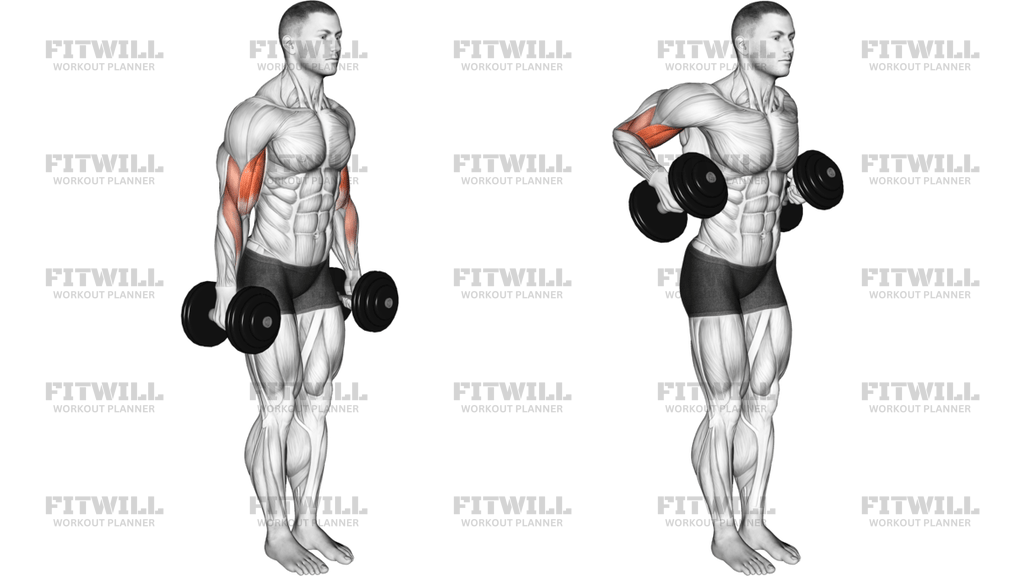
Dumbbell Standing Drag Curl Version 2 is a standing biceps curl variation that keeps the dumbbells close to the body as the elbows travel slightly behind the torso. That setup changes the line of pull compared with a normal curl: instead of swinging the weights out in front, you “drag” them up the front of the shirt and keep tension on the upper arm through a shorter, stricter path. The image shows a tall stance, dumbbells held at the sides, and the elbows pinned back while the shoulders stay quiet.
This version is primarily a biceps exercise, but it also asks the brachialis, brachioradialis, and forearm flexors to stabilize the wrists and help control the load. Because the elbows stay back, the movement can feel more isolated at the top of the arm than a standard standing dumbbell curl. It is useful when the goal is cleaner arm work, less momentum, and a more controlled contraction rather than heavy total-body cheating.
The setup matters because the drag curl only works well when the torso stays stacked and the elbows remain slightly behind the ribs. Start with a shoulder-width stance, a tall chest, relaxed shoulders, and dumbbells hanging just outside the thighs. If the ribcage flares or the lower back leans back to finish the rep, the curl stops being a drag curl and turns into a body swing. The best reps begin from stillness, not from a pre-loaded hip drive.
As you curl, keep the dumbbells brushing close to the torso and think about pulling the elbows back while the hands rise. The weight should travel in a tight vertical line, ending near the lower chest or upper abdomen without the elbows drifting forward. Lower the dumbbells under control until the arms are straight again, then reset before the next rep. A smooth exhale on the lift and a controlled inhale on the return help keep the trunk steady.
Use this exercise as accessory biceps work, as part of an arm session, or in a controlled upper-body block where precision matters more than load. It is a good choice for lifters who want to reduce shoulder involvement and build cleaner elbow flexion mechanics. The safer and more productive version is usually the lighter one: choose a weight that lets you keep the dumbbells close, the wrists quiet, and the torso still from the first rep to the last.
[ Workout Log & Planner ]
Put your next workout in Fitwill
Keep your plan and training log ready when you are.


Instructions
- Stand tall with a dumbbell in each hand, feet about shoulder-width apart, arms straight, and the weights hanging just outside your thighs.
- Set your shoulders down and back, brace your midsection, and keep your chest tall without leaning your upper body backward.
- Start each rep by pulling your elbows slightly behind your torso instead of letting them drift forward.
- Curl the dumbbells upward in a tight path close to your body, as if you are dragging them up the front of your shirt.
- Keep your wrists straight and avoid letting the dumbbells swing away from your thighs or knees.
- Squeeze hard near the top when the weights reach the lower chest or upper abdomen, with the elbows still back.
- Lower the dumbbells slowly along the same close-to-body path until the arms are fully extended.
- Exhale as you lift, inhale as you lower, and reset your posture before the next repetition.
Tips & Tricks
- If the dumbbells drift away from your thighs, the rep becomes a regular curl; keep them brushing close to the front of the body.
- Think about driving your elbows back before you bend the elbows, because the rearward elbow path is what makes this a drag curl.
- Choose a lighter load than you would use for a standard standing curl; the shortened lever arm gets difficult quickly.
- Keep your shoulders from shrugging up at the top, or the upper traps will take over and the biceps will lose tension.
- Do not lean back to finish the rep; if your ribs flare, the load is too heavy or the set is too fatigued.
- A brief squeeze near the top is more useful here than chasing extra height with the hands.
- Lower for at least as long as you lift so the biceps stay loaded through the negative phase.
- If your wrists bend back, reduce the weight and keep the knuckles stacked over the forearms.
Frequently Asked Questions
What muscle does Dumbbell Standing Drag Curl Version 2 target most?
The biceps are the primary target, with the brachialis, brachioradialis, and forearm flexors helping stabilize the dumbbells.
Can beginners perform this exercise?
Yes. Beginners usually do best with light dumbbells and a shorter set so they can keep the elbows back and the torso still.
Where should the dumbbells travel during the rep?
They should stay very close to the front of the torso, rising in a tight line instead of swinging out in front of the body.
What is the main mistake with the drag-curl setup?
Letting the elbows drift forward or the chest lean back turns the movement into a loose standing curl instead of a strict drag curl.
How is this different from a regular standing dumbbell curl?
In a drag curl, the elbows stay slightly behind the torso and the dumbbells track up the body, which reduces swing and increases upper-arm isolation.
Should I use a neutral grip or palms-up grip?
Use the grip shown by your program or setup, but keep the wrists stacked and the dumbbells stable so the forearms do not dominate the rep.
What should I feel at the top of the rep?
You should feel a hard biceps squeeze with the upper arms still close to the sides, not a shoulder shrug or lower-back arch.
Can I use this exercise for forearms too?
The forearms work as stabilizers, especially around the wrist, but the exercise is still mainly intended for biceps-focused arm work.