Dumbbell Incline Shrug
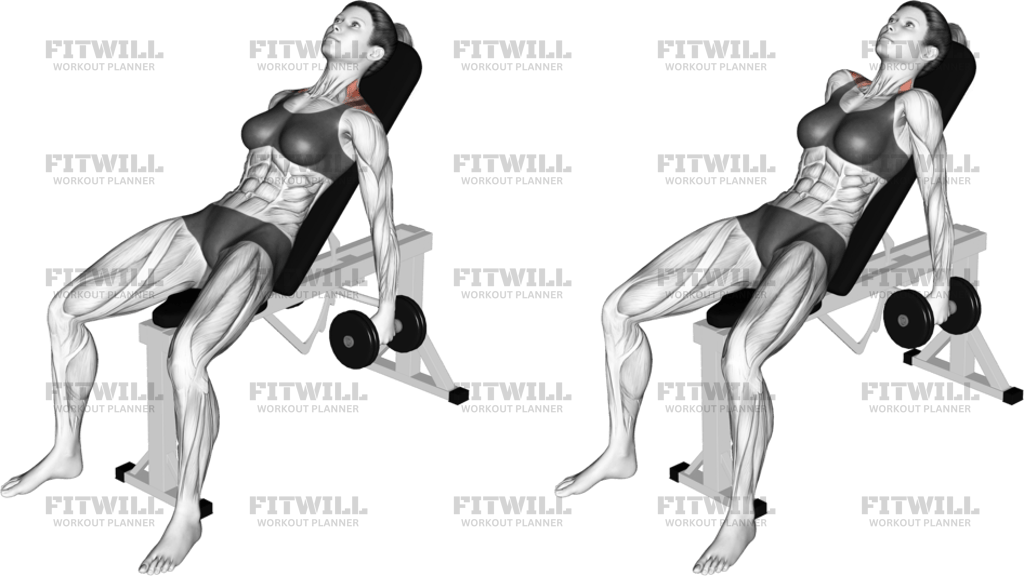
Dumbbell Incline Shrug is a bench-supported upper-trap exercise performed while leaning back on an incline bench and letting a dumbbell hang from each hand. The support from the pad removes most of the torso swing that often turns a shrug into a standing cheat rep, so the shoulders have to do the work of lifting and lowering the load in a cleaner vertical path.
The main training target is the upper trapezius, with the rhomboids, levator scapulae, and grip muscles helping stabilize the shoulder girdle and control the dumbbells. Because the elbows stay long and the arms remain mostly passive, the rep should feel like shoulder elevation, not a row, curl, or rear-delt swing. That makes the exercise useful when you want direct trap work without using body momentum to finish the lift.
Bench angle matters because it changes how freely the shoulders can move. A moderate incline should support the upper back while still leaving room for the dumbbells to hang clear of the bench. If the chest is pushed too far forward, the shoulders roll back too hard, or the head drifts off the pad, the neck and front of the shoulder often take over. Set the body so the ribs stay down, the neck stays long, and the shoulders can rise and lower without pinching.
Each repetition should travel straight up toward the ears and back down to a full hang. Shrug the shoulders up with control, hold the top briefly, then lower slowly until the traps lengthen again. The dumbbells should not swing, the elbows should not bend to help the lift, and the chin should not jut forward to chase a bigger range. Exhale as you shrug, inhale as you lower, and keep the head still against the bench.
This movement fits accessory upper-back work, posture-focused training, or hypertrophy sessions where a controlled trap isolation exercise makes sense. It is usually best with moderate loads and deliberate tempo rather than maximal weight. If the neck starts to dominate or the shoulders start rolling instead of lifting, reduce the load and make the rep path more vertical until the traps are doing the work cleanly.
[ Workout Log & Planner ]
Put your next workout in Fitwill
Keep your plan and training log ready when you are.


Instructions
- Set an incline bench to a moderate angle and sit back so your upper back is supported, with both feet flat on the floor.
- Hold a dumbbell in each hand and let your arms hang long at your sides with a neutral grip and soft elbows.
- Keep your head and upper back against the pad, ribs down, and neck long before you start the first rep.
- Begin with the shoulders relaxed and low so the dumbbells hang just outside your thighs.
- Shrug both shoulders straight up toward your ears without bending the elbows or rolling the shoulders forward.
- Pause briefly at the top while keeping the torso still and the wrists neutral.
- Lower the dumbbells slowly until the shoulders fully lengthen and the arms return to a dead hang.
- Reset at the bottom and repeat for smooth, even reps, then place the dumbbells down without jerking your torso off the bench.
Tips & Tricks
- Use a bench angle that supports your upper back but still leaves room for the dumbbells to travel straight up and down.
- Think about moving your shoulders toward your ears, not lifting the weights with your hands.
- Keep the elbows long; any noticeable arm bend turns the rep into a partial pull instead of a shrug.
- Avoid rolling the shoulders backward at the top, because this changes the emphasis away from the upper traps.
- Let the dumbbells settle at the bottom so each rep starts from a real stretch instead of bouncing off tension.
- Keep the chin neutral against the pad; reaching the head forward usually means the neck is taking over.
- Use straps only if grip fails before the traps do, since the forearms should not be the main limiter here.
- Choose a load that lets you pause at the top without rocking your torso or losing contact with the bench.
Frequently Asked Questions
What muscle does Dumbbell Incline Shrug target most?
The upper trapezius is the main target, with the rhomboids and grip muscles helping stabilize the shoulders and dumbbells.
Why do this shrug on an incline bench instead of standing?
The bench reduces torso swing and makes it easier to keep the shrug vertical, so the traps do more of the work.
Should my arms bend during the rep?
No. Keep the elbows long so the movement stays a shoulder-elevation pattern instead of turning into a row or curl.
How high should I shrug the dumbbells?
Raise the shoulders as high as you can without jutting your chin forward or rolling the shoulders back.
What should I feel at the bottom of the rep?
You should feel the traps lengthen while the dumbbells hang freely at your sides, not bounce off the bench or your legs.
Is Dumbbell Incline Shrug good for beginners?
Yes, as long as the load stays light enough to keep the torso still and the shrug path vertical.
What if I feel this mostly in my neck?
Lower the weight, keep the head back on the pad, and make sure the shoulders are lifting straight up instead of the neck reaching forward.
Can I use this as a finisher for back day?
Yes. It works well as accessory trap work when you keep the tempo controlled and avoid turning the last reps into momentum-based shrugs.